















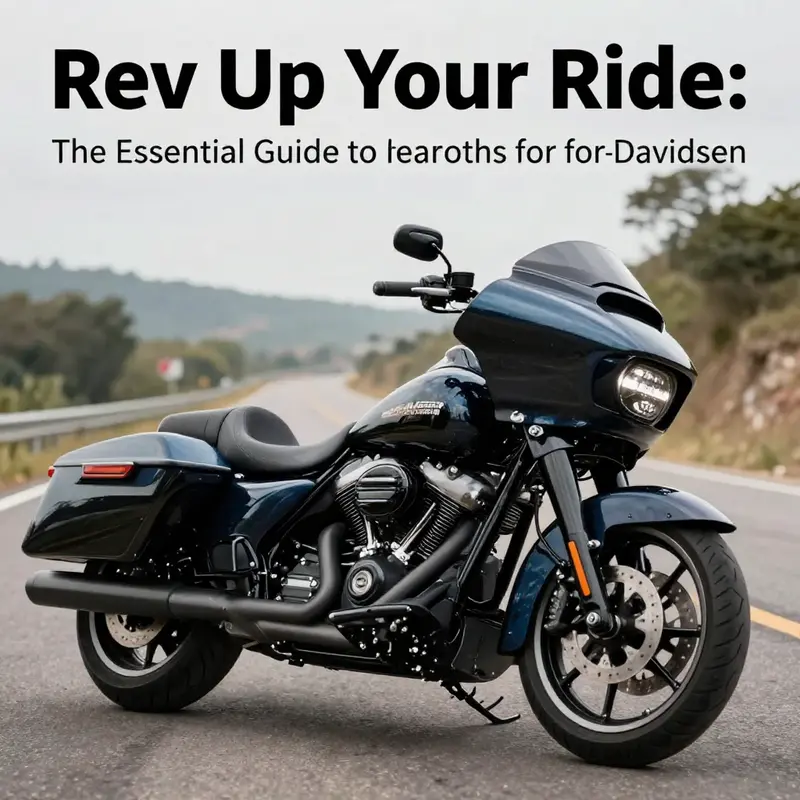
Motorcycle fairings have become an integral part of enhancing both the performance and aesthetic appeal of Harley-Davidson bikes. These components not only improve aerodynamics but also allow riders to express their individuality through various styles and features. In this guide, we will delve into the different types of motorcycle fairings available for Harley-Davidson, explore customization options that cater to personal tastes, examine cutting-edge technological advancements, and discuss the economic impact these fairings have on sales. Additionally, we will uncover the cultural significance of fairings within the Harley-Davidson community, providing you with a comprehensive understanding of their role in the motorcycle world.
Windswept Identity: The Art and Engineering of Harley-Davidson Fairings
 A motorcycle’s front end is more than a shield; it is a storyteller. The fairing speaks before the rider does, hinting at intention, performance, and personality. On Harley-Davidson machines, the fairing is a defining feature that blends wind protection with a signature stance. It carries the rider’s silhouette through the air and frames the cockpit with silhouette, line, and graphic language. This chapter treats fairings as an integrated system—part sculpture, part aerodynamics lab, part hardware kit—designed to balance comfort, control, and character across miles of highway and backroads alike. Rather than view fairings as a single object, it helps to imagine them as a family of forms that serve different riding purposes, weather conditions, and aesthetic ambitions, all anchored to the same core goals: minimize fatigue, manage flow, protect the rider, and make a statement that’s unmistakably Harley.
Στην πιο σκοπιμό τους μορφή, τα φαίρινγκ της Harley-Davidson διατίθενται σε διαμορφώσεις που κοινωνούν με διαφορετικές φιλοσοφίες οδήγησης. Τα πλήρη φαίρινγκ καλύπτουν μεγάλο μέρος της προσανατολισμένης πλευράς, διαμορφώνοντας μια λεία αλληλεπίδραση με τον αέρα και παρέχοντας σημαντική προστασία από τον αέρα για μακρινές μετακινήσεις. Αντιμετωπίζουν τα ριπάκια και μειώνουν την κοπετή του οδηγού, επιτρέποντας στο σώμα να παραμείνει χαλαρό και ευθύ για μεγάλο χρονικό διάστημα. Τα μισά ή τριών τετάρτων φαίρινγκ, αντιθέτως, αφήνουν περισσότερο των μυϊκών γραμμών του μηχανήματος έκθεση, ενώ παρέχουν ακόμα σημαντική απόκλιση του αέρα. Τα τετραγωνικά φαίρινγκ, τα φαίρινγκ τύπου βικίνια και τα απλοποιημένα φελιζάκια που επηρεάζονται από το streetfighter θέλουν οδηγούς που τιμούν ένα πιο λεπτό ύφος και μια πιο άμεση, προς τα εμπρός αίθουσα αίσθηση. Το φάσμα απεικονίζει μια γενικότερη αλήθεια: τα φαίρινγκ δεν είναι ένα χαρακτηριστικό που ταιριάζει σε όλους, αλλά ένα μοντουλαρισμένο γλωσσικό σύστημα που μπορεί να ρυθμιστεί σύμφωνα με την οδήγηση, το δρόμο και τον οδηγό.
Τα υλικά και η κατασκευή έχουν εξελιχθεί μαζί με το στιλ. Τα πιο κοινά μέσα είναι ανθεκτικά πλαστικά, συνήθως μολυβδωμένα σε παχιές τοιχοποιίες ABS ή γυαλικής ίνας, με την άνθρακας να εμφανίζεται σπάνια όπου το βάρος, η σκληρότητα και η λάμψη δικαιολογούν το προνόμιο. Το πλαστικό προσφέρει μια υπομονετική επιφάνεια που παίρνει χρώμα καλά και απορροφά την κρούση με ένα βαθμό αντοχής, που έχει σημασία όταν περνάς μέσα από ανεμοστρόβιλους ή συμπεριφέρεση με το δικό του οδηγού. Η γυαλική ίνας παραμένει μια οικονομική επιλογή για πλήρη φαίρινγκ ή εξειδικευμένα σχήματα, επιτρέποντας περίπλοκες καμπύλες και μεγαλύτερα τμήματα να παραχθούν χωρίς το κόστος της άνθρακας. Η άνθρακας, όταν χρησιμοποιείται, φέρνει ένα κορυφαίο λόγο αντοχής προς βάρος και μια προνομιακή τελειότητα που λάμπει υπό τον ήλιο και τα φωτεινά του δρόμου. Κάθε επιλογή υλικού επηρεάζει όχι μόνο το βάρος και τη γεωμετρία στερέωσης, αλλά και τις ανάγκες συντήρησης, τη διαχείριση θερμότητας γύρω από τα τμήματα του κινητήρα και την ευκολία της αντιστοίχισης χρώματος με το σώμα του μηχανήματος και τα χρωματιστά στοιχεία.
Beyond the shell itself, the underlying geometry of a Harley’s fairing matters as much as its surface. Aerodynamics begins with the silhouette—how the face of the fairing guides airflow, where the flow attaches, and where it detaches as speed climbs. A well-designed shell minimizes drag but also curtails buffeting, particularly at highway speeds where a rider’s helmet would otherwise greet turbulent eddies. The resulting improvement in ride quality translates into an easier steering input at the bars and a calmer head position, which is the quiet engine behind longer, more confident rides. The engineering challenge is to craft a shape that reduces lift at high speeds while maintaining visibility and instrument readability. It’s a balancing act between form and function, where curves and edges are tuned not just for looks but for a measurable, tangible change in the ride experience.
Inside the cockpit, the fairing becomes a digital and physical platform. Modern touring-oriented and cruiser-oriented fairings are designed to cradle dashboards, navigation screens, and audio or communication interfaces in a way that’s legible in sunlight and resilient against vibration. The rise of integrated display systems and riders aids has sharpened the relationship between human and machine. A well-integrated cockpit respects the rider’s posture, ensures that critical information remains within a natural line of sight, and preserves access to controls without forcing a rider to compromise posture or focus. This integration also shapes the fairing’s surrounding geometry: the edges around a display must accommodate mounting hardware and cable routing, while preserving the visual coherence of the bike’s front end. The result is a front end that communicates capability as clearly as it communicates style.
Η προσαρμογή παραμένει ένας δυνατός παράγοντας της πολιτιστικής επίστρωσης της Harley-Davidson. Το αγοραστικό σκηνικό ζει με την ιδέα ότι το ποδήλατο του οδηγού είναι μια προσωπική δήλωση - μια επέκταση γούστου, στόχων οδήγησης και ακόμα και της καθημερινής διάθεσης. Τα σύνολα που αντικαθιστούν ή ενισχύουν το αρχικό φάρδο έρχονται με εξαρτήματα στερέωσης, βραβεία και συχνά νέα παραθύρια ή αντιδραστήρια. Για πολλούς οδηγούς, η επιλογή να αντικαταστήσεις το φάρδο είναι τόσο σημαντική όσο η επιλογή ενός χρώματος ή μιας νέας κασετίνας. Το αισθητικό κέρδος μπορεί να είναι αμέσως: πιο ξεκαθαρισμένες γραμμές, ισχυρότερες αντιθέσεις χρωμάτων και ένα μοναδικό προφίλ που καθιστά το ποδήλατο αμέσως αναγνωρίσιμο σε μια πλήθος ποδηλάτων σε μια συγκέντρωση ή σε μια μακρά τομή της οδού. Τα πρακτικά οφέλη δεν χάνονται στην προσπάθεια να πάρεις χρώμα και μορφή. Ένα καλά σκεφτόμενο σύνολο επιστρωσης λαμβάνει υπόψη τη γεωμετρία του πλαίσιου του ποδηλάτου, την κατανομή βάρους και το πόδι του οδηγού σε σχέση με τα πατάκια, τα σακιά και το ύψος της κασετίνας, εξασφαλίζοντας ότι η εγκατάσταση δεν χειροτερεύει την αντιμετώπιση ή την άνεση του ποδηλάτου.
Στον τομέα των χρωμάτων και των γραφικών, το θαυμαστό χρώμα και τα εντυπωσιακά γραφικά - σχεδιασμένα για να ξεχωρίσουν ενώ διατηρούν την αναγνωσιμότητα και την προστασία του πίνακα - είναι μια κοινή επιθυμία. Η επεξεργασία της επιφάνειας της επιστρωσης αλληλεπιδρά με το φως με τρόπο που μπορεί να εντείνει τις γραμμές του ποδηλάτου, ή αντίθετα, να δημιουργήσει αίσθηση κίνησης ακόμα και όταν το ποδήλατο είναι σταθερό. Οι λαμπερές και οι ματ επιφάνειες αντιδρούν διαφορετικά στις ηλιακές και τις δρομικές ανακλάσεις, και η επιλογή μπορεί να επηρεάσει την αντιληπτή βάθος και το σχήμα σε ταχύτητα. Ο οδηγός που επιλέγει ένα θαυμαστό γραφικό θέλει συχνά μια ιστορία που τρέχει από το ταμπακιέ στην επιστρωση μέχρι το πίσω μέρος, μια οπτική περιπλάνηση που ανακοινώνει την παρουσία στο δρόμο και συμπληρώνει το μηχανικό χαρακτήρα του ποδηλάτου.
Mirror and accessory compatibility remains an essential consideration for those who want a complete, integrated look. Fairing-mounted mirrors, in particular, provide both function and emphasis on the front-end language. Their shapes—rectangular, teardrop, or more angular—can contour the fairing’s edges and emphasize the overall silhouette. The mounting strategy also affects air management, access to the cockpit, and the ease with which the rider can adjust or replace components after a ride or a fall. The best arrangements feel almost invisible when they’re working well—present, but not obtrusive—allowing the rider to focus on line, pace, and line-of-sight rather than hardware decisions.
A note on the relationship between OEM and aftermarket options helps illuminate a broader point about Harleys and their fairings. The factory configurations often prioritize a balance of protection, comfort, and dealer-installed electrical integration that suits broad markets. Aftermarket offerings, by design, expand what’s possible—offering specialized shells, unique graining, or aggressive aero shapes that may target a rider’s preferred cockpit stance or a particular touring distance. This ecosystem of choice empowers riders to tailor weight, balance, airflow, and visual identity without compromising the bike’s core architecture. The result is not simply a cosmetic update but a re-sculpting of the rider’s interaction with the road, influenced by a fairing’s geometry, its visual language, and its physical footprint on the bike.
To illustrate the breadth of practical consideration, consider how installation and fit influence the riding experience. A fairing must align with the headlight assembly, the instrument cluster, and the steering head, while leaving room for cables, sensors, and windscreen adjustments. The alignment is not merely aesthetic; it affects wind pressure on the rider’s chest and helmet, which in turn influences fatigue over long miles. Mounting hardware needs to be robust enough to tolerate occasional vibrations and impacts from road debris, yet sufficiently discreet to preserve the bike’s clean lines. These tensions drive a design approach that treats mounting points as integral to the fairing’s performance, not as afterthoughts. When done well, installation feels like a seamless upgrade rather than a bolt-on modification, preserving the bike’s original balance and, ideally, improving it.
The broader implication for riders is that the fairing becomes a lens through which to read the bike’s mission. On a cruiser-oriented machine, a fairing might emphasize timeless proportions and a laid-back cockpit—an invitation to cruise, feel the wind, and savor the machine’s torque and cadence. On a touring-focused setup, the same front-end language can be tuned to emphasize comfort, wind management, and instrument clarity for hours on the road. In every case, the fairing’s shape, materials, and integration reflect a careful choreography: the rider’s posture, the bike’s mass distribution, the engine’s character, and the road’s temperament all speaking in one language. That language is the fairing—at once practical and expressive, technical and poetic.
The chapter’s arc circles back to where it began: the fairing as a form that communicates. It is a tool that reduces fatigue, supports visibility, and sanctifies the ride with a distinctive presence. The choice among full, half, quarter, or minimalist shells is not simply about shielding the rider from wind; it is about shaping a riding experience that aligns with one’s aspirations. When a rider steps back to survey the bike, the fairing should feel like a natural extension of the chassis—an intentional edge that makes the machine feel both capable and intimate. As design language evolves, the fairing remains the hinge between breath and speed, between silhouette and horizon, a quiet partner in the rider’s pursuit of the open road.
For readers who want to explore related shaping principles and mounting strategies that transcend brands, a glance at a broader catalog such as the Honda fairings collection can provide useful context for how similar engineering concerns appear across families of bikes. See Honda fairings catalog for an example of mounting philosophy and panel integration that echoes the same careful balance between protection, stance, and access that defines Harley’s approach. This cross-brand perspective helps reveal how shape and structure carry meaning in two-wheeled design.
External resource: https://en.wikipedia.org/wiki/Aerodynamics
Shaping the Ride: Custom Fairings for an Iconic American Cruiser
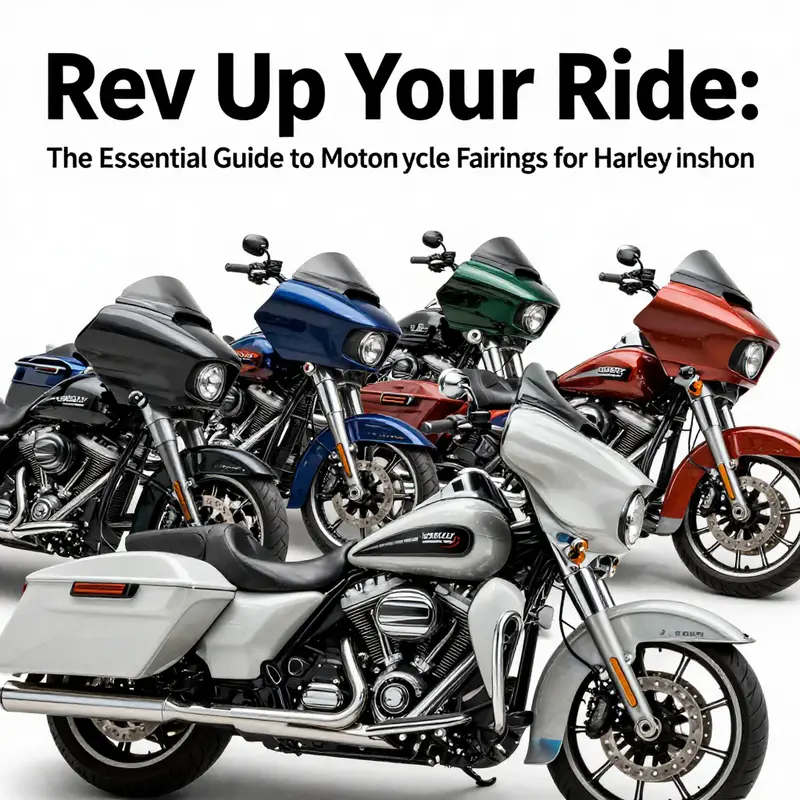 A motorcycle is more than metal and screws; it is a statement that travels with the rider. When the topic turns to fairings for a legendary American cruiser, the conversation deepens beyond color swatches and bolt counts. It becomes a dialogue between wind and angle, between the rider’s posture and the bike’s silhouette, and between the bike’s legacy and the owner’s personal narrative. Custom fairings offer a rare chance to tune aerodynamics, control, and presence in a single, cohesive upgrade. They invite riders to rethink how protection, performance, and personality coexist on long days in the saddle. The result is not merely a new look; it is a reimagined riding experience that can change how a rider feels about the open road. In this space, the fairing becomes a bridge between engineering and identity, a way to honor a storied lineage while translating it into a modern, personal ride. Among the most recognizable elements in the fairing ecosystem is an iconic silhouette that has defined the brand’s touring aesthetic for decades: a broad, sculpted fairing whose lines sweep back toward the handlebars while framing the rider like a cockpit partner. This batwing profile is more than a design cue; it is a functional philosophy. Its broad surface area channels wind away from the rider, reducing fatigue on multihour journeys and offering a canvas for bold graphics that can echo a rider’s mood or moodiness. The batwing’s presence on the bike is instantly legible on the road, signaling both heritage and intent. And because it anchors so much of the bike’s identity, choosing a fairing in this style is as much about visual language as it is about wind pressure and ride quality. Reworking that silhouette can yield a look that is simultaneously timeless and dynamic, a combination that resonates with riders who want their machines to feel both rooted in tradition and tuned for today’s roads. The spectrum of customization extends far beyond that single shape. For riders seeking a more aggressive or streamlined stance, there are options that emphasize a tighter profile and cleaner upstream lines. These fairings often come in a mix of materials and thicknesses, designed to balance rigidity with weight, and to accommodate integrated components such as wind deflectors, speakers, or selectable lighting sequences. A windscreen is frequently upgraded as part of the package—larger dimensions that push the glass or polycarbonate farther from the rider’s line of sight, providing better protection from the gusty punch of highway speeds while preserving visibility and reducing turbulence. In many builds, designers purposefully position vents and air inlets to manage flow around the rider’s torso and shoulders, which can translate into meaningful comfort improvements over long stretches. In this sense, a fairing kit can become a modular performance upgrade, not merely an aesthetic one, allowing riders to tailor their wind exposure to regional climates and personal preferences. The vanishing line between cosmetic appeal and functional advantage becomes especially evident in the array of styles that accompany the batwing baseline. Full fairings, air intake variants, and hybrid configurations offer distinct ergonomic advantages and a different acoustic profile. Full fairings can encapsulate more of the front end, shaping the bike’s aerodynamics with a smoother, uninterrupted surface. Air intake fairings, in turn, can provide a sportier flavor, pushing cooling considerations into the design dialogue while offering a race-inspired edge that still suits long-distance comfort. For certain models within the cruiser spectrum, larger windshields—sometimes in the range of substantial, tour-ready dimensions—work in concert with these fairings to deliver a calm highway experience. The combination of silhouette, shielding, and airflow can transform how the bike feels at cruising speeds and how responsive it remains when navigating twisty backroads. The goal is clear: a cohesive integration where form follows function without compromising the bike’s core personality. Material and finish options further broaden the customization frontier. Manufacturers and aftermarket houses alike deliver a spectrum that runs from rugged, impact-resistant outer shells to resin-based shells that sculpt elegant curves with a surprisingly forgiving weight profile. The common choices include durable fiberglass, engineered ABS, and sometimes composite blends that can better resist flex under high-speed winds. Carbon fiber overlays are less common but highly prized for adding a performance sheen without a heavyweight penalty. Finishes range from high-gloss to satin or matte textures, with color opportunities spanning the classic all-black motif to vibrant blues and other custom hues. The decision is rarely about one attribute alone; it is about how texture, color, and light interact on the bike’s surface as it moves. Gloss surfaces catch the eye with crisp reflections and a sense of vitality, while matte finishes soften the edges and emphasize the lines of the fairing in a different way. For riders, the finish is another layer of the ride’s story—one that catches both light and attention. In practical terms, most aftermarket kits are designed to slip into a fairly well-defined ecosystem: a specific model family and a compatible generation of components. The emphasis is on a seamless integration with the bike’s existing bodywork and wiring harness, so that upgrades do not create misalignments or electrical gremlins. The hardware included with these kits—mounting brackets, seals, fasteners, and any required trim pieces—often reflects a deliberate attention to ease of installation. For riders who prefer a precise, factory-like fit, professional installation can ensure that gaps are minimized, the windscreen seals are secure, and the wind flow is precisely where it should be. The installation journey can also be a chance to revisit other related accessories, such as fairing-mounted mirrors, auxiliary lighting, or integrated audio options, all of which can harmonize with the chosen fairing to produce a unified, functional cockpit rather than a mismatched assembly. The end result is a system that feels as if it grew from the bike rather than being bolted on. Beyond the mechanical and ergonomic considerations lies a broader design conversation. The fairing is, at heart, a storytelling device. When a rider selects a colorway or a graphic treatment, they are choosing a narrative thread to weave into the bike’s broader identity. Bold paint and graphics are often engineered to stand out against the road’s backdrop, turning a visual pause into a statement. The ability to pair the fairing with the bike’s existing line work and tank graphics invites a level of curation that resonates with riders who see customization as a creative practice. Inspiration often flows from dedicated boards and communities that celebrate dynastic styling languages, vintage cues, or modern geometry. While some builders lean into retro-inspired lattices and pinstripes, others pursue clean modernism with sharp, geometric graphics that echo contemporary automotive design. The result is a spectrum in which the fairing becomes both a protective shell and a canvas for personal branding, a way to convey mood, speed, and taste in a single, highly legible form. To navigate this landscape, riders frequently consider how a choice aligns with their day-to-day riding needs. The scope includes not just the appearance but the ride quality at speed, the wind you’ll feel at shoulder height, and how a fairing interacts with luggage and seating positions. It is not uncommon for riders to assemble a look around a larger concept—perhaps a touring theme grounded in long-distance comfort, or a more compact, upright posture for urban riding and weekend escapades. Pinterest boards and design forums often serve as a wellspring of ideas, offering diverse interpretations—from streamlined, low-profile contoured shapes to more sculptural, sculpture-like forms that emphasize the play of light on curved surfaces. The journey from concept to reality involves balancing the dream against practical constraints—model compatibility, installation effort, maintenance considerations, and, crucially, the personal story each rider wants to tell while rolling down the highway. In the end, the value of choosing a fairing upgrade lies in the confluence of protection, performance, and personality. A well-chosen fairing can cut fatigue on long stretches, improve wind management during gusty days, and provide a stage for color and texture that reflects a rider’s journey. It is an element that speaks to both the machine’s heritage and the rider’s evolving tastes, a tactile reminder that customization is not merely about appearing different but about riding better and feeling more at home in the landscape that unfolds ahead. The official options catalog remains a useful resource for mapping out the available configurations, presenting a curated set of possibilities that can spark a rider’s imagination while ensuring compatibility and a trustworthy fit with the bike’s core structure. For riders who want to move beyond generic aesthetics, the fairing becomes a project that mirrors their riding life—one fairing, one idea, and one open road at a time. External resource: https://www.harley-davidson.com/us/en/vehicles/accessories/bodywork.html
null
 null
null
null
 null
null
null
 null
null
Final thoughts
Τα προστατευτικά του μοτοσικλέτας της Harley-Davidson δεν βελτιώνουν μόνο την απόδοση και την εμφάνιση των μοτοσικλετών, αλλά παίζουν επίσης ένα σημαντικό ρόλο στην ταυτότητα των οδηγών και στην ευρύτερη κοινότητα της Harley. Η κατανόηση των διαφόρων τύπων προστατευτικών, των δυνατοτήτων προσαρμογής, των νέων τεχνολογιών και των οικονομικών επιπτώσεων μπορεί να ενισχύσει τους ιδιοκτήτες επιχειρήσεων να χρησιμοποιήσουν αυτήν τη γνώση αποτελεσματικά στις δραστηριότητές τους. Η αναγνώριση της πολιτιστικής σημασίας των προστατευτικών τοποθετεί τις επιχειρήσεις σε θέση να συνδεθούν βαθύτερα με τους πελάτες τους, εξασφαλίζοντας ότι ικανοποιούν τις επιθυμίες και τις αξίες της ενθουσιασμένης κοινότητας της Harley-Davidson.