
















Introduction
Las cubiertas de motocicletas son esenciales para la apariencia estética y el rendimiento aerodinámico de las motocicletas, lo que hace que su mantenimiento y reparación sea una prioridad alta para los propietarios de negocios en el mercado posterior de motocicletas y la industria de reparación. Seleccionar el mejor epoxi para cubiertas de motocicletas asegura reparaciones que no solo sean fuertes, sino también lo suficientemente flexibles como para resistir vibraciones y factores ambientales como la exposición al sol. Esta revisión integral abordará aspectos esenciales que todo propietario de negocio debe entender: las ventajas de las formulaciones de dos componentes de epoxi, la importancia de la flexibilidad y la resistencia a los rayos UV, técnicas efectivas de preparación de superficie y aplicación, y opciones de terminación con pinturas de epoxi que preserven tanto la resistencia como la apariencia. Cada capítulo construye sobre estos componentes básicos, permitiéndote ofrecer servicios de reparación de cubiertas superiores y productos duraderos que cumplan con las demandas de los riders exigentes.
Tables of Contents
Capítulo 1: Formulaciones de epoxi de dos componentes como el mejor epoxi para cubiertas de motocicletas
- Innovaciones de vanguardia que mejoran el rendimiento del epoxi de dos componentes para cubiertas de motocicletas
- Equilibrando costo y rendimiento: la ventaja económica del epoxi de dos componentes para cubiertas de motocicletas
- Cómo la experiencia del usuario y los estándares de la industria moldean la confianza en el epoxi de dos componentes para cubiertas de motocicletas
Capítulo 2: Flexibilidad y resistencia a la radiación UV en el mejor epoxi para cubiertas de motocicletas
- Formulaciones innovadoras de resina y recubrimientos que mejoran la flexibilidad y la estabilidad UV para cubiertas de motocicletas
- La ventaja económica del epoxi flexible y resistente a la radiación UV en la longevidad de las cubiertas de motocicletas
- Cómo el epoxi flexible y resistente a la radiación UV mejora la sostenibilidad y la seguridad del conductor
Capítulo 3: Técnicas de preparación de superficie y aplicación para el mejor epoxi para cubiertas de motocicletas
- Dominar la preparación de superficie: pasos esenciales para maximizar la adhesión del epoxi en cubiertas de motocicletas
- Dominar la aplicación y la capa del epoxi para reparaciones duraderas de cubiertas de motocicletas
- Dominar las técnicas de terminación y recubrimiento para maximizar la durabilidad del epoxi en cubiertas de motocicletas
Chapter 4: Finishing and Paint Options for the Best Epoxy for Motorcycle Fairings
- Mastering Surface Preparation and Priming for Flawless Epoxy Finishes on Motorcycle Fairings
- Mastering Color and Coating Techniques for Durable and Vibrant Epoxy Finishes on Motorcycle Fairings
- Layered Durability: Advanced Protection and Finishing Techniques for Epoxy-Resin Motorcycle Fairings
Capítulo 1: Formulaciones de epoxi de dos componentes como el mejor epoxi para cubiertas de motocicletas

1. Cutting-Edge Innovations Enhancing Two-Part Epoxy Performance for Motorcycle Fairings
Two-part epoxy systems have evolved into the essential adhesive solution for motorcycle fairings, owing to significant technological breakthroughs that enhance their durability, adhesion, and resistance to environmental stresses. These formulations involve a precise blend of resin and hardener that chemically cure to form a resilient composite layer, capable of enduring mechanical impacts, engine heat, and prolonged UV exposure. Recent advances have optimized curing speeds, allowing repairs and manufacturing processes to operate more efficiently without sacrificing the toughness or chemical stability of the cured epoxy. This balance is crucial for motorcyclists who demand both reliability and swift turnaround after repairs.
Moreover, advancements in viscosity regulation facilitate superior flow and wetting characteristics. This ensures the epoxy bonds effectively to the diverse substrates used in fairing construction, such as carbon fiber and fiberglass composites. Enhanced adhesion on these materials translates to stronger repairs and longer-lasting reinforcements, vital for resisting vibrations and stresses encountered during rides. Integrating modern composite manufacturing technologies, like digital twin simulations, further refines epoxy application and curing on complex fairing shapes. Through these virtual models, manufacturers optimize process parameters, minimizing errors and maximizing product consistency.
Noteworthy too is the development of two-component catalyzed aerosol epoxy coatings that deliver flawless, high-gloss finishes with excellent durability. These spray systems enable precise application, improving both the aesthetics and protective qualities of repaired or new fairing surfaces. Such innovations not only meet performance demands but also enhance visual appeal, a priority for many motorcycle enthusiasts.
Collectively, these technological strides secure two-part epoxies as the premier choice for fairing repairs and construction, balancing mechanical strength, environmental resilience, and ease of use. For those interested in a comprehensive understanding of composite manufacturing advancements applicable to motorcycle fairings, detailed industry insights are available in aerospace and automotive composite literature, which share foundational epoxy technologies. More information on tailored fairing options and repair techniques can be found in resources such as this guide to motorcycle fairings.
[1] https://acmanet.org/digital-twins-reveal-hidden-information/
2. Balancing Cost and Performance: The Economic Edge of Two-Part Epoxy for Motorcycle Fairings
Two-part epoxy formulations provide a compelling economic advantage in motorcycle fairing applications due to their exceptional durability and strength. Although the initial material investment may be higher compared to simpler adhesives, their superior bonding capabilities drastically extend the lifespan of fairings, minimizing repair and replacement frequency. This longevity translates directly into reduced maintenance expenses and lower total cost of ownership over time.
The dual-component nature of these epoxies—combining resin with hardener—ensures precise chemical curing that produces strong, flexible bonds capable of withstanding vibration, impacts, and exposure to UV light. Such properties protect fairings from common environmental damage, thereby preventing premature failure and costly refurbishments. Additionally, the production process benefits from the epoxy’s compatibility with advanced manufacturing techniques, like reaction injection molding, that balance efficient medium-volume output while maintaining high-performance material qualities.
Economic gains also arise from assembly improvements. Two-part epoxy adhesives replace traditional mechanical fasteners or welding, thereby simplifying construction and reducing labor costs without sacrificing structural integrity. This allows for lighter, more aerodynamic fairing designs that contribute to improved fuel efficiency and overall motorcycle performance—key market demands as manufacturers pursue weight reduction alongside durability.
While the cost of raw materials is an important factor, the broad performance benefits and streamlined production approach create a favorable cost-benefit balance. This makes two-part epoxies a strategic choice for manufacturers and repair professionals seeking cost-effective, long-lasting solutions for motorcycle fairings.
For more insights on motorcycle fairings that maximize performance and durability, explore the best motorcycle fairings available today.
Reference: Henkel Adhesives guidance on motorcycle fairing repair with epoxy.
3. How User Experience and Industry Standards Shape Trust in Two-Part Epoxy for Motorcycle Fairings
Two-part epoxy formulations have earned a strong reputation among motorcycle enthusiasts and professionals alike for their exceptional performance in fairing repairs and fabrication. These epoxies combine a resin and hardener that, when mixed, deliver a flexible yet robust bond, essential for withstanding the vibrations and impacts typical on motorcycles. Users appreciate the versatility of two-part systems, notably their strong adhesion and excellent sag resistance, which facilitate smooth application on varied surfaces, including challenging vertical areas.
For riders and DIY mechanics, the ability of these epoxies to bond and fill cracks, support shaping, and resist environmental conditions such as water exposure and temperature changes offers great practical value. This usability extends to professional repair shops, where reliability and durability are critical to maintaining both function and aesthetics of motorcycle fairings over time.
On the industry level, two-part epoxy systems are increasingly recognized for their compatibility with composite materials widely used in modern fairings. Their resistance to UV degradation and moisture ensures that repairs and reinforcements preserve their integrity despite harsh outdoor conditions. This environmental resilience contributes to longer component lifespans and reduced maintenance demands, aligning with broader sustainability goals.
While emerging materials like carbon fiber influence fairing design, the balanced combination of strength, adaptability, ease of handling, and cost-effectiveness keeps two-part epoxy formulations central to fairing maintenance and customization. Their proven track record fosters confidence among users who demand both professional-grade results and practical application.
Further insights and detailed advice on selecting and using epoxy for your motorcycle can be found at Explore más perspectivas sobre piezas y accesorios de motocicleta de calidad en. Additionally, comprehensive guidance by leading adhesive manufacturers underlines why two-part epoxy remains the top solution for motorcycle fairings.
Capítulo 2: Flexibilidad y resistencia a la radiación UV en el mejor epoxi para cubiertas de motocicletas
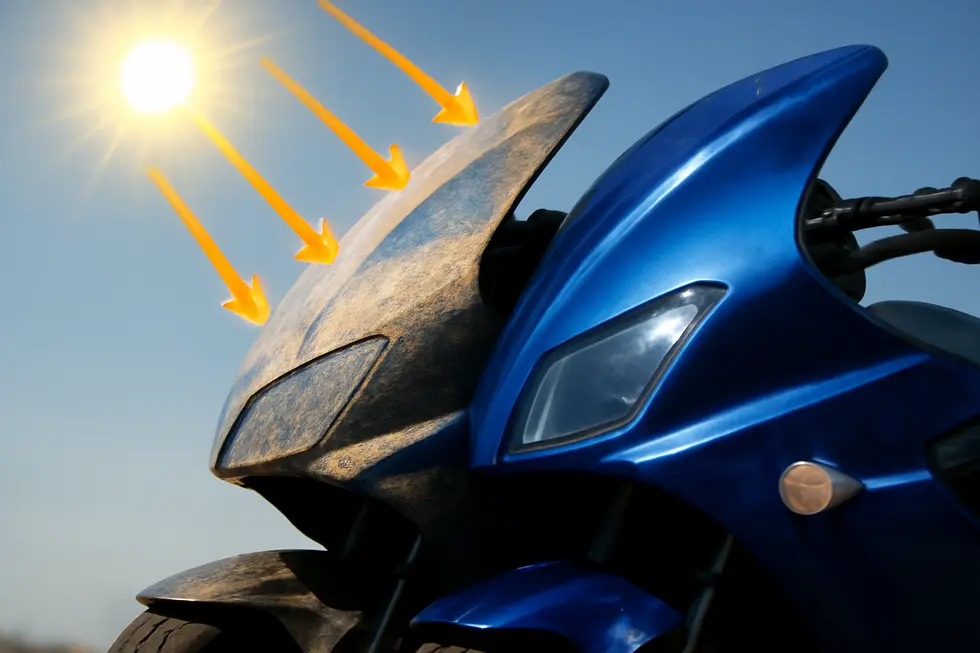
1. Innovative Resin Formulations and Coatings Enhancing Flexibility and UV Stability for Motorcycle Fairings
Más información y consejos detallados sobre la selección y uso de epoxi para su motocicleta se pueden encontrar en.
Además, orientación completa por fabricantes líderes de adhesivos subraya por qué la epoxi de dos partes sigue siendo la solución ideal para parabrisas de motocicleta.
Formulaciones Innovadoras de Resinas y Recubrimientos que Mejoran la Flexibilidad y Estabilidad UV para Parabrisas de Motocicleta.
Las demandas evolutivas de reparaciones de parabrisas de motocicleta han impulsado innovaciones continuas en la tecnología de epoxi, especialmente en flexibilidad y resistencia a la radiación UV. Los resinos de epoxi modernos equilibran durabilidad con la capacidad de absorber vibraciones e impactos sin agrietarse o deformarse—un avance crítico considerando el estrés mecánico constante que experimentan los parabrisas durante las carreras. Esta flexibilidad suele lograrse mediante técnicas de fabricación compuesta, donde los resinos de epoxi se refuerzan con materiales como fibra de carbono o laminados de fibra de vidrio. Estos compuestos proporcionan una estructura que puede flexionarse ligeramente pero mantener su integridad de forma, mejorando tanto la fuerza como la resistencia. motorcycle fairings offers valuable guidance.
External resource: https://adamspolishes.com/products/graphene-ceramic-coating%E2%84%A2-advanced
Las técnicas de laminación fría optimizan aún más el compuesto de epoxi tejiendo fibra de vidrio en patrones de trama, lo que mejora el rendimiento mecánico mientras permite que la química resistente a la radiación UV del resino florezca. Posteriormente, pinturas spray resistentes a la radiación UV de grado industrial y recubrimientos cerámicos forman un escudo resistente al desgaste, protegiendo los parabrisas contra daños ambientales y exposición química.
Juntos, estos avances tecnológicos producen sistemas de epoxi adaptados para parabrisas de motocicleta, combinando resiliencia, flexibilidad y estabilidad prolongada frente a la radiación UV. Esta integración asegura que las reparaciones y mejoras no solo soporten condiciones de conducción exigentes, sino que también mantengan su apariencia e integridad. Para quienes busquen más información sobre materiales de parabrisas de calidad y métodos de reparación, explore una fuente confiable de.
Recurso externo: https://adamspolishes.com/products/graphene-ceramic-coating-advanced.
La Ventaja Económica de la Epoxi Flexible y Resistente a la Radiación UV en la Longevidad de los Parabrisas de Motocicleta.
Incorporar epoxi flexible y resistente a la radiación UV en los parabrisas de motocicleta ofrece ventajas económicas significativas a través de una mayor durabilidad y vida útil extendida. Los parabrisas de motocicleta están sujetos a estrés ambiental constante, incluida la intensa luz solar y las vibraciones causadas por condiciones de carretera. Las epoxis diseñadas con flexibilidad absorben eficazmente los golpes y vibraciones mecánicas, reduciendo la probabilidad de grietas o roturas. Al mismo tiempo, las propiedades resistentes a la radiación UV evitan el cambio de color, la fragilidad y la degradación superficial, manteniendo el atractivo estético y la integridad estructural durante años de exposición.
Aunque estas epoxis especializadas puedan tener un costo inicial más alto en comparación con resinas convencionales, su capacidad para extender la vida útil de los parabrisas resulta en menos reemplazos y reparaciones. Esto se traduce en gastos de mantenimiento más bajos y menor tiempo de inactividad para los conductores y fabricantes. Además, la mayor durabilidad puede reducir las reclamaciones de garantía, beneficiando la gestión de costos y la reputación de los fabricantes. Explore the Best Motorcycle Fairings at Summit Fairings También existe un impacto económico indirecto relacionado con la mejora del rendimiento. Los parabrisas de compuestos de epoxi flexible a menudo permiten construcciones livianas, contribuyendo a una mejor eficiencia de combustible y manejo. Estos factores ofrecen ahorros en costos operativos y mayor atractivo para los consumidores que buscan valor y fiabilidad.
Desde una perspectiva del mercado, la creciente demanda de materiales epoxi avanzados refleja la aceptación generalizada de sus ventajas en cuanto a relación costo-beneficio y durabilidad. Aunque alternativas como los compuestos de fibra de carbono ofrecen mayor resistencia, las epoxis flexibles resistentes a la radiación UV ofrecen un equilibrio más accesible adecuado para producción masiva y reparaciones posteriores. Innovaciones en procesos de fabricación como moldeo por inyección y impresión 3D continúan optimizando la utilización de materiales y la eficiencia de costos.
Para quienes estén interesados en explorar parabrisas duraderos y económicos para motocicletas, recursos como proporcionan información valiosa sobre opciones de calidad..
En general, las formulaciones de epoxi flexibles y resistentes a la radiación UV ofrecen una propuesta económica convincente al combinar longevidad, mantenimiento reducido y una mejor experiencia para el conductor, reforzando su status como la elección óptima para parabrisas de motocicleta.
Para obtener más datos del mercado y pronósticos sobre adhesivos epoxi, visite el by significantly extending the lifespan and preserving the integrity of critical components. The inherent flexibility in these epoxies helps fairings absorb vibrations and shocks common in motorcycle use, preventing cracks and potential failures that could compromise rider safety. Their UV resistance counters damage from prolonged sun exposure, which otherwise leads to yellowing, brittleness, and surface degradation. This preservation of structural and aesthetic quality not only maintains important protective functions and visibility but also upholds the vehicle’s overall appearance, contributing to rider confidence and satisfaction.
From a societal viewpoint, these durable coatings reduce the frequency of repairs and replacements. This lowers maintenance costs and decreases motorcycle downtime, allowing riders to enjoy uninterrupted use. Additionally, less frequent interventions translate into reduced labor and parts expenses, benefiting owners economically while enhancing brand trust through sustained product performance.
Environmentally, flexible, UV-stable epoxies mitigate waste by prolonging fairing usability and reducing part discard rates. This translates into less landfill accumulation and diminished demand for new manufacturing resources. As a result, energy-intensive extraction, production, and transport emissions drop, markedly lowering the ecological footprint tied to fairing components. Moreover, these epoxies guard against degradation that could release microplastics or harmful residues into the environment, addressing pollution concerns associated with material breakdown.
Certain formulations also enable energy-efficient curing methods, further minimizing manufacturing environmental impacts. These combined effects support a circular approach to motorcycle upkeep, emphasizing longevity and sustainability while safeguarding rider well-being. For further details on UV stabilization techniques in coatings, explore Everlight Chemical’s light stabilizer technology.
To learn more about durable motorcycle bodywork solutions, visit the Summit Fairings blog.
Capítulo 3: Técnicas de preparación de superficie y aplicación para el mejor epoxi para cubiertas de motocicletas
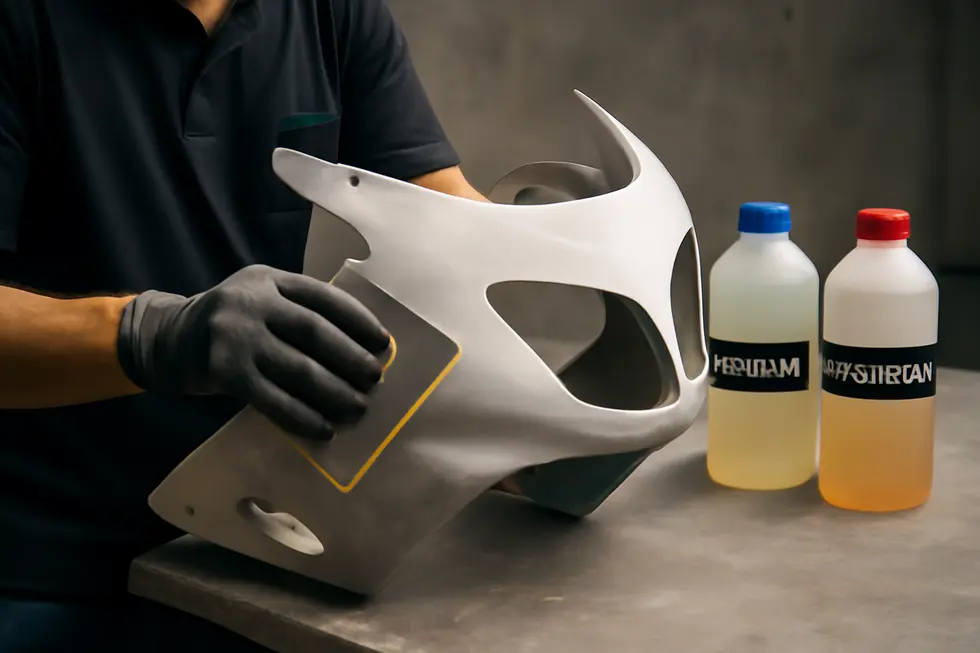
1. Mastering Surface Preparation: Essential Steps to Maximize Epoxy Adhesion on Motorcycle Fairings
Achieving durable repairs and refinished surfaces on motorcycle fairings relies heavily on comprehensive surface preparation techniques tailored for epoxy application. The foundation of optimal adhesion begins with thoroughly cleaning the fairing surface to remove any dirt, grease, oils, and contaminants. Even minute residues can significantly weaken the bonding effectiveness of epoxy resin systems, especially since fairings often endure exposure to environmental grime and road debris.
Following cleaning, the next critical step involves introducing a micro-texture to the surface by abrasive sanding or blasting. Using fine-grit sandpaper—around 280 grit or finer—creates a slightly roughened profile that encourages mechanical interlocking between the epoxy and the substrate. For more stubborn or smooth plastics, abrasive blasting methods can be employed, which ensure even better texture and remove any previously deteriorated coatings or oxidation. This mechanical preparation complements the chemical bonding properties of epoxy, producing a bond resilient to vibration and stress commonly experienced by motorcycles.
For many plastic and composite fairing materials, the application of a compatible epoxy primer before the main resin can further enhance adhesion. The primer acts as a hermetic seal against moisture ingress and promotes corrosion resistance when metal components are part of the assembly. It prepares the surface chemically to accept the subsequent layers uniformly, reducing the risk of delamination or uneven curing.
It is equally important to ensure that all prepared surfaces are completely dry and free of dust or debris just prior to epoxy application. Any residual contamination can create weak points and reduce long-term performance.
During application, multiple thin coats of epoxy or epoxy-based paint are preferable to a single heavy layer. This method improves coverage uniformity and prevents sagging or runs, which can undermine both aesthetics and protective qualities. Heat curing, if compatible with the materials, can refine the finish and add mechanical strength.
These preparation and application techniques, aligned with automotive painting standards but adapted for motorcycle-specific materials, ensure the strongest possible bond and durability under dynamic road conditions. For a deeper understanding of motorcycle fairing materials and their maintenance, explore las perspectivas expertas de summit fairings.
Henkel Adhesives provides useful guidance on epoxy primers and surface preparation essentials for plastic and composite substrates.
2. Mastering Epoxy Application and Layering for Durable Motorcycle Fairing Repairs
Achieving a long-lasting, smooth finish when repairing or reinforcing motorcycle fairings depends largely on mastering epoxy application and layering techniques. The process begins with meticulous surface preparation; cleaning the fairing to remove all dirt, grease, and residues is crucial. Sanding the area with medium grit creates a textured surface that dramatically improves epoxy adhesion. Especially for fiberglass components, removing oils and dust ensures the resin bonds properly.
The application itself should never rely on a single thick coat. Instead, multiple thin layers produce superior results by reducing air entrapment and allowing uniform curing. When using fiberglass cloth for structural reinforcement, saturating each layer carefully with epoxy resin eliminates trapped bubbles and strengthens the repair. Gradual layering—from smaller patches feathered into larger sections—helps maintain the fairing’s original shape and rigidity.
Curing time between layers is non-negotiable; rushing this step compromises the bond and risks future cracks. The environment’s temperature and humidity influence cure duration, so controlling workspace conditions is beneficial. Once fully cured, sanding progresses from coarse to fine grits, smoothing out imperfections and preparing the surface for finishing. Minor flaws can be addressed with glazing putty or body filler, ensuring an even base for priming and painting.
Selecting a high-quality thermosetting epoxy resin tailored for automotive or composite repairs guarantees dimensional stability, heat resistance, and compatibility with reinforcement materials. Applying epoxy with brushes or squeegees suited to the repair size helps control coverage, avoiding excess resin which could sag or cause uneven surfaces. Minimizing environmental contaminants during application also contributes to a flawless finish.
This careful, multi-step approach balances structural integrity with aesthetics, providing a repair that endures the stresses of riding and exposure. For detailed visual guidance, this fiberglass repair demonstration offers practical insights into these techniques. To explore a wide variety of durable and affordable motorcycle fairings and related repair tips, visit Summit Fairings’ comprehensive resource at Discover Affordable Motorcycle Fairings at Summit Fairings.
3. Mastering Finishing and Coating Techniques to Maximize Epoxy Durability on Motorcycle Fairings
Achieving lasting durability with epoxy repairs on motorcycle fairings hinges on meticulous finishing and coating practices. After thorough surface cleaning and degreasing to eliminate contaminants, sanding the area with fine grit creates an optimal texture for epoxy adhesion. Applying a high-quality two-part epoxy specifically formulated for fairing repairs ensures the compound remains flexible and resistant to sagging during application. Multiple thin coats, each properly cured, allow shaping and filling to build a robust base without runs or weak spots.
Once fully cured, the epoxy surface requires careful sanding to achieve a smooth, even finish. This step not only enhances the aesthetic appearance but also prepares the surface for subsequent protective coatings. A clear coat or protective top layer is essential, as it guards against ultraviolet radiation, chemical exposure, and abrasion—factors that commonly degrade epoxy and plastic fairings over time. Spray-applied clear coats remain the preferred option for maintaining flexibility while delivering an even, high-quality finish suitable for the contours of motorcycle fairings.
To further enhance protection and color retention, using paint systems designed explicitly for plastic and epoxy surfaces is critical. Applying multiple thin paint layers with proper drying intervals promotes adhesion and prevents peeling or fading. This layered approach—from surface preparation through curing, smoothing, and coating—ensures each repair not only sustains structural integrity but also preserves the fairing’s appearance in demanding riding conditions.
For deeper insights into quality motorcycle fairings and the latest trends in repair materials and techniques, explore resources such as Explore the Best Motorcycle Fairings at Summit Fairings.
This comprehensive finishing strategy maximizes the mechanical strength and longevity of epoxy repairs, effectively maintaining motorcycle fairings against the rigors of road use and environmental wear. For practical guidance and reliable epoxy putty formulations known for their excellence in fairing repair, refer to trusted external resources like the MAS Epoxies Fairing Compound Kit detailed at https://www.campingworld.com/mas-epoxies-fairing-compound-kit-2-pints-331755.html.
Chapter 4: Finishing and Paint Options for the Best Epoxy for Motorcycle Fairings

1. Mastering Surface Preparation and Priming for Flawless Epoxy Finishes on Motorcycle Fairings
Achieving a durable and visually appealing finish on motorcycle fairings begins with meticulous surface preparation and priming, which are essential for the best epoxy bonding and paint adhesion. The process starts by thoroughly cleaning the fairing surfaces to remove any grease, dirt, or wax that could interfere with the epoxy’s grip. Using a plastic-safe degreaser ensures contaminants are removed without damaging delicate composite materials.
Next, sanding lays the groundwork for adhesion. Employing fine-grit sandpaper between 600 and 800 grit lightly roughens the surface to promote primer and paint adherence while preserving the fairing’s integrity. Specialized sanding pads aid in reaching contours without damaging the surface. Once sanding is complete, all dust must be cleared via compressed air or tack cloth to prevent imperfections.
Priming then plays a pivotal role. While metal fairing components benefit from an initial etch primer followed by a high-build primer to create a smooth, even canvas, plastic fairings—commonly made from ABS or similar polymers—require plastic-compatible bonding primers. These primers ensure the epoxy and subsequent paint layers attach securely, preventing peeling or flaking.
When applying epoxy resin, thin, multiple coats sprayed evenly are preferred over thick layers to avoid runs and ensure a consistent finish. Automotive- or marine-grade epoxy resins are ideal, offering robustness against heat, chemicals, and weathering. After the epoxy cures fully, a high-quality, two-component catalyzed clear coat protects the finish, providing glossy UV resistance and mechanical durability even under heat exposure reaching 300°F (150°C).
This carefully integrated approach of cleaning, sanding, priming, and applying epoxy with final clear coats guarantees a resilient, professional-grade finish that preserves both the structural and aesthetic qualities of motorcycle fairings. For further insights on quality fairings and repair techniques, visit Explore the Best Motorcycle Fairings at Summit Fairings.
Reference: Henkel Adhesives—Guidance on motorcycle fairing epoxy repair.
2. Mastering Color and Coating Techniques for Durable and Vibrant Epoxy Finishes on Motorcycle Fairings
Achieving a lasting and visually striking finish on motorcycle fairings repaired with epoxy depends heavily on the thoughtful selection and application of color and coating layers. The process typically begins with a high-quality two-part (2K) epoxy primer, which is essential for promoting superior adhesion to plastic or fiberglass substrates. This primer not only fortifies adhesion but also provides much-needed corrosion resistance, protecting fairings from moisture and environmental damage commonly encountered on the road.
Following the primer, the choice of basecoat color plays a crucial role in defining the fairing’s aesthetic. Riders can select from an extensive palette including OEM-matched colors or explore custom blends tailored for a unique appearance. Specialty finishes—such as candy, pearl, and chameleon paints—introduce depth, richness, and color-shifting effects, though they demand careful application techniques and multiple coats to realize their full visual potential.
The final protective barrier is applied through clear coat layers, which enhance gloss and depth while sealing the vibrant colors beneath. These clear coats, when activated and applied with proper flash times, significantly improve resistance to UV exposure, abrasion, and chemical contaminants like oil and gasoline. Suc