
















The quest for performance and aesthetics in motorcycle customization starts with high-quality fairing kits. For the 2011 Yamaha YZF-R6, a plethora of options is available to meet the desires of enthusiasts and business owners alike. Understanding the types of fairing kits on the market, their material qualities, and potential modifications can significantly influence your choices and investments in motorcycle upgrades. This comprehensive guide delves into the offerings of fairing kits tailored for the 2011 R6, unraveling insights into their specifications, suitability, and the endless opportunities for personal customization.
Shaping the 2011 Yamaha YZF-R6: Fairing Kit Options, Fit, and the Art of Customization
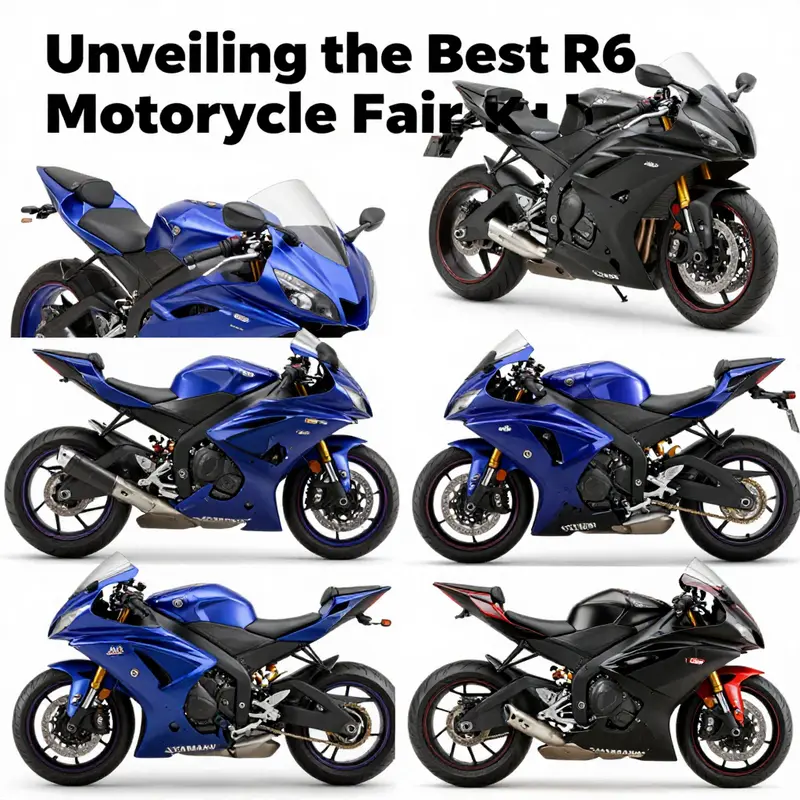 Shaping the 2011 Yamaha YZF-R6: Fairing Kit Options, Fit, and the Art of Customization
When riders talk about the Yamaha YZF-R6, especially the 2011 model year, the fairing is often where the conversation starts and ends. The fairing is more than a shell; it is the bike’s first impression, a statement of attitude, and a practical shield against the elements and the wind blast that comes with blistering midrange speeds and lean angles. For owners seeking to replace, refresh, or personalize their ride, the market presents a surprisingly broad spectrum of fairing kit options. The landscape blends OEM-style replacements with full-on performance-oriented suits and, increasingly, customized finishes that push the bike from a showroom-inspired silhouette to a personal shrine of speed and style. The story of the 2011 R6 fairing kit is thus a story of choice—of materials that can flex rather than crack under heat and impact, of coatings that resist fading in sunlight, and of configurations that balance aesthetic ambition with practical fit and function.
A central pillar of today’s fairing market is the prevalence of universal kits designed to fit a wide range of years, including the 2008 through 2016 YZF-R6 generation. These universal kits are typically molded from high-quality ABS plastic, a material prized for its combination of rigidity and elasticity. ABS holds up under heat more reliably than other plastics and is less prone to cracking when subjected to minor impacts and vibrations. For riders, this means a kit that can absorb the tremors of highway riding and the occasional scrape, preserving the bike’s lines rather than ending in a jagged, costly replacement. Heat shields have become a staple feature in many of these offerings, a thoughtful addition that helps keep the plastic from warping or softening during sustained high-speed runs where the engine bay radiates heat toward the vulnerable underbelly of the fairing. UV-curable finishes have also entered the mainstream, offering a glossy or semi-gloss shield against sun fade and the micro-scratches that accumulate with riding and washing. With such features, a fairing kit becomes more than a cosmetic upgrade; it becomes a practical upgrade that helps maintain aerodynamics, appearance, and value over time.
Within this market, price is a spectrum rather than a ceiling. Listings on popular online marketplaces show a wide range—roughly from $49.95 up to $548.55—often with the incentive of free shipping. The low end frequently represents generic, injection-molded sets that promise compatibility with multiple model years but might deliver less in terms of fit precision or finishing durability. The higher end tends to reflect injection-molded, precisely engineered pieces designed to mimic OEM contours more closely, with better hardware compatibility and sometimes enhanced coatings or finishes. One example on a well-known platform identifies itself as compatible specifically with the 2011 model, signaling a targeted fit that can ease installation and alignment. While the labeling may imply a precise match, buyers are wise to verify fitment and to confirm whether mounting hardware is included or must be sourced separately. In the realm of do-it-yourself repairs and upgrades, such verification can spell the difference between a seamless installation and a misaligned visor of panels that catches air in the wrong places.
Color and finish options expand the narrative further. Beyond the traditional black, many sellers offer variations such as gloss black with a contrasting matte or satin finish, or even more complex paint schemes that reproduce factory hues with a modern twist. The aesthetic payoff for these finishes is substantial. A glossy black surfaces the bike’s lines, catching reflections in the sun and emphasizing the R6’s muscular shoulders, while a matte or gloss-matte combination can lend a stealthy, aggressive vibe that aligns with a rider’s desire for a race-inspired silhouette. The choice of color and texture is not merely cosmetic; it interacts with lighting, reflections, and even perceived aerodynamics. A well-chosen finish can visually shrink or expand the bike’s profile, influencing how it sits in a turn or when parked, and it can also signal to onlookers the rider’s intent—whether to blend into the crowd or stand out in a show of personal identity.
In practice, most riders tile their decisions across two broad paths: a complete bodywork makeover or a more surgical, piece-by-piece replacement. Complete bodywork sets—those that replace front, sides, and rear sections—offer a cohesive re-skin that can dramatically alter the machine’s face. Such sets are often positioned around a figure in the mid-range of pricing, with some packages hovering near four hundred dollars alongside occasional discounts. These kits can provide a near-seamless look, provided the seller’s tolerances and finish align with the rider’s expectations. However, the reality is that these sets may or may not include installation hardware. The absence of mounting brackets, fasteners, and grommets can complicate installation, especially for riders who do not have a dedicated workbench or the right tools for panel alignment. For many, that is a small price to pay for a dramatic transformation that preserves the bike’s silhouette while swapping in new textures and reflections—a fresh face for a familiar riding partner.
Not all riders want an entire rebody. A large portion of the community looks to targeted updates: a few front fairings, a pair of side panels, or a rear fairing piece that can alter the bike’s visual vocabulary without the cost or complexity of a full kit. These partial sets give owners the flexibility to emphasize certain design cues—perhaps focusing on the upper fairing’s air intake lines, or substituting a panel that shows an even line with the tail section’s curvature. The practical advantage is clear: faster installation, lower risk of misalignment, and a more measured financial commitment. For many, partial changes are a gateway to more ambitious future work, allowing riding seasons to overlap with aesthetic experiments and giving the bike a dynamic, evolving appearance as the rider’s preferences grow.
Beyond the stock-inspired or full-tilt aesthetic upgrades, the market also opens space for the kind of customization that plays to performance and identity rather than sheer replication. Enthusiasts are increasingly drawn to personalizing their machines with aftermarket touches that suggest a race-ready lineage. While the fairing kit remains the visible skin, owners often add or upgrade other components—such as windscreens, exhausts, and tail units—creating a cohesive look that is visually athletic while remaining functional. In many cases, these changes are not about gaining competitive advantage on the track but about echoing the sensibilities of a rider who values lightness, streamlined airflow, and the sense of tuning that comes with a careful assembly of parts. The spirit here is not simply to look fast but to feel fast when the bike is in motion. And in the modern market, that feeling is less about brand banners and more about the totality of the build—the way the fairing panels align with the bike’s frame, how the edges catch the light, and how the finish resists micro-abrasions from riding and maintenance.
To navigate these options with confidence, riders should consider fitment as a practical criterion equal to aesthetics. The 2011 R6 sits within a broad compatibility window, with many aftermarket sets designed to accommodate models from 2008 through 2016. This overlap makes the R6 a flexible donor for fairings that must negotiate a curved nose, sloping windscreen, and the engine’s upper contours. Yet there is no substitute for careful verification. Even within a seemingly universal kit, small distinctions in mounting positions or the sizes of grommets can affect how the panels align against the frame. The path to a clean, tight fit usually starts with a careful assessment of the seller’s notes, including whether the kit is injection-molded for precise replication of original contours or a more general, multi-year fit. Some sellers provide fitment diagrams or photos that highlight how each piece interfaces with mounting points, while others rely on customer reviews to attest to the ease of installation. In this context, the buy-in is as much about the after-market supplier’s competence as it is about the fairing’s material, coating, and engineering. Consumers who take the extra step to compare photos, check fitment lists, and confirm what hardware is included often come away with a kit that not only looks right but also behaves correctly under load and heat.
The decision-making process around these components often feeds into a broader conversation about the relationship between form and function. ABS plastic is not a magic material. Its elasticity helps it resist cracking when the bike is dropped or brushed by a guardrail during a low-speed mishap, but repeated UV exposure can eventually degrade surface coatings if the finish is not resin-stable or properly cured. This is where UV-curable finishes enter the story as a practical shield against fading and discoloration. In the long run, the investment in UV protection translates into a fairing that maintains color fidelity after years of sun exposure and after repeated washing with common detergents. The finishing process can thus be as critical as the panel design itself because a faulty finish can undermine the entire effect, even if the panel’s geometry mirrors the original bike to the millimeter.
The nuances of finishing also extend to color, texture, and the perceived depth of the paint. Clear coats that resist micro-scratches and yellowing can preserve the bike’s gleam and edge. The end user may never see the chemistry behind the finish, but they will notice when a panel wears like a shield that remains vibrant and true after countless rides, brief stops, and routine maintenance. In addition to the practical considerations, the aesthetic decisions shape how a rider feels on the road. A fairing that reflects light in a way that accentuates the R6’s lines can conjure a sense of speed even while the bike is stationary. Conversely, a dull or mismatched texture can soften the aggressive silhouette that denotes a sport motorcycle. For a rider who uses the bike to commute, to practice, or to show at weekend gatherings, the fairing kit becomes a canvas for expression—an interface between rider, machine, and road that communicates intent before the engine turns over.
An important practical note for shoppers is the necessity of verifying compatibility with the specific model year. While many universal kits advertise broad compatibility with the 2008–2016 range, fitment for the 2011 R6 may hinge on subtler factors like the geometry of the mounting holes, the clearance around the fuel tank cover, and the alignment with the seat and tail sections. A misalignment can manifest as gaps at the lower edges where air and water may creep in, or as taillight or indicator shadows that look awkward when viewed from certain angles. In some instances, small trimming may be required to accommodate windscreen curvature or cooling ducts, and a planning phase that includes measuring, test-fitting, and, if possible, a mock assembly can save time and frustration later. The best approach is to view a fairing kit as a modular system that can be assembled piece by piece, with attention paid to how each component’s contour interacts with the rest of the bike. The more conscientious a buyer is about fitment, the more likely they are to achieve an integration that looks like factory even if it is the result of after-market assembly.
With these considerations in mind, riders can approach the fairing kit decision with a clear framework. Start by defining the budget and the desired balance between appearance and performance. Decide whether a full body replacement or targeted panel updates will deliver the visual and aerodynamic effect you want. Evaluate the finish quality as a core requirement—not just color, but the durability of the coating and the integrity of the seams. Check whether hardware is included and whether installation requires specialized tools or professional assistance. Finally, consider the broader ecosystem of the build: windscreen geometry, exhaust notes, and tail structure all contribute to the sensation of speed and the machine’s stance at rest. The symbols of speed—the gloss under a sunlit sky, the clean lines along the fairing’s edges, and the smooth transitions between panels—come together in ways that reflect not only a rider’s taste but also a commitment to maintaining a machine that still feels alive after years of use.
For readers seeking a direct route to exploring options, there is a dedicated collection that focuses on the Yamaha YZF-R6 fairings for the 2008–2016 window. This resource provides a curated view of what is available, helps compare styles, and clarifies which pieces might be best suited for a 2011 R6. The collection emphasizes how the shape and contour of the R6 have proven resilient to time, and how aftermarket kits can preserve or reinterpret those lines without compromising fit or safety. It is useful to examine line-for-line how each piece aligns with the bike’s natural geometry and how the join lines contribute to a seamless overall silhouette. While the market moves quickly and new finishes or fittings appear, the fundamental anchors—material performance, finish durability, and precise fit—remain the touchstones for making a thoughtful choice. Yamaha YZF-R6 fairings 2008-2016 collection provides a practical starting point for riders who want to see what a well-curated selection looks like in real life and to compare how different panels interact with the bike’s lines across years.
As riders advance through their decisions, a broader principle emerges: a fairing kit is not merely a cosmetic upgrade. It is a strategic modification that can reinforce the bike’s aerodynamics, protect sensitive components, and sustain resale value if chosen with care. The 2011 R6, with its distinctive blend of compact sports ergonomics and aggressive stance, benefits from a fairing kit that respects its compact cockpit while offering a refreshed exterior. The market’s openness allows riders to weave in preferences for lighter weight with the practicalities of fitment and finish. In this sense, choosing a fairing kit becomes a meditation on balance—how to preserve the machine’s original identity while allowing it to express a new temperament through color, texture, and panel detailing.
To conclude this exploration without stepping beyond the scope of what a rider needs to know, the key is to approach the purchase as a thoughtful assembly process. Confirm compatibility with the bike’s year and color code, verify what hardware is included, and assess the finish’s resilience to sun, heat, and abrasion. Consider whether you want a uniform, factory-like appearance or a bolder, race-inspired presence that reads as a deliberate departure from stock. Think about how the installed kit will interact with other aftermarket parts and what maintenance regime will keep the finish pristine. In the end, a well-chosen fairing kit for the 2011 Yamaha YZF-R6 can transform the ride’s character and endurance, ensuring the bike remains not just a machine to ride but a statement to behold.
External reference: For a concrete example of a fairing kit listing and its components, you can review an eBay listing of a complete injection-molded plastic body kit designed for compatibility with models from 2008 to 2016, including the 2011 R6. The listing presents a practical snapshot of what buyers encounter when exploring affordable options and highlights the kinds of inclusions and considerations that buyers weigh when assessing fitment, finish, and value. https://www.ebay.com/itm/Fairings-Kit-For-YAMAHA-YZF-R6-2008-2016-R6-ABS-Injection-Fairing-Set-Body-Work/335227465192?hash=item4dca5a9f38:g:KkYAAOSwHqNcRvBj
Under the Skin of Speed: Material Quality and Specifications of the 2011 Sportbike Fairing Kit
 Every component that wraps a sportbike in form and function begins with a material choice and a manufacturing philosophy. The 2011 fairing kit, as a representative of high-performance aftermarket bodywork, offers a case study in how material science translates into durability, aesthetics, and ride-ready reliability. When riders shop for a fairing kit designed for the 2011 model year, they are not only choosing colorways and graphics; they are selecting a composite that must endure heat from the radiator and exhaust, endure the vibrations and impacts of road use, and withstand environmental exposure while preserving the rider’s visibility of the machine’s lines. In this context, the material quality and the concrete specifications of the fairing kit become central to the decision, shaping everything from fitment and runtime performance to long-term value and the satisfaction of a rider who insists on both speed and precision in equal measure.
At the heart of the kit is a polymer that has proven itself across countless years of high-performance applications: Acrylonitrile Butadiene Styrene, commonly known as ABS. This thermoplastic polymer is chosen for its blend of strength, impact resistance, and heat tolerance. The ABS used for aftermarket fairings, particularly in a kit aimed at a model-year like 2011, is selected to align with the perceived grade of OEM bodywork materials. That alignment matters, because the goal is not merely to resemble the factory look but to echo the elasticity, resilience, and long-term durability that the original components display under normal riding loads. ABS brings a balanced set of properties that can handle minor flex without cracking, resist scratching and scuffs, and absorb the small but frequent stresses that arise from road irregularities and aggressive riding. In a field where a slight misalignment or a crack can compromise airflow, aerodynamics, and the rider’s sense of the machine, ABS offers a dependable middle ground between rigid, brittle plastics and more flexible, less protective materials.
The manufacturing process further informs the fairing’s integrity. The 2011 fairing kit is produced through 100% injection molding, a method that specializes in repeatability and precision. Injection molding yields uniform wall thickness and accurate geometry, ensuring that mounting points align with predictable tolerances. The result is a panel system that snaps into place with minimal post-production trimming, reducing the likelihood of misfit that can plague kits produced by alternative methods. Consistency across every panel—front fenders, side panels, fuel tank covers, and the rear bodywork—is critical for riders who demand a clean, cafe-lean profile without the nagging worry of loose edges or gaps that can degrade airflow or invite moisture intrusion.
Aesthetic performance accompanies structural performance in this context through a multi-layer paint process. Most kits in this category are finished with three to five layers of paint and clear coat. The process begins with a base coat that adheres well to ABS, followed by one or more pigment layers that deliver the color identity riders expect. A multi-layer system contributes not only to color depth but to overall durability. Each additional layer adds a measure of scratch resistance and UV protection, while the clear coat provides the essential glossy shield that guards against solvent exposure, stone chips, and minor abrasions. The cumulative effect is a finish that can maintain its vibrancy for longer periods, reducing the frequency of repaints or color touch-ups. This is especially important for riders who ride in sun-drenched climates or who frequently park their bikes outdoors; in those scenarios, the combination of UV resistance and clear-coat durability helps preserve the visual integrity as much as the underlying ABS preserves the structural integrity.
The materials and finishes described above do more than deliver a glossy exterior. They influence how the fairing behaves in the real world. ABS has excellent impact resistance for a plastic component that sits on the exterior and can encounter road debris or a tip-over on a gentle slope. Its heat tolerance is a necessary consideration given the proximity of the fairing to the engine and exhaust outlets; a kit designed for an 11-year-old model is expected to withstand repeated heats that accompany riding at highway speeds or spirited sessions on a closed course. The element of elasticity provided by the ABS formulation helps the panels flex slightly rather than shattering when subjected to a sharp impact, a characteristic that affords some forgiveness when the bike encounters curbs, gravel, or a heavy pack of wind-lift events at speed. These mechanical properties—impact resistance, elasticity, and heat tolerance—work in concert with the manufacturing and finishing processes to deliver a product that can perform as intended over time without requiring constant maintenance or immediate replacement.
Of course, the practical life of a fairing kit is defined not just by the raw material and the molding technique but by how well the parts fit together once installed. The injection-molded approach also plays a crucial role in fitment. With precise cavities and standardized gate locations, the panels mount to the frame and substructure with predictable engagement points. The result is a cohesive shell that follows the machine’s lines and maintains a seamless silhouette from tank to tail. Precision fit reduces the risk of gaps, rattles, and misalignment that could compromise aerodynamics and rider comfort. For a 2011 machine year, where subtle changes in ch-axis tolerances could affect the assembly process, such precision is not a luxury but a necessity. The uniformity of wall thickness, a by-product of 100% injection molding, reduces the likelihood of warp or sag as the panels age, maintaining alignment through countless ride cycles and exposure to temperature fluctuations.
The paint system adds another layer of robustness to the material story. The paint layers—three to five—are not just for color. They provide a buffered line of defense against environmental exposure and the everyday hazards that accompany riding. The mid-sequence layers contribute depth and gloss, while the outer clear layer seals the surface against solvent exposure and micro-scratches. Patience in curing, controlled atmospheric conditions during paint application, and the use of UV-curable or UV-resistant topcoats all contribute to a finish that resists fading and yellowing, at least within typical riding life spans. This is particularly relevant for riders who expose their machines to long hours under direct sun, rain, or high-speed spray, because the finish needs to hold its aesthetics even as the underlying base color remains intact and the plastic remains resilient under mechanical stress.
Beyond the factory-like fit and finish lies a broader ecosystem of features that a modern fairing kit may bring to bear. Some kits incorporate heat shields or related defensive measures designed to limit the transfer of engine heat to the outer panels. While the core ABS and the paint layers handle mechanical loads and UV exposure, heat shields provide a secondary dimension of protection by moderating thermal effects that can soften the surface or accelerate wear in the most exposed areas. When these features exist, they contribute to the long-term stability of both the panel itself and the paint finish, preserving geometry and gloss during hot operation and in the face of repeated thermal cycling. In practical terms, such features can translate to fewer micro-cracks and less paint delamination over the bike’s service life. The combination of a robust ABS substrate, precise injection-molded geometry, a durable paint system, and optional thermal protection represents a holistic approach to durability that a rider can feel in the bike’s overall feel and in the longevity of the external bodywork.
From a consumer perspective, the price spectrum for fairing kits in this category often reflects the breadth of engineering and finishing choices described. Lower-cost options may rely on thinner wall sections, fewer paint layers, and less rigorous QA processes, resulting in a kit that still fulfills basic coverage and appearance but may exhibit quicker wear under harsh use. Mid-range offerings typically provide the most reliable balance between rigidity and resilience, with a robust paint system and reliable fitment. Higher-end variants, which dig deeper into premium finishes or specialized features, may incorporate enhanced UV protection, additional layers of clear coat, or hardware improvements that improve installation ease and long-term reliability. Each tier has implications for how riders allocate budget and how the extra investment translates into perceived value in daily riding and longer touring sessions. The central thread across these options remains the material and process choices already discussed: ABS substrate, 100% injection molding, and a layered paint regimen that together define the kit’s expected performance.
An important practical dimension comes from the realities of aftermarket purchasing. For a kit designed for a model year spanning 2008 through 2016, compatibility with the individual bike’s geometry is critical. The kit is intended to align with the common mounting points and subframe geometry associated with that generation, but small variances can exist between production runs or regional variants. This is why buyers are repeatedly urged to verify product fitment with sellers before purchase and to confirm that the specific panels and hardware in the kit will align with their particular machine. A misfit—such as panels that sit too tight against the tank or an edge that clashes with a mounting bracket—can negate the aesthetic and aerodynamic benefits and even necessitate remanufacture or modification. The reliability of the injection-molded process helps mitigate this risk by delivering consistent contours and interfaces, but it does not replace due diligence on the part of the buyer.
With that in mind, the fairing kit’s material choices also influence maintenance practices. Cleaning ABS panels requires care to avoid scratching or dulling the finish. The paint, particularly if it includes UV-curable layers, benefits from regular cleaning with non-abrasive products that do not strip away protective coatings. Over time, even the most durable finishes may show micro-scratches or fading if exposed to abrasive compounds or not kept clean. A simple maintenance routine—gentle washing, light drying, and periodic wax or protective sealant application—helps preserve the glossy surface and the structural integrity of the panels by reducing the cumulative impact of dust and debris. More than a cosmetic concern, the clean exterior supports a smoother aerodynamic profile by maintaining uniform surface texture and minimizing drag inconsistencies caused by micro-scratches or paint defects.
For readers considering the broader ecosystem of aftermarket bodywork, it is worth noting how this particular material and process narrative compares with other generations and other brands. The emphasis on a robust ABS substrate, exacting injection-molding standards, and a layered paint system mirrors the expectations that riders have for a kit intended to replace or upgrade factory panels while preserving the bike’s lines and performance. It underscores that achieving a balanced combination of weight, rigidity, and color resilience is not an incidental outcome but the result of deliberate material choices, controlled manufacturing, and disciplined finishing practices. It also highlights why riders often see value in staying within a compatible ecosystem of fairings that have been engineered with common mounting geometry and color-matching considerations in mind. This reduces the risk of misfit and ensures that aesthetic and functional aspects align with the rider’s expectations for a premium, ride-ready appearance.
To place this discussion in the context of a rider’s broader experience, consider how the fairing kit’s material quality translates into real-world outcomes. The bike’s performance gains accrue not just from the engine or exhaust but from a bodywork system that behaves predictably at speed. A precisely molded panel with consistent wall thickness ensures that the fairing contributes minimal adverse airflow disruption, while a durable finish maintains directional stability in high-speed wind. The reliability of a uniform fit reduces the likelihood of rattles and vibrations that can affect rider perception and even accelerate wear on fasteners and mounting points. In this light, the 2011 fairing kit is more than a cosmetic investment; it is a structural and aerodynamic component capable of supporting the bike’s dynamic identity on the road or track.
For readers who wish to explore related opportunities within the same ecosystem of aftermarket bodywork, a broader view of the available Yamaha collections can be informative. See the Yamaha fairings collection for additional context and potential cross-compatibility across generations: Yamaha fairings collection.
External resources can provide further technical depth and third-party validation of these material properties. For a detailed, professional overview of fairing kits of this era, consult external references such as the following resource: https://www.motorcyclefairings.com/yamaha-r6-2011-fairing-kit.html. This external source offers a complementary perspective on how industry-standard practices translate to aftermarket products while reinforcing the core idea that material quality and manufacturing precision are the foundation of a reliable bodywork system for the 2011 model year.
Riding the Edge: Customizing the 2011 Yamaha YZF-R6 Fairing Kit for Performance and Style
 The 2011 Yamaha YZF-R6 sits at a sweet spot in sport-bike history where aggressive design meets reliable, race-inspired performance. When riders begin to think about the fairings that cloak this machine, they are really contemplating a balance of protection, aerodynamics, and personality. The fairing kit serves as the first line of contact with the ride’s air and weather. It shapes how the bike slices through wind, how the radiator and cooling ducts breathe, and how a rider’s silh