















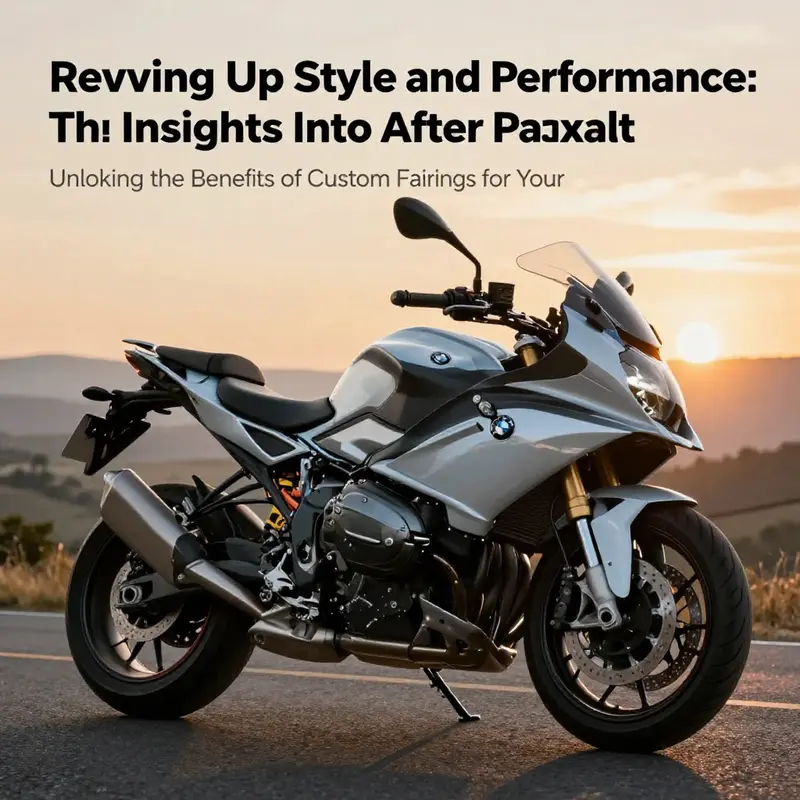
Aftermarket fairings for BMW motorcycles represent a growing trend among enthusiasts and business owners alike, enhancing both aesthetic appeal and performance. In a market increasingly driven by personalization, understanding the dynamics of aftermarket fairings is vital for businesses aiming to cater to passionate riders. This article examines the multifaceted attributes of aftermarket fairings, highlighting their role in customization, economic influence, technological advancements in manufacturing, and the vibrant culture surrounding motorcycle modifications. Each chapter will delve deeper into these aspects, providing a comprehensive overview necessary for navigating this niche market effectively.
Shaping Speed and Style: The Aesthetic and Aerodynamic Craft of BMW Motorcycle Aftermarket Fairings
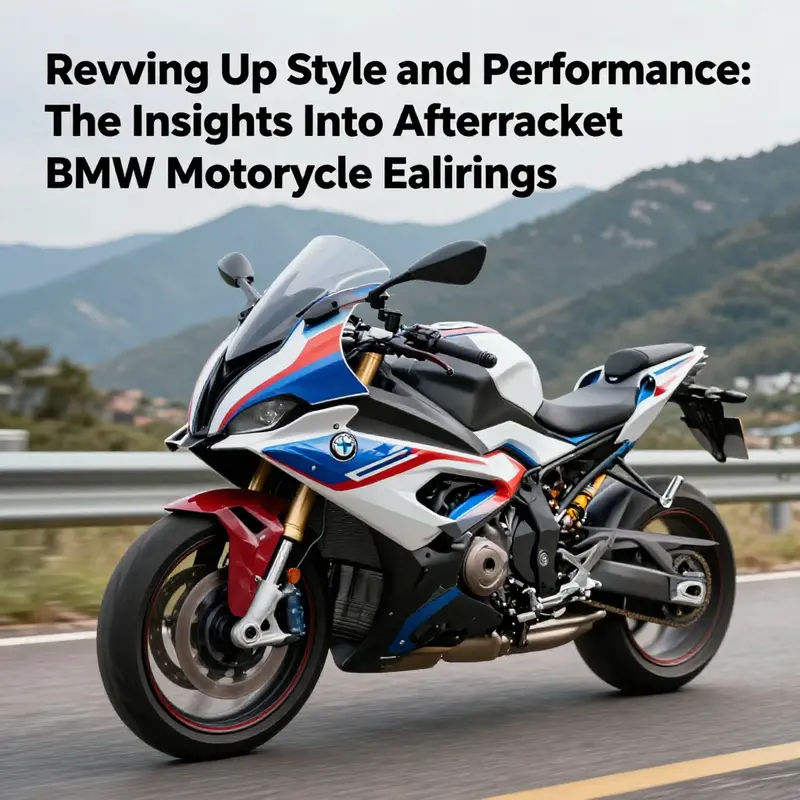 The realm of aftermarket fairings for BMW motorcycles sits at a unique intersection of artful design and engineering discipline. Riders come to these components not merely to repaint a silhouette, but to sculpt a form that speaks to personal taste while folding in measurable gains in aerodynamics, wind management, and rider protection. The narrative of these fairings is a blend of color theory, material science, and careful conformity to the realities of riding geometry. In practice, the impact of a well-chosen body kit can be felt from the moment the bike rolls into a lean, where the rider’s shielded profile meets a carefully shaped wind stream, and from the long open stretch where the fairing’s more subtle attributes—airflow channels, radiator protection, and under-panel coverage—play out in the bike’s thermal and acoustic reality.
The aesthetic draw of aftermarket fairings is immediate. They offer a browser-ready spectrum of finishes, from solid color blocks to carbon fiber textures that echo race machines. This visual language matters because the bike’s identity, perceived speed, and stance are significantly shaped by the fairing’s lines and surface treatment. Yet the allure goes deeper than looks. Modern designs are conceived with attention to how air reattaches around the rider and engine bay, how the wind hugs the helmet, and how turbulence is managed at different speeds. For a BMW, whose identity spans sport bike precision, adventure-ready ergonomics, and refined touring comfort, this means balancing a sculptural form with the practical realities of real-world wind and weather exposure. Materials play a central role in that balancing act, and here the repertoire has grown far beyond the original plastics of factory pieces.
ABS plastic remains the workhorse material for many aftermarket kits. It provides a robust baseline of impact resistance, a forgiving surface for paint and clear coats, and a predictable molding process that helps manufacturers deliver parts with repeatable fitment. Fiberglass remains a common choice for value-oriented kits, offering workable durability and a lighter touch when it comes to shaping complex contours. On the higher end, carbon fiber finishes have earned the most coveted status among enthusiasts who chase both minimal weight and a premium aesthetic. Carbon fiber’s woven patterns convey a sense of performance even before the bike moves, and when paired with UV-resistant coatings, the material can maintain a glossy or matte look over years of exposure. The choice among these materials is not merely about price; it’s a statement about how much emphasis a rider places on weight savings, impact resistance, and long-term color stability.
The practical value of aftermarket fairings extends into the realm of fit and finish. Quality kits aim for precise OEM-like alignment, preserving mounting points and screw patterns that ensure reliable attachment without gapping or torque-induced stress. The best solutions respect the bike’s geometry and maintain safe clearance around brakes, forks, and exhaust routes. This is especially important for BMW models that span sport-bred machines, adventure-touring platforms, and grand-touring configurations. Even when a kit is marketed as “universal” or “semi-custom,” reputable manufacturers will deliver detailed fitment notes, mounting instructions, and sometimes support with a light template or bracket system to ease installation. In other words, the transformation is not simply cosmetic; it is a durable, ride-ready modification when executed with care.
Another layer to consider is aerodynamics as a functional science rather than a marketing hook. Fairings influence how air moves around the rider and engine, shaping pressure zones that affect stability, steering feel, and wind noise. A well-designed kit can reduce high-frequency buffeting at open-road speeds, lower wind fatigue over long distances, and provide improved cooling by guiding air through strategically placed intakes and vents. These gains are rarely dramatic in isolation, but they accumulate as riders extend their time in the saddle and push toward higher performance envelopes. The engineering rationale is reinforced by the materials and manufacturing processes behind the kit. Injection-molded ABS and glass-reinforced composites, for example, can yield tight tolerances and consistent surface quality, which support predictable aerodynamics and a clean paint finish that holds up under UV exposure and temperature cycling.
The procurement landscape for aftermarket fairings has become a global tapestry. Asia remains a dominant center of production, driven by advanced molding capabilities, skilled workmanship, and efficient logistics. Guangdong and Zhejiang, in particular, serve as critical nodes in the supply chain, where scale-friendly methods and standardized processes enable the rapid iteration of new designs. This ecosystem supports developers who can offer OEM-compatible or near-OEM-compatible fit at price points that broaden access for retailers and individual riders alike. The practical implications for buyers are significant: shorter lead times, more predictable quality, and the possibility of modular choices that align with a rider’s budget, color goals, and desired weight savings. For a dealer or a custom shop, this environment also means a wider spectrum of material options, coating technologies, and paint-process capabilities, from UV-curable clear coats to multi-stage finishes that resist micro-scratches in daily riding.
Alongside the material and mechanical considerations, there is a cultural and community-driven dimension to the aftermarket fairing story. Enthusiasts draw inspiration from a wide range of sources, from show-floor standouts to online threads where creators share their techniques for handling prep work, paint, and decal application. Pinterest and similar platforms host conversations that document the evolution of styling trends—from clean, minimalist silhouettes to aggressive, race-inspired profiles. This culture of customization is not just about chasing a bold look; it also reflects a desire to preserve a personal connection to the bike. Riders share notes on keeping a fairing’s edges rounded to minimize chafing during entry and exit from parking stalls, on preserving a pristine paint job after a winter in a damp garage, and on how to blend a bold color scheme with the BMW’s existing chrome and titanium accents in a way that feels cohesive rather than contrived.
In this ecosystem, buyers care deeply about value, performance, and reliability. The economics of aftermarket fairings often reflect a tiered market: entry-level kits deliver bold looks and basic protection, mid-range options balance durability with lighter weight, and premium sets emphasize carbon fiber aesthetics, sculpted vents, and meticulous surface finishes. For a rider contemplating a transformation, the decision often comes down to a bundle of interrelated questions: Will the fairing improve wind management enough to justify the cost and labor? Is the colorway compatible with existing body panels, or will it require a full repaint? How will mounting hardware hold up to road debris or occasional off-road use? Will the kit survive a high-speed rain run without wing panels separating from their mounts? The answers hinge not only on the materials and fitment notes but also on the install environment, the owner’s mechanical aptitude, and a willingness to engage in a thoughtful maintenance routine that keeps all fasteners secure and paint protected.
For readers who want a practical sense of breadth without wading through dozens of product listings, the broader marketplace showcases an astonishing range of choices. A quick survey of verified listings reveals a spectrum of configurations, from complete fairing sets that replace nearly every external panel to partial kits that offer a performance-oriented edge while preserving much of the stock appearance. The value story emerges when considering not just sticker price but the cumulative cost of shipping, paint, and potential modifications required for a perfect fit on a given model. In the end, the decision often centers on the rider’s priorities: a desire for a bold visual identity, a targeted aerodynamic improvement, or a blend of the two that remains faithful to BMW’s design language while ushering in a personal touch.
Within this ongoing dialogue, it helps to have a frame of reference that links the broader world of motorcycle customization to BMW-specific practice. A useful point of reference for seeing how aftermarket lines are organized and presented is the Honda fairings collection, which illustrates how suppliers categorize styles, materials, and compatibility notes in a way that many BMW-focused retailers emulate. Explore the collection here: Honda fairings collection. The general principles—clear fitment notes, material choices, and finish options—translate across brands, even as each manufacturer tailors its approach to a different riding ethos. This cross-pollination helps explain why a BMW rider might gravitate toward a particular aesthetic or construction strategy when selecting a kit that aligns with their riding goals.
For readers seeking a window into the global sourcing landscape, the broader research points toward a well-established export ecosystem that supports both B2B and direct-to-consumer channels. Buyers who want to understand lead times, quality controls, and after-sales assistance can benefit from supplier profiles and customer feedback that accompany product listings. The market thus rewards clarity, reliability, and a demonstrated commitment to consistent, reproducible results—from molding tolerances to paint adhesion. In a community that values both form and function, the aftermarket fairing becomes more than a cosmetic upgrade. It evolves into a platform for self-expression, a statement of riding philosophy, and a practical tool that can enhance the riding experience when chosen with care and installed with attention to detail.
External resource for further reading on global sourcing dynamics and the materials used in aftermarket fairings can be found here: https://www.alibaba.com/showroom/best-bmw-motorcycle-fairings.html. This listing provides a lens into the breadth of options, the range of finishes, and the kinds of supplier capabilities that feed the aftermarket ecosystem. As the market continues to mature, buyers who approach fairing upgrades with a blend of curiosity, technical literacy, and a clear view of how fit and finish translate into on-bike performance will find themselves navigating choices with greater confidence—and perhaps redefining what speed and style mean on their BMW machines.
Riding the Market: The Economic Impact of Aftermarket BMW Motorcycle Fairings
 The economics of aftermarket fairings for BMW motorcycles unfold like a map of choices, where price signals, engineering tradeoffs, and rider ambitions converge. They are not merely skin; they are components that touch performance, cost of ownership, and the health of a broader ecosystem that depends on skilled labor, material science, and cross-border trade. In this light, the fairing market reads as a practical case study in how customization scales from individual thrill to macroeconomic momentum.
On the consumer side, the most immediate benefit is cost. Aftermarket fairings often come with a lower price tag than original equipment parts, especially when considering bundles or kits that replace multiple panels at once. The price delta is a meaningful lever for riders who want to refresh a bike’s look or recover from regular wear without triggering large expenses. Yet the affordability is not the sole appeal. The wider tolerance for customization changes the very experience of ownership. Riders can express personality through color palettes, finishes, and texture—carbon fiber aesthetics, matte contrasts, or bold graphics—without paying a premium for bespoke, one-off fabrication. The result is a sense of agency: a machine that reflects the rider’s identity rather than a single factory blueprint.
Beyond appearance, the aerodynamic argument remains central. Aftermarket fairings are designed not just to cover but to improve the way air flows around the bike. In practical terms, this can reduce drag and potentially enhance efficiency at higher speeds. While gains will vary with design and fit, a well-integrated fairing package can translate into measurable benefits on the open highway. Riders who frequently log long miles may notice lower wind buffeting, reduced fatigue, and steadier handling when integrated with a well-made windscreen and a streamlined silhouette. The consequence, over time, is a mild but meaningful reduction in fuel consumption. It is not about a dramatic miracle in every ride but about cumulative efficiency that adds up across hundreds of miles.
Durability is a central selling point for many owners who treat fairings as investments. In the aftermarket space, panels manufactured with modern polymers or reinforced composites can survive road hazards better than some stock plastics. UV resistance, impact resistance, and color fastness matter because a fairing kit that yellows or splits after a season undermines the value of the entire upgrade. In the long run, maintenance costs tend to decrease because a properly designed kit reduces the need for frequent touch-ups or panel replacements after minor knocks. Riders often appreciate that their bike remains more weather-resistant and easy to repair, especially when a kit is designed for compatibility with fasteners and mounting points that keep the machine within factory tolerances.
From an industrial perspective, the aftermarket fairing sector contributes to job creation and the cross-pollination of technology. As demand grows for higher quality, more precise fits, and better finishes, manufacturers invest in advanced tooling, automated processes, and quality control that ripple through the supply chain. Injection-molded plastics, for example, benefit from tighter tolerances, improved material blends, and reproducible finishes that help standardize fit across model years and across various regional variants. Coatings, pigments, and clear coats that endure the elements push the conversation beyond aesthetics into durability and lifecycle cost. This in turn supports skilled labor—from mold designers to paint technicians, from assembly line workers to quality inspectors—creating steady employment opportunities in regions with strong engineering ecosystems.
Another facet is the role of small and medium-sized enterprises. SMEs in the aftermarket sector often act as nimble innovators, delivering tailored solutions quickly and responding to rider feedback with a pace rarely seen in larger, slower-moving OEM programs. This dynamism fosters competition, which tends to keep prices fair and pushes the entire market forward. The resulting price competition benefits consumers by widening access without sacrificing quality. The exchange is not simply price versus performance; it is a broader dialogue about how materials, processes, and design choices align with rider needs.
Global trade adds another layer of complexity and opportunity. The aftermarket fairing market is highly international. Components are sourced and assembled across borders, with design and engineering hubs in one region feeding manufacturing ecosystems elsewhere. This international dimension strengthens economies by generating export revenues, building supplier networks, and distributing risk. It also drives standardization around fitment interfaces. A panel that hails from a particular process can be adapted to different mounting points with relative ease, enabling retailers to stock a more diverse catalog without custom work for each model year. The net effect is a more resilient and dynamic market that can respond to shifting demand curves and supply chain disruptions with greater agility.
For BMW motorcycle owners, the practical impact sits at the confluence of form, function, and financial prudence. A rider who chooses aftermarket fairings can tune the bike’s air profile to personal preferences and riding style, sometimes aligning with specific performance goals such as longevity of engine temperatures, stability in crosswinds, or reduced drag on long rides. The result is a machine that remains faithful to brand identity while embracing individualized performance. In parallel, the ability to refresh or upgrade beauty without incurring a new OEM price tag can extend the usable life of a motorcycle. A well-maintained, better-looking bike often commands a stronger resale proposition because the owner has demonstrated care, investment, and an eye for detail. All else equal, the combination of improved aesthetics and enhanced performance tends to attract a more engaged secondhand market.
Scooping back and looking at the broader picture, consumer satisfaction in this space grows when buyers see a clear pathway from value to experience. The chain from purchase to daily use becomes shorter when aftermarket options are well supported by design guidelines that emphasize fit, durability, and ease of installation. As long as a kit aligns with OEM mounting points and does not require extensive modification, the perceived risk drops and the perceived reward rises. The market then rewards clear information flows: accurate product specifications, robust support networks, and transparent warranties. If riders sense that a supplier stands behind the product, they are more likely to invest in a full kit rather than a single panel, which amplifies both customer satisfaction and brand confidence in the aftermarket ecosystem.
From a storytelling angle, this ecosystem thrives on the shared language of motorcycle culture—community, feedback, and revision. Enthusiasts exchange notes on fitment quirks, color compatibility, and performance impressions in online forums, social feeds, and dedicated catalogs. That cultural dimension matters because it reduces uncertainty for new buyers and accelerates adoption. Platforms that curate community feedback often translate rider insights into design adjustments, creating a virtuous loop: better designs, longer bike life, and broader consumer appeal. In this sense, the economic impact is not just about money changing hands; it is about knowledge flows that lower barriers to entry and raise the expectations for quality across the whole market.
For readers seeking a concrete example of breadth, it is instructive to see how aftermarket options extend beyond a single model year or even a single brand family. While BMW owners may seek precision-fit panels, the catalog of aftermarket options across brands demonstrates the scale of customization available to riders. This cross-brand flexibility accelerates learning curves for new buyers who may start with a cost-conscious package and gradually migrate toward higher-end finishes as confidence and riding budgets permit. The result is a marketplace that naturally encourages ongoing investment in materials innovation, surface engineering, and finishing techniques. Riders thus participate in a cycle where evolving tastes push suppliers to balance cost, performance, and aesthetics without compromising reliability.
As a practical reminder, readers who want to explore the breadth of aftermarket catalog options across brands can browse collections that showcase the range of fairings available to riders. For example, a dedicated Yamaha fairings collection offers a window into the scale and variety of options riders expect when they commit to a visual and aerodynamic upgrade. This link reflects how retailers segment their offerings to meet distinct budgets and preferences while maintaining compatibility with common mounting standards. While BMW-specific options remain the core focus, the existence of such catalogs signals the health of the wider aftermarket ecosystem and the willingness of suppliers to serve a diverse rider base. Yamaha fairings.
With this broader lens, the chapter closes on a reminder that the economics of aftermarket fairings touch almost every facet of the motorcycle landscape. The advantage to riders is clear: cost efficiency, customization, improved performance, and extended durability. The advantage to manufacturers and suppliers is resilience, growth opportunities, and a steady pipeline of skilled labor. The advantage to communities is shared knowledge, better customer satisfaction, and stronger, more diverse supply chains. Taken together, these forces make aftermarket BMW fairings a case study in how design, economics, and culture converge on two wheels. The implications extend beyond a single upgrade; they hint at how the motorcycle economy evolves when riders demand more from their machines and markets respond with better processes and smarter options.
External reading: How aftermarket fairings improve fuel efficiency and reduce drag.
From Mold to Measured Air: Manufacturing Technology Behind Aftermarket BMW Motorcycle Fairings
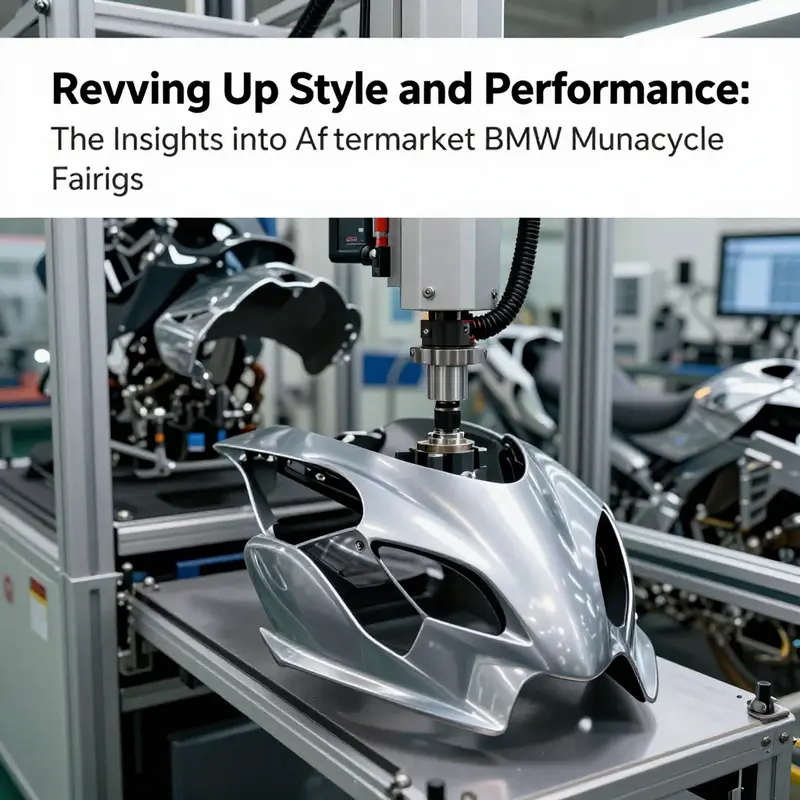 The journey from a rider’s vision of a sharper, more protected silhouette to a tangible, replaceable shell is a quiet lesson in how manufacturing technology quietly underpins motorcycle culture. In the aftermarket world, fairings do more than flatter a bike’s profile; they braid aesthetics with aerodynamics, weight considerations with durability, and mass production realities with the loyalty of individual riders. A well-made fairing must resist the brutal choreography of wind, rain, heat, and road debris while remaining compatible with a bike’s mounting geometry and service needs. That compatibility is the hinge on which the entire aftermarket concept turns from decorative potential into a practical, repeatable product. If a fairing cannot align with the bike’s frame, fuel tank, and bodywork, all the visual drama in the world won’t translate into real-world performance or reliability. The manufacturing story, then, unfolds as a quiet testament to precision and materials science that often goes unremarked by riders who simply want their bike to look and feel right on the road.
Material selection sits at the core of this balance. In the aftermarket sphere, the most common shells are molded from thermoplastics such as ABS, or formed from composite laminates that blend fiberglass with resin. Both pathways have distinct advantages. ABS is renowned for its impact resistance and processability, which translates into high-volume production with consistent tolerances. This makes it an appealing backbone for injection-molded fairings that must replicate mounting points, contours, and seam lines across thousands of units. On the premium side, carbon fiber reinforced polymer (CFRP) laminates offer exceptional stiffness-to-weight ratios and a coveted aesthetic when finished with resin-rich surfaces or visible weaves. Fiberglass, with its own cost-to-performance ladder, remains a versatile option for mid-range kits that aim for light weight and reasonable durability. Each material class demands a different manufacturing discipline, and the choice is often a negotiation between expected usage, target price, and the required fidelity of fitment.
The production methods behind these materials reveal a spectrum of capabilities. Injection molding remains the backbone for many mass-produced ABS fairings, delivering reproducible geometry and fast cycle times. For those corridors of the market where customization is valued, hand lay-up or spray-up processes that build CFRP or fiberglass laminates can yield bespoke aesthetics and tuned stiffness profiles. Subtle differences in resin systems, weave orientations, and curing regimes become the levers that engineers press to manage impact resistance, energy absorption, and surface finish. In both cases, the downstream finishing steps—priming, painting, and topcoating—are not mere decoration. They are essential to UV resistance, color stability across years of sun exposure, and the overall gloss that communicates quality. A durable finish protects the shell from micro-abrasions and weathering while providing a surface that holds decals and graphic work without cracking or peeling.
Crucially, the aftermarket fairing is designed to fit with the same precision as OEM components. That means the design phase explicitly accounts for mounting hardware locations, radiator intakes, and air channels in ways that do not compromise other systems. Tolerancing becomes a discipline: where a millimeter of misalignment can alter airflow, cause rattles, or stress mounting points, engineers tighten the process. The result is a product that can bolt onto a wide array of bikes within a model family—yet still feel like a natural extension of the original silhouette. In practice, achieving this balance relies on a mix of digital tooling and physical testing. CAD models feed into digital simulations that anticipate airflow and vibration modes, while physical prototypes verify that the shells align with existing fasteners, brackets, and seals. The integration of digital and physical validation makes the difference between a fairing that looks right in a studio and one that behaves right on the road.
From a workflow perspective, the manufacturing of aftermarket fairings straddles high-volume efficiency and boutique customization. In regions with mature plastics and composite industries, manufacturers leverage automated painting lines and UV-curing booths to guarantee colorfast finishes that resist chalking and fade. The coating systems themselves are chosen to resist engine heat and sun exposure while preserving the clarity of any clear coats and protecting decals from oxidation. When finishes feature carbon fiber aesthetics, the underlying technique might range from actual CFRP overlays bonded to a base shell to computer-printed textures designed to mimic weave. Either path demands careful attention to edge integrity, seam matching, and surface uniformity so that the final product reads as a single, coherent shell rather than a patchwork of disparate layers. The execution of these finishes—along with the inherent stiffness of the finished shell—often informs the perceived quality and, ultimately, a rider’s confidence in the kit.
Beyond the laboratory and the workshop, the global supply chain breathes life into the aftermarket fairing ecosystem. A substantial share of production for many of these kits takes place in manufacturing hubs where polymer processing, painting, and assembly have matured into scalable operations. These hubs bring together injection molding capabilities, automated painting, and precision assembly with logistics solutions that can deliver DDP (Delivered Duty Paid) shipping to retailers and workshops around the world. The geographic concentration of suppliers in regions like major industrial districts offers both cost efficiencies and the advantage of rapid prototyping and iterative testing. It also means that the performance and appearance of a given kit can be influenced by the speed and reliability of suppliers, the quality control standards of the plants, and the consistency of color-matching across large runs. Consumers benefit when these networks translate into stable pricing, timely availability, and predictable quality, even as a bike’s rider-specific preferences push for more bespoke appearances.
A thread that threads through the fabric of aftermarket fairings is the cultural appetite for customization. Riders have long treated bodywork as a canvas for personal expression, a tradition that keeps pace with engineering advances. Online galleries and forums serve as living archives where enthusiasts discuss fitment quirks, paint schemes, and the longevity of different finishes. Historical references to older BMW twins surface as a reminder of the long-running culture of customization, where the look and feel of a bike can evolve with the same care and attention once reserved for a factory prototype. The evolution over decades—from simple cosmetic tweaks to highly engineered, aerodynamically informed shells—reflects how manufacturing technology has expanded the possibilities for what a fairing can do and how it can be made to endure.
For readers seeking a window into how cataloging and compatibility are managed across brands, the broader market context is instructive. A widely circulated cataloging approach groups fairings by model families and mounting configurations, which helps workshops and retailers pair the right shell with the right bike. This not only simplifies installation but also reduces the risk of misfitment that could compromise performance or safety. Within that landscape, it is useful to browse example collections that illustrate how other brands organize their aftermarket lines. See the Honda fairings collection for a sense of the cataloging approach and the way fitment references are standardized across a broad range of bikes. The broader point is that, even when the bike in question is not the subject of a particular kit, the same design and manufacturing principles—precision fit, durable finishes, and consistent color matching—apply across the spectrum of products.
In considering the manufacturing technology behind aftermarket BMW motorcycle fairings, it is important to bracket away some of the hype and focus on the practical engineering that makes these components reliable. The most visible differences—the glossy finish, the tight alignments, the perceived stiffness—are the results of deliberate material choices, careful process control, and rigorous testing. The interplay of cost, performance, and aesthetics shapes every decision: whether to favor a high-volume ABS solution that can be produced quickly and affordably, or a high-end CFRP approach that delivers lightness and strength at a premium. Each choice influences the end user’s experience, from the feel of the bike at speed to the ease of installation in a shop environment.
As the aftermarket ecosystem continues to mature, the next chapters will likely explore how emerging manufacturing techniques—such as multi-material molding, advanced surface coatings, and digital twin validation—will further redefine what is possible for BMW motorcycle fairings. The underlying narrative remains consistent: the fairing is more than a visual wrapper. It is a careful