
















Exploring the world of motorcycle customizations, particularly for the Honda CMX 500, reveals a pivotal component in enhancing both performance and style: the motorcycle fairing. The quest for the right fit leads us to ABC Auto Part, a name synonymous with quality, although direct product information remains elusive. However, by delving into fairings crafted for the CMX 500 from various reputable sources, we uncover significant aspects critical for business owners in the motorcycle parts sector. From material composition to installation techniques and the visual allure that fairings provide, each chapter serves to equip you with comprehensive knowledge, ensuring that your inventory meets the expectations of discerning customers seeking the best for their rides.
Between Style and Shield: Navigating CMX 500 Fairings in the Aftermarket Landscape
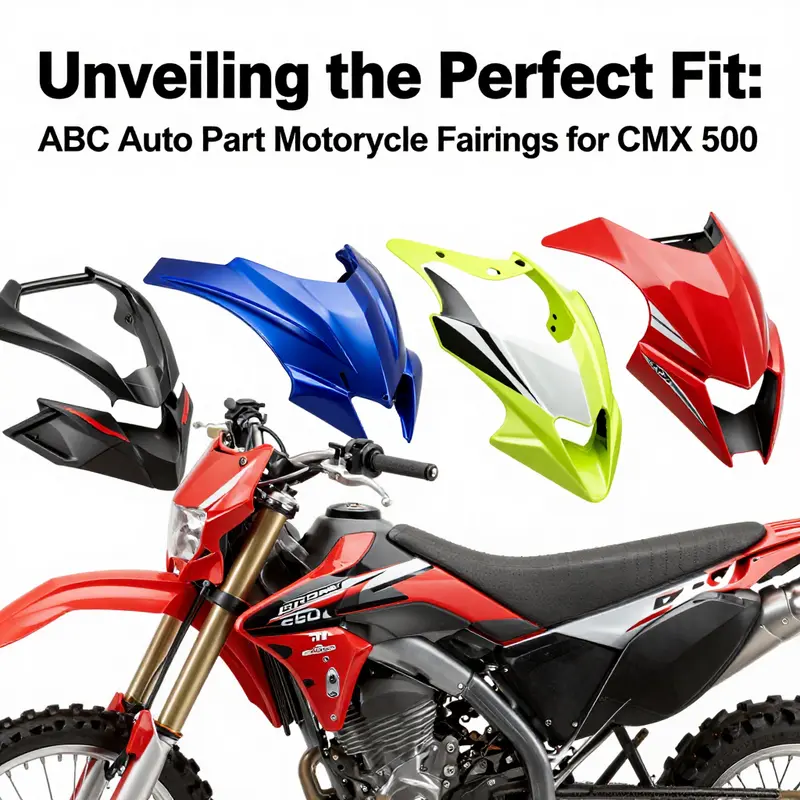 Riding a CMX 500 invites a careful balance between naked character and protective shield. The aftermarket world around this motorcycle is a tapestry of shapes, finishes, and mounting theories, every option promising a slightly different relationship between rider, wind, and road. The knowledge base you provided confirms something important: there isn’t a direct listing for a brand named ABC Auto Part in relation to CMX 500 fairings. Yet it also sketches a clear pattern that matters for any rider who wants to customize the bike. The dominant reality is that most aftermarkets for this model are built from ABS plastic, designed to fit 2017 through 2024 variants, and offered as various configurations that range from subtle engine covers to more ambitious, full or partial body kits. This is not merely a quest for cosmetics; it is a practical exploration of how a small change in the bike’s exterior can alter its weight perception, its aerodynamics, and, ultimately, the rider’s confidence on the road. In that sense, choosing a fairing is almost a negotiation with wind and space, an acknowledgment that your bike will spend more time with open air around it than tucked away in a showroom display. The decision process is influenced by how much of the machine you want to conceal, how you ride, and the degree to which you’re willing to invest in hardware that can promise years of service without demanding constant refinishing.
The types of aftermarket fairings commonly encountered for the CMX 500 reflect a straightforward philosophy: you can add or subtract coverage, you can emphasize the motorcycle’s lines, and you can tune the balance between protection and weight. A belly pan, often marketed as an under fairing or engine guard, is a popular choice for riders who want a sleeker, more integrated look without enclosing the entire engine area. A belly pan does more than look good; it protects vulnerable components from road spray, debris, and, in some cases, minor impacts. The structure is typically engineered to resist flex under normal riding conditions, with mounting points designed to align with existing brackets on the frame and engine cases. The materials are usually ABS plastic because it offers a forgiving mix of stiffness and impact resistance, a lightweight footprint, and ease of molding into curved shapes that echo the bike’s contours. Even when the belly pan arrives with steel mounting hardware included, the overall weight impact remains modest, preserving the CMX 500’s agile feel while delivering a cleaner lower silhouette. The visual effect is not merely Hollywood gloss; it is about creating a cohesive picture where the front and rear sections visually speak to one another, making the bike appear as if it were designed that way from the factory.
Front headlight fairing covers form another axis of customization. These pieces reframe the bike’s face, lending a contemporary or aggressively streamlined appearance while also contributing a modest aerodynamic benefit. The hooded look comes with practical considerations: ABS plastic stands up well to everyday riding, and finishes often include a glossy black or high-contrast tone that complements chrome, aluminum, or matte surfaces on the exhaust and engine covers. Installation typically involves aligning mounting holes with stock brackets and, in some cases, reusing existing fasteners. The process can be straightforward enough for a weekend project, yet it rewards careful alignment. The aesthetic payoff is immediate: a front fairing that harmonizes with the bike’s headstock and fender profile can instantly alter its perceived speed and stance. For riders who want a more integrated appearance without the mass of a full fairing, a front fairing cover provides a balanced solution that preserves the CMX 500’s iconic stance while signaling intentional modification.
Windshield fairing kits present another dimension of customization—wind protection and rider comfort—without burying the bike under a full half-shell. These kits typically include a front windscreen, deflectors, and sometimes visor protectors, designed to direct airflow over and around the rider. The compatibility notes emphasize models from 2017 to 2024 and the Rebel 300 and Rebel 500 variants, reflecting the fact that the underlying frame dimensions and mounting points across these machines share enough similarity for aftermarket parts to be interoperable. A properly chosen windscreen can markedly reduce fatigue on long rides, especially at highway speeds, while maintaining a balance between protection and visibility. The finishes range from clear to tinted, and some riders prefer a darker shade that visually anchors the headlight assembly to the bike’s broader silhouette. The more understated approach tends to prioritize function and maintain the bike’s original character, while the more expressive option invites the eye to travel along the lines created by the fairing’s profiles. Either path can be effective, but it’s essential to confirm the specific year and trim of your CMX 500 before committing to a particular windshield kit, to avoid misalignment with mounting points or interference with the instrument cluster.
Then there are side engine covers and complete under fairings. These components offer deeper protection and a more dramatic reshaping of the bike’s exterior. The side covers serve to conceal portions of the engine and left-right airflow channels, producing an appearance that feels more enclosed and cohesive. A full under fairing, while heavier and more elaborate to install, can deliver a striking visual overhaul, giving the CMX 500 a café-racer or sportier vibe depending on the chosen styling language. The objective here is not simply to change the look but to offer a shield against road grime, moisture, and the occasional splash from wet conditions. When correctly engineered for a 2017–2024 Rebel CMX 500 platform, these kits maintain access to service points and maintainance hatches while presenting a factory-grade finish. The decision to pursue side covers and under fairings often aligns with a broader plan for a bike that travels in mixed conditions and remains a daily rider as well as a weekend showpiece. Finishes can include gloss black, satin tones, or sprayed finishes to better blend with or contrast against the bike’s existing paint, and some riders choose to color-match their fairings to the tank and fenders for a seamless, single-surface look.
In this ecosystem, color and finish are more than a mere preference. They communicate a rider’s intent: a glossy surface may suggest a penchant for showroom polish and a sense of speed that reads well on glossy showroom floors; a matte or satin finish may convey practicality, ease of maintenance, and a desire for a rugged, understated aesthetic. The variety of finishes often includes the option to have the fairing pieces spray-painted or pre-finished by the manufacturer, with the caveat that touch-up and maintenance might be more involved when color systems diverge from the factory palette. These choices matter because they influence maintenance routines, the likelihood of visible scratches, and the ease with which a rider can touch up a scuff in the field. At their core, each component—the belly pan, the front fairing cover, the windscreen kit, and the side covers—serves a dual role. They are both protective elements and visual tools, guiding the observer’s eye along the bike’s lines and shaping how the bike sits in space when parked or on a turn. A thoughtful combination can transform a CMX 500 from a straightforward commuter into a personal statement on the road.
If you want to explore established catalog options, you can browse the Honda fairings catalog, which gathers a range of compatible designs and finishes in a unified resource. This approach helps riders compare options side by side and assess fitment against their year and model. It can also provide a clearer sense of whether a particular look aligns with their riding style, whether it’s a clean street-ready surface or a more aggressive, performance-oriented silhouette. When considering fitment, it is essential to check the specific model year because even small changes in mounting points or engine layout can influence how a fairing fits. The CMX 500’s compact engine and exposed mechanicals benefit from fairings that offer protection without constraining access for maintenance. A well-chosen belly pan or set of side covers should leave the oil drain plug, timing marks, and cooling fins accessible without undue disassembly. Likewise, a windshield kit should leave space for the instrument cluster and turn signals to remain visible and functional. These checks are simple in principle but critical in practice because a misfit can result in rattling hardware, alignment issues, or gaps that collect water and dirt.
The practical realities of sourcing and installing aftermarket fairings for the CMX 500 involve a few honest considerations. First, compatibility is rarely declared in broad, universal terms. Even though many products declare support for years 2017–2024, riders should confirm that their exact bike configuration and accessories do not conflict with the mount points, exhaust routing, or crash bars. Second, the installation experience varies. Some kits come with instructions that promise a straightforward, do-it-yourself process, while others require a bit more mechanical confidence, a set of hand tools, and perhaps some mounting brackets or adapters. Third, the finish and color options matter. Gloss black is common, but some riders want a color-matched look that flows with the tank’s color or with the chrome accents on the exhaust system. In the final tally, the value of a fairing is a function of fit, finish, and the rider’s willingness to invest in installation time. A well-executed upgrade can feel and ride like a natural extension of the motorcycle, as if the bike had rolled off the showroom floor with that exact silhouette in mind.
As you weigh these choices, consider a broader sense of customization that includes not only the look but the tactile experience. A fairing that touches the rider with a careful edge, a mounting system that feels secure rather than rickety, and a surface that resists scuffing after city rides or gravel-strewn back roads—all contribute to the sense that the CMX 500 has been tuned for personal use rather than left as a stock platform. In this sense, the fairing becomes a language by which the rider tells a story about how they ride, where they go, and how the machine should be perceived by others. It is possible to blend the practical with the aspirational, to choose a treatment that keeps the bike functional for daily commutes while infusing it with a distinctive personality that stands out in a line of similar motorcycles at a stoplight.
For readers seeking an overview that aligns with established aftermarket ecosystems, the links to catalogs and collections can be helpful. One such resource presents a curated range of options in a way that makes side-by-side comparisons accessible. If you click through to the Honda fairings collection, you will encounter a spectrum of forms and finishes that illustrate how modular designs can be combined to achieve different looks while preserving the underlying geometry of the CMX 500. The idea is to allow the rider to build a coherent aesthetic without sacrificing the bike’s practical capabilities. The catalog approach can help you avoid overpaying for features you do not need, while letting you identify a model that already fits your intended riding context—commuting, weekend touring, or light sport riding.
When contemplating the broader aftermarket landscape, it is useful to think about the balance between an exact fit and an adaptable system. Some fairing pieces are designed to be precise, with quick-release fasteners and exacting tolerances that require little in the way of custom modification. Others are more flexible, using universal mounting points and adjustable brackets that can accommodate a range of bikes with similar chassis. The CMX 500, with its compact frame and relatively simple engine architecture, benefits from both a neat, tightly integrated look and the possibility to swap out components as needed. The choice often depends on how much the rider values a minimal, almost factory-clean appearance, or a more expressive, high-contrast style that draws attention on city streets and at motorcycle meets. In this context, thinking about maintenance access, weather exposure, and long-term durability becomes inseparable from the aesthetic equation. A well-chosen fairing sequence stays attached through seasons, resists cracking after a few accidental drops, and remains pleasant to live with through routine cleaning and polishing.
To close, the journey toward selecting fairings for the CMX 500 is not a single decision but a series of small, well-considered steps. It begins with a clear sense of how you want the bike to feel and how you want it to present itself to the world. It then proceeds to verify fitment against your model year, confirm that the mounting points and hardware are adequate, and assess the finish for color, gloss, and longevity. Finally, it resolves the practical questions of installation time, maintenance needs, and whether the kit preserves service access without compromising the bike’s appealing silhouette. In this framework, ABC Auto Part as a brand is not the sole locus of value; rather, the broader aftermarket ecosystem—constructed around ABS plastic components, sensible mounting, and year-specific compatibility—provides the toolkit you need to craft a CMX 500 that speaks with your voice on the road. For readers who wish to explore options beyond the immediate scope of this chapter, the Honda fairings catalog remains a useful starting point. It offers a structured catalog of compatible designs and finishes, enabling riders to compare, contrast, and ultimately decide which combination best fits their riding style and aesthetic preferences. Access to such catalogs can empower riders to move beyond generic impressions toward a tailored solution that integrates form, function, and personality in a single, cohesive package. And as the narrative of this bike continues to unfold, the right fairing becomes less a product feature and more a chapter in the ongoing story of how a rider and machine travel through weather, traffic, and time together.
External resource for reference: https://www.amazon.com/dp/B0B6QY8WJZ
From Mold to Machine: Material Journeys in Aftermarket Fairings for a Mid-Displacement Cruiser
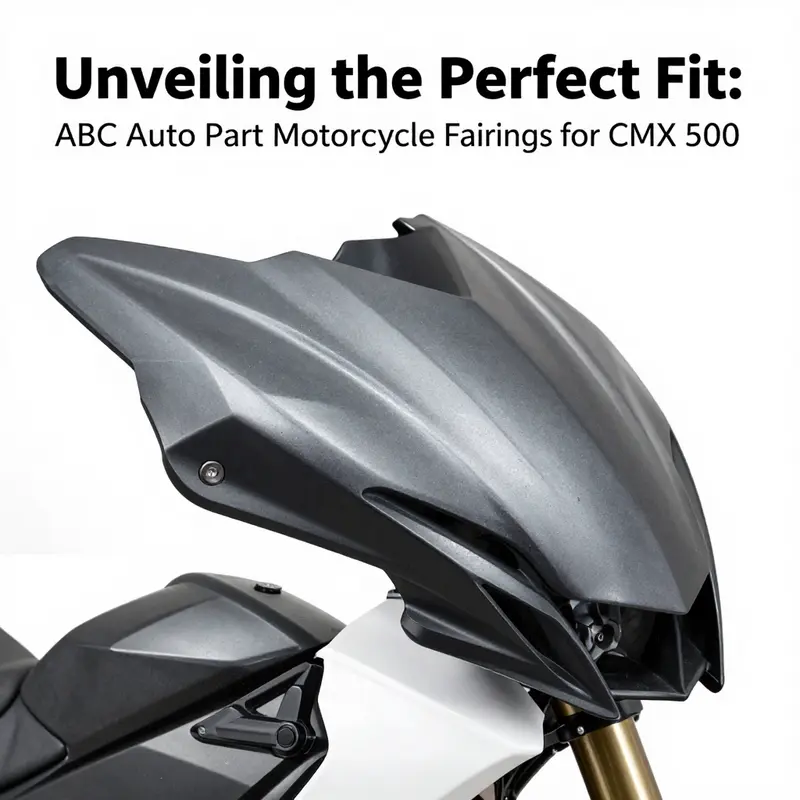 The saddle of a motorcycle tells a story before the rider twists the throttle. The fairing, more than a cosmetic shell, is a study in material choice, manufacturing craft, and the nuanced relationship between form, function, and fit. When a mid-displacement cruiser adopts an aftermarket fairing, the journey from raw polymer to finished surface unfolds across a landscape of design intent, precision engineering, and supply-chain choreography. This chapter traces that journey, weaving together the practicalities of ABS plastics, the realities of Guangdong’s manufacturing ecosystems, and the tacit knowledge builders acquire when the fairing meets the bike in the real world. It is a narrative that moves beyond the sightlines of a glossy online catalog to the hands-on decisions that determine whether a piece of plastic will withstand a summer commute, deflect a stray stone, or align perfectly with the engine and frame geometry over years of riding.
First comes material selection, and the logic is not solely about color and texture. ABS, or acrylonitrile butadiene styrene, has become the workhorse material of aftermarket fairings because it blends toughness with processability. The plastic’s impact resistance helps it survive the inevitable bumps and scrapes of urban riding and gravel roads alike. It also offers a straightforward path to a smooth, aerodynamic surface, which is essential for a piece designed to wrap around the engine’s contouring and the bike’s frame rails. ABS’s compatibility with thin-wall injection molding keeps wall sections compact while preserving rigidity where it matters most, such as around mounting tabs, engine guards, and edge radii. The result is a shell that can be produced in relatively thin gauges, allowing designers to achieve those sculpted lines that catch the eye without bloating the overall weight.
In practice, the manufacturing environment matters as much as the resin itself. The most relevant hubs for high-quality, OEM-like fairings cluster in a region known for precision engineering and a robust tooling ecosystem. This concentration of capability makes it feasible for aftermarket suppliers to push the boundaries of what used to be considered mere replicas. The process begins long before plastic enters the mold. Engineers work backward from the intended geometry—how the fairing interfaces with the bike’s frame, how the emission routing beneath the engine is preserved, and how the fairing’s inner surfaces will accommodate mounting hardware and fasteners. Through rapid prototyping and iterative tooling, a digital design evolves into a physical form with the tolerances necessary to achieve a snug, secure fit. The emphasis on fit is not cosmetic; it governs how the fairing will interact with the bike’s airflow, how it might contribute to heat management, and how it will respond to vibrations and temperature swings on the road.
The journey from CAD to a tangible part in a factory floor is aided by a robust tooling infrastructure. In Guangdong’s specialized clusters, factories maintain a continuum of capability—from computer-aided design and virtual testing to multi-cavity molds and precision injection equipment. This proximity reduces cycle times and enables rapid iterations when a client requests a change in geometry—perhaps a tighter corner radius to improve clearance with the handlebars, or a revised headlight cutout to align with a different lighting module. The tooling becomes an ever-adjusting instrument, a kind of bridge between the conceptual and the tangible. Because fairings must mirror the bike’s original frame geometry while offering some latitude for aftermarket articulation, the molds’ tolerances are calibrated with care. The result is a product that not only looks similar to OEM styling but also sits with harmony against the bike’s lines, preventing gaps that would let wind and rain intrude or vibrate loose under riding conditions.
From there, the quality assurance stage begins, and it often centers on fitment. Reputable suppliers—those who bring more than a sheet of plastic to the table—tend to operate with in-house design teams that can reverse-engineer fitment specifications. They measure reference points on the bike chassis, check the path of emission lines, routing channels, and how the fairing interfaces with the exhaust system and the undercarriage protections. The measurement discipline is not merely about dimensions; it is about ensuring that the exterior shape accommodates the bike’s acoustic and thermal realities as well. A well-fit fairing flows with the rider’s perception of control and protection. The rider feels shielded from wind pressure and debris, yet the sensation remains natural rather than stiff or mismatched. The best aftermarket pieces achieve a balance: they’re visibly close to the OEM silhouette, while remaining sturdy enough to resist the fatigue that comes from road vibration.
This is where the manufacturing ecosystem pays dividends. Proximity to suppliers of ABS polymer and related additives reduces lead times and enables faster production cycles. In a market where demand can surge in response to seasonality or changing styling preferences, being near the source of raw materials translates into shorter wait times for customers and more nimble support for retailers. Typical lead times for standard orders in this network have developed into a rhythm that suits both distributors and end users: deliveries arrive within a window of a few weeks, usually measured in weeks rather than months. Such reliability matters when a rider has decided that a fresh look is worth the cost and the temporary absence of the bike while the fairing ships and is fitted. Importantly, the supply chain’s efficiency is not only about speed. It also reflects a disciplined approach to quality control, with in-house testing that checks for consistency in color matching, surface finish, and the integrity of mounting points.
Color, texture, and surface finish complete the transformation. Even when the raw material’s mechanical performance is solid, the final appearance must convince a rider that the fairing belongs on the bike. Manufacturers often apply an initial primer and base coat before a topcoat and clear layer, akin to the finishing sequence used in manufacturing original components. The surface can then be polished to a high gloss or given a matte treatment depending on the design language the customer desires. Although the colored exterior is primary for aesthetics, the paint system must also endure exposure to sunlight, rain, and temperature fluctuations. UV stability and colorfastness become determinants of long-term satisfaction; untreated ABS can suffer color shift or gloss loss if the finish is not engineered for outdoor use. A good finish resists micro-scratches that accumulate through daily riding and washing, maintaining the fairing’s appearance without requiring constant restoration.
The practical implications of these material and process decisions extend into how a rider actually experiences maintenance and upkeep. Installation is a moment where design choices reveal their true value. A fairing that fits snugly with clear mounting points and tabs reduces the risk of gaps and misalignment after a long haul or a rough parking lot maneuver. People who perform their own installation appreciate clear, repeatable steps and hardware that aligns with common mounting patterns. Some pieces are designed to share fastener locations with other protective components, so owners can swap in a new shell without reconfiguring the entire fastening system. In other words, the fairing becomes a modular part of the bike’s protective ensemble rather than a brittle add-on that requires a toolkit and a weekend of frustration to install.
But the story does not end with the first ride or the first wash. The lifecycle of an aftermarket fairing hinges on its resilience and adaptability. ABS devotees point to repairability as a practical virtue. When a minor crack appears at a mounting tab or near a cutout, resin-based repair techniques or adhesive bonding can extend the life of the piece. The repairability dimension is not merely about fixing damage; it is also about preserving the appearance and the aerodynamic integrity of the shell. A repaired surface should remain visually cohesive with the rest of the bodywork, with little to no perceptible color mismatch after touch-up. The better the initial design for repair—thicker walls at critical stress points, accessible fastener routes, and a forgiving shape around sharp corners—the easier the subsequent maintenance becomes. Riders with a passion for customizing their machines understand this nuance, as it means the fairing remains a living component rather than a disposable cosmetic item.
Beyond the individual part, the broader market dynamics reveal a quiet, steady shift toward value-driven choices. The regional manufacturing network’s advantage lies in the combination of cost-effectiveness, consistent quality, and the ability to adapt to a growing range of styling directions. This balance matters because a rider’s appetite for aesthetic variation can be intense; the fairing is an emblem of personal identity as much as it is a shield against wind and weather. Manufacturers respond by offering a spectrum of finishes—from high-gloss to satin textures—and a palette of color-matching options designed to harmonize with a bike’s existing tone. The result is a product category that sits at the intersection of engineering pragmatism and creative expression. The forward-looking supplier recognizes that today’s rider may want a kit that echoes classic street-bike lineage or one that leans into modern, aggressive contours. The same ABS material, molded with precise tolerances and finished with durable coatings, can realize either vision while maintaining the necessary structural and aerodynamic integrity.
Internal and external considerations further shape the market’s response to rider needs. On the internal side, collaborative workflows between designers, tooling partners, and paint shops help ensure that every fairing can be finished to a consistent standard. This collaboration reduces variance across batches, which matters for color matching and fitment when customers order multiple components or replacements over time. The external dimension involves looking outward to how these parts influence riding safety and reliability. For instance, when a fairing is designed to maintain the airflow around the engine and radiator, it can support more efficient cooling or reduce intake noise, depending on the routing channels and vent placements. In addition, well-executed fairing design can contribute to reduced drag without compromising rider protection or comfort, a subtle but meaningful performance characteristic that many riders come to value over time.
The synthesis of material science, manufacturing prowess, and rider-centric design is what elevates aftermarket fairings from simple cosmetic upgrades to robust, lasting components. A high-quality ABS shell is more than a surface finish; it is a carefully engineered system that interacts with the bike’s frame, plastics, metal hardware, and the rider’s experience. The best examples reflect a willingness to embrace both the precision of a mold-maker and the artistry of a designer. In a landscape where customization has become a core aspect of motorcycling culture, such pieces offer a practical way to refresh a bike’s appearance while preserving or enhancing its functional qualities. Riders who choose these upgrades often weigh ease of installation, long-term durability, and the look they want against the cost and potential trade-offs in weight or wind behavior. The most satisfying outcomes come from a harmonious alignment of these factors, where the fairing’s surface gleams after a wash, the lines between panel edges read clean in the sun, and the component sits with the certainty of a factory part—even though it was produced in a parallel track of commerce and craft.
For readers seeking a concrete sense of how a catalog-level selection translates into a real-world choice, an exploration of a typical aftermarket catalog can illuminate the flow from concept to completion. A catalog entry for a mid-size cruiser’s fairing usually begins with fitment notes, clarifying model compatibility and any alterations required for specific production years. It then presents a materials and finish section, outlining the ABS base resin, the surface treatment, and the available colorways. The installation instructions often emphasize the need to verify attachment points against the bike’s frame and to check clearances near critical components like the exhaust shield and engine bay covers. Some listings will also note the paint finish’s compatibility with UV protection and the expected longevity of the color under regular sun exposure. In an ideal scenario, the user can select a kit that aligns with their bike’s silhouette while maintaining the vehicle’s overall aerodynamic balance. The attention to detail in these descriptions is not merely descriptive—it’s a practical framework for achieving a satisfying, long-lasting upgrade.
If you want to explore similar offerings in a structured catalog format, you can reference the collections page that presents a range of fairing options and configurations. The catalog approach exemplifies how the same base material and front-mounting philosophy can support a variety of aesthetic and functional outcomes. For those who want to see how the broader family of fairings is organized—how each kit is categorized by fitment, finish, and mounting geometry—the online catalog serves as a guide to understanding the decisions behind a given design. To give readers a concrete touchpoint, one can browse the dedicated collections page that aggregates fairings in a single, navigable space, offering a window into how different styling directions translate into physical parts that can be installed on a mid-sized cruiser. For those who want to dive directly into the catalog, follow the link to the collections page labeled collections/honda-fairings. This reference point provides a straightforward way to visualize the design language and the practical constraints involved in aftermarket fairings, without requiring readers to navigate a maze of unrelated products.
At the same time, the chapter’s discussion remains mindful of the broader ecosystem. The region’s focus on precision engineering, the use of ABS plastics, and the emphasis on fitment and surface finish illustrate a mature market that balances cost with quality. This balance matters because riders expect more than a superficial change; they want a part that behaves consistently across seasons, will not degrade quickly under sun and rain, and can be repaired or replaced without excessive downtime. In this light, the material insights discussed here are not merely about chemistry. They are a reflection of the baked-in discipline that characterizes a supply chain specialized in motorcycle fairings: a discipline that harmonizes the speed and efficiency of modern manufacturing with the care and attention to detail that riders value most.
External resource for further reading: for a broader perspective on how OEM-equivalent parts are sourced and managed within the supply chain, readers may consult the 2025 OEM Replacement Parts Supplier Guide, which provides a detailed look at procurement practices, supplier capabilities, and lead-time considerations that underpin the aftermarket ecosystem. https://www.supplychaininsights.com/2025-honda-oem-parts-supplier-guide/ (External reference)
To close the loop on practical exploration, consider navigating to the catalog section that curates fairing options for mid-sized cruisers—specifically the collections page that consolidates fairings by model class and compatibility. This page serves as a tangible entry point into how manufacturers segment offerings by fitment and finish, and it helps readers visualize how a kit can harmonize with a bike’s lines and stance. See the collections page linked here as a direct reference to how a catalog organizes options and communicates essential fitment information.