
















Los protectores de motocicleta, esenciales tanto para el rendimiento como para la estética de las motocicletas, son notoriamente caros. Este precio a menudo deja a los propietarios de negocios cuestionando la lógica detrás de los costos. Para comprender plenamente las razones detrás de estos precios altos, es crucial profundizar en tres áreas principales: los costos de fabricación, las elecciones de materiales y las implicaciones de volúmenes de producción bajos. Cada aspecto se interconecta para formar una comprensión integral de por qué los protectores de motocicleta tienen precios premium en el mercado, impactando finalmente su margen de beneficio y estrategias de precios en la industria de motocicletas.
El precio oculto: cómo los materiales, los moldes y las fuerzas del mercado hacen que los protectores de motocicleta sean más caros
 The cost of motorcycle fairings often stirs surprise among riders and shop owners alike. They look like simple shells that wrap around a bike, yet the price tag on a replacement set reflects a complex mix of materials, machinery, and market dynamics that unfold far from the showroom floor. To understand why fairings sit at a premium, it helps to follow the thread from raw material to finished panel, and then to the wider world in which these parts are bought, sold, and held to standards of performance and safety. The journey begins with material choice, a decision that cascades through every other stage of production. High-grade ABS plastic, fiberglass, and carbon fiber are not interchangeable options. Each material brings a distinct profile of strength, impact resistance, weight, and ease of molding that directly translates to cost. ABS is versatile and forgiving; it behaves well under heat and stress, which makes it a reliable base for cost-conscious production. But even ABS carries a price, especially when suppliers must meet tight tolerances for a part that must fit a specific frame and aerodynamics package. Fiberglass offers a balance of rigidity and lightness, yet it requires meticulous layup, curing, and finishing to avoid air pockets or delaminations that could compromise fit or safety. Carbon fiber, the premium choice for stiffness and weight reduction, is the standout from a performance perspective but carries an unmistakable price premium. The raw material costs alone can push per-unit prices higher, particularly when manufacturers demand consistent resin systems, high-quality fibers, and tightly controlled fiber orientations to achieve the desired aerodynamic profile. Material handling compounds the math. Carbon fiber, for example, demands specialized storage, precut or pre-preg processes, and careful inventory control. The risk of contamination or moisture intrusion in carbon fiber systems can ruin a layup and force expensive rework. The same careful attention shows up with ABS in molding lines that must manage equilibrium between resin flow, wall thickness, and surface finish. Each material segment is a chapter of itself, but what truly amplifies the cost is the precision required to transform raw material into a form that not only looks right but fits as a seamless extension of the motorcycle’s engine, chassis, and rider geometry. The molding techniques themselves are a major cost driver. Fairings demand accurate replication of complex curves, flares, vents, and mounting features that must harmonize with other parts of the bike. Vacuum-assisted resin transfer molding, vacuum forming, and CNC-assisted trimming are common, each adding a layer of cost beyond simple stamping. Precision is not a luxury here; it is the foundation of performance and safety. The tooling that supports these processes—molds, dies, and fixtures—represents a one-time but often substantial investment. A single set of molds tailored to a specific model can demand six figures or more, depending on the complexity of the part, the number of cavities, and the required tolerances. When a fairing is designed to be an exact fit for a particular frame, even minor deviations in the tooling can create misalignment or gaps that degrade aerodynamics and rider protection. The initial tooling cost is recovered only over the volume of sales the part expects to achieve, a relationship that explains in part why fairings for older or less common models can carry a higher per-unit price than widely compatible panels. It is not merely the initial investment worth counting; ongoing quality control adds another layer of expense that grows with every production run. For a product as visible as a fairing, surface flaws—pinholes, resin bubbles, or slight waviness—are not acceptable. Quality control becomes a continuous process: dimensional checks at multiple stations, non-destructive testing where necessary, and meticulous surface finishing. Each check point protects the rider, prevents rattles and stress concentrations, and reduces returns. The cost of this vigilance compounds quickly, particularly in a market where a single manufacturing batch can contain tens or hundreds of parts, each requiring consistent conformance to a moving target of fit and finish. The final appearance and performance of a fairing also hinge on finishing processes—priming, painting, decals, clear coats—that add labor and material costs. A smooth, UV-resistant surface requires careful sanding, multiple coats, and controlled curing environments to prevent orange peel or substrate show-through. The paint and clear coats must also withstand harsh weather, sun exposure, and the occasional abrasion from road debris. All these factors—material choice, molding technique, tooling, and finish—interlock to shape the final bill for a replacement or aftermarket fairing. Yet the economics of fairings do not stop there. Production processes introduce energy costs, a factor often overlooked by casual buyers. Curing cycles for resins and composites can be energy-intensive, with ovens or autoclaves requiring stable temperatures and long dwell times. Even seemingly small inefficiencies in energy usage add up across thousands of parts. This is particularly true in plants that run tight production windows or operate around the clock to meet aftermarket demand and OEM supply schedules. In such environments, the choice of cure method, processing speed, and waste recovery strategies can influence material usage, cycle times, and, ultimately, unit costs. The energy equation compounds when a manufacturer must balance performance with price sensitivity in a global market. The global market dynamics surrounding motorcycle fairings push the price upward in several subtle but meaningful ways. One dominant pressure is the tension between material performance and cost-efficiency. Suppliers are compelled to push for materials that deliver the needed durability and aerodynamic performance, while also keeping material costs in check to remain competitive. The interplay between these goals often forces compromises—perhaps a slightly heavier panel if the market cannot bear a carbon fiber premium, or a more resilient resin system that sacrifices marginal weight savings in favor of reliability and throughput. In an industry with tight margins and vivid competition, even small shifts in material mix reverberate through the price. Another market reality is the nature of fairings as OEM or aftermarket replacements. OEM panels are typically designed to fit a specific bike model and year, which means tooling and mold costs cannot be amortized across a broad range of models in the same way as universal panels. When a model year changes or a frame receives a minor revision, the tooling may need to be updated or replaced, elevating the per-unit cost for that specific iteration. On the aftermarket side, competition can drive prices downward, but not without trade-offs. Lower-cost fairings may come from suppliers who cut corners on glass content, resin quality, or finishing accuracy. Buyers must weigh the risk of accelerated wear, cracking, or misfit against a lower sticker price. In this balance, the tiered structure of supplier networks becomes visible. Large manufacturers may benefit from economies of scale and long-term contracts that secure better material pricing and faster production cycles. Yet even these advantages encounter limitations when the demand span is narrow or models proliferate. A proliferation of model-specific variants—driven by consumer preference, licensing, or racing heritage—means more molds, more quality-control checkpoints, and more specialized labor. The result is a per-unit price that reflects not only the raw costs but also the cost of maintaining capabilities to support a broad catalog of shapes and sizes. Geographic considerations add another layer to the cost picture. In recent years, manufacturing hubs in regions with established supply chains, skilled labor pools, and robust logistics networks have become central to fairing production. China stands out as a focal point in this landscape, offering advantages such as economies of scale, access to skilled labor, and efficient transportation networks that can move components quickly from plant to port. Specific hubs within China—areas renowned for molding of materials like fiberglass and ABS plastic—support rapid prototyping and high-volume production. These geographic dynamics influence both cost and cadence. Proximity to the end market matters for both timing and risk management. Shorter supply lines reduce freight costs, accelerate prototyping iterations, and dampen the impact of currency fluctuations or tariffs. But the reliance on any single region carries its own risks, from policy changes to supply disruptions. The economics of fairings therefore become a study in trade-offs among material performance, manufacturing capability, and logistical strategy. In practice, manufacturers must decide how to allocate limited resources across the most critical performance traits: fit, stiffness, impact resistance, and aerodynamic effectiveness. These decisions are seldom abstract; they translate into the very texture of the fairing—how smoothly a rider slides into a wind tunnel of air over the bike, how confidently the surface handles a stone strike, and how well the panel remains in place under high-speed vibration. The procurement and supplier management side of the equation cannot be ignored. For businesses that assemble or resell fairings, supplier evaluation becomes a gatekeeper of costs and reliability. Indicators such as response time, production flexibility, and performance feedback from customers can provide a pragmatic view of supplier strength when ISO certifications are not in place. A supplier with rapid turnaround and consistently high-quality responses reduces the risk of delays that ripple into higher costs—especially in the aftermarket sector where stockouts or backorders can be a killer. Data-driven decisions are not a luxury but a necessity in this space. Procurement teams monitor yield rates, defect frequencies, and time-to-delivery metrics to predict and manage costs. The ability to forecast these parameters allows a business to price fairly while preserving margins, even as material prices swing with global demand and feedstock volatility. The broader context of global trade, currency shifts, and tariff regimes also lays a shadow over fairing pricing. When manufacturing is concentrated in a few regions, local price pressure can translate into higher export costs or protective measures that ripple through the supply chain. Conversely, a strong supplier network in multiple regions can blunt some of that volatility, providing alternative sourcing paths that keep production flowing even in uncertain times. In the end, the price of a fairing is a composite signal: it tells you about the care invested in materials, the endurance designed into the molding process, the discipline of quality control, and the resilience of the supply chain. It narrates a story about the balance between performance and affordability, a dynamic tension that defines not only the cost of a part but the very capability of a bike to meet rider expectations on highway and track alike. For readers seeking deeper context on how these factors relate to the standards and industrial benefits of Chinese motorcycle fairings, a broader resource offers useful perspectives on composition and engineering applications—an external reference that complements the practical implications discussed here. As you navigate pricing with a shop or a repair center, it helps to remember that a fairing’s price is less a number and more a map of the decisions that shaped it: the choice of resin and fiber, the precision of the mold, the robustness of the finishing, and the strategic decisions that connect a model year to a global supply network. If you ever wonder why a replacement panel costs what it costs, you are looking at the cumulative effect of dozens of decisions designed to deliver safety, performance, and durability in a package that has to endure the weather, the road, and the rider’s own expectations. For those who want a closer look at how the aftermarket catalog organizes these parts, a representative entry point can be found in the Honda fairings collection, which gives a sense of how fitment-specific and model-year-specific options accumulate during cataloging and fulfillment. This segmentation—driven by fit, mounting points, and aerodynamic goals—underlines why a single generic replacement is rarely a one-size-fits-all solution. Rather, each set reflects a carefully negotiated equilibrium among material costs, tooling investment, finishing quality, and the logistics of delivering a part that can stand up to the rigors of real-world riding. The commercial reality is that in a world where consumer demands move quickly and competition intensifies, manufacturers and suppliers continually refine processes to extract more value from every component without compromising safety or performance. In the end, the cost of a fairing encodes a long chain of decisions, each weighted by risk, opportunity, and the rider’s insistence on reliability. It is a reminder that behind every sleek exterior there is a substantial engineering enterprise, a network of suppliers and manufacturers, and a market that rewards performance and efficiency in equal measure. External resource: https://www.oshop.com.cn/blog/chinese-motorcycle-fairings-composition-standards-industrial-benefits/
La economía de los protectores de motocicleta
 Los protectores no son solo capas estéticas. La elección del material impulsa el costo, el peso, la durabilidad y el rendimiento. El fibra de carbono ofrece una rigidez excepcional en relación con su peso, pero tiene costos de fabricación y materiales elevados, generalmente reservados para motocicletas premium y enfocadas en carreras. El ABS y el fibra de vidrio ofrecen alternativas más económicas con producción más fácil, pero con propiedades mecánicas y durabilidad a largo plazo diferentes.
La herramienta, los moldes y el trabajo especializado moldean el precio; el ajuste específico al modelo agrega un costo adicional mediante herramientas personalizadas. Las dinámicas del mercado, las cadenas de suministro y la necesidad de una integración precisa con el chasis de la moto y el sistema de refrigeración influyen en el precio final. En resumen, el precio refleja un equilibrio entre los beneficios de rendimiento, la complejidad de fabricación y la economía de escala.
Pequeñas Cantidad, Grandes Facturas: Cómo la producción en bajas cantidades impulsa los precios de los protectores de motocicleta
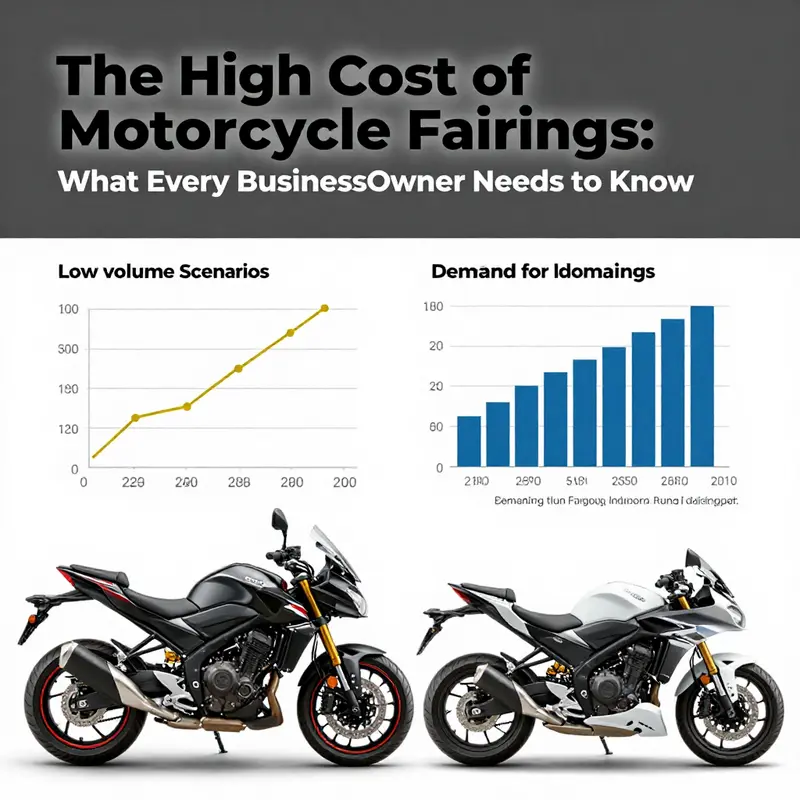 Cuando los riders se preguntan por qué un protector de motocicleta específico cuesta más, la respuesta suele apuntar a los materiales y al diseño, pero el verdadero motor es el volumen de producción. En la fabricación en bajas cantidades, los costos fijos para herramientas, desarrollo y configuración deben distribuirse sobre mucho menos unidades, elevando los costos por unidad y incorporando un suplemento en el precio de venta. La I+D, pruebas en túnel de viento y evaluación de prototipos siguen siendo un factor que elimina las economías de escala, mientras que el trabajo especializado y los procesos de precisión para moldeo, laminado y terminado se convierten en importantes factores de costo. El resultado es un precio que refleja no solo los materiales brutos, sino también la economía de atender un mercado estrecho, con ajuste específico al modelo, coincidencia de colores y consideraciones de garantía que contribuyen a un suplemento que tiene sentido dada la baja demanda. Este marco ayuda a explicar por qué un protector de repuesto para un modelo poco común puede estar en un punto de precio más alto, incluso si la calidad de acabado y ajuste sigue siendo un punto clave de venta.
Final thoughts
Los altos precios de los protectores de motocicleta provienen de una combinación de procesos de fabricación complejos, elecciones de materiales premium y los desafíos planteados por las bajas cantidades de producción. Para los dueños de negocios en la industria de motocicletas, comprender estos factores es fundamental para estrategizar precios, compras y gestión de inventario. Al comprender las razones subyacentes de estos costos, los negocios pueden tomar decisiones informadas que se alineen con marcos financieros y expectativas del mercado. El conocimiento, en este sentido, no solo empodera mejores estrategias de compra, sino que también mejora la posición de su marca en un entorno competitivo.