















Introduction
Les carénages de motocyclettes servent non seulement d'améliorateurs aérodynamiques, mais aussi d'éléments critiques de l'identité visuelle d'une moto. Pour les propriétaires d'entreprises dans le secteur de la réparation et de la personnalisation, maîtriser l'art de réparer les carénages de motocyclettes est essentiel pour offrir un service de qualité qui génère la satisfaction des clients et des affaires répétées. Le processus de réparation implique une séquence minutieuse commençant par un retrait soigneux des carénages pour éviter les dommages, suivi d'une restauration habile des fissures et imperfections de peinture, et se terminant par une réinstallation précise et des techniques de finition qui assurent la durabilité et l'esthétique. Chaque phase contribue au succès global de la réparation, affectant le temps de traitement, l'efficacité coûteuse et la qualité finale. Cette approche globale permet aux ateliers de se distinguer sur un marché concurrentiel en offrant des réparations professionnelles et fiables qui répondent aux attentes des amateurs exigeants de motocyclettes.
Tables of Contents
Chapitre 1 : Retirer les carénages de manière approfondie dans la réparation des carénages de motocyclettes
- Démontage étape par étape : Maîtriser la séquence du retrait des composants connectés pour le retrait des carénages
- Désconnection systématique des composants électriques et mécaniques pour un retrait des carénages sans dommages
- Maîtriser l'art de manipuler les clips, les rivets et les composants fragiles pour un retrait des carénages parfait
- Maîtriser le démontage progressif et le soutien pour un retrait sûr des carénages de motocyclettes
- Maîtriser le retrait des carénages grâce à des démonstrations visuelles et un guide pratique
Chapitre 2 : Réparation des fissures et des dommages à la peinture dans la réparation des carénages de motocyclettes
- Maîtriser les adhésifs, les mastics et les finitions : Techniques efficaces de réparation des fissures et de la peinture sur les carénages de motocyclettes
- Préparation de surface essentielle et nettoyage pour des réparations de fissures et de peinture impeccables sur les carénages de motocyclettes
- Renforcer la durabilité des carénages : Techniques de renforcement structurel pour la restauration des fissures et de la peinture
- Maîtriser la restauration de peinture : De la préparation de surface à la finition polie dans les réparations de carénages de motocyclettes
- Obtenir une solidité et une excellence visuelle sans faille dans les réparations de fissures et de peinture
Chapitre 3 : Techniques de réinstallation et de finition dans la réparation des carénages de motocyclettes
- Techniques de préparation de surface essentielles pour une réinstallation et une finition impeccables des carénages
- Maîtriser les adhésifs et les fixations : Assurer une réinstallation des carénages durable et précise
- Maîtriser la peinture et les revêtements pour des carénages de motocyclettes durables et magnifiques
- Maîtriser les défis de réparation : Améliorer la résistance structurelle et les finitions impeccables lors de la réinstallation des carénages
- Équilibrer l'efficacité coûteuse et l'impact environnemental dans les réparations des carénages de motocyclettes
Chapitre 1 : Retirer les carénages de manière approfondie dans la réparation des carénages de motocyclettes
Démontage étape par étape : Maîtriser la séquence du retrait des composants connectés pour le retrait des carénages
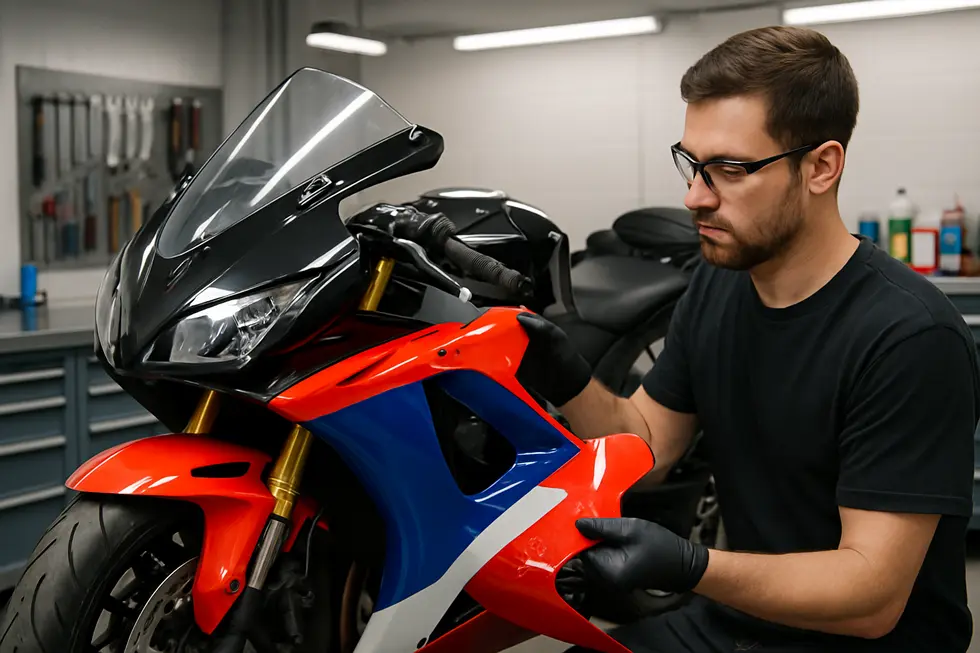
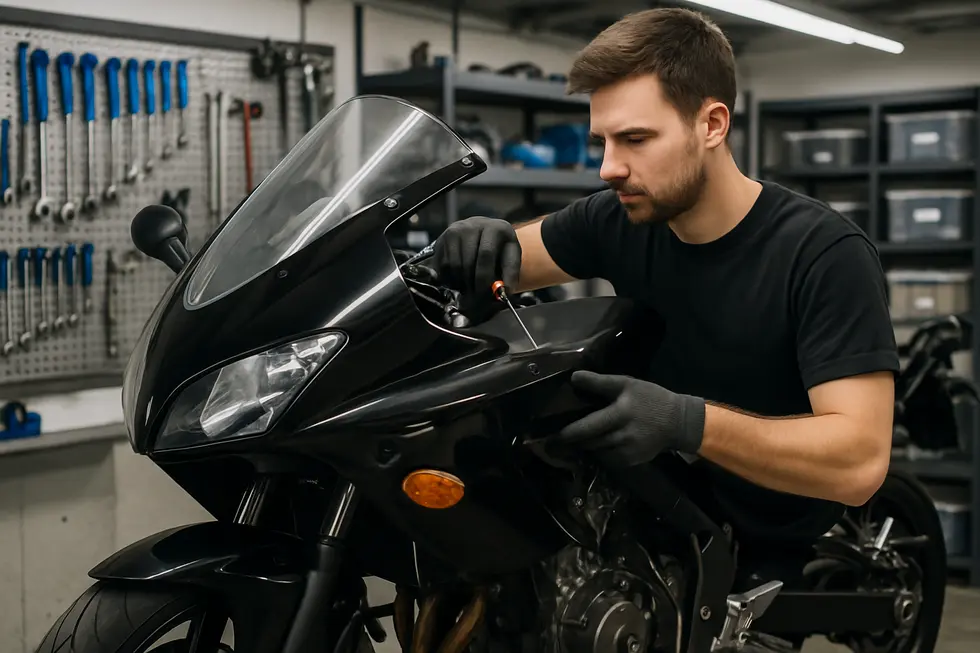
Le retrait des carénages de motocyclettes exige une approche réfléchie, étape par étape, pour détacher soigneusement toutes les pièces connectées sans causer de dommages. Le processus commence généralement par le desserrage et le retrait du pare-brise et de ses accessoires de montage, qui sont souvent intégrés au carénage avant. Cette première étape expose les vis et boulons sous-jacents qui maintiennent les panneaux principaux et facilite l'accès aux composants connectés. Après le pare-brise, desserrez systématiquement les supports et boulons qui maintiennent les panneaux de corps en place. Certains boulons peuvent avoir des supports conçus pour permettre le desserrage sans retrait complet, assurant ainsi une séparation douce des pièces sans solliciter les filets ou les languettes.
Ensuite, l'attention se porte sur les couvercles en plastique tels que les grilles de haut-parleurs, qui sont généralement fixés par des crochets. Libérer ces crochets nécessite de la patience et une pression délicate pour éviter de fissurer les plastiques fragiles. Une fois exposés, débranchez les connecteurs électriques - prises de phare, câbles de feux de direction et câbles du système audio - qui rattachent les carénages au système électrique de la moto. Il est crucial de manier ces connecteurs avec soin pour éviter les dommages aux fils ou les contacts lâches qui peuvent compliquer le remontage.
Les panneaux latéraux des motos sportives comme le CBR600RR impliquent des étapes miroirs des deux côtés, souvent commençant par le retrait des miroirs avant de retirer les panneaux adjacents. L'ensemble de la séquence privilégie une progression progressive des composants externes vers les composants internes, tout en maintenant une conscience des emplacements des éléments de fixation pour faciliter un remontage fluide. Retirer des grandes sections prématurément risque de casser les languettes en plastique ou de tirer les fils trop fort, donc l'adhésion à la séquence garantit un processus de retrait approfondi et sans dommages.
Ce démontage méthodique a été démontré efficacement dans des tutoriels couvrant les modèles tels que le Harley-Davidson Road Glide et le CBR600RR, où un retrait méthodique conduit à une séparation propre de l'assemblage avant sans stress sur les pièces. Pour ceux qui cherchent des procédures détaillées adaptées à des motocyclettes spécifiques, des guides détaillés et des démonstrations vidéo sont précieux.
Pour plus d'informations sur l'entretien et les techniques de réparation des carénages de motocyclettes, explorez your ultimate source for affordable motorcycle fairings.
Référence externe pour les procédures de retrait détaillées : Tutoriel de retrait des carénages du CBR600RR.
Désconnection systématique des composants électriques et mécaniques pour un retrait des carénages sans dommages
Référence externe pour les procédures détaillées de démontage :.
Tutoriel de démontage du carénage CBR600RR.
Désconnection systématique des composants électriques et mécaniques pour un démontage sans dommages du carénage.
Le démontage des carénages de motocyclette exige plus que de simplement desserrer les boulons visibles : il nécessite un processus soigneux et méthodique de déconnexion des attaches électriques et mécaniques afin d'éviter les dommages et d'assurer un réassemblage fluide. Commencez par retirer les fixations extérieures telles que les pare-brise, les grilles de haut-parleurs et les supports de montage. Ces éléments nécessitent souvent de desserrer ou de déclipser avec précision ; se précipiter lors de cette étape risque de casser les clips en plastique fragiles ou de perdre des petits boulons difficiles à remplacer.
Lors de la déconnexion du pare-brise, soutenez-le fermement pour éviter qu'il ne tombe pendant que vous desserrez ses supports. Ensuite, abordez les connexions électriques derrière les carénages. Les prises de phare, les câbles des haut-parleurs et les faisceaux de câbles doivent être déconnectés délicatement en utilisant une technique de poussée et de traction sans forcer les connecteurs. Cela préserve l'intégrité des câbles et empêche les broches cassées ou les câbles frangés qui entravent la reconnexion.
Le retrait des boulons doit suivre une séquence logique - commencer par les fixations visibles et passer ensuite aux boulons cachés qui peuvent être sécurisés avec des cliquets ou des composés de colle filetée. Ces cliquets empêchent souvent les boulons de tomber, mais nécessitent un maniement soigneux. Évitez de tirer soudainement les carénages, car les câbles d'ajustement des phares permettent un mouvement limité ; comprendre ces contraintes physiques aide à exposer les ampoules ou les câbles sans dommage. ultimate source for affordable motorcycle fairings.
Par exemple, certains modèles modernes de tourisme nécessitent six vis spécifiques à retirer avant que les carénages ne puissent être détachés, ainsi qu'un décliquetage soigné des grilles de haut-parleurs. Reconnaître la position des boîtiers de fusibles, souvent situés sous les réservoirs faux, est crucial avant de desserrer les ensembles de phare pour éviter les problèmes électriques.
Cette approche de démontage systématique garantit que tous les éléments mécaniques et électriques restent intacts pour des réparations ou peintures réussies. Une attention constante durant ces étapes réduit le risque de fissures, de clips cassés ou de pannes de câblage courantes lorsqu'on retire les carénages rapidement.
Pour ceux qui recherchent une orientation visuelle détaillée, un tutoriel complet démontre ces techniques efficacement pour divers modèles, montrant l'équilibre critique entre minutie et prudence. Pour explorer davantage sur les composants et accessoires de carénage, consultez ce.
Tutoriel de référence : https://www.youtube.com/watch?v=H94tYKTP3tw.
Maîtriser l'art de gérer les clips, rivets et composants fragiles pour un démontage parfait des carénages.
Le démontage des carénages de motocyclette exige une main ferme et une technique précise, particulièrement lorsqu'on traite les nombreux clips, rivets et pièces délicates qui fixent ces panneaux. Ces fixations sont souvent constituées de plastique fragile ou de métal fin, rendant vulnérables à la casse ou à la déformation si elles sont mal manipulées. Pour éviter les dommages, il est crucial de s'appuyer sur des outils spécialisés tels que des outils de retrait de garnitures en plastique et des petits tournevis, qui permettent de soulever délicatement sans gratter ou casser les composants. Une force brutale ou un retrait hâtif risque de briser les languettes fragiles ou les points de fixation, compliquant les réparations et le réassemblage. Maintenir un rythme méthodique assure que chaque clip et rivet est relâché soigneusement et de manière systématique. Si des rivets doivent être retirés par perçage, cela doit être fait avec précision pour éviter d'endommager le matériau du carénage environnant. Tout au long du processus, organiser et étiqueter tous les fixateurs est vital - cette pratique empêche la confusion et la perte lors des étapes suivantes. De plus, nettoyer légèrement les surfaces avant le retrait peut minimiser les rayures fines en réduisant la saleté qui pourrait coincider sous les outils de levage..
Des embouts et outils spécialisés conçus pour les clips ou rivets tenaces gagnent du temps et protègent l'intégrité des pièces de carénage. Protéger les languettes fragiles et les bords fins pendant le levage des panneaux maintient l'alignement de la carrosserie et réduit le risque de dommages coûteux. Cette attention aux détails, combinée à la patience et aux bons outils, forme la base d'un processus de désassemblage complet et sans dommages.
Le retrait des garde-boue de motocyclette exige une approche méthodique de démontage pas à pas combinée à un soutien soigneux des panneaux pour s'assurer que les panneaux et les points de fixation restent indemnes. Commencez par placer la motocyclette sur une surface stable, déconnectez la batterie pour éviter les risques électriques, et rassemblez tous les outils nécessaires, notamment des tournevis, des clés Allen, des clés à cliquet, et des outils de trim en plastique conçus pour éviter les rayures. Identifier et localiser chaque fixateur - boulons, vis et clips qui fixent les garde-boue sur les bords, sous le siège, près des manettes et le long du châssis - est essentiel pour planifier un retrait efficace.
Le processus de démontage doit commencer logiquement par les sections supérieures ou avant, en avançant progressivement vers le bas ou l'arrière afin de maintenir un soutien constant des garde-boue et d'éviter une pression excessive sur les attaches individuelles. Suivre toutes les fixations en les organisant dans des conteneurs étiquetés ou des plateaux magnétiques aide à faciliter le remontage ultérieur. Lorsque les boulons et les vis se desserrent, il est crucial de soutenir fermement les panneaux avec l'autre main ou de faire appel à un assistant lors du maniement de pièces plus grandes ou mal formées pour éviter de les plier ou de les laisser tomber accidentellement.
Les connecteurs électriques intégrés dans les garde-boue - généralement pour les feux ou les indicateurs - doivent être détachés avec soin pour éviter les dommages aux câbles. Utilisez des outils de trim en plastique lors de la levée des clips pour éviter les rayures ou les entailles. Si vous rencontrez une résistance, arrêtez-vous pour vérifier la présence de fixations cachées ou tenaces plutôt que de forcer les panneaux, ce qui risque de fissurer ou de déformer le matériau. Après avoir retiré tous les fixateurs et connecteurs, tirez doucement les garde-boue du châssis, puis inspectez les points de fixation pour toute trace d'usure ou de dommage avant de procéder aux réparations ou au remontage.
Cette technique réfléchie et patiente est soutenue par des démonstrations pratiques trouvées dans des guides détaillés pour des modèles comme le Yamaha R6 ou le Harley Davidson, qui mettent l'accent sur l'évitement des dommages pendant le retrait. Pour ceux travaillant avec des matériaux techniques ou composites, tels que le carbone, comprendre les propriétés de ces matériaux est vital pour un maniement sûr et la prévention des dommages. Pour une exploration approfondie des garde-boue de qualité supérieure pour motocyclettes et leur entretien, consultez Explore the Best Motorcycle Fairings at Summit Fairings.
En outre, de nombreux vidéos TikTok montrent des exemples concrets de prévention des rayures et de gestion des pièces délicates pendant le retrait des garde-boue, offrant un soutien visuel pour compléter les stratégies de démontage pas à pas et de soutien décrites ici.
Maîtriser le retrait des garde-boue grâce à des démonstrations visuelles et un accompagnement pratique
Le retrait des garde-boue de motocyclette sans causer de dommages exige non seulement de la patience mais aussi des instructions claires, c'est pourquoi les démonstrations pratiques et les supports visuels sont précieux. Les tutoriels vidéo fournissent une carte visuelle exacte - soulignant les emplacements des vis, des clips et des fixations cachées qui provoquent souvent de la confusion. Par exemple, une présentation détaillée du retrait des garde-boue d'une moto Harley Davidson Road Glide montre comment utiliser habilement des outils de levage en plastique le long des joints des panneaux pour désengager délicatement les parties, en veillant à ce que les panneaux restent intacts. La vidéo insiste sur le fait de soutenir constamment le garde-boue pour éviter qu'il ne tombe ou ne se casse pendant la déconnexion. De même, la vidéo sur le retrait des garde-boue de la Yamaha MT-09 offre des informations sur la découpe soigneuse des attaches de fabrication pour permettre un jeu de câble, évitant ainsi des déconnexions inutiles des câbles LED ou des commandes. Ces instructions minutieuses aident les motards à effectuer des modifications ou des réparations avec confiance sans risquer de dommages électriques ou structurels.
Des formats plus courts comme les vidéos TikTok pour des modèles tels que le Yamaha R6 offrent des visuels concis et étape par étape pour retirer efficacement les pare-chocs latéraux. Ces vidéos améliorent la compréhension de la séquence de dévissage et de déclenchement des composants, ce qui est crucial pour l'entretien ou les réparations cosmétiques. Dans tous ces ressources, plusieurs conseils récurrents émergent : utiliser des outils en plastique plutôt que métalliques pour protéger les surfaces en plastique, maintenir fermement les panneaux lors du relâchement des fixations, et méthodiquement suivre et organiser les boulons et clips retirés pour assurer un remontage fluide.
L'utilisation de ces aides visuelles n'empower pas seulement les amateurs de bricolage mais réduit également le risque de dommages coûteux et économise du temps. Elles transforment les instructions abstraites en actions concrètes, rendant la tâche complexe de retrait des pare-chocs accessible. Pour les motards cherchant une guidance visuelle complète et des conseils experts sur la manipulation sécurisée des pare-chocs, le tutoriel de retrait du pare-chocs de la Harley Davidson Road Glide se distingue comme un exemple parfait de clarté pratique et de connaissances actionnables. Pour plus d'informations sur le choix des panneaux de remplacement adaptés et sur la compréhension de l'entretien des pare-chocs, explorez ceci ultimate source for affordable motorcycle fairings.
Tutoriel de retrait du pare-chocs de la Harley Davidson Road Glide : https://www.youtube.com/watch?v=JWZMBYyxMQM
Chapitre 2 : Réparation des fissures et des dommages à la peinture dans la réparation des carénages de motocyclettes
Maîtriser les colles, les remplissages et les finitions : Techniques efficaces de réparation des fissures et de la peinture sur les pare-chocs de motocyclette
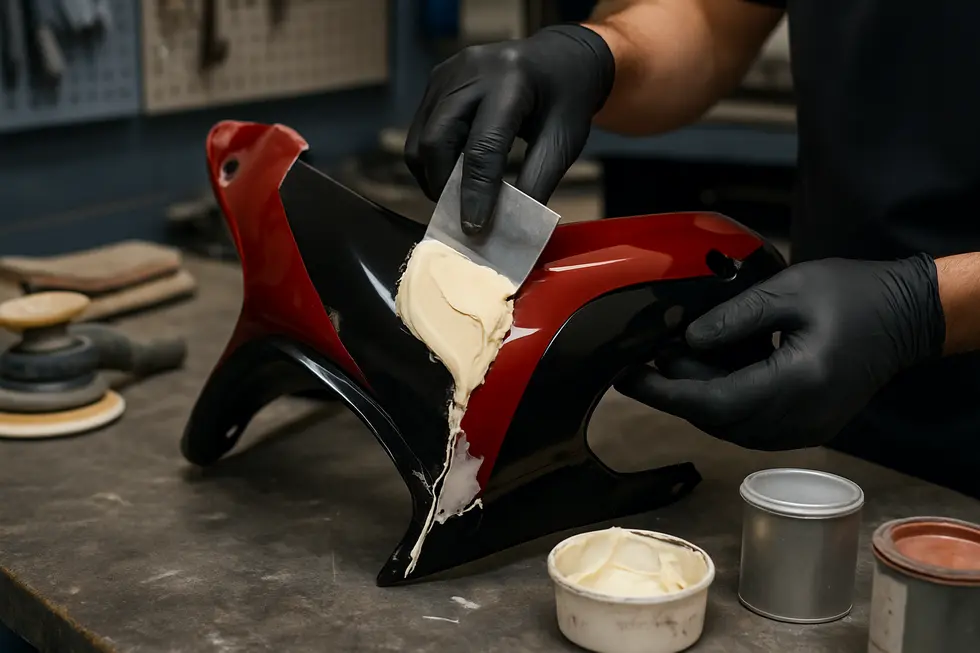
La réparation des fissures et des dommages à la peinture sur les pare-chocs de motocyclette nécessite un équilibre soigneux entre l'intégrité structurelle et la restauration visuelle. Généralement conçus en plastique ABS ou acrylique, ces panneaux exigent des colles spécialisées comme l'époxy à haute température ou les soudés à solvant qui s'attachent solidement tout en résistant à la chaleur du moteur et aux vibrations. Le processus commence par nettoyer soigneusement la zone fissurée pour éliminer les huiles et les débris qui peuvent affaiblir l'adhésion. Pour les fissures mineures, ces colles suffisent seules à restaurer la force, tandis que les dommages plus importants nécessitent souvent la fabrication de nouvelles sections à l'aide de feuilles de plastique ABS ou acrylique pouvant être formées à chaud ou découpées par CNC pour correspondre aux contours originaux.
Après collage ou remplacement, toute imperfection de surface est nivelée avec des remplissages en plastique conçus pour la flexibilité et la durabilité. Le ponçage avec un papier abrasif fin assure une transition sans faille entre les zones réparées et originales, en adoussant doucement les bords dans la surface existante pour préparer la peinture. Une préparation correcte de la surface est cruciale : le nettoyage doit éliminer tous les contaminants avant d'appliquer un primer spécialement formulé pour les plastiques. Ce primer favorise l'adhésion de la peinture et protège contre le décollement dans des conditions difficiles.
L'étape de peinture implique l'application de couches de couleur qui correspondent à la finition originale, suivies de couches claires qui fournissent une protection UV et une surface brillante, résistante. Pour les pare-chocs en fibre de carbone, les processus de réparation sont plus avancés, impliquant des patchs en fibre de carbone imprégnés de résine, curés pour rétablir la force et la finition, bien que les réparations à grande échelle puissent nécessiter l'intervention professionnelle et l'outillage de moule.
Comprendre ces matériaux et techniques garantit que les pare-chocs de motocyclette réparés retrouvent à la fois leur force et leur apparence esthétique, offrant des résultats approchant la qualité d'usine. Pour des informations supplémentaires sur le choix de pièces de rechange de qualité et de matériaux de réparation, explorez affordable motorcycle fairings at Summit Fairings.
Plus de guides techniques détaillés et expériences de la communauté peuvent être trouvés sur des ressources externes comme forums V11LeMans sur les matériaux et les méthodes.
Préparation et nettoyage de surface essentiels pour des réparations de fissures et de peinture impeccables sur les pare-chocs de motocyclette
Obtenir un fini professionnel sur les pare-chocs de motocyclette commence par une préparation et un nettoyage minutieux de la surface. Ces premières étapes sont critiques pour s'assurer que les remplissages, les colles et la peinture adhèrent fermement, aboutissant à une réparation durable et visuellement indiscernable.
Le processus commence par nettoyer soigneusement la surface du pare-chocs pour éliminer toute saleté, graisse, huile et contaminants environnementaux. L'utilisation de nettoyants spécifiquement adaptés aux pare-chocs en plastique ou en fibres de verre empêche les dommages à la surface tout en préparant la zone pour la réparation. Pour les finitions mates ou spéciales, des produits de détail doux qui nettoient et protègent la texture préservent l'apparence originale du pare-chocs sans causer de dommages.
Une fois nettoyé, le ponçage devient essentiel pour éliminer toute peinture détachée ou endommagée autour des fissures et des rayures. Le ponçage non seulement lisse la surface mais aussi crée une légère texture rugueuse qui favorise une forte adhérence des remplissages et de la peinture. En général, le ponçage est effectué légèrement autour de la zone endommagée pour préserver l'intégrité de la finition environnante tout en exposant une base propre. Des papiers abrasifs de finesse fine sont recommandés pour éviter une usure excessive.
Après ponçage, une autre étape de nettoyage élimine la poussière et les débris. Cela est souvent réalisé à l'aide d'un chiffon collant ou d'un solvant léger pour garantir une surface complètement propre, libre de particules qui pourraient interférer avec l'adhésion.
Avant d'appliquer tout remplissage ou primaire, il est essentiel de s'assurer que la zone est sèche et dépourvue d'huiles. Cette attention minutieuse prévient les problèmes courants tels que le décollement, la fissuration ou des finitions imparfaites ultérieurement dans le processus de réparation. Ces principes de préparation s'alignent étroitement avec les normes professionnelles de carrosserie moto et automobile, mettant l'accent sur la patience et la précision.
Une préparation rigoureuse de la surface ne soutient pas seulement la durabilité de la réparation, mais assure également une finition peinte parfaite, restaurant à la fois l'apparence et la fonction de vos protections de moto. Pour plus de conseils détaillés et des options de pièces, visitez Explore the Best Motorcycle Fairings at Summit Fairings.
(Référence externe : lignes directrices pour la préparation saisonnière des protections)
Améliorer la durabilité des protections : techniques de renforcement structurel pour la réparation des fissures et de la peinture
Lorsque l'on traite des fissures et des dommages à la peinture sur les protections de moto, le renforcement structurel joue un rôle crucial pour restaurer la force et l'esthétique sans compromettre la légèreté essentielle à la performance de la moto. Le processus commence par une préparation minutieuse de la surface - nettoyer la saleté, l'huile et la peinture détachée crée une base idéale pour un collage durable. Pour renforcer les parties fissurées, des matériaux composites avancés tels que des tissus en fibres de carbone unidirectionnels sont appliqués sur les dommages, imprégnés de résine époxy. Cette combinaison se solidifie en un patch rigide mais léger qui améliore considérablement l'intégrité mécanique de la protection. L'orientation des fibres est choisie stratégiquement pour contrebalancer les contraintes spécifiques subies aux points de fixation et aux zones fracturées, souvent en superposant plusieurs couches pour une résilience accrue.
L'application de ces matériaux bénéficie grandement d'environnements de guérison contrôlés, tels que des autoclaves ou des installations assistées par chaleur, garantissant que la résine époxy atteint une adhérence optimale et une consistance de finition. Des colles flexibles et fortes, telles que des époxy à base d'uréthane, sécurisent davantage ces renforcements sans ajouter de fragilité ou d'excès de poids.
Une fois les réparations structurelles solidifiées, l'attention se porte sur la restauration de la surface. Le sablage prépare la zone à l'application du primaire, qui prépare la protection à être repeinte avec des peintures automobiles compatibles avec le plastique. Cela assure un recouvrement de couleur et une protection durable contre les éléments et l'usure. Bien que les techniques de soudage soient rarement utilisées pour les protections composites en raison de l'incompatibilité des matériaux, les professionnels utilisent parfois ces méthodes sur les composants métalliques lorsqu'elles sont nécessaires.
Cette approche intégrée équilibre la restauration de la durabilité de la protection tout en maintenant son efficacité aérodynamique et son apparence. Pour les lecteurs souhaitant des informations supplémentaires et de l'inspiration pour les réparations, explorer des sources expertes sur les protections de moto de qualité peut fournir davantage de conseils sur les matériaux compatibles et les options de finition. Pour une analyse plus approfondie des méthodes de renforcement composites dans les applications de course, des ressources industrielles détaillées peuvent être consultées Dear client, nous
Découvrez-en plus sur le choix et l'entretien des protections de haute qualité à Summit Fairings blog.
Maîtriser la restauration de la peinture : de la préparation de surface à la finition polie dans les réparations de protections de moto
La restauration de la peinture et de la finition des protections de moto après la réparation des fissures exige une approche minutieuse en plusieurs étapes pour redonner à la fois l'apparence visuelle et les qualités protectrices. Le processus commence par un nettoyage soigneux à l'aide de shampoings et de détergents spécifiques aux motos, qui éliminent la saleté, les huiles et les contaminants tout en préservant l'intégrité originale de la peinture et du plastique. Cette préparation essentielle assure une adhérence supérieure pour les remplissages et les revêtements suivants.
Le sablage léger suit, ciblant les bords des fissures ou des rayures pour lisser la surface. Pour les fissures plus profondes, l'application de remplissages compatibles avec le plastique ou d'époxy adapté à l'ABS ou au fibres de verre est cruciale. Une fois séchés, ces réparations sont sablés à nouveau pour créer un plan plat, permettant aux couches de peinture de s'attacher sans problème. Le sablage prépare également les zones rayées exposant le primer ou le plastique nu.
Le primage suit avec des primes adhésifs pour le plastique conçus pour améliorer la durabilité de la peinture et empêcher le décollement, particulièrement important pour les panneaux d'après-vente ou les sections réparées. La phase de peinture implique l'application de couches fines et uniformes de peinture correspondant à la couleur, formulée pour les plastiques de moto ou l'usage automobile. Laisser chaque couche sécher complètement évite les imperfections telles que les écoulements ou les teintes inégales.
Après les couches de couleur, le vernis protège la finition contre les rayons UV, les rayures et les dommages environnementaux. Plusieurs couches de vernis augmentent le brillant et la robustesse, offrant un éclat de showroom. Une fois complètement durci, le polissage avec des composés fins élimine les petites imperfections et augmente le lustre. Une application finale de cire ou de revêtement céramique sûr pour les motos prolonge la protection et enrichit la longévité du brillant.
Effectuer ces étapes dans des environnements exempts de poussière et ombragés, ainsi qu'utiliser des chiffons en microfibre protège contre la contamination et les nouvelles rayures. Masquer les zones adjacentes empêche l'effet de pulvérisation, préservant des bords nets et propres. Pour des dommages graves, il est conseillé de faire appel à des services de réparation professionnels pour assurer la sécurité et des résultats impeccables.
Cette restauration soignée de la peinture ne répare pas seulement, mais améliore l'apparence du pare-brise, préservant la valeur et la présence de votre moto. Pour des conseils pratiques, consultez les tutoriels visuels détaillés comme cette vidéo complète de restauration de peinture qui montrent ces techniques étape par étape.
Pour plus d'informations sur l'obtention de pièces de qualité pour compléter votre restauration, explorez le explore the best motorcycle fairings at Summit Fairings blog.
Réaliser une résistance et une excellence visuelle sans faille dans les réparations de fissures et de peinture
Équilibrer la durabilité avec la restauration esthétique lors de la réparation des fissures et des dommages à la peinture sur les pare-brises de motos nécessite une approche détaillée et soigneuse. Le processus commence par la restauration de l'intégrité structurelle du pare-brise, essentielle pour s'assurer que la pièce puisse supporter les vibrations, les impacts et les rigueurs de la conduite. Des techniques telles que le soudage de plastique, le collage à l'époxy ou le renforcement en fibre de verre sont appliquées en fonction du matériau du pare-brise. Après avoir reconstruit la zone endommagée, le sablage lisse les imperfections, créant une base solide pour le rafraîchissement.
La restauration de la peinture se concentre sur une correspondance précise des couleurs et sur la reproduction de la finition, essentielle pour obtenir un aspect d'usine. Nettoyer la zone soigneusement élimine les contaminants, tandis qu'un primer favorise une adhérence forte de la peinture. La couche de base est ensuite pulvérisée soigneusement, correspondant à la couleur originale pour se fondre invisiblement avec la surface environnante. Les couches claires finales ne fournissent pas seulement un fini brillant, mais ajoutent également une résistance contre les éléments environnementaux tels que les rayons UV et l'humidité.
Les dernières touches impliquent le sablage humide et le polissage, qui atténuent toute irrégularité de surface telle que des coulures ou des effets orange-peel dans la couche claire. Cette étape est vitale pour fusionner sans faille la section réparée avec le reste du pare-brise, assurant une uniformité visuelle et une durabilité. Tout au long du processus de réparation et de peinture, la patience et la précision évitent le sablage excessif ou une superposition incorrecte, qui pourraient compromettre la force ou l'apparence de la réparation.
Les matériaux de qualité et les temps de séchage adéquats sous-tendent une réparation fiable et attrayante. En fin de compte, combiner des réparations structurales robustes avec une peinture parfaite revitalise la fonction protectrice et la valeur esthétique du pare-brise. Pour ceux qui souhaitent des conseils plus approfondis sur le lissage des défauts de peinture et l'application de la couche claire, des démonstrations en direct fournissent un soutien précieux pour maîtriser ces compétences. Alors que vous travaillez à travers ce processus, envisagez d'explorer une source complète pour les pare-brises de motos pour obtenir des pièces de remplacement de qualité qui complètent vos pare-brises restaurés.
Chapitre 3 : Techniques de réinstallation et de finition dans la réparation des carénages de motocyclettes
Techniques essentielles de préparation de surface pour une réinstallation et une finition parfaites de pare-brises
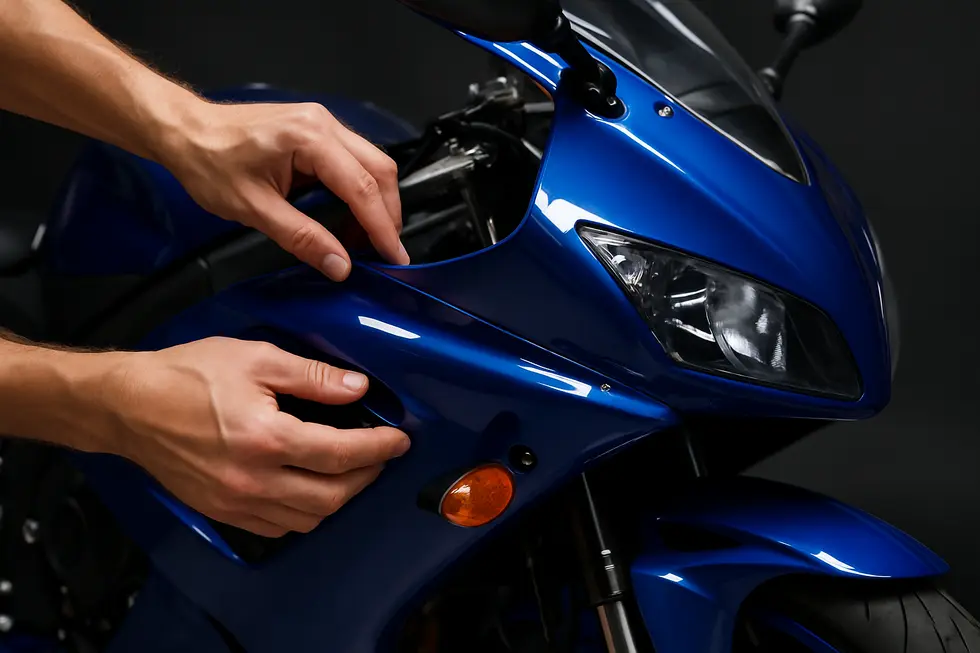
Une réinstallation et une finition réussies des pare-brises de motos commencent bien avant l'attache - elles commencent par une préparation minutieuse de surface qui assure à la fois la durabilité et l'esthétique. Le processus commence par un nettoyage approfondi à l'aide de savons doux à pH neutre et de chiffons doux, éliminant efficacement la saleté sans ternir la finition sous-jacente. Pour les pare-brises ayant subi une utilisation intensive, le dégraissage est impératif pour éliminer les huiles et la saleté provenant des composants mécaniques, créant une base propre pour les traitements suivants.
Après le nettoyage, le sablage léger joue un rôle crucial. L'utilisation d'abrasifs fins crée une surface légèrement texturée qui favorise une adhésion optimale de la peinture ou des couches protectrices. Cette étape exige de la prudence pour éviter le sablage excessif, qui pourrait endommager les contours ou la peinture originale. Une fois sablé, la surface doit être nettoyée à nouveau pour éliminer toute poussière et résidus qui pourraient interférer avec l'application de la couche.
Pour les panneaux présentant des rayures ou des imperfections, les techniques de correction de peinture élèvent la finition à un niveau professionnel. Le polissage mécanique avec des composés abrasifs lisse les petites imperfections et revitalise le brillant de la surface - une étape cruciale avant d'appliquer des scellants ou des cires. Lorsque des revêtements protecteurs sont envisagés, les options vont des cires traditionnelles qui apportent un éclat riche et une protection basique aux revêtements avancés ressemblant à la céramique, enrichis de matériaux tels que le graphène. Ces traitements modernes offrent une résistance accrue aux rayures, des propriétés hydrophobes et une protection prolongée contre les UV, pouvant préserver l'apparence du pare-brise pendant des années.
Maintenir cette finition implique également une prise de conscience environnementale - stationner à l'ombre et utiliser des couvertures anti-UV limite le décoloration et la dégradation. Importamment, ces étapes de préparation et de finition nécessitent un espace de travail bien ventilé et minimisant la poussière, ainsi que des équipements de sécurité appropriés comme des respirateurs, notamment lors de l'utilisation de produits à base de solvants.
En résumé, consacrer du temps et de la précision au nettoyage, au sablage, à la correction et à la protection des surfaces de pare-chocs garantit un remontage lisse avec un fini durable et attrayant. Pour des techniques détaillées de préparation et de peinture à l'airbrush, il est utile de consulter des guides adaptés aux débutants, tels que ceux trouvés sur Meilleures motos pour les débutants. De plus, explorer des avis professionnels sur la restauration de qualité et l'entretien des pare-chocs peut être trouvé th