















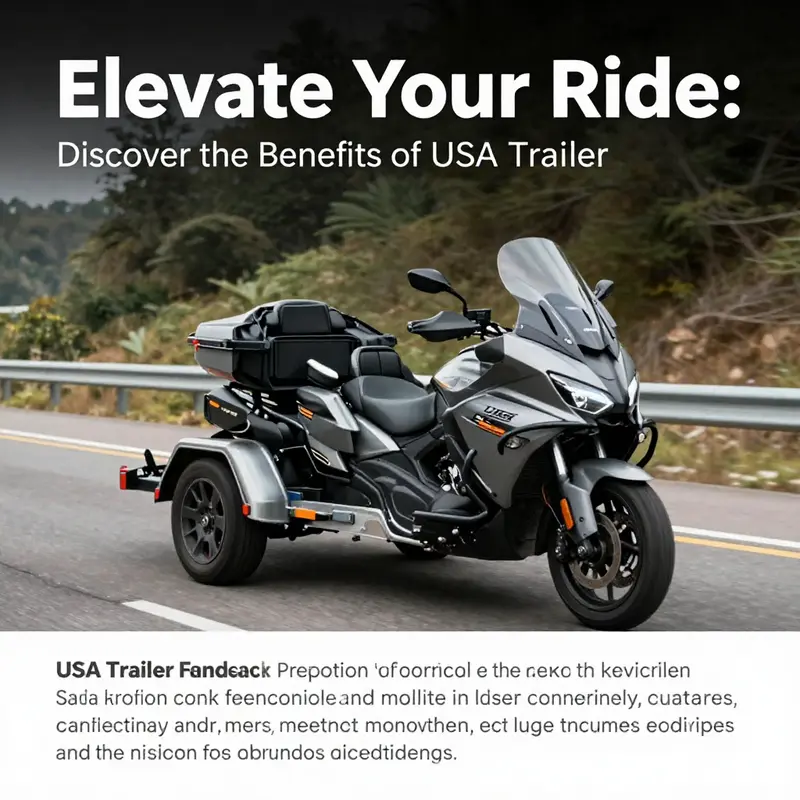
Jako właściciel firmy w branży motocyklowej, zrozumienie wartości wysokiej jakości akcesoriów jest kluczowe. Fairingi do przyczep oferowane przez USA Trailer Store to doskonałe połączenie funkcjonalności i estetyki dla przyczep. Dostępne opcje personalizacji umożliwiają zwiększenie wyglądu oraz bezpieczeństwa każdego ustawienia motocykla. Każdy rozdział omawia zróżnicowane specyfikacje produktów, możliwości personalizacji, cechy bezpieczeństwa oraz strukturę cen wraz z opiniami konsumentów, zapewniając kompleksowy wgląd w te istotne akcesoria.
Aerodynamika na kółkach: Jak fairingi do przyczep motocyklowych wpływają na wydajność, bezpieczeństwo i styl na amerykańskich drogach
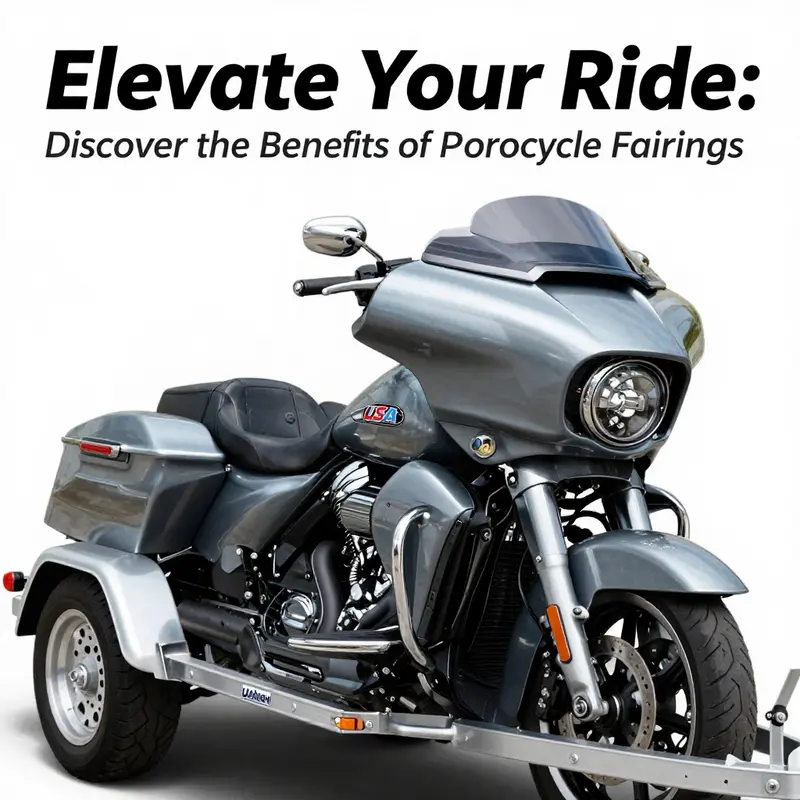 Kiedy kierowcy łączą przyczepę z motocyklem, odkrywają nowy etap aerodynamiki, widoczności i wyrażania osobistego stylu. Rozdział związany z ciągnięciem motocykla za przyczepą to więcej niż praktyczne rozwiązanie transportowe lub kampowanie; jest to laboratorium wiatru, prędkości i psychologii jakości jazdy. W całych Stanach Zjednoczonych rośnie liczba kierowców eksperymentujących z osłonami przytwierdzanymi bezpośrednio do przyczepy lub uzupełniającymi własną konstrukcję motocykla. Cel pozostaje niezmienny: zarządzanie powietrzem następującym za pojazdem, ochrona kierowcy przed elementami oraz dostarczenie wyglądu, który czuje się celowy i unikalny. Zasięg ofert jest szeroki, od prostych powłok gładzących natychmiastowy profile wiatrowy po bardziej skomplikowane, skrzydło-inspirujące formy kształtujące całą strefę wiatru wokół motocykla i jego przyczepy. W tym obszarze osłona to mniej o dekoracyjnym elementie niż o funkcjonalnym partnerze, który może zmieniać zmęczenie, hałas i kontrolę w różnych warunkach drogowych. W praktyce osłona działa jak tarcza przeciwko natarciu ciśnienia wiatru, deszczu i błotu z drogi. Gdy kierowca siedzi prosto, a przyczepa ciągnie za sobą, powietrze za wierzchnią krawędzią osłony staje się turbulentnym obszarem, który może bić kierowcę i wprowadzać nieprzyjemne poczucie oporu. Dobrze zaprojektowana osłona reguluje ten przepływ, tworząc gładki strumień. Wynikiem jest mniejsze obciążenie torsu i ramion kierowcy, zmniejszone zmęczenie podczas długich podróży oraz spokojniejsze i bardziej przewidywalne poczucie w wiatrach bocznych. Kierowca często odkrywa, że co zaczyna się jako ulepszenie estetyczne szybko dowodzi swojej wartości w wytrzymałości i pewności na drodze. W tym kontekście rola osłony przyczepy staje się tak samo praktycznym zagadnieniem inżynierskim jak wyborem stylu, kształtując, jak cały zespół zachowuje się przy dużej prędkości i zmieniających się warunkach pogodowych.
The science behind these effects rests on steady, repeatable principles. Air, when forced to move around a profile, negotiates a path of least resistance. A fairing enlarges that path by smoothing sharp edges and guiding airflow along a favorable angle. When attached to a trailer, the fairing must consider not just the rider’s wind exposure but the interaction between the motorcycle and the tow unit. The wake created by the bike can merge with the trailer’s own wake, sometimes amplifying drag or, with a well-matched fairing, canceling some turbulence through careful shaping. Designers emphasize clean lines and progressive tapering, so the air transitions from the leading edge to the trailing edge with minimal separation. The goal is not simply to reduce drag in a single dimension but to stabilize the overall aerodynamics around a moving pair. This holistic approach improves predictability for the rider, especially in gusty or crosswind scenarios, and helps the trailer maintain a steadier yaw angle.
Materials play a decisive role in achieving these outcomes. Modern trailer fairings use a blend of impact-resistant polymers, fiberglass composites, and lightweight plastics chosen for stiffness, durability, and resilience in varying climates. The selection process balances weight against strength; a heavier fairing might offer a more solid shield but at the cost of added trailer mass and potentially reduced maneuverability during storage and hitching. A lighter option, conversely, saves energy but must demonstrate adequate rigidity to resist flex at highway speeds. The outer surface is molded to resist UV exposure and to resist the cracking or yellowing that can accompany long periods in sun and rain. A textured, matte, or gloss finish may be chosen to align with the rider’s aesthetic goals, from subtle to bold, while also providing the practical benefit of reducing glare in bright sunlight.
Beyond the profile itself, the installation details matter as much as the shape. The fairing must integrate with the trailer frame or hitch point without disrupting the load path or causing vibration that could transfer to the bike or to the rider. Mounting strategies range from clamp-on brackets to bolt-on assemblies that are designed to fit standard trailer frames. Some setups require minimal permanent modifications, offering the flexibility to remove the fairing when not towing. Others are designed to be permanently affixed, emphasizing long-term stability and weatherproof sealing at all joints. In all cases, the goal is a secure interface that can tolerate highway speeds, wind gusts, and the occasional rough patch in the road. As a result, installation instructions, hardware quality, and warranty support become essential considerations when evaluating options.
One practical detail that often gets overlooked is the synergy between the trailer fairing and the rider’s own protective accessories. A windshield designed to work with fairings can provide added deflection for the rider, particularly in rain and during high-speed wind exposure. A windshield intended for fairing compatibility typically uses a robust mounting system that keeps it aligned with the rider’s line of sight and the tow vehicle’s profile. The windshield’s own material choices, such as polycarbonate or scratch-resistant laminates, complement the fairing by offering resilience against airborne debris and weathering. Although product catalogs rarely spell out every dimension, the general rule is simple: a windshield that aligns symmetrically with the fairing will deliver the best wind management and the clearest visibility. When riders seek this combination, they often discover that an integrated approach to wind control across both bike and trailer yields the most satisfying ride experience.
Aesthetics matter as much as function, and here the American market shows a penchant for bold, expressive silhouettes. Some fairing designs take on a wing-like or aero-inspired form, channeling wind in ways that accentuate the feeling of speed even when the trailer is stationary. This visual identity can be as important to a rider as the measurable drag coefficients or the marginal gains in fuel efficiency. Color and finish options become a means of personal storytelling on the road. A striking amber tint might be chosen to echo a rider’s taste for warmth and visibility, providing a distinctive signature on the highway and helping the rig stand out in a sea of conventional silhouettes. The customization mindset extends beyond color; it includes trim accents, edge detailing, and customizable mounting hardware that can be chosen to harmonize with the bike’s paint scheme or to create a deliberate contrast. In this sense, the trailer fairing becomes a mobile canvas, enabling riders to communicate mood and momentum through form and shade.
From a safety perspective, the fairing contributes several measurable advantages. The reduced buffeting around the rider translates into steadier control inputs, especially on long, straight stretches and in uneven wind environments. When crosswinds threaten to push the rig, a well-balanced fairing helps maintain directional stability, reducing the chance of unintended steering inputs and rider fatigue. The fairing-mounted mirrors, designed specifically for the fairing interface, enhance rear visibility without forcing the rider to lean toward the edge of the seat or to adjust posture in an uncomfortable way. These mirrors are designed to integrate cleanly with the fairing’s lines, minimizing vibration through better alignment with the airframe and reducing the chance of distortion as speed climbs. This arrangement fosters a more confident riding experience, where the rider can monitor other traffic without sacrificing comfort or focus.
The broader market supports a wide range of choices, including variations in profile, layering, and assembly options. Some riders seek a low-profile enclosure that tames wind while preserving a minimal, almost invisible presence on the road. Others opt for a more pronounced silhouette that performs as a visible statement, signaling a rider’s attitude with the trailer’s form as a coordinated extension of the motorcycle. Either approach benefits from clear compatibility guidance, especially when pairing a fairing with different bike models and trailer configurations. For riders who are exploring these options, a logical first step is to compare available fairings by their effective width, their degree of curvature, and their mounting compatibility with common trailer frames. The goal is not merely to choose a shape but to understand how that shape interacts with the bike, the trailer, and the road.
As riders research, they often turn to specialist resources that illustrate how fairing components interact with the broader ecosystem of motorcycle accessories. A practical reference point is to examine collections that showcase a range of fairing options for different motorcycle models, which can provide a sense of proportion, scale, and adhesive or mounting requirements. In this context, the rider’s investigation might include visiting general reference pages that group models by manufacturer lineage or by a shared aesthetic language. The exploration is rarely about chasing a single perfect solution; it is about assembling a compatible set that yields consistent performance across diverse riding scenarios. The result is a more confident journey that respects the practical realities of trailer towing and the emotional impulse toward personal style.
For those who want to dive deeper into the world of fairings and related accessories, a practical path is to study specific examples within the broader ecosystem of motorcycle customization. This can involve looking at collections that focus on a given brand’s fairings, which helps you build an understanding of how different profiles align with particular chassis and powertrain layouts. You can explore, for instance, the Yamaha fairings collection as a starting point to see how shapes, mounting interfaces, and finish options translate into real-world builds. This exploration is rarely about copying a single model; it is about translating successful geometry into a trailer context, where the goal is to harmonize air management with towing stability and rider comfort. The process invites a measured balance between form and function, an awareness that a single element on the trailer can ripple across performance and perception. For further reading on fairing design and its aerodynamic implications, see the Yamaha fairings collection for inspiration and context, and consider how those principles might adapt to a trailer-based setup. Yamaha fairings collection
In summarizing how motorcycle trailer fairings fit into the larger landscape of U.S. riding, it becomes clear that the conversation is about more than a shield from wind. It is a dialogue about efficiency, control, aesthetics, and the rider’s relationship to the open road. The fairing is a carefully engineered interface between machine and atmosphere, a deliberate shape that tucks into the weather and emerges with a quiet, confident stance. The freedom to select different materials, forms, and finishes means riders can tailor the experience to their typical routes, weather patterns, and personal narratives. It is a practical investment that yields a more comfortable ride, a more stable tow, and a more personal statement about how a rider chooses to travel. In this sense, the trailer fairing becomes a small but meaningful chapter in the ongoing story of motorcycling—where engineering meets expression, and wind becomes a collaborator rather than an adversary. For readers seeking a trustworthy starting point for broader exploration of fairing options and their integration with windshields and mirrors, the reader is invited to consult primary sources and product catalogs that illuminate the practical details that determine fit, finish, and performance. For those who crave further reading about the broader concept of motorcycle fairings, a comprehensive resource is available online. https://en.wikipedia.org/wiki/Motorcycle_fairing
Winged Innovations: Customization and Comfort in USA Trailer Motorcycle Fairings
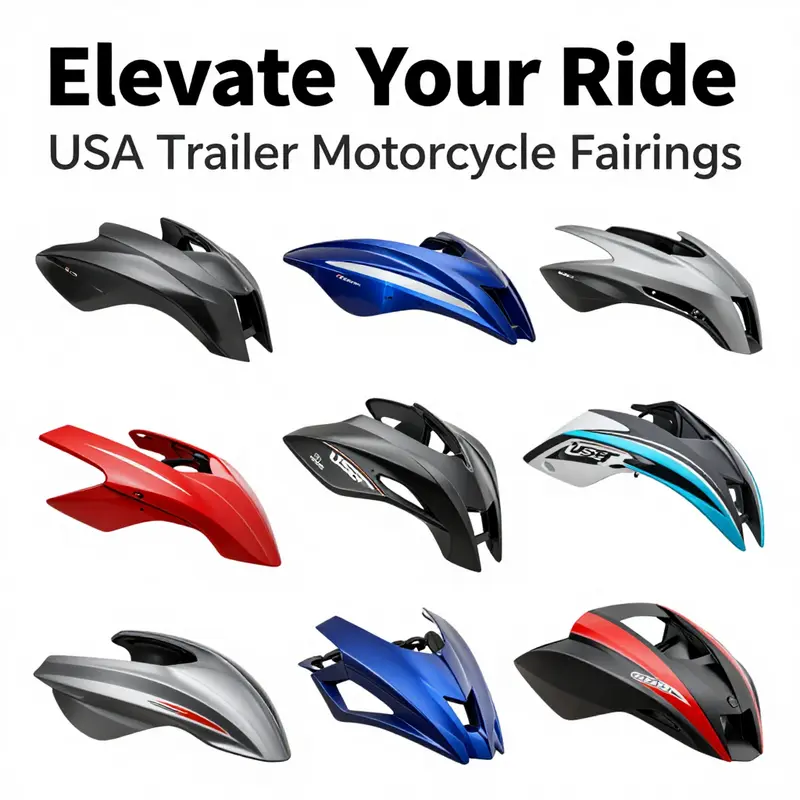 Across the open road, riders and trailer owners increasingly treat the traveling ensemble as a single expression of purpose, personality, and practical foresight. The pairing of a motorcycle with a trailer, once seen as a utilitarian setup, has become a platform for design dialogue. The fairing that graces the front of a trailer is not merely a shield against wind but a shaping element for aerodynamics, stability, and the experience of the ride itself. In this context, the conversation around customization grows richer. It moves beyond color choices and finishes into a choreography of performance and perception. A well conceived fairing can smooth air in a way that reduces fatigue on long days, yet it can also carry a rider’s voice in the palette they choose, the silhouette they approve, and the mirrors that provide a trusted line of sight from behind the handlebars to the highway beyond. This is the space where function and style converge to redefine what a trailer can be when it travels with a motorcycle, rather than simply behind it.
One of the central ideas in this ecosystem is that the fairing serves as much more than a shield from wind as it does a canvas for expression. Designers and fabricators think of airflow as a partner, not an opponent. A fairing with a batwing inspired silhouette, for instance, evokes a sense of speed and air mastery even when the machine is at rest. The shape channels air in a way that helps the trailer slice through gusts and crosswinds with greater predictability. It is not about chasing a futuristic look alone but about translating an aerodynamic philosophy into everyday practicality. For riders who spend hours on the road or pull through windy corridors of state highways, that careful balance between form and function makes a tangible difference in how the journey feels from the first mile to the last.
Customization within this framework tends to begin with a consideration of line and proportion. A fairing with bold, clean contours can define the trailer’s presence, while a more understated profile can blend with a broader system of gear and vehicle styling. This fluid approach to shape invites riders to think about where the fairing meets the trailer and how the transition influences both aesthetics and performance. For those who want a distinct visual footprint, the option to select color accents adds another layer of personalization. A color choice such as amber can offer a bold visual cue that catches light in different ways as the trailer moves from sun glare to shade. The aim is to empower riders to craft a look that resonates with their riding voice while honoring the practical need for visibility and legibility on the road. What emerges is a sense of ownership that extends beyond fashion into daily use and long distance reliability.
Color is a conversation starter, but it is not the only language. The materials and finish choices matter just as much. A high quality fairing encounters a broad spectrum of weather, road salt, rain, and sun. The best options rely on materials and coatings designed to resist warping, fading, and micro cracking over time. This durability matters when a trailer is used in varied climates, from coastal winds to inland heat. The finish then becomes a steward of the rider’s investment, helping preserve the appearance while preserving the integrity of the aerodynamic profile. In practice, this means that a rider can expect not only a striking look but a consistent performance over the life of the accessory. In the end, customization that values both aesthetics and endurance yields a product that remains visually engaging while continuing to serve its core purpose during every mile of travel.
But customization is never merely about surfaces. The concept expands to practical add ons that enhance safety and convenience. A common, well considered upgrade is the fairing mounted mirrors. These accessories are designed to integrate with the overall silhouette while delivering reliable rear visibility. The options typically include several stylistic families—some are sleek and compact, others present a more substantial edge cut or traditional shape. The key is compatibility with the fairing mounting system and the responsiveness of the mirror to different mirror arms and weather conditions. For the rider who values safety as a cornerstone of customization, mirrors that stay tight and steady across gusts, rain spray, and vibrations can be as important as the color or texture of the fairing itself. The end result is a cohesive assembly that feels engineered rather than added on—a sense that the entire setup was designed as a single, harmonized system.
Price points, of course, matter in any customization program. A broad spectrum of options makes this space accessible to a wide range of riders, from casual enthusiasts to serious travelers. Entry level components can be found at modest prices, while more premium features command higher investment. The economics reflect the balance between materials, engineering, and the promise of longer service life. For buyers who plan to live with their choice for years, investing in quality components that resist environmental wear is a prudent decision, even if it requires a larger upfront commitment. Yet the market understands that even small upgrades—plug kits for quick maintenance, simple color accents, or a robust mirror assembly—can yield outsized returns in user satisfaction and long term reliability. The net effect is a tiered ecosystem where riders can decide how far their personalization extends, without sacrificing the essential performance that keeps the trailer secure and the ride comfortable.
The installation experience is another crucial variable in the customization equation. A well designed fairing attaches with a straightforward mounting system that accommodates different trailer frames while preserving the integrity of the tow. In practice, this means components that resist deformation under wind pressure and that can be secured with common tools. The more intuitive the install, the more quickly a rider can move from concept to cruising, with little downtime spent wrestling with brackets or alignment tweaks. And because roads and environments vary, the ability to adjust the fairing slightly after each long trip can extend its life and maintain its aerodynamic benefits. Riders who take the time to align the fairing with their trailer’s geometry often describe a noticeable improvement in stability and a reduction in fatigue on back-to-back days on the road. The sense of confidence that follows is part of the value proposition that keeps customers returning to this segment for ongoing customization opportunities.
As the dialogue around customization deepens, it is worth acknowledging the social texture of the market. A community of riders who share tips not only about looks but about wind management, noise reduction, and the practicalities of mounting mirrors and lights helps everyone make smarter choices. This sharing of practical knowledge—how a particular fairing behaves with certain trailer torsion or how color can affect heat absorption—turns a purchase into an ongoing collaboration between rider and design. The result is not a static accessory but a living exchange where riders contribute experiences that influence how future iterations are imagined and refined. In this light, the fairing becomes a collaborative instrument rather than a one off add on, part of a broader system that supports longer, more comfortable journeys.
To connect this broader narrative to the everyday experiences of riders, consider the way a well chosen fairing can harmonize with a trailer’s own lines. A streamlined front end creates a sense of continuity with the motorcycle, while its presence behind the bike signals a readiness for long hours in the saddle. The aesthetic choices—whether bold or restrained, warm amber or cool satin—tell a story about the rider’s priorities and their approach to travel. The engineering behind the fairing and its mirrors addresses the practical realities of towing, yet it never loses sight of how those decisions feel when the wind shifts or when the sun dips and the road becomes a ribbon of light. In a landscape where function and fashion cohabit, a thoughtfully customized fairing stands as a small but meaningful act of design stewardship on the road ahead.
For readers who want a sense of how a broader catalog can inform this still evolving field, a representative collection of fairings offers a useful reference point. The catalog embodies the spectrum from basic utility to premium, sculpted designs, and it demonstrates how choices made in color, silhouette, and accessory options translate into a tangible riding experience. If you are curious to see how a particular profile translates into the road tested environment, a quick tour through a curated fairings collection provides a practical education in proportion, finish, and compatibility. It is through this exploration that riders learn how subtle shifts in shape can influence air flow, how a new finish can withstand the elements, and how a few well chosen attachments can extend the life of a trailer and the comfort of every trip. For those who want to venture deeper into the catalog and see how different configurations align with their own towing setup, a browse through the catalog can be a useful next step. fairings collection 2013-2014
In summation, customization for USA trailer motorcycle fairings is not a mere cosmetic layer. It is a thoughtful integration of aerodynamics, safety, durability, and personal expression. The options that touch color, silhouette, and mounting hardware create a continuum of choices that let riders tailor their equipment to the road they intend to travel. This ecosystem invites ongoing experimentation, inviting riders to test ideas in real world conditions and refine them based on experience. The result is a traveling ensemble that feels coherent, capable, and distinctly theirs. As the highway unfolds and the wind shifts, the fairing becomes part of a larger conversation about how American riders, at their best, turn a tow behind the bike into a trusted companion on long miles and new horizons.
Aerodynamics, Visibility, and Responsibility: Weaving Safety Into Motorcycle Trailer Fairings in the US
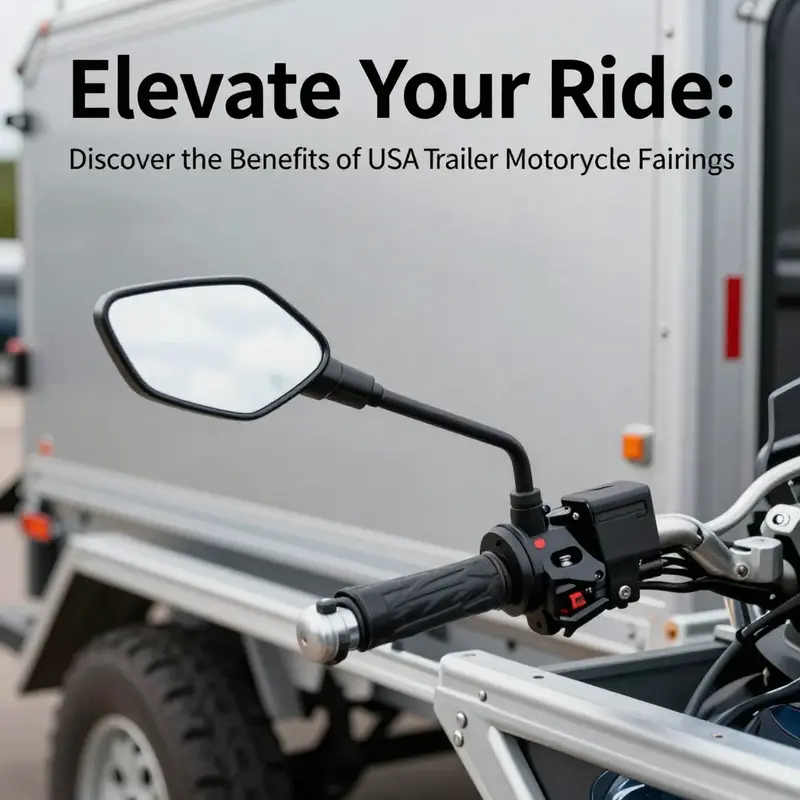 A trailer’s fairing can be an afterthought or a quiet catalyst for safer, more stable highway behavior. When you tow a bike rig behind a motorcycle, you are not just extending your vehicle’s footprint; you are layering in a new set of aerodynamic forces, sightlines, and mounting considerations. In the United States, where highways carry a mosaic of weather, traffic patterns, and road surfaces, the way a fairing interacts with wind, trailer sway, and the tow vehicle’s electrical system matters as much as the trailer’s tongue weight or braking setup. The conversation around safety features for trailer fairings is not simply about adding a pretty shell. It is about how a carefully designed fairing can reduce buffeting, channel airflow to minimize turbulence around the hitch, and preserve the rider’s control and awareness. Yet the practical reality is that, within the current knowledge landscape, explicit safety feature listings for trailer fairings and their accessories are not standardized in one universal, consumer-facing guide. What exists are general safety principles that manufacturers, engineers, and towing guidelines emphasize: compatibility with the trailer’s frame, secure mounting, and components that resist the stresses of highway speeds. In absence of a single definitive catalog, a rider must read between the lines of product descriptions, installation manuals, and regulatory guidelines to assemble a safety-minded setup that works in real-world conditions.
A fairing’s effect on aerodynamics is one of its most consequential safety attributes. The movement of air around a towed bike and its trailer can either amplify or dampen the forces encountered by one or more riders. When wind flows smoothly over a fairing, the resulting pressure distribution around the trailer tends to be steadier. This steadiness translates into more predictable tracking and a reduced likelihood of sudden, uncontrollable sway in gusty crosswinds. The physics is not magical; it is a matter of reducing abrupt changes in lift and drag that can nudge a trailer off its intended path. For riders, that means less afternoon fatigue from fought steering and a more confident sense of control when passing trucks, navigating chain-link canyons, or riding through a sudden weather shift. Of course, these aerodynamic improvements rely on a fairing being correctly sized for the trailer, properly mounted, and free from obstructions that would negate the performance gains. A poorly fitted shell or one that extends into the wheel wells or lighting area can create new turbulence, interfere with observation, or obscure essential signals that other drivers rely on.
Beyond the physics, there is an essential human factor: visibility. A fairing is not merely an aerodynamic shield; it can also be a conduit for safety in traffic by improving the silhouette of the whole bike-and-trailer combination. Bigger, brighter, or more distinctive lines can help following motorists assess the vehicle’s speed and distance more accurately. But the safety value of a fairing is not universal; it depends on how the entire lighting and signaling ecosystem is integrated. To avoid blind spots or accidental light blockage, any fairing design must preserve clear access to taillights, brake lights, turn signals, and reflectors. It must also offer mounting points for auxiliary lighting if the rider chooses to enhance conspicuity. The union of a fairing with lighting needs is not merely decorative. It has direct consequences for night visibility, day-glow presence in low-visibility conditions, and the ability of other drivers to anticipate the trailer’s movements.
The practical reality for riders is that there are many ways to achieve these safety objectives, and not all fairings or accessories are equally suited to every towing scenario. Some designs emphasize a sculpted, aerodynamic appearance with smooth contours that minimize turbulent wake. Others prioritize rugged materials and simple, utilitarian outlines that shrug off road debris and reduce maintenance headaches. The choice often comes down to where you ride, what you tow, and how much attention you want to devote to installation and upkeep. In any case, the mounting method matters as much as the shape. A fairing must be anchored to a trailer frame with hardware rated for highway speeds and temperature variations. Vibration, vibration, and more vibration can loosen fasteners over time, so a design that accounts for dynamic loads is preferable. Likewise, the integration of mirrors, if offered as part of a fairing package, needs to be robust enough to survive road spray and wind pressure without compromising the rider’s field of view.
Wpływ osłony na aerodynamikę to jedno z najważniejszych cech bezpieczeństwa. Ruch powietrza wokół przyciąganego roweru i jego przyczepy może zwiększać lub zmniejszać siły napotykane przez jednego lub więcej kierowców. Gdy wiatr płynie gładko po osłonie, rozkład ciśnienia wokół przyczepy staje się bardziej stabilny. Ta stabilność prowadzi do bardziej przewidywalnego śledzenia i zmniejszonego ryzyka nagłego, niekontrolowanego wahania w wiatrach poprzecznych. Fizyka nie jest magiczna; to kwestia zmniejszania nagłych zmian podnoszenia i oporu, które mogą popychać przyczepę z drogi. Dla kierowców oznacza to mniej zmęczenia po południu z walki ze sterowaniem i większą pewność siebie przy przejeżdżaniu obok ciężarówek, poruszaniu się przez łańcuchowe kaniony lub jazdzie w przypadkowej zmianie pogody. Oczywiście, te poprawy aerodynamiczne zależą od tego, czy osłona jest odpowiednio dobrana do przyczepy, prawidłowo zamontowana i wolna od przeszkód, które mogłyby anulować zyski w wydajności. Zły dopasowany płaszcz lub ten, który rozciąga się do kół lub obszarów oświetlenia, może tworzyć nowe turbulencje, zakłócać obserwację lub zakrywać istotne sygnały, na które opierają się inni kierowcy.
Poza fizyką, istnieje istotny czynnik ludzki: widoczność. Osłona nie jest jedynie tarczą aerodynamiczną; może również być medium bezpieczeństwa w ruchu, poprzez poprawę sylwetki całego zestawu motocykla i przyczepy. Większe, jaśniejsze lub bardziej charakterystyczne linie pomagają kierującym za nimi ocenić prędkość i odległość pojazdu dokładniej. Ale wartość bezpieczeństwa osłony nie jest uniwersalna; zależy od tego, jak cały system oświetleniowy i sygnalizacyjny został zintegrowany. Aby uniknąć miejsc ślepych lub przypadkowego zasłaniania światła, każdy projekt osłony musi zapewniać jasny dostęp do świateł tylnych, światła hamulcowego, kierunkowskazów i reflektorów. Musi również oferować punkty montażowe dla dodatkowego oświetlenia, jeśli kierowca chce zwiększyć widoczność. Połączenie osłony z oświetleniem nie jest jedynie dekoracyjne. Ma bezpośrednie konsekwencje dla widoczności w nocy, obecności w warunkach niskiej widoczności oraz zdolności innych kierowców do przewidywania ruchu przyczepy.
Praktyczna rzeczywistość dla kierowców polega na tym, że istnieje wiele sposobów osiągnięcia tych celów bezpieczeństwa, a nie wszystkie osłony lub akcesoria są równo odpowiednie dla każdego scenariusza przyciągania. Niektóre projekty podkreślają wygląd aerodynamiczny z gładkimi konturami, które minimalizują turbulencję. Inne priorytetem mają trwałe materiały i proste, funkcjonalne kształty, które odpierają drobne elementy drogi i zmniejszają problemy z utrzymaniem. Wybór często zależy od tego, gdzie jeździsz, co przyciągasz i ile uwagi chcesz poświęcić instalacji i konserwacji. W każdym razie, sposób montażu ma taką samą wagę jak kształt. Osłona musi być zamocowana do ramy przyczepy za pomocą sprzętu odpornego na szybkość drogową i zmiany temperatury. Wibracje, wibracje i jeszcze więcej wibracji mogą rozluźnić śruby z czasem, więc projekt, który uwzględnia dynamiczne obciążenia, jest lepszy. Podobnie, integracja lusterek, jeśli oferowane jako część osłony, musi być wystarczająco trwała, aby wytrzymać deszcz i ciśnienie wiatru bez zakłócania pola widzenia kierowcy.
Rozważając bezpieczeństwo, pomocne jest myślenie o osłonie jako części systemu, a nie jako osobnej cechy. System składa się z ramy przyczepy, przyczepy, elektroniki pojazdu ciągnącego, obwodu oświetleniowego i dynamiki płynów drogi. Dobrze zaprojektowana osłona będzie współpracować z tymi elementami, a nie z nimi walczyć. Nie będzie blokować ani komplikować punktów mocowania używanych do zabezpieczenia lub kołków, a także nie będzie wpływała na dostęp do ramp przyczepy lub miejsca załadunkowego. Najskuteczniejsze projekty szanują rozłożenie masy przyczepy i zapewniają, że dodatkowa masa nie przesuwa środka ciężkości w sposób, który może zakłócać stabilność przy wysokiej prędkości lub podczas wejścia w skręt. Krótko mówiąc, bezpieczeństwo wynika z zgodności i harmonii, a nie z pojedynczej cechy. Ten punkt widzenia jest potwierdzony najlepszymi praktykami branżowymi, które podkreślają dokumentację, właściwy montaż i regularną konserwację jako bariery bezpieczeństwa, a nie opcjonalne luksusy.