















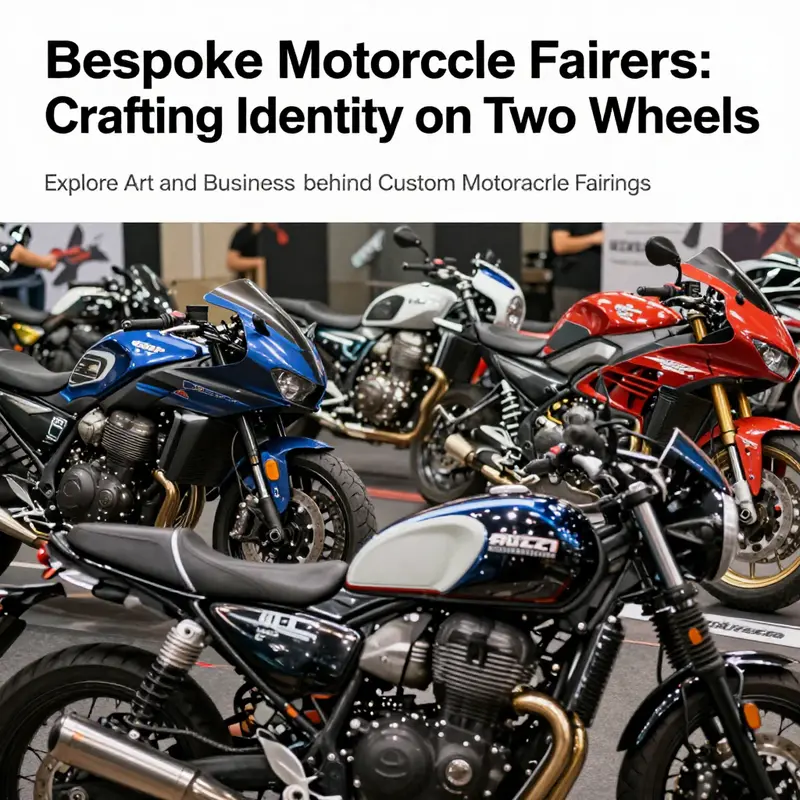
Bespoke motorcycle fairings stand at the crossroads of personalization, engineering precision, and rider identity. As motorcycle enthusiasts seek to express their individuality, the demand for custom fairings has surged, offering not just aesthetic appeal but also enhanced functionality. This article delves into the multifaceted world of bespoke motorcycle fairings, breaking down the intricate design process, the materials that elevate their craftsmanship, and the potential for functionality enhancements. Additionally, we’ll explore the economic implications of this bespoke production and offer guidance on selecting the right manufacturer. Understanding these elements not only benefits business owners operationally but also creatively opens avenues for unique offerings in an evolving market.
From Concept to Curve: Designing Bespoke Motorcycle Fairings for Performance and Personality
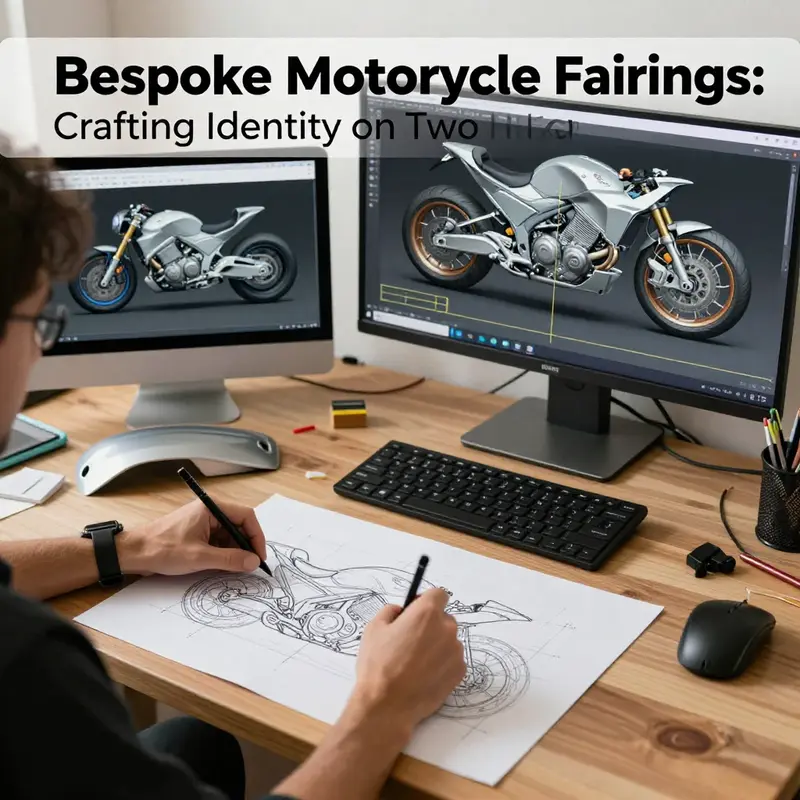 From concept to curve, the design process of bespoke motorcycle fairings unfolds as a single, continuous dialogue between imagination and physics. It is equally an artistic pursuit and a precise engineering challenge, because a fairing is never just a shell; it is a shape that must kiss the air, cradle the rider, and blend with the bike’s geometry and electronics. This journey begins in a quiet room where ideas take rough form and ends on a wind-swept road where the rider senses, without thinking, that every contour has chosen itself to make the ride more intimate. The bespoke path rejects generic solutions in favor of tailored snugness—fit, feel, and function tuned to the specific motorcycle model, the rider’s posture, and the performance goals that define the project. The result is not merely a cosmetic upgrade but an integrated system where aesthetics, aerodynamics, and durability act in concert to transform how a machine behaves at speed and how a rider experiences it at rest and in motion.
Conceptualization sits at the heart of this process as the first real conversation between desire and constraint. Designers begin with a clear brief: the motorcycle in question, the rider’s aims, and the environment where the bike will most often operate—whether it is street miles, circuit laps, or rugged backroads. Aesthetics come alive through sketches that translate mood into line, tone into silhouette, and memory into a language of curves. This phase is not a mere art exercise; it is a practical draft where form must anticipate fit with existing components such as headlights, mirrors, and the instrument cluster. Digital modeling, usually through CAD, takes over quickly. In the virtual space, the fairing materializes in three dimensions, and every interface with the bike’s geometry is tested for clearance, mounting points, and potential interference. The designer’s eye seeks harmony between the new skin and the bike’s original lines, ensuring that the fairing does not fight the bike’s geometry but rather extends it, like a natural extension of the chassis and rider posture. The goal is a cohesive expression that respects the bike’s identity while enabling the rider to express a personal vision.
Aerodynamic optimization follows as the critical bridge between vision and reality. The fairing must slice through air with minimal drag, yet it must preserve stability and controllability at high speed. Computational fluid dynamics (CFD) becomes the language by which ideas are tested before a single piece of material is cut. CFD simulations reveal how air streams negotiate every bend, edge, and junction, highlighting potential sources of turbulence and buffeting. Designers iterate on shapes, tuning canopy angles, chine lines, and venting strategies to manage not only drag but lift, downforce, and crosswind sensitivity. The interaction with other components—such as the front fender, headlight elements, and handlebars—receives careful attention to avoid unintended flutter or misalignment. The process often involves virtual wind tunnel tests that simulate real-world conditions and rider postures. In this way, the fairing becomes an active participant in the bike’s performance envelope, smoothing airflow over the rider’s seated position and guiding it toward a path that reduces noise and fatigue without sacrificing the bike’s aggressive stance.
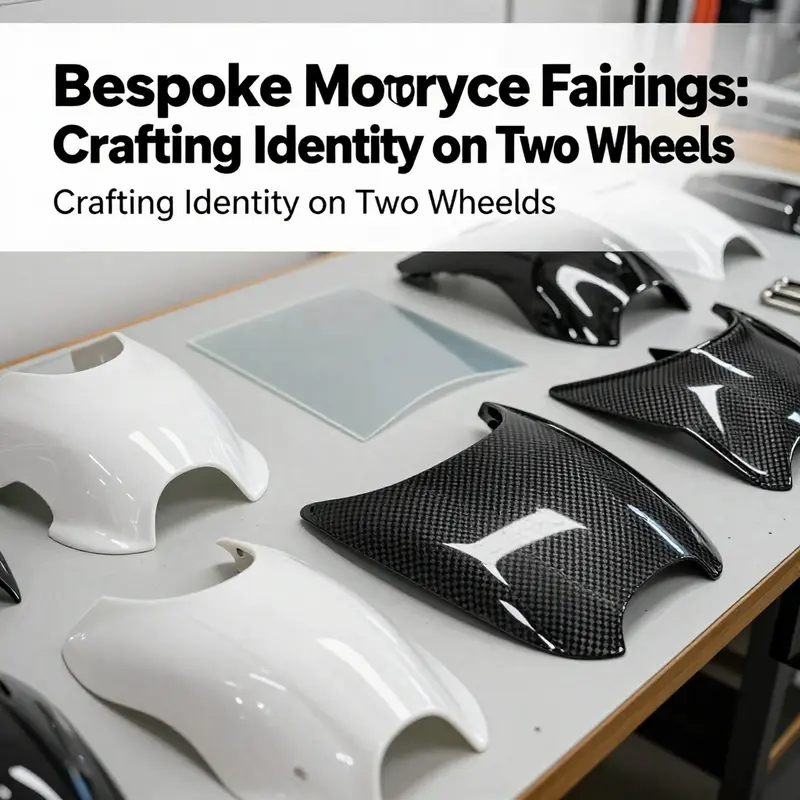
Material selection then translates digital dreams into physical reality. The dominant choices are high-performance polymers such as ABS and PP, prized for their strength-to-weight ratios, moldability, and impact resistance. These polymers can be shaped into complex, sculptural forms while remaining durable under the stresses of racing or daily riding. UV stability is a recurring concern, particularly for bikes that spend long hours under sun or in open environments, so stabilizers and protective coatings are commonly applied to preserve color integrity and material properties. In projects where weight and stiffness are paramount, carbon fiber may enter the conversation, offering near-ultimate strength-to-weight benefits but at higher cost and more involved manufacturing. The material strategy must also consider aging, abrasion, and repairability, because a bespoke fairing should endure years of exposure while maintaining ease of service. This careful pairing of material performance with the design intent ensures that aesthetics do not come at the expense of practicality and safety. The choice of materials relentlessly loops back to the rider’s needs: a fairing that looks purposeful and refined yet remains forgiving in the real world, where rock chips, road debris, and temperature swings test resilience.
Manufacturing approaches reflect the scale and ambition of each project. For many bespoke fairings, injection molding or vacuum forming provides the balance of precision and efficiency required for complex geometries. In limited runs or highly intricate forms, hand finishing may be essential to guarantee paint adhesion, edge quality, and surface smoothness. The process does not end at forming; it extends into a meticulous phase of surface preparation, priming, painting, and coating that safeguards the finish from chips and UV exposure. The painter’s skill in blending edges and transitions matters as much as the designer’s mathematics, because a seamless surface contributes to perceived quality and aerodynamic integrity. In all cases, tolerances are carefully controlled to ensure a precise fit with mating parts and connectors. The production philosophy emphasizes repeatability, but the bespoke nature means each fairing tells a slightly different story of how a particular bike and rider converge in material form. A well-executed build respects not only aesthetics but the mechanical interfaces that guarantee proper mounting and long-term reliability.
Prototyping and rigorous testing complete the loop between idea and reality. A physical prototype is mounted on the motorcycle to evaluate fitment, harbored by rideable feel and ergonomic compatibility. Engineers observe how the fairing behaves under real wind conditions, listening for unusual noises, vibrations, or flex that might indicate a design flaw. Wind tunnel testing, when available, provides a precise measurement of drag coefficients and pressure distributions that are otherwise hard to glean from CFD alone. Rider feedback is invaluable in this stage; the human element—how the wind feels on the shoulders, how the cockpit breathes, how the air affects helmet stability—often reveals nuances that purely technical testing cannot. Iterative cycles of refinement follow: adjust a fairing edge here, soften a curve there, relocate a mount point, or tweak a duct for better air steering. Each revision edges closer to a finish that fuses form and function. The prototype then becomes a blueprint for production or for subsequent iterations should the rider seek further personalization. This relentless testing discipline is the heartbeat of bespoke design, transforming a concept into a durable, ride-ready sculpture that improves the motorcycle’s presence and performance.
Beyond the craft of forming and fitting, bespoke fairings demand a thoughtful consideration of how they communicate identity. The shapes carry mood, whether inspired by classic lineage, modern minimalism, or futuristic prophecy. This expressive layer is not superficial trimmings; it is a coherent design language that informs every contour, void, and transition. The lines must not shout louder than the bike’s essence but rather harmonize with it, so the rider feels a natural amplification of their own riding voice. In practice, this means testing for proportional relationships: the scale of the fairing to the wheel, the clearance to the brake lines, the negative space around the headlight cutouts. It also means acknowledging the rider’s practical rituals—how protective film, maintenance access, and removable panels influence ease of service. A bespoke fairing should invite care, not complicate it. It should age gracefully, with color and texture that resist micro-scratches and weathering, while still enabling the owner to refresh the finish as tastes evolve.
A final layer of collaboration binds the process together. Designers work closely with craftspeople who understand the material’s behavior and the tolerances required for consistent results. The rider’s expectations crystallize into a prototype that embodies both emotional resonance and measurable performance gains. At this intersection, the project becomes a narrative of care—care for the bike’s silhouette, care for the rider’s experience, and care for the long-term relationship between machine and owner. It is this synthesis of artistry, engineering, and practical know-how that elevates bespoke fairings from mere aftermarket parts to a heightened state of integration where form and function meet in a way that feels inevitable once the bike is completed. For readers seeking a tangible sense of how previous builders have translated this design language into real-world shapes, exploring a wider catalog can illuminate the continuum from heritage-inspired forms to contemporary interpretations. A practical starting point might be the Honda fairings collection, which showcases how existing shapes can inspire bespoke variations while preserving essential fitments and ergonomic rationales. Honda fairings collection
When the journey begins anew for the next rider or model, the design process recurs with a different set of constraints and aspirations. The objective remains constant: to craft a fairing that respects the bike’s anatomy, answers the rider’s functional and emotional necessities, and presents a singular visual statement that will endure under the scrutiny of time and speed. The best bespoke fairings are not simply a product of advanced software or expensive materials; they are the culmination of a disciplined workflow that recognizes both the beauty of disciplined curves and the power of tested, repeatable processes. As with any high-precision craft, the result is a material identity that feels inevitable to those who experience it—an identity earned through careful listening, rigorous testing, and an unyielding commitment to aligning design intent with real-world performance. For readers who want to explore the broader spectrum of bespoke possibilities, the materials, forms, and techniques discussed here provide a framework that can be adapted to almost any motorcycle, from classic retro-styles to aggressive track-focused profiles. The design journey is not merely about making a bike look different; it is about shaping the rider’s connection to the machine by translating intention into a tangible, tactile encounter that resonates at speed and at rest.
External resource: https://www.motorcyclefairing.com/design-process-bespoke-fairings
null
 null
null
Wind, Weight, and Wonder: The Functional Edge of Bespoke Motorcycle Fairings
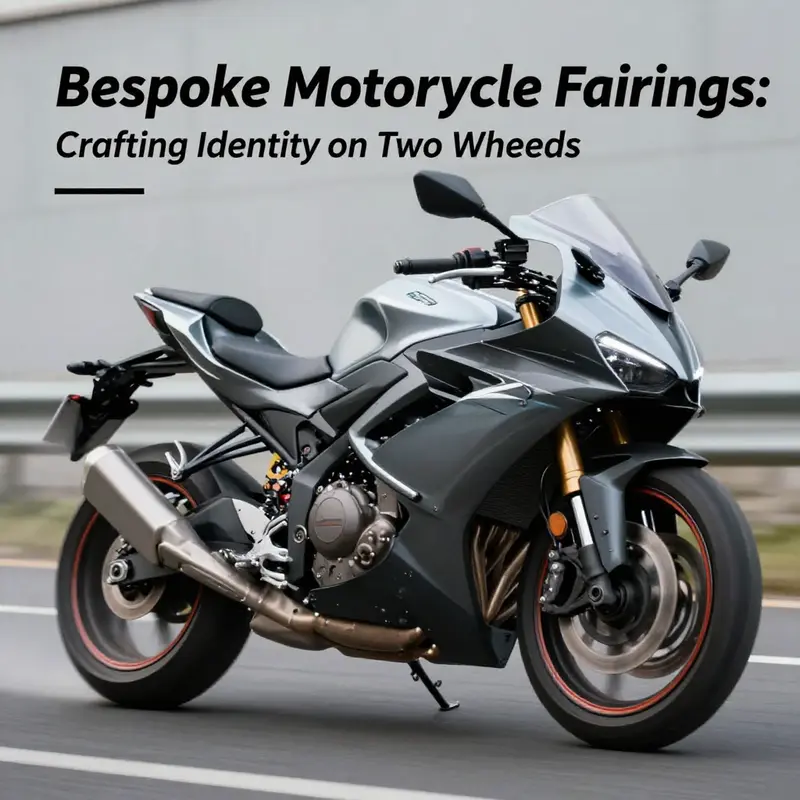 Bespoke motorcycle fairings live at the intersection of performance and poetry. They are not merely shells painted to catch the eye; they are carefully engineered interfaces between rider, machine, and the air that surrounds them. In the world of riding, where every gram matters and every gust of wind can tug at a rider’s posture, tailored fairings offer a precision that mass-produced pieces seldom match. They are crafted to respond to the rider’s specific motorcycle geometry, riding position, and the predictable yet highly variable demands of real-world conditions. The result is a component that does more than look unique; it reshapes the bike’s behavior at speed, at throttle, and through the long arc of a ride where fatigue, posture, and cockpit comfort determine how far you go and how well you remember the journey.
From the outset, the functional objective of bespoke fairings is to optimize aerodynamics without compromising fit or aesthetics. This begins with a detailed understanding of the machine’s curves and the rider’s posture. A skilled fabricator or design studio will start with measurements—everything from rake and trail to the rider’s elbow bend and knee contact points. Modern practice often employs high-fidelity 3D modeling, sometimes complemented by tactile clay or foam mockups that capture the tactile sense of the bike in the hand. The aim is not to impose a generic silhouette but to craft a skin that echoes the bike’s lines while guiding airflow with surgical intent. The fit must be exact, integrating smoothly with headlights, mirrors, and instrumentation so that there is no clash between components and no protrusion that creates unexpected turbulence. When a fairing fits perfectly, it behaves like a single aerodynamic system rather than a collection of molded panels slapped onto a frame.
One of the primary functional gains is the management of air itself. High-speed wind is not a mere nuisance; it is a force that can buffets a rider, raise fatigue, and influence handling. Bespoke fairings are designed to minimize drag and reduce turbulent wake. They do this through carefully contoured surfaces, optimized radii, and deliberate transitions from windward to leeward sides. The end result is smoother airflow over the rider’s torso and a more stable wind envelope around the helmet. Riders report reduced wind noise and less helmet buffeting at sustained highway speeds, which translates into quicker recovery after long days in the saddle and a calmer, more focused riding posture. Adjustable wind management systems are a standout feature in many bespoke projects. Height-adjustable or removable windscreens let the rider fine-tune the balance between wind protection and visibility. In practice, a single bike can be optimized for a 120-km/h sprint on a dry day or a relaxed 60-km/h country road ride with the wind howling from a different angle. Being able to dial in airflow reduces fatigue, maintains a clearer line of sight, and enhances the rider’s sense of control when options change—whether due to weather, elevation, or tempo.
A secondary but equally important aerodynamics pillar is integration. The fairing becomes a living part of the bike’s cooling and propulsion ecosystem. Air intakes and channels can be optimized to feed engine and radiators with a steady, pressure-balanced flow, improving cooling efficiency at speed and during spirited acceleration. The channels may guide air to critical components, assisting with heat dispersion while avoiding hot pockets that could degrade performance or rider comfort. The exhaust routing, underbody diffusers, and side-stream vents are not mere stylistic decisions; they are purposeful features designed to shape the pressure gradients that reach the engine bay, the beltline, and even the rider’s legs. The result is a functional increment in efficiency that, while perhaps subtle on a short ride, becomes decisive during a long stint on a track or a cross-country sprint on a hot day.
Material choices play a central role in translating aerodynamic intent into real-world performance. Polycarbonate remains a stalwart for visibility and impact resistance, making it ideal for windshields and light covers where clarity matters. It protects the rider from the consequences of road debris without sacrificing visibility, though it benefits from protective coatings to resist surface scratching in the field. ABS, favored for its lightness and moldability, supports large, complex shapes with a forgiving manufacturing footprint. It absorbs impacts well and remains cost-effective for many applications, which is important when fairings must be rebuilt or replaced after intense use. For riders pursuing greater stiffness and reduced flex under load, fiberglass offers a compelling balance of rigidity and weight. It resists cracks that might propagate under high-speed vibrations and lean angles, ensuring the fairing maintains its aerodynamic geometry even after repeated exposure to track-grade stress. Carbon fiber, rarely the starting point for all projects but highly prized where extreme weight savings are crucial, delivers unmatched stiffness-to-weight performance. It can be tailored to specific load paths and contour requirements, producing an ultra-light skin that still carries the print of a bespoke design. Each material brings advantages and compromises—durability, optical clarity, rigidity, weight, and cost interplay with the rider’s goals. The selection process, therefore, becomes a negotiation not just about looks but about how the bike breathes, moves, and responds under load.
Yet materials and aerodynamics alone do not define function. Bespoke fairings can enclose and safeguard critical engine and electrical components from harsher weather, stone strikes, and the relentless assault of UV exposure. They can be engineered to resist degradation over time, maintaining structural integrity and the visual promise the rider saw at the design table. Integrated features extend the fairing’s utility beyond protection. For example, some projects incorporate built-in storage compartments or cleverly concealed mounting points for accessories. This combination of utility and concealment preserves the sleek lines that drew the eye in the first place while adding practical value for riders who use their bikes in a daily cadence that blends commuting with weekend escapes. The result is a skin that looks purposeful and behaves accordingly—an interface that supports a rider’s ambitions without becoming a distraction or a compromise point in the bike’s control loop.
Another aspect of function that deserves emphasis is the effect on handling characteristics. When a fairing’s geometry respects the bike’s geometry and mass distribution, it helps preserve predictable steering, stable high-speed behavior, and consistent feedback through the handlebars. The aerodynamic load shifts that come with a properly tuned fairing can reduce draft-induced instability at the motorcycle’s front end, particularly in gusty crosswinds. A rider who can lean into a corner with the confidence that the fairing will hold its line and not fight against the wind experiences a deeper sense of connection with the machine. In practical terms, that translates to a bike that feels more planted on entry, more confident through mid-corner transitions, and more forgiving if weight is shifted unexpectedly during aggressive riding. This is where aesthetics and engineering converge: the shape that turns heads also yields the steady heartbeat of performance that riders notice in the saddle.
Function, in a bespoke context, is not a one-time calculation but an ongoing dialogue between rider, fabricator, and the bike’s evolving use. A track-focused fairing may prioritize maximum rigidity and direct airflow paths to optimize cooling and downforce, while a touring-oriented design might emphasize wind protection, noise reduction, and storage capacity. The design process embraces iteration and testing, often moving from digital simulations to physical prototypes, then to a few ride tests that reveal how real-world conditions alter the performance equation. This iterative loop is crucial; it ensures the final product remains faithful to the rider’s aims while honoring the bike’s inherent geometry. It also means that the bespoke fairing evolves with the rider’s needs—whether those needs shift with a new riding style, a different motorcycle in the stable, or a change in routes and climates.
Crucially, the functional gains of bespoke fairings hinge on the credibility of the maker. A well-executed project rests on adherence to material quality standards, safety considerations, and compatibility with existing components. It is not enough to produce a body that looks good in a studio render; the fairing must perform in the real world. It must withstand the rigors of long-term exposure to heat, sun, moisture, and road grit, while maintaining its precise fit with sensors, dash plastics, and lighting elements. A trustworthy partner will provide a transparent specification of materials, explain the expected service life, and offer post-installation checks to ensure ongoing alignment and performance. When done well, the resulting fairing becomes more than a protective shell; it becomes a performance envelope that enhances the bike’s efficiency, reduces the rider’s burden at speed, and deepens the emotional bond between machine and rider.
For riders who pursue bespoke fairings as a form of technical expression, the value is measured less by a single dramatic change and more by a cascade of small, cumulative improvements. Reduced drag lowers fuel consumption on long rides; a calmer wind environment preserves mental stamina; improved fit eliminates hot spots and rattles that distract during spirited runs. A streamlined profile can afford richer top-end stability, so the rider can concentrate on line choices rather than compensating for a gust that disrupts balance. The added convenience of integrated storage or mounting points can simplify touring logistics, letting a rider carry essentials without compromising the silhouette or its aerodynamic coherence. The fairing becomes a modular, adaptive tool rather than a fixed adornment: something that scales with performance ambitions, daily realities, and the rider’s evolving taste.
Ultimately, bespoke fairings embody a philosophy of mindful engineering: they are designed to honor the rider’s intent while pushing the envelope of what is possible with form and function. They deliver tangible gains in efficiency, stability, and comfort without sacrificing identity. And because they are crafted to a rider’s exact model and posture, they harmonize with the bike’s lines rather than fighting against them. The best projects read as if the fairing had always belonged to the motorcycle—an extension of its architecture that the rider can forget as it disappears into the ride, only to reveal itself in the quiet moments when speed gives way to control, and control blossoms into confidence. In that sense, bespoke fairings are not simply cosmetics with a premium price tag; they are performance enablers that convert airflow, weight, and geometry into a more confident, more enjoyable, more personal riding experience. They are, in every real-world sense, a functional upgrade that happens to look utterly singular.
External resource for further reading: https://www.motorcycle.com/tech-features/bespoke-motorcycle-fairings-aerodynamics-and-performance-enhancements-2026/
Riding the Ripple: The Economic Pulse and Prosperity of Bespoke Motorcycle Fairings Production
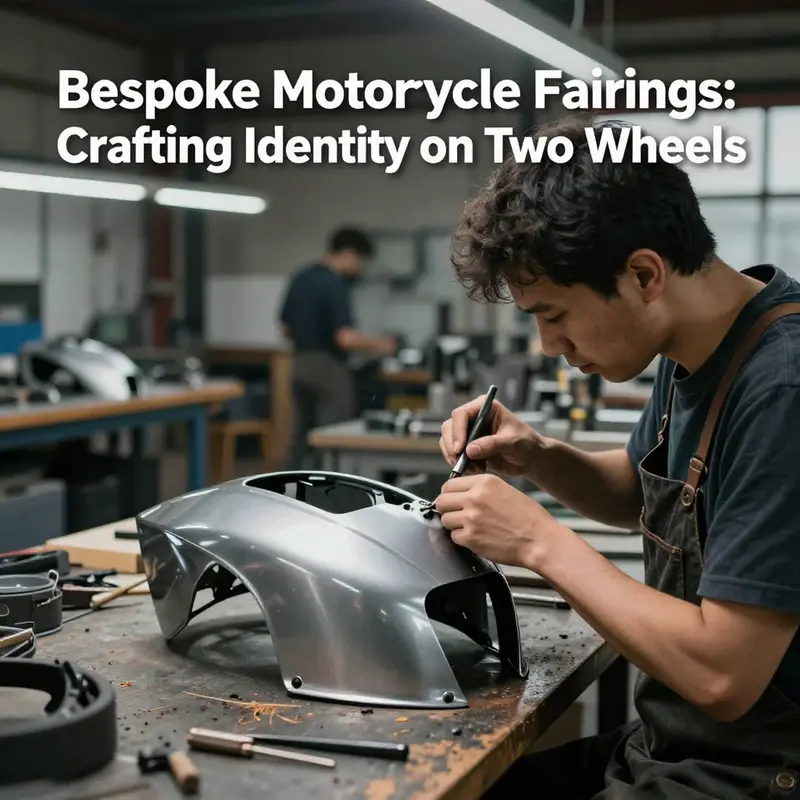 In the world of motorcycles, the bespoke fairing is not merely a shell wrapped around a frame; it is a statement of design intent, a marriage of aerodynamics and artistry, and a measurable economic force that reverberates through design studios, workshops, and supply chains. The economics of bespoke motorcycle fairings unfold as a quiet but persistent current beneath the roaring surface of performance riding. They begin with a rider’s desire for a one-off expression and end with a cascade of investments, labor, and trade that shape regional economies and global markets. The chapter that follows traces this current, linking a rider’s personal aspiration to a complex ecosystem where engineering precision, material science, and manufacturing discipline converge to create value well beyond a single bike’s silhouette. It is a narrative of how customization, when scaled through careful process and responsible production, becomes a driver of growth in design, fabrication, and distribution networks alike.
At the core of the economic impact is a simple yet powerful fact: bespoke fairings command a premium. This premium reflects not only the luxury status of personalization but also the intensiveness of the design and production workflow. Unlike mass-produced OEM components, bespoke fairings demand meticulous measurements, individualized aerodynamics tuning, and parts integration that must harmonize with a bike’s specific geometry and rider posture. 3D modeling, clay mockups, and multi-stage prototyping extend the development timeline, and with them comes higher upfront cost. Yet riders are often willing to invest because the payoff is a perfect fit, enhanced performance, and a coherent aesthetic that cannot be replicated by off-the-shelf shells. That willingness to pay translates into a revenue model that supports specialized design studios, precision shops, and small to mid-sized manufacturing networks—an economic architecture that thrives on capability, not volume alone.
Market data underscore the scale and velocity of this opportunity. The global motorcycle fairing market hovered around USD 2.1 billion in 2023 and is projected to grow at a robust pace, with forecasts placing a compound annual growth rate (CAGR) in the range of 11.7% to 13.4% from 2025 to 2032. These figures do more than illuminate market size; they reveal an evolving demand for customization as riders increasingly see their machines as personal platforms, capable of signaling identity while delivering performance benefits. The drivers are multifaceted: a rising tide of riders who seek differentiation, a broader adoption of high-performance composites, and a growing ecosystem of independent designers who translate a rider’s narrative into a tangible part. In parallel, the materials toolkit—polycarbonate for impact resistance and optical clarity, ABS for durability and cost efficiency, fiberglass for workable composites, and carbon fiber for peak performance—has matured, enabling parts that are lighter, stronger, and more aesthetically expressive than ever before. This material evolution not only improves the rider experience but also broadens the market’s tax base: more specialized suppliers, more skilled labor, and more regional manufacturing clusters.
The production narrative itself is a study in optimization, where economics meet engineering. The workflow typically begins with a detailed briefing and a precise data capture of the motorcycle’s dimensions, riding posture, and intended use. Designers translate this input into a precise digital model, often accompanied by physical clay maquettes to evaluate ergonomics and airflow behavior. The choice of material becomes a strategic decision that balances cost, weight, impact resistance, and surface finish. Polycarbonate offers excellent impact resistance and clarity for visually striking inserts, ABS handles abuse and production efficiency, fiberglass provides a forgiving composite path for boutique work, and carbon fiber delivers the lightest option with supreme rigidity. Each material choice has a cascading effect on cost, lead time, and the supply chain’s resilience. The production network expands beyond a single shop; it calls for reliable resin suppliers, mold makers, CNC machinists, and finishing specialists. In this sense, bespoke fairings become a catalyst for local and regional manufacturing ecosystems, stimulating demand for skilled labor and long‑term supplier relationships.
The economics of customization are deeply intertwined with efficiency gains that come from advanced manufacturing methods and design discipline. Modern bespoke projects often leverage digital twins and parametric design tools, allowing a studio to quickly iterate fitment, aerodynamics, and aesthetics while preserving accuracy. When a fairing is designed to match exact geometry, it reduces assembly friction on the bike and minimizes integration challenges with headlights, instrumentation, and mounting points for accessories. That careful fitment lowers post-sale service costs and warranty risk, which in turn enhances the perceived value of the service and strengthens customer loyalty. In a market where clients increasingly expect not only a unique look but also seamless operation, the ability to guarantee precise fitment becomes a differentiator that justifies higher price points and sustains investment in top-tier talent and equipment.
Beyond the shop floor, the economic ripple extends through the distribution and service networks. Bespoke fairings influence demand for faster prototyping services, specialized paint and finish shops, and color-matching laboratories. They also spur demand for digital scanning capabilities, which convert a rider’s dream pattern into production-ready data without sacrificing fidelity. Shops that can translate a customer’s ideas into a ready-to-fit part become hubs of specialized expertise. Their growth supports ancillary roles—from CAD technicians and prototypers to quality inspectors and logistics coordinators who manage the movement of fragile, high-value parts. As this value chain expands, local economies gain new employment opportunities, training pipelines, and entrepreneurial avenues for skilled technicians. In effect, bespoke fairings serve as a microcosm of the broader blue-collar-to-tech-manufacturing continuum, a pathway by which craftsmanship evolves into sustainable, high-skill employment.
A notable dynamic within this ecosystem is the shift toward eco-friendly innovations in production. The push for sustainability is not ancillary; it is increasingly a competitive differentiator in a market that prizes performance with a lower environmental footprint. Manufacturers are embracing eco-conscious materials and processes that reduce emissions during production while maintaining or enhancing durability and performance. Lightweight composites, recyclable resins, and optimized tooling reduce waste and energy consumption. Lean production and closed-loop recycling streams help studios manage costs while delivering high-quality finishes that stand up to the demands of racing and daily riding. The environmental narrative thus aligns with the economic narrative: as studios invest in sustainable practices, they can realize longer-term cost savings, meet evolving regulatory expectations, and appeal to riders who weigh environmental impact alongside aesthetics and performance when choosing a custom partner.
Nevertheless, the economics of bespoke fairings face challenges that shape market dynamics. The bespoke model is inherently capital-intensive. The upfront costs for design, rapid prototyping, tooling, and skilled labor can be substantial, and the longer lead times needed to deliver a truly custom product contrast wit