
















As motorcycle design continues to evolve, components like the front fairing of the 2011 Victory Cross Country Touring S play a pivotal role in optimizing performance, aesthetics, and rider experience. With its key functions that enhance aerodynamics and comfort, the front fairing becomes not just an accessory but a necessity. Businesses dealing in motorcycle parts and services will benefit significantly from understanding how to source compatible replacements, the technical specifications involved, and the value of aftermarket options. Each chapter of this article delves into these critical aspects, offering insights that can help enhance sales and customer satisfaction. We’ll explore compatibility, technical specifications, aftermarket options, installation considerations, and the profound impact of the front fairing on the rider’s journey, equipping business owners with the knowledge to support their clients effectively.
Beyond Aesthetics: Compatibility, Sourcing, and Fit for a 2011 Touring Motorcycle Front Fairing
 A front fairing does more than frame a motorcycle’s face. On a 2011 touring-class machine, the fairing is the primary interface between rider and wind, a chassis-adjacent body panel that shapes aerodynamics, cabin comfort, and the silhouette that defines the bike from curb to horizon. When the goal is to maintain or restore that delicate balance of performance and presence, the front fairing becomes a test of precision as much as a cosmetic touch. The chapter you just read framed the idea that compatibility matters far beyond appearance. It is here, in the careful alignment of parts, mounting points, and design intent, that a rider discovers whether a replacement or upgrade will truly serve the journey rather than merely cover a gap. The right front fairing, verified to fit year and model, does not just reduce buffeting; it preserves the intended airflow, preserves instrument clarity, and keeps the windscreen in harmonious proportions with the chassis geometry. That harmony is where comfort and efficiency meet, ride after ride, mile after mile.
To understand why compatibility is so critical, consider a touring framework built around a specific year’s wind pressure, headlight alignment, and mounting architecture. Every hole pattern, every notch for the instrument cluster, every cutout for switches and wiring, is calibrated for a unique blend of wind resistance and rider reach. A fairing from a different year or a different model may look similar, yet small deviations in mounting points, anchor brackets, or the curvature of the plastics can render the piece unreliable. The problem often appears not as an obvious misfit but as subtle misalignment: gaps where the fairing rest too loosely, creaks at highway speeds, or a windscreen that no longer sits at the intended height. This is not merely a matter of aesthetics; it is a question of structural integrity, aerodynamics, and rider confidence on long hauls. The best sourcing decisions begin with accepting that front fairings are year-sensitive components, designed to work within a precise ecosystem of brackets, fasteners, and nearby assemblies.
The practical challenge begins with the marketplace itself. A 2011 touring motorcycle front fairing is a specialized object. It exists within a family of parts that share a common geometry, yet diverge as the bike’s design matured through the years. When seeking a replacement or upgrade, the rider faces several layers of verification. Are you looking at a fairing that fits the exact year and model, or is it one that merely resembles the original form? Does the listing specify the mounting brackets required for installation, or will you need to source those separately? Is the windscreen compatible with the fairing’s cutouts and hinge points, or will you be forced to chase a new windscreen that matches the updated contours? These questions are not academic. They determine whether a purchase shortens a project or extends it, whether a weekend job becomes a weeklong hunt, or whether a rider’s travel plans remain intact or are put on hold.
In this context, the sourcing landscape can feel as technical as the assembly itself. A robust approach begins with understanding that the front fairing is composed of multiple interacting components. The main fairing shell, yes, but also upper and lower mounting brackets, the windscreen, the headlight or headlamp assembly, the instrument cluster housing, and the various gaskets and weather seals that manage airflow and moisture. Some aftermarket solutions promise a perfect look, yet require a different arrangement of brackets, which means new mounting hardware and careful re-routing of electrical connectors. Others may advertise universal fit or close approximations, enticing a dream of a universal upgrade that finally delivers a clean aesthetic. But universal fit rarely translates to stable fitment at highway speeds, where vibrations and wind forces test every joint. The reality is that compatibility is a composite requirement: you must confirm the shell’s geometry, the bracket pattern, the cutouts for lights and cables, and the precise dimensions of the windscreen/sun visor interfaces.
The question then becomes practical: where do you begin, and how do you verify fit without turning the project into a gnarled puzzle? First, assemble a parts map that lists all components required for a year-specific front-end assembly. Identify the exact part numbers when possible, and note whether those numbers correspond to OEM or aftermarket alternatives. Second, insist on source quality. Trusted sellers, clear photos of mounting points, and explicit notes about year and model compatibility reduce the risk of misfit. Third, cross-check with reference resources such as part catalogs, service manuals, and dealer sheets in addition to marketplace listings. This triad—part numbers, seller transparency, and authoritative references—offers the best guard against ill-fitting fairings that do not align with the machine’s intended wind dynamics.
When it comes to marketplaces, the practical guidance translates into a disciplined search and verification process. Listings for the fairing or its mounting brackets may appear under broad bodywork or fairings categories, and discerning sellers will specify compatibility with the exact year and model. A notable advantage in online exchanges is the presence of part-specific filters and compatibility guarantees. A “guaranteed fit” designation, where available, provides a baseline assurance that the part has been confirmed to fit the year and model. Yet even with such assurances, the discerning buyer goes a step further. They compare the visible mounting patterns in listing images to the bike’s own measurements, they request close-up photos of the bracket mounting points and the screw hole spacings, and they verify the presence of critical hardware such as upper fairing stays or mounting rubbers that may not be visible in a stock photo. The careful buyer also checks the part’s paint condition, noting whether a repaint or repair could affect panel alignment or the panel’s edge contour, which in turn impacts the seamless flow from fairing to windscreen and to the bike’s overall silhouette.
For any rider weighing a front fairing upgrade or replacement, a practical, methodical approach to compatibility is not merely about matching a shape to a frame. It is a process that recognizes that the fairing’s job is to slice through air with minimal distortion, and that the rider’s comfort hinges on a predictable wind cushion. A correctly matched fairing aligns the windscreen so that its top edge sits at the right height relative to the rider’s line of sight, providing clear visibility and reducing the need for wave-like postural adjustments that can lead to fatigue. The headlight openings must frame the beam correctly, ensuring that illumination remains focused and that any integrated daytime running light or signal light remains within the intended field of view. The instrument cluster cutouts must accommodate existing gauges without forcing a cramped, awkward layout that distracts the rider during a long ride. Inadequate fitment can produce wind noise, buffeting, and rattles that gnaw at rider focus. Sourcing, therefore, is not a matter of collection; it is a critical design choice with direct consequences on performance and safety.
Beyond the practicalities of mounting points and visual harmony lies a more subtle dimension: the way a front fairing interacts with the bike’s overall aerodynamics. On a touring machine, the fairing’s form channels air around the rider and across the engine bay, turning a potential wind obstacle into a controlled flow that reduces fatigue and shields sensitive components. A mismatch, even a small one, can alter the intended air stream in a way that increases drag or creates zones of turbulent flow. That is why the process of verifying fit should include a mental checklist of how the fairing will sit during long-range travel, how it meets the windscreen to form a clean seal against rain, and how the lower extensions align with the lower fairings to maintain a continuous, jet-like airflow beneath the rider’s line of sight. The goal is not simply to replace a panel; it is to preserve or restore the engineered balance that made the original design effective at speed and under load.
In this light, the decision between OEM and aftermarket becomes a question of fidelity to the original design intent versus the benefits of lighter weight, cost considerations, or a desired styling update. OEM replacements tend to offer the most straightforward compatibility path because they are designed to align with the existing mounting architecture and with the machine’s electrical and lighting interfaces. Aftermarket options can provide value in terms of customization and availability, but they often require careful verification of bracket configurations, additional hardware, and sometimes modifications to the mounting interface. A careful buyer keeps an eye on the total parts package: does the listing include the mounting brackets, or will those need to be sourced separately? Are there changes to the windscreen mount points or to the instrument housing that would necessitate a broader front-end refresh? These factors determine how smoothly a project progresses from a collection of parts to a fully integrated, riding-ready front end.
Another layer of consideration is the condition and history of the available fairing. Pre-owned shells may carry cosmetic blemishes, fading, or stress marks that could affect structural integrity. Even when a fairing appears visually sound, it is wise to request a clear accounting of any prior repairs, the status of the mounting points, and whether the shell retains all factory fastener locations. Some listings reveal a fairing that matches the exterior lines but lacks essential hardware, which can derail a project before it begins. A seller’s willingness to provide serial information, photos of the internal mounting points, and candor about fit challenges is a telling indicator of reliability. For the buyer, this diligence reduces the risk of a mismatch that not only wastes time and money but also introduces uncertainty into the bike’s alignment and handling.
In the end, the journey to find a compatible front fairing for a 2011 touring motorcycle is a blend of engineering awareness and market literacy. It requires recognizing the fairing as a system component, not a standalone cosmetic piece. It demands careful checks of part numbers, bracket configurations, and mounting hardware. It calls for a disciplined sourcing process that balances OEM fidelity with the availability and potential customization offered by aftermarket options. And it rewards the rider with a front end that not only looks right but feels right—the wind managed, the handlebars steady, and the rider’s posture comfortable over hundreds of miles. When those conditions align, the journey through compatibility becomes a smooth passage rather than a detour, letting the bike’s classic character shine through its restored or upgraded front end.
For those seeking a concrete starting point, practical notes from recent sourcing experiences emphasize the importance of part-specific details and seller transparency. Buyers should search for listings that clearly state compatibility with the exact year and model, verify mounting bracket availability, and request close-up images of critical interfaces before purchasing. The safer path remains a combination of OEM-referenced compatibility and a careful review of any aftermarket offerings to ensure the front fairing integrates without forcing further changes to the bike’s electrical or mechanical systems. It is a careful discipline, but one that delivers long-term dividends in ride quality and mechanical reliability. As with any major anchor piece of bodywork, the front fairing is where design intent meets practical engineering—the point at which a rider can still feel the original balance, even as the bike gains a fresh, trustworthy shell that will carry them into the next long stretch of road.
External resource for practical verification and listings: https://www.ebay.com
Aerodynamic Harmony: The Front Fairing of a 2011 Touring Cross-Country Motorcycle
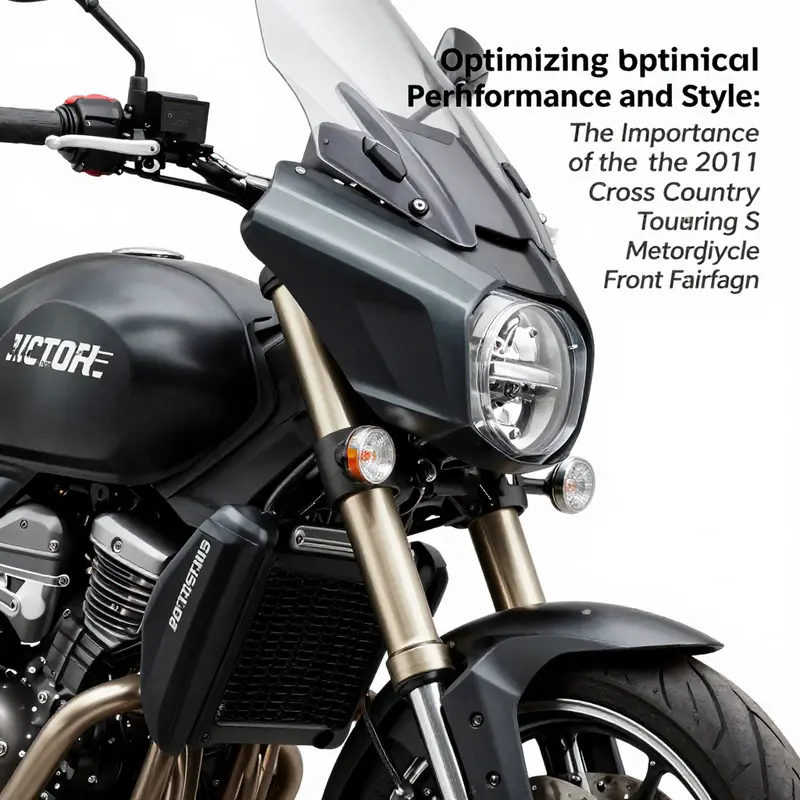 The front fairing of a touring motorcycle from the early 2010s played a central role in shaping the riding experience as much as it defined the silhouette of the bike itself. On a model designed for long-haul journeys, the fairing was not merely a decorative shell but a carefully engineered element that balanced protection, stability, and rider comfort. In the context of a 2011 touring cross-country machine, the front fairing embodies a practical philosophy: shield the rider from the elements without compromising airflow, visibility, or access to the bike’s core systems. The result is a cohesive, almost architectural component that integrates the rider’s needs with the machine’s overall dynamics, turning potential wind fatigue into a more manageable physical condition and enabling steadier highway progress even when the road stretches into hours of uninterrupted riding.
From a design standpoint, the front fairing is the first line of interaction between the rider and the environment. It has to manage wind pressure, buffeting, and lift, while also serving as a platform for essential features such as the headlight, instrumentation, and, increasingly, integrated control surfaces. In the 2011 touring cross-country configuration, the fairing is designed to work in concert with a windscreen and bodywork that together create a streamlined profile. The objective is not just reduced drag in the abstract sense; it is a practical reduction of wind resistance that translates into lower fatigue during long rides, improved stability at speed, and a calmer, more controlled feel at the bars. The interplay between the fairing and the steering geometry matters, too. As the rider’s line of sight sits above the glassy surface of the windscreen, the fairing’s shape must guide the air so that it does not induce unnecessary turbulence near the rider’s helmet. When done well, the rider senses a sheltered cockpit that still remains responsive to rider input, a sensation of control rather than a rigid barrier between human and machine.
Material choice for the front fairing in this class of bike is inherently linked to real-world durability and performance. Publicly shared specifications for exact dimensions or material composition are not always disclosed by manufacturers, especially for specific model-year details. However, the fairing commonly employs impact-resistant, rigid plastics—often a type of acrylonitrile butadiene styrene, or ABS—chosen for its balance of toughness, lightness, and ease of molding. ABS offers a degree of rigidity to maintain a sharp outer contour, while also providing enough resilience to absorb minor road hazards such as gravel, small rocks, and contact with branches or errant debris without cracking. The use of such materials also simplifies integration with other components, allowing mounting points to be engineered with a predictable interface to metal brackets, fuel tank cover panels, and lower fairings. In a touring machine meant to cover thousands of miles, this compatibility carries practical weight: replacement parts and upgrades can be planned with a clearer picture of how the fairing will align with the rest of the bodywork.
What the rider feels during a long stretch of highway is a composite sensation. Airstream flow over the fairing should glide smoothly, with minimal buffeting around the helmet and shoulders. When the air glances across the glossy surface of the fairing, it generates lift and pressure patterns that either amplify or dampen gusts depending on the bike’s speed, weight distribution, and the rider’s posture. An effectively designed fairing lowers the wind pressure on the rider’s chest, redirects heavier currents away from the torso, and channels them toward the sides and rear where they pose less disruption to steering and balance. In practice, this means a more relaxed posture at highway speeds, with the arms resting naturally and the wrists remaining comfortable rather than tensed against the forces of wind resistance. The rider experiences a predictable ride profile, where the combination of the fairing and the windscreen seems to carve a corridor through the air rather than a turbulent breach that sends energy through the frame. The more predictable this corridor, the less mental energy the rider has to invest in fighting the wind, leaving more attention available for navigation, road awareness, and ongoing comfort.
Beyond the aerodynamic purpose, the fairing serves an easier-to-overlook but critical function: it houses and protects a portion of the bike’s facially exposed systems. The design integrates the optics of the headlight and the dashboard, giving the rider a clear line of sight to vital gauges and indicators while keeping them shielded from harsher weather. The fairing’s shape must accommodate a clean routing path for wiring, cooling intakes, and the mounting hardware that ties these elements to the bike’s frame. A well-integrated fairing can reduce the likelihood of rattles and misalignment as metal and plastic temperature cycles occur with changes in weather and road conditions. Such integration eases maintenance and service life. With long-distance travel in mind, access panels and mounting points are placed with practicality in mind: they simplify routine inspections, allow for straightforward component swaps, and enable a rider or mechanic to service the setup without disassembling essential parts of the bike’s bodywork.
The practical reality of replacements and upgrades is inseparable from the fairing’s initial design. For riders who plan to replace or upgrade the front fairing or install compatible accessories, the critical considerations are compatibility with mounting hardware and alignment with existing body panels. The skew of the fairing’s edges, the spacing of the mounting holes, and the precise location of windscreen fasteners all influence whether a given aftermarket component will fit cleanly. This is not simply a matter of texture or color; it is about the geometry of the bike’s front-end ecosystem. Any mismatch can lead to accelerated wear on brackets, misalignment of the headlight or instrument cluster, or increased air leakage that undermines the very wind protection the fairing is meant to deliver. The best practice is to consult official service documentation for model-year specifics. In some cases, the official manuals provide exact torque specifications for mounting bolts, recommended hardware, and any required spacing or shim usage to guarantee a secure, rattle-free assembly. The reality is clear: accuracy in the mounting procedure translates directly into both performance and durability, especially when riding becomes a test of endurance.
When assessing the front fairing in a touring context, riders also weigh aesthetic considerations—how the fairing contributes to the bike’s iconic silhouette while remaining faithful to the machine’s overall design language. The fairing’s lines are meant to complement the flow of the gas tank cover, the cockpit, and the side panels. The goal is a visually cohesive front end that communicates purpose—wind management, protection, and a sign of the machine’s readiness for long stretches of road. Yet behind that aesthetics lies engineering reality: the shape must avoid creating eddies that could degrade stability at high speed or at crosswinds, while still preserving the rider’s sense of inclusion in the bike’s aerodynamics rather than being shut off from the air entirely. A successful front fairing is both a technical asset and a design ambassador, presenting a pragmatic face to the road that honors the machine’s touring intent.
The broader context of compatibility and maintenance is never far from the practicalities of ownership. As with any complex, integrated component, the front fairing interacts with a variety of supplementary parts—from windshields and lower fairings to cooling ducts and lighting assemblies. When a rider seeks replacements or upgrades, it is essential to confirm that the chosen parts align with the bike’s mounting geometry and frame fasteners. The service manual and technical bulletins are the most reliable sources for such specifications, offering precise mounting points and step-by-step procedures. The manual’s guidance reduces the risk of misalignment, ensures the structural integrity of the front end, and preserves the intended aerodynamics. The process of verifying compatibility often involves more than simply matching model years; it can require attention to production runs, minor revisions in mounting bracket shapes, or updates to the headlight assembly that affect the surrounding fairing geometry. In short, the front fairing is not a standalone shell; it is a living interface between design, engineering, and daily riding realities.
For readers seeking the clearest path to precise technical specifications, the most reliable route is to access the official service manual or the technical documentation published by the manufacturer. While many public-facing sources provide broad descriptions of the fairing’s role, only the manufacturer’s documentation contains the exact figures that matter for maintenance and upgrades—weight, dimensions, mounting hardware, and accessory compatibility. This information can typically be obtained through an authorized dealer portal, where technicians and owners alike can access the model-year-specific data necessary to service or upgrade the front end. The reality is straightforward: if you want verified, up-to-date data tailored to the 2011 model year, the official documentation is the gold standard. Maintaining alignment with this source ensures that the front fairing continues to perform as intended, preserving aerodynamic efficiency, rider protection, and the long-distance comfort that defines touring riding.
As a practical takeaway, a rider considering a front-fairing upgrade or replacement should approach the project with two guiding questions in mind. First, will the component physically fit within the surrounding geometry of the bike’s front end, including the windscreen, headlight, and the lower panels? Second, will the installation procedures align with the torque specifications, mounting sequences, and any required spacers or shims outlined by the official documentation? Answering these questions with care helps maintain the machine’s intended performance envelope. It also preserves the balance of rider protection and comfort that is the essence of a touring-focused front fairing. In the end, the fairing’s importance lies not only in how it looks or the promises of wind protection but in how it participates in a holistic design that supports comfort on hours of open-road travel and reliability in the most demanding riding conditions.
For those who want to explore further fundamentals and historical context around front fairings in touring motorcycles, a broader look at the evolution of wind management and rider comfort across the segment can provide useful perspective. The core principles—streamlined aerodynamics, protection for the rider, and a maintenance-friendly integration with bodywork—remain consistent even as materials, graphics, and electronics evolve. The 2011 model year sits at an interesting juncture: it reflects a period when engineers were refining the balance between aesthetic mass and functional mass, a balance necessary for long-haul reliability. Riders and technicians who study this era can appreciate the compromises and decisions that shaped the front end’s behavior on the road. The practical takeaway from this historical lens is that the front fairing represents a synthesis of many small choices—material, form, mounting, and integration—that come together to produce a riding experience that is at once protected, stable, and visually coherent with the bike’s touring mission.
Ultimately, the front fairing on a 2011 touring cross-country motorcycle embodies a design philosophy that values rider endurance as a core metric of performance. It is the product of integration: the clip that locks aerodynamic efficiency to rider comfort and mechanical reliability. A front fairing that performs well is not merely a cosmetic feature; it is a functional shield that reduces fatigue, a mechanism for stable steering through variable wind conditions, and a boundary that defines the rider’s relationship with the machine during long, winding days on the road. This synthesis of function and form is what makes the front fairing a central feature of the model’s touring identity. It is this identity that continues to influence how riders think about wind management, maintenance, and upgrades as they plan their journeys on a bike built for long distances and open horizons.
External resource for additional official specifications and documentation can be consulted at the manufacturer’s authorized documentation portal: https://www.polarisdealer.com
Riding the Wing: Navigating Aftermarket Front Fairings for the 2011 Victory Cross Country Touring S
 The front fairing on a motorcycle is more than a face. It is a carefully engineered blend of aerodynamics, rider comfort, and style that can redefine long-distance performance. For the 2011 Victory Cross Country Touring S, the front fairing is not merely a shield against wind; it is a focal point of the bike’s identity, a canvas for weather protection, airflow management, instrument visibility, and even heat routing. Touring models in Victory’s lineup have long prioritized comfort on extended rides, and the Cross Country Touring S takes that ethos a step further with a batwing-like silhouette that wraps around the rider. When owners think about aftermarket options, the conversation inevitably returns to how a front fairing can be aligned with the bike’s frame, its electrical system, and the rider’s own expectations for wind blast, noise, and heat. The goal is not to chase novelty for novelty’s sake but to curate a setup that preserves the model’s core strengths while offering incremental gains in ride quality and aesthetics. In this light, aftermarket front fairings become a practical narrative about fit, function, and fidelity to the rider’s long-haul ambitions.
For many riders, the gateway to meaningful upgrades begins with a pragmatic look at the mounting hardware. The front fairing is a collection of parts that must work in harmony with the bike’s frame, headlight assembly, gauge cluster, and wind deflectors. On a 2011 Cross Country Touring S, compatibility matters as much as cost. One of the more concrete, budget-conscious options that surfaces in online markets is a set of pre-owned mounting brackets. In the current marketplace snapshot, a listing for 14 Victory Cross Country Touring Front Fairing Mounting Brackets presents an entry point for those seeking to re-time and align a previously installed fairing or to repair a damaged mounting system. Priced at a modest $14.00, such brackets can be the hinge on which a broader fairing project turns. They are not glamorous, but they are essential. Without solid mounting hardware, even the most thoughtfully chosen fairing becomes a cosmetic shell that rattles at highway speed and wobbles through imperfections in the road.
Having established the importance of the mounting framework, it’s useful to widen the lens to the other bodywork components that commonly accompany a front fairing upgrade. Chrome saddle heat shields and air deflectors, for instance, often appear in the same aftermarket ecosystem as front fairings. Even when they do not constitute a complete fairing package, these small, complementary pieces can significantly affect the rider’s comfort and the bike’s thermal management. The saddle heat shields, when positioned correctly, can deflect heat from the engine and exhaust away from the rider’s thighs during hours in the saddle. The air deflectors, meanwhile, can be tuned to influence the boundary layer of air that travels over the tank and rider’s torso, smoothing the wind flow and reducing cockpit buffeting. The practical effect is a more controlled cabin of air—less turbulence, less fatigue, and more confidence when cruising at highway speeds or carving through gusts.
Of course, many riders do still crave a more dramatic leap, and the aftermarket ecosystem responds with customization options that reach beyond simple brackets and shields. Custom paint schemes, graphic accents, or even full fairing replacements are among the routes available to the determined owner. It is worth noting, however, that the excerpted findings indicate that while high-end aftermarket kits exist that can be tailored to match the premium feel of a Cross Country Tour—with its batwing fairing, integrated ventilation, and a polished, touring-ready finish—the specific listings for complete replacement front fairings are not always detailed in public marketplaces. This reality underscores a broader truth about aftermarket front fairings: while there is abundant scope for enhancement, the most reliable paths to a cohesive result lie in selecting parts with verified fitment and compatibility to the 2011 model year’s geometry, wiring, and mounting points.
Within this landscape, the practical approach blends a respect for the bike’s original design with a willingness to adapt. The Cross Country Touring S is not a blank canvas; it is a compact system in which each component is sized and tuned for a specific path through wind and weather. A front fairing upgrade, therefore, should be seen as a careful negotiation between preserving the model’s aerodynamic intent and upgrading the rider’s comfort, protection, and visibility. The batwing silhouette, for instance, is more than a stylistic flourish; it channels air around the rider’s torso and toward deflectors that shepherd airflow down and away from vulnerable wiring and hardware. Any aftermarket effort must consider whether the chosen fairing will preserve or enhance this relationship. If the upgrade veers toward a different wind profile—whether more shielded or more exposed—the rider should be prepared to recalibrate shocks