
















Racing fairings are vital components in the world of competitive motorcycle racing, designed to improve both aerodynamic performance and overall rider experience. Business owners in the motorcycle industry should understand the significance of these fairings, as their proper integration can mean the difference in a racer’s performance and revenue generation. This article will cover essential aspects ranging from aerodynamics and materials to installation techniques and market trends that highlight the economic potential of this niche segment. Read on to uncover how investing in high-quality racing fairings can enhance performance and, ultimately, your business’s bottom line.
Rugged Curves, Smooth Air: Aerodynamics and Performance Enhancement in Racing Fairings for Motorcycles
 On the track, the fairing is not merely a shield at the front of the bike; it is a shaping tool that tames air around rider and engine, turning invisible forces into measurable speed. A well-crafted racing fairing reduces aerodynamic drag, steadies the front end, and supports cooling and rider comfort at the same time. Aerodynamics becomes a decisive performance lever when circuits demand precision at extreme speeds, where a small change in flow can translate into meaningful gains in lap time. The problem space is not abstract: it includes how air travels over complex curves, how pressure builds on the helmet and chest, and how the wake behind the rider interacts with the bike’s rear. Engineering wise, the goal is a cohesive envelope that smoothly guides air from the nose to the tail, with every contour contributing to a cleaner, more forgiving flow field.
A landmark aspect of understanding this flow is the wind tunnel, where scale models are tested under controlled conditions. In a recent investigation, researchers worked with a scale model that carried a blockage ratio of about 15 percent. This high blockage presented a challenge: it distorts the natural flow, complicating the extraction of accurate aerodynamic coefficients. Yet through careful calibration and repeatable testing procedures, the team derived detailed force and moment coefficients across a range of Reynolds numbers and yaw angles. The practical takeaway was clear. Small adjustments to the fairing contour changed surface pressures, altered the onset of flow separation, and shifted the balance between drag and stability. In real terms, that means a few millimeters of contour adjustment can reduce buffeting at the rider’s torso, improve helmet comfort, and give the machine a more predictable response as it leans into a corner.
Two complementary strategies emerged for reducing drag without compromising rider safety or structural integrity. The first is a bolt-on approach: streamlined devices added to an existing fairing package, designed to yield gains without major structural rewrites. The second path is a complete redesign of the motorcycle’s form, creating a more integrated silhouette that minimizes frontal area while preserving the rider’s ergonomics. The results highlighted a compelling truth: drag reduction is often not about one drastic change but about a coherent sequence of refinements. When paired with careful packaging of the rider’s line of sight and body position, this can deliver sizable improvements in efficiency. In practical terms, a well-executed redesign can yield around a 40 percent drop in drag, a figure that carries through to smoother flow, better wind handling around the rider, and more favorable pressure recovery behind the bike. Beyond top-line gains, such improvements also tend to support cooling efficiency by steering air toward radiators and vents in a controlled way, reducing the risk of hot spots under race conditions.
Parallel to physical testing is the growing role of computational fluid dynamics, or CFD. Early CFD work focused on predicting pressure distribution and identifying regions of separation and recirculation on the fairing’s surface. The promise was a cost-effective, rapid means of screening design concepts before committing them to a wind tunnel or on-bike testing. The emerging consensus is that CFD can model highly separated flows with reasonable accuracy, provided the simulations are grounded in physically plausible boundary conditions and validated with experimental data. The benefit for race teams is tangible: faster iteration cycles, better understanding of how subtle changes in shoulder, chest, and knee position influence the overall aerodynamics, and a safer path to optimizing complex geometries without inflating development costs.
Material choice is another critical factor shaping what is possible on the racetrack. Racing fairings lean on composites and reinforced polymers that deliver an exceptional strength-to-weight ratio. Carbon fiber stands out for its stiffness and lightness, while advanced fiberglass and multilayered polymers offer a balance of cost, impact resistance, and tunable stiffness. The challenge is to design surfaces that remain smooth and structurally sound under the stress of high-speed air, vibration, and occasional impact, while also accommodating cooling channels and inlets that ensure efficient engine cooling. The surface finish matters just as much as the layup. A meticulously polished surface reduces skin friction and delays flow separation, whereas microtexturing, when used judiciously, can influence the boundary layer in ways that complement the broader aerodynamic strategy. In addition to performance, the aesthetic integration with the bike’s lines reinforces a sense of purpose and aggression that resonates with riders and teams alike.
The design challenge becomes especially acute when considering rider comfort and track realities. A track-ready fairing must shield the rider from wind pressure and excessive noise while still allowing easy cockpit access for adjustments and repairs. It must promote effective cooling even as the rider assumes a tucked position and the chassis leans into the curve. Weight remains a relentless constraint; engineers must shave grams from the skin without compromising stiffness or safety. The most effective concepts are those that emerge from an integrated design philosophy, where the nose, side contours, and tail are conceived as a single aerodynamic package rather than a series of bolt-on afterthoughts. The advantage of this approach is not just reduced drag, but a more stable flow regime that preserves steering feel and reduces the tendency for the front end to hide in a vortex as the bike is pushed to the limit.
From the rider’s seat, the aerodynamic story translates into tangible feel. A smoother air curtain around the helmet lowers fatigue, while steadier buffeting improves line tracking through the turn. The interaction between the rider’s posture and the fairing’s geometry matters; the air must part cleanly around the helmet and shoulders and rejoin behind the back without creating excessive turbulence. The rider’s mass becomes a dynamic part of the airfoil, and the optimal fairing therefore supports the body’s motion rather than opposing it. When the flow remains attached through a corner, the front end remains planted, confidence grows, and the rider can leverage current grip to the limit, accelerating earlier and more reliably out of the turn. These effects cascade into lower lap times, not solely from raw speed but from improved consistency and control under changing track conditions.
Market options for upgrading a race bike reflect this spectrum of aerodynamic philosophy. Some riders lean toward bolt-on elements that promise quick wins and simple integration, while others invest in bespoke, track-specific fairings that require careful fitment and professional alignment with the bike’s geometry. The best approaches harmonize with the chassis—bolstering stability where needed, preserving rider comfort, and minimizing the risk of misfit that could compromise overall performance or safety. For those curious about model-specific fit, it can be informative to explore a curated set of fairings that aligns with a given bike’s lines and geometry. Yamaha fairings, for example, represent a common category of aftermarket options that can be evaluated for fit and consistency on a race-ready platform. See the dedicated collection for a sense of how manufacturers and suppliers translate aerodynamic intent into a surface that meets the track’s demands. Yamaha fairings.
The broader takeaway is that aerodynamic performance in racing fairings is a synthesis of wind-tunnel insight, computational validation, material science, and rider-centric design. Drag reduction and stability emerge not from a single trick but from a disciplined process: measure, model, test, and iterate in a loop that respects the rider’s input as an essential part of the system. When this process yields a package that flows smoothly with the rider’s posture, that package helps the motorcycle behave like a streamlined organism on the track—one that answers the pilot’s commands with precise, predictable movement, even in gusty crosswind or high-speed braking scenarios. The result is a bike that preserves power where it counts, minimizes energy losses in the air, and returns rider confidence through every corner.
As racing continues to push toward higher speeds and more challenging track layouts, the aerodynamic conversation around fairings will keep evolving. The push toward integrated, data-informed design will remain central, reinforced by advances in materials, sensing, and simulation. Each new iteration offers a chance to reclaim margin on the clock, to refine cooling pathways, and to reduce drag without sacrificing the rider’s connection to the machine. In this light, fairings are less a cosmetic shell and more a critical driver of performance, safety, and sustainability on the modern racetrack.
External resource: https://www.sciencedirect.com/science/article/pii/S002186982500321X
Material Composition and Endurance: How Racing Fairings Shape Performance and Reliability
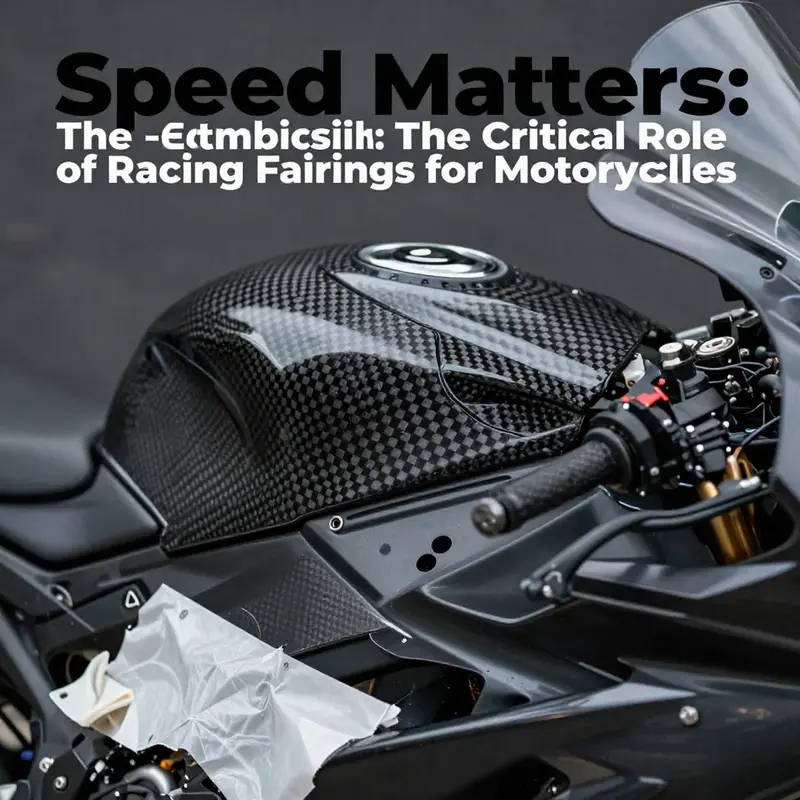 Racing fairings sit at the intersection of aerodynamics, structural engineering, and practical endurance. They are not merely shell panels; they are carefully engineered skins that must slice through air, shed drag, and survive the rigors of high-speed competition where every gram matters and every gust tests the rider’s control. The core question this chapter treats is not which composite looks best in a showroom, but how the chosen materials and their manufacturing realities translate into real-world performance, reliability, and ease of maintenance on the track. In this context, the material palette for racing fairings is dominated by advanced composites, chiefly carbon fiber and fiberglass, with reinforced polymers filling the space where cost or impact considerations dictate a different balance of properties. Each material brings a distinct set of strengths and trade-offs that ripple through the bike’s handling, cooling, and resilience, and together they form a continuum rather than a rigid dichotomy. Carbon fiber stands out for its extraordinary strength-to-weight ratio and stiffness, two attributes that directly influence how cleanly a motorcycle can run through corners at warp speed. When a fairing is made from carbon fiber, the layup strategy becomes a crucial design tool. Engineers specify layers of fiber in multiple directions to tailor the stiffness along the most stressed paths, especially where the fairing interfaces with the wind pressure, the rider’s weight, and the bike’s own geometry. The resin system and the manufacturing process—often a combination of prepregs and vented resin infusion or vacuum-assisted resin transfer—determine how well those fibers perform under aerodynamic loading and thermal cycling. In practice, a carbon-fiber fairing saves weight without sacrificing rigidity, which helps maintain a stable platform at the apex of a high-speed bend. This stability is not just about reducing drag; it’s about keeping the front end planted, the rider shielded from buffeting, and the chassis cadence predictable as speeds climb. Yet carbon fiber is not a silver bullet. Its outstanding properties hinge on meticulous workmanship. Carving complex shapes from carbon requires precise control of ply orientation, resin content, and void management. Small manufacturing defects—air pockets, misaligned plies, or uneven cure—can become crack initiation points under repeated loads or in a bending impact. Even when a carbon fairing holds its shape under normal loads, a sharp impact can induce microcracks that propagate with heat, vibration, and continued exposure to debris on the track. This is not merely a cosmetic concern; microcracks can alter aerodynamic airflow, raise drag, or, in extreme cases, compromise the fairing’s structural integrity. On the other hand, fiberglass presents a different set of trade-offs that make it a practical alternative where cost, repairability, and impact resistance are prioritized. Fiberglass blends well with a lower price point while delivering respectable rigidity and good energy absorption when struck by debris or during a minor crash. The energy dissipation characteristics of fiberglass can be more forgiving in the field, enabling quicker, more economical repairs at a paddock bench or in a workshop. Its interfaces with carbon fiber or reinforced polymers are particularly important in mixed-material configurations, where the bonding method and the transition between materials must manage differences in stiffness, thermal expansion, and moisture uptake. Reinforced polymers, often comprising aramid fibers or other toughened matrices, occupy a middle ground. They can extend impact resistance and improve resistance to fatigue without pushing the weight budget beyond reasonable limits. In practice, a race fairing might use a carbon-fiber skin for the most critical load paths, with fiberglass or reinforced polymer sections where durability and cost are dominant considerations. This kind of graded material approach allows designers to concentrate carbon fiber where it yields the most benefit while providing robust protection in zones exposed to debris or abrasion. The materials’ performance is inseparable from the environmental and operating conditions encountered on the track. Debris, temperature fluctuations, and constant aerodynamic stress shape how a fairing behaves over time. Road debris at racing speeds can cause localized damage that, if left unchecked, can propagate through the laminate. The risk is not only catastrophic failure but also progressive delamination or microcracking that changes the airflow—an unwelcome shift in drag and stability. Temperature cycles, especially in endurance events or long sessions, test the resin systems and the matrix–fiber interface. A fairing must withstand the heat of the engine bay, the radiant heat from the sun, and the cold air that follows the bike off the straight. Resin systems that cure to a higher glass transition temperature help maintain rigidity and dimensional stability when the fairing expands and contracts with heat. In addition, moisture ingress can alter the mechanical properties of certain resins, particularly where open-structured fiberglass laminates are involved. Proper sealing, the use of compatible resins, and careful venting during curing are all part of a manufacturing discipline aimed at minimizing water uptake, which can otherwise reduce stiffness and affect shape retention under load. Practical durability is also tied to repairability and inspection regimes. Carbon-fiber panels, while lighter and stiffer, tend to be more challenging to repair because damage may be localized to a small area yet require full-panel remediation to restore a smooth surface and correct airflow characteristics. Fiberglass panels, by contrast, are often easier to patch and rework in a variety of workshop settings, which can be beneficial for teams operating on tight budgets or with limited access to high-end fabrication tools. Yet repair ease does not absolve the rider or team from a rigorous inspection routine. Routine checks for delamination, surface cracks, resin cracking, and adhesive bond integrity are essential. The interface between the fairing and the frame, plus the mounting hardware, also deserves attention. Improper mounting load paths, torque, or overtightened fasteners can chip edges, crack corners, or create lugging effects that concentrate stress. In a high-demand sport context, where cornering loads are extreme and wind pressures peak, those stress concentrations matter. The durability story extends to the assembly process itself. Cleanliness during bonding, proper surface preparation, and the use of compatible adhesives ensure that the laminate remains bonded under vibration and heat. The collaboration between the skin and the substructure—ribs, backing plates, and connection points—defines how well a fairing preserves its shape and continues to deliver predictable aerodynamics lap after lap. There is a practical dimension to these material choices beyond raw physics. The track environment demands consistency in performance across sessions and seasons, which implies predictable aging behavior. A well-designed composite fairing will retain its geometry under repeated loading, resist creep in exposed regions, and deter moisture intrusion that could otherwise alter stiffness. This durability is intertwined with the fairing’s cooling strategy. Aerodynamic shaping affects not only drag and lift but also how air flows around the engine and radiators. A fairing that maintains a clean, laminar boundary layer reduces pressure drag and allows the radiator and cooling ducts to function more effectively, ensuring the engine runs at stable temperatures that do not degrade performance or shorten service life. The knowledge base for these materials reflects a broader engineering context that extends beyond a single team or season. For those seeking deeper, standards-driven insights into racing motorcycles, a comprehensive reference in a Japanese context offers technical depth on material standards, specifications, and performance expectations. This resource provides guidance on how the material choices for fairings align with broader racing-specific requirements and testing protocols that gauge long-term behavior under track conditions. In everyday practice, the practical takeaway is a layered one: choose a material and a layup approach that aligns with the track’s demands, the rider’s tolerance for repair complexity, and the budgetary framework of the team. The fairing must deliver a reliable aerodynamic surface with predictable response to steering inputs, while also maintaining compatibility with the bike’s cooling, electrical, and cosmetic systems. That means a holistic view of compatibility, not just isolated properties. It also means recognizing that there is no one-size-fits-all material solution. Carbon fiber excels where weight and rigidity matter most, but fiberglass and reinforced polymers shine where affordability, repairability, and impact resistance are valued. The best practice is a deliberate mapping of load paths, exposure, and service conditions, followed by a manufacturing plan that minimizes defects and ensures repeatable results on the track. For teams and builders, this translates into an emphasis on process controls, cure schedules, and inspection routines that protect the aerodynamic surface from edge to edge. It also supports a design ethos that treats the fairing as an active participant in the bike’s performance: a lightly engineered cloak that shapes the air and, through its interaction with other components, participates in the rider’s control loop. If you want to visualize how these principles translate into real-world options, consider exploring general collections of fairing shapes that emphasize the balance of form and function in a way that does not rely on a single material narrative. collections/yamaha-fairings offers a sense of how different shapes and finishes can be paired with varying construction approaches, without tying the discussion to a specific product line. This kind of exploration helps frame decisions about stiffness, weight, and protection within the practical realities of race weekends, where quick repairs, easy replacement, and consistent performance across sessions are as important as any theoretical advantage. Finally, for readers who want a deeper, standards-driven technical context, the external resource on material standards, technical specifications, and performance insights for racing motorcycles in Japan provides a rigorous backdrop to the discussion of endurance and reliability. It connects the material choices described here to a broader testing and qualification framework that many teams respect as part of their engineering discipline. See https://www.racingmotorcyclejapan.com/materials-and-technical-specs for those detailed insights. In summary, the durability story of racing fairings is a narrative of material science meeting racing reality: carbon fiber when lightness and stiffness matter most, fiberglass where resilience and economy are key, and reinforced polymers where a balanced mix of performance and practicality is required. Proper manufacturing, careful joining, and disciplined inspection turn these materials into reliable aerodynamic surfaces that protect the rider, preserve performance, and endure the demanding choreography of high-speed competition.
Fit for Speed: Mastering Installation and Compatibility of Racing Fairings on Track-Ready Motorcycles
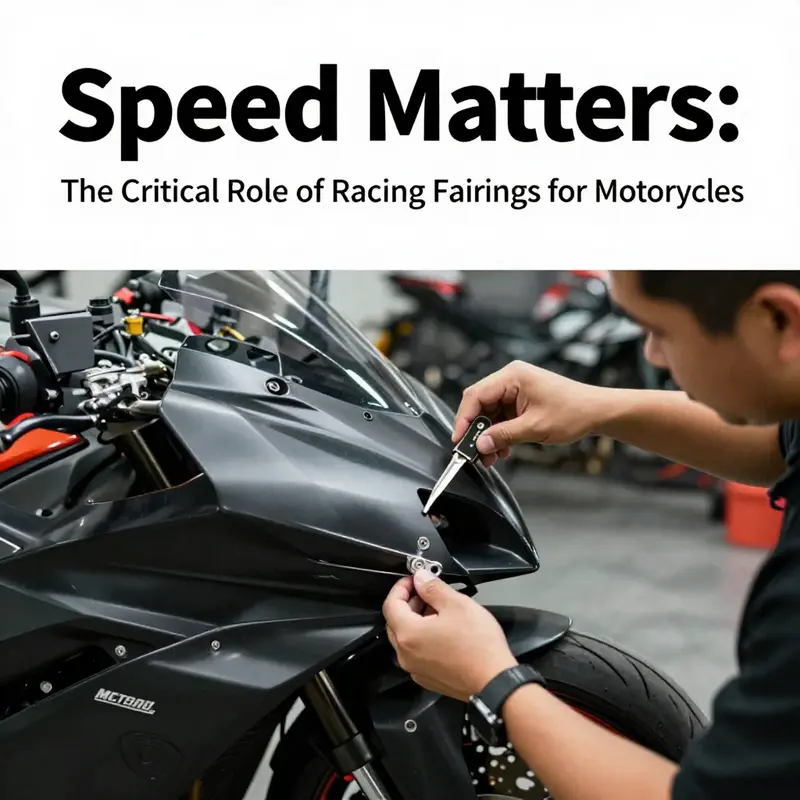 The installation of racing fairings is more than a wrench-and-windshield chore. It is a precise collaboration between the bike’s underlying geometry, the rider’s preferences, and the aerodynamic intent of the kit. When done well, a fairing set becomes an extension of the machine, smoothing the airflow, shaping the balance of the chassis, and quietly enhancing rider confidence at the moment speed becomes important. When done poorly, even the most sophisticated composite panels can become an anchor, tugging on the front end, creating drag, or rubbing against critical components during high-load cornering. That is why compatibility and fitment are not merely a box to check before purchase; they are the hinge on which performance and reliability turn together. The conversation begins with respect for the bike’s model family and the specific year, because fairings are engineered around a frame and a cockpit that are rarely interchangeable across broad eras. Mounting points, frame stay geometry, and handlebar clearances all serve as the invisible blueprint that determines whether a set will simply cover the bike or actually help it slice through air with less effort. To the extent that the rider and the tuner want more than just a cosmetic upgrade, the commandment is clear: verify fitment against official charts, and treat every mounting point as part of a required, track-tuned system rather than a purely cosmetic add-on. The importance of this approach can’t be overstated, because even small deviations in alignment or clearance can distort the intended airflow, introduce turbulent wake, or place stress on mounting hardware under cornering loads. For a rider chasing faster laps, the difference between a snug, aerodynamically efficient install and a loose, buffeting-prone setup can be measured in tenths of a second as well as in the long-term durability of the bike’s fairing stays and fasteners. The path to that ideal starts before the first bolt is touched. It begins with selecting a kit whose design philosophy is compatible with the bike’s geometry, the rider’s weight distribution, and the track demands the rider faces. Fairing kits are typically engineered around specific makes, models, and sometimes even sub-models or engine configurations. This means that a straight swap from one generation to another—say, a late-model fairing on an earlier frame—can look tempting but often fails the compatibility test in practice. A dry fit without fasteners becomes the first crucial step. With the bike on a stand or properly supported, the fairing pieces are held in place to gauge alignment along the wheelbase, the fork crown, and the radiator shroud. The goal is not simply to line up with the holes but to confirm that the profile of each panel follows the bike’s natural contour. Any panel that sits proud of the fairing stay or sits in close proximity to the tire, exhaust, or radiator is a red flag, signaling that adjustments, trimming, or alternate hardware might be necessary. This exercise is not an accusation of shoddy engineering; it is the practical confirmation that the kit’s design assumptions actually match the bike’s reality. Once a dry fit reveals adequate clearance and alignment, the installation progresses with mounting points that are carefully prepared. Surfaces should be cleaned to remove oil, grime, and any polishing compounds that could compromise the grip of sealant or the bite of a fastener. Threaded inserts and mounting brackets must be checked for wear and corrosion, because over time these points bear the cumulative load of high-speed air and dynamic steering inputs. If the kit includes new stay brackets or revised mounting hardware, those parts should be inspected and, if necessary, chamfered or deburred to avoid snagging during assembly. Bolts should be selected to balance rigidity and vibration absorption. In high-speed scenarios, the right fasteners do more than hold a piece in place; they help the assembly maintain its aerodynamic intent under sustained load, reducing the risk of panel flutter or micro-movements that translate into buffeting. The process also requires careful attention to sealants, gaskets, and weather strips. Although much of the modern fairing package is fashioned to seal against wind pressure, these seals also serve to dampen vibrations and to reduce noise that can contribute to rider fatigue in long sessions. The trims and edges deserve equal care. Sharp cut lines or imperfect edges can create turbulent eddies that degrade performance and wear the edges of the panels faster. A round of final fitting should include a test ride or a simulated test in a controlled environment to verify that the panel lines remain aligned through steering lock, a full lock-to-lock range, and the peak steering angle used during aggressive cornering. If a fairing line encroaches on the instrument cluster or the steering stop, minor adjustments to the panel position or to the hardware placement may be required. At times, compatibility is also about the electronics and the hydraulic or mechanical systems that interface with the fairing. Modern race-oriented fairings frequently incorporate integrated or partially integrated lighting, turn signals, and, in some cases, radiator vents that double as aerodynamic channels. While a kit might physically fit, the electrical harnesses and sensing devices need to be routed in a way that preserves both function and airflow. The conclusion of a careful installation is more than a cosmetic finish; it is a confirmation that the fairing’s aerodynamics have not been compromised by interference with wires, hoses, or clamps. The materials used in racing fairings—most often carbon fiber, fiberglass, or reinforced polymers—are chosen for their strength-to-weight ratio and stiffness, but their properties also shape how an installation should be approached. Carbon fiber panels are stiffer, lighter, and more forgiving to small misalignments in some respects, yet they require precise handling because their edges and fastener zones can be sensitive to overt tightening or misaligned clamps. Fiberglass, while robust and relatively forgiving for novice installers, can be heavier and more susceptible to resin creep over time if not properly sealed and mounted. Reinforced polymers sit in between, offering predictable behavior and easier trimming when necessary, but they can distort if the mounting points are stressed. In every case, the installation should include a check on whether the fairing lines contribute to optimal airflow at the rider’s position. A well-fit kit should maintain a consistent line from the steering axis through the front wheel and back into the rider’s torso, minimizing separation and creating a predictable pressure distribution across the fairing surface. When that alignment is achieved, the rider often notices improved stability in high-speed transitions and corner exits. The rider’s position also matters. Handlebar mounts, clip-ons, and footpeg placements influence how the panels sit relative to the rider’s body. In a track-oriented build, the rider’s body position is often adjusted to exploit the aerodynamic shape of the fairings. This means that a compatible kit may necessitate modest changes to the rider’s stance or to the upper body position to truly unlock the intended airflow direction and pressure recovery. The best practice remains to consult the installation guidelines offered by reputable manufacturers, whose diagrams and notes provide model-specific data for mounting points, required spacers, and any cautionary steps. A reliable guide will also spell out permissible trim lines and the recommended order of assembly to minimize the risk of rework. In practice, many riders rely on a two-step approach: a careful dry fit to confirm alignment, followed by a structured fastening sequence that evenly distributes load and maintains panel tension as the fasteners are torqued to specification. The value of this approach becomes evident in track days, where a well-fitted fairing remains stable through repetitive high-speed cycles and aggressive braking. For those pursuing upgrades beyond stock configurations, it helps to review model-specific compatibility charts and model-year notes from the kit’s documentation. The reality is that even within the same model family, successive years often bring subtle changes in the frame geometry, mounting bracket shapes, or sensor placements. Before purchase, confirm the exact year and sub-model of the bike and compare these details with the kit’s fitment notes. For example, a broad catalog of compatible options can be found in the Honda fairings collection. This resource can help ensure you select a kit whose panels align with the bike’s true mounting lattice and centerline, reducing the risk of misfit. When it comes to sourcing, many riders begin with a kit that promises track-oriented weight savings, then verify fit against the official documentation. In this context, a practical rule of thumb is to treat the kit as a bespoke component for the bike rather than a ready-to-plant universal shell. This mindset helps prevent frustration and ensures that the installation proceeds in a manner consistent with professional practice. For those who want to double-check fitment before committing, it is worth consulting the manufacturer’s published charts and installation notes, which often include model-specific compatibility diagrams and the precise order in which fasteners should be installed. If you encounter ambiguous or conflicting information, reach out to technical support or a seasoned installer who has experience with the exact model and year. The goal is not to rush the process but to honor the fairing’s design and the bike’s integrity. By embracing a disciplined approach to compatibility and installation, a rider can realize the fairing’s aerodynamic potential without compromising handling, c