
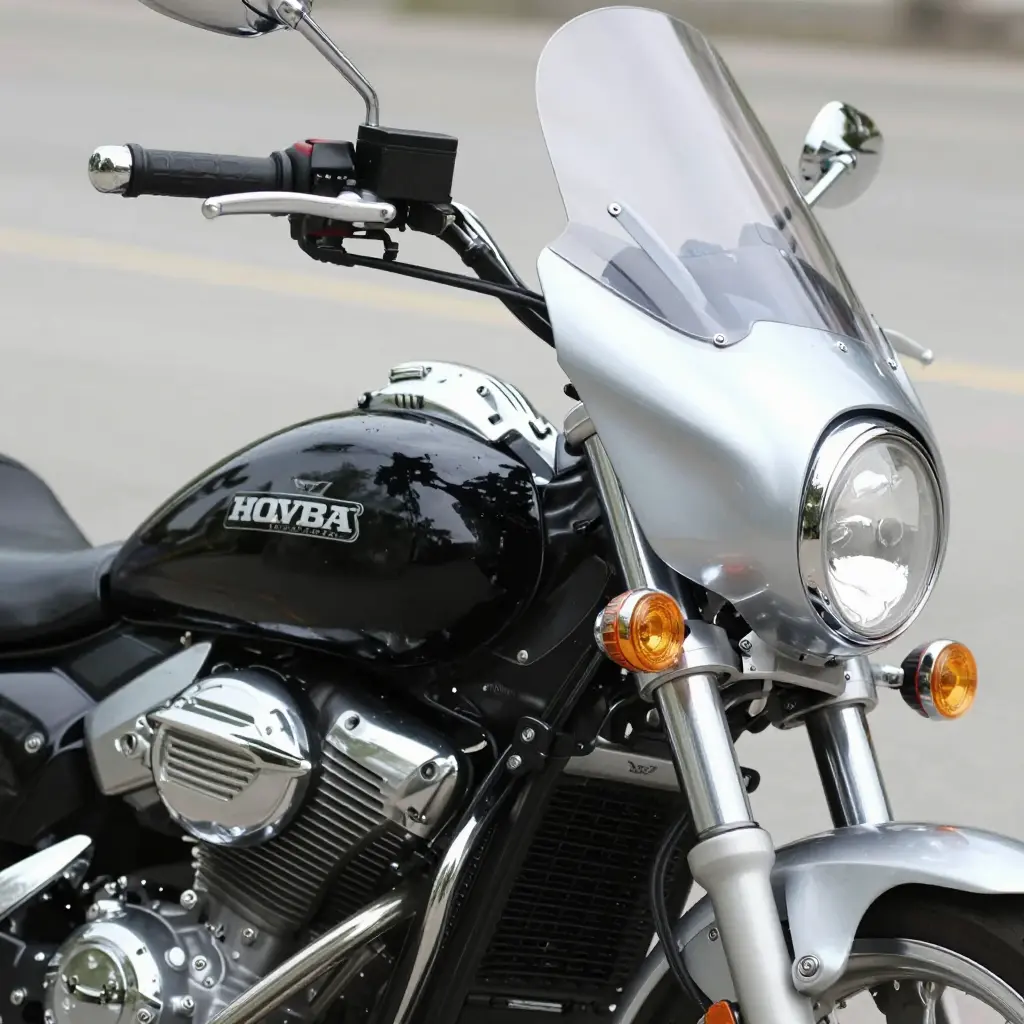
Two measurements decide how much buffeting you feel at highway speed on a 2004 Honda Shadow fitted with a batwing fairing: fork clamp spacing and windshield height. Clamp spacing sets where the fairing mounts on the fork tubes, which fixes its width, its alignment, and how rigidly it holds. Windshield height sets where the airflow separates off the top edge, and whether that stream hits your helmet or passes over it. Get either one wrong and a well-built fairing will still lift, vibrate, or hammer your head at 65 mph and above.
If you’re comparing quality Honda motorcycle fairings, get these numbers before you buy, not after, since correcting a mismatched mount usually means new clamps, re-drilled holes, or a second windshield. What follows covers how to measure your 2004 Honda Shadow’s fork clamp spacing, how to pick windshield height around your torso length and seat position, and how the two dimensions work together on the road.
Fork Clamp Spacing: The Primary Fairing Mounting Constraint
Fork clamp spacing is the center-to-center distance between the fork tube mounting points on the triple clamp assembly. On the 2004 Honda Shadow it’s fixed by the factory fork geometry, and any batwing fairing has to be built around that number. In practice it decides whether the fairing drops on cleanly or fights you the whole way.
Why Clamp Spacing Governs Bracket Compatibility
Mounting brackets are drilled and bent to match one specific spacing. Match it and the fairing bolts straight to the fork tubes with no shims, spacers, or adapters. Miss it and you’re into makeshift adapters, which almost never hold alignment once highway vibration sets in.
Understanding what a motorcycle fairing actually does makes the point: no amount of hardware can compensate for a dimension that was wrong to begin with.
Off-Center Shifts and Rider Distance
Wrong spacing pushes the shell sideways, so the fairing sits off-center over the front wheel. It also changes how far the fairing sits from you, putting the windshield too close to your helmet or too far from it.
How Geometry Feeds Buffeting at Highway Speed
That mounting geometry sets the windshield angle and height relative to your head. Mount the fairing off-center or at the wrong distance and air curls around the edges and strikes the helmet from below, which is the low-frequency shake riders call buffeting. Correct fork clamp spacing is what keeps that flow smooth.
Fork Clamp Spacing Reference for Batwing Fairing Fitment
Measure twice, bolt once. Fork clamp spacing (the center-to-center distance between your Shadow’s fork tubes) is the one number that decides whether a batwing fairing mounts cleanly or fights you at every bolt. The values below are typical OEM references for the 2004 model year, so confirm them with a caliper on your own bike. For a wider look at how these kits are built and sold, explore the benefits of motorcycle fairing kit benefits.
| Shadow model / year range | Nominal fork tube diameter | Typical clamp spacing (center-to-center) | Common batwing fairing adapter requirement | Notes on fitment |
|---|---|---|---|---|
| Shadow Aero (VT750C), 2004 | 41 mm | ~7.5 in (190 mm) | 41 mm clamps + triple-tree offset adapter | Off-the-shelf kit fits with Aero-specific adapter plate |
| Shadow Spirit 750 (VT750DC), 2004 | 41 mm | ~8.0 in (205 mm) | Standard 41 mm fork clamps | Most off-the-shelf brackets fit; verify bracket width |
| Shadow Sabre (VT1100C2), 2004 | 41 mm | ~8.5 in (215 mm) | Extended-width adapter bracket | Wider spacing; adapter usually required |
| Shadow VLX (VT600C), 2004 | 39 mm | ~7.0 in (178 mm) | 39 mm clamps with narrow bracket | Smaller tube diameter; dedicated adapter needed |
| Shadow ACE (VT750CD), 2004 | 41 mm | ~8.0 in (205 mm) | 41 mm clamps + spotlamp-bar adapter | Off-the-shelf fits with ACE mounting adapter |
| Shadow Spirit 1100 (VT1100C), 2004 | 41 mm | ~8.5 in (215 mm) | Extended-width adapter bracket | Adapter required to match wide fork spacing |
How to read these numbers: Match fork tube diameter first to choose the clamp size, then compare your measured center-to-center spacing to the typical value. If spacing runs wider than ~8.0 in, expect to add an adapter bracket; the narrower VLX forks need dedicated 39 mm hardware.
Windshield Height and Buffeting on the 2004 Honda Shadow
Windshield height does more than any other setting to decide whether a batwing fairing is comfortable or miserable at highway speed. The shield doesn’t just block wind; it redirects the airflow around you and determines where that disturbed air reattaches downstream.
How Height Controls Airflow Reattachment
A correctly sized shield lifts the slipstream up and over the helmet so the air reattaches cleanly behind your head. Too short, and the flow separates early and dumps turbulent air straight onto the helmet, producing the headshake and noise riders call wind buffeting.
The Head-Forward Problem
Go too tall and the effect reverses. A shield that sits above eye level creates a low-pressure zone that pulls your head forward and leaves you fighting neck strain at speed.
The Clean Air Pocket
The goal is a clean air pocket: a calm, laminar bubble where your head sits free of turbulence. Getting there depends on how shield height lines up with head position, not height by itself. Set the top edge just below eye level so the slipstream passes over the crown of the helmet.
Riders refining this setup tend to compare profiles and materials first, as covered in this guide to Memphis Shades motorcycle fairings. Then tune height against your actual head position to eliminate buffeting.
How to Measure Fork Clamp Spacing
Before ordering a batwing fairing for a 2004 Honda Shadow, you need one number above all others: the fork clamp spacing, also called fork tube center-to-center distance. It’s the gap between the centers of the two vertical fork tubes, measured where the fairing clamps actually mount. Measure center to center, never edge to edge, because the clamp arc itself adds roughly the tube diameter to either side.
The schematic below reduces the job to its core geometry: two vertical fork tubes, a horizontal line spanning their centers, and the clamp brackets as simple blocks. It shows the measurement principle only, so it applies whether you’re checking a factory number or verifying a new bracket set on the bench.
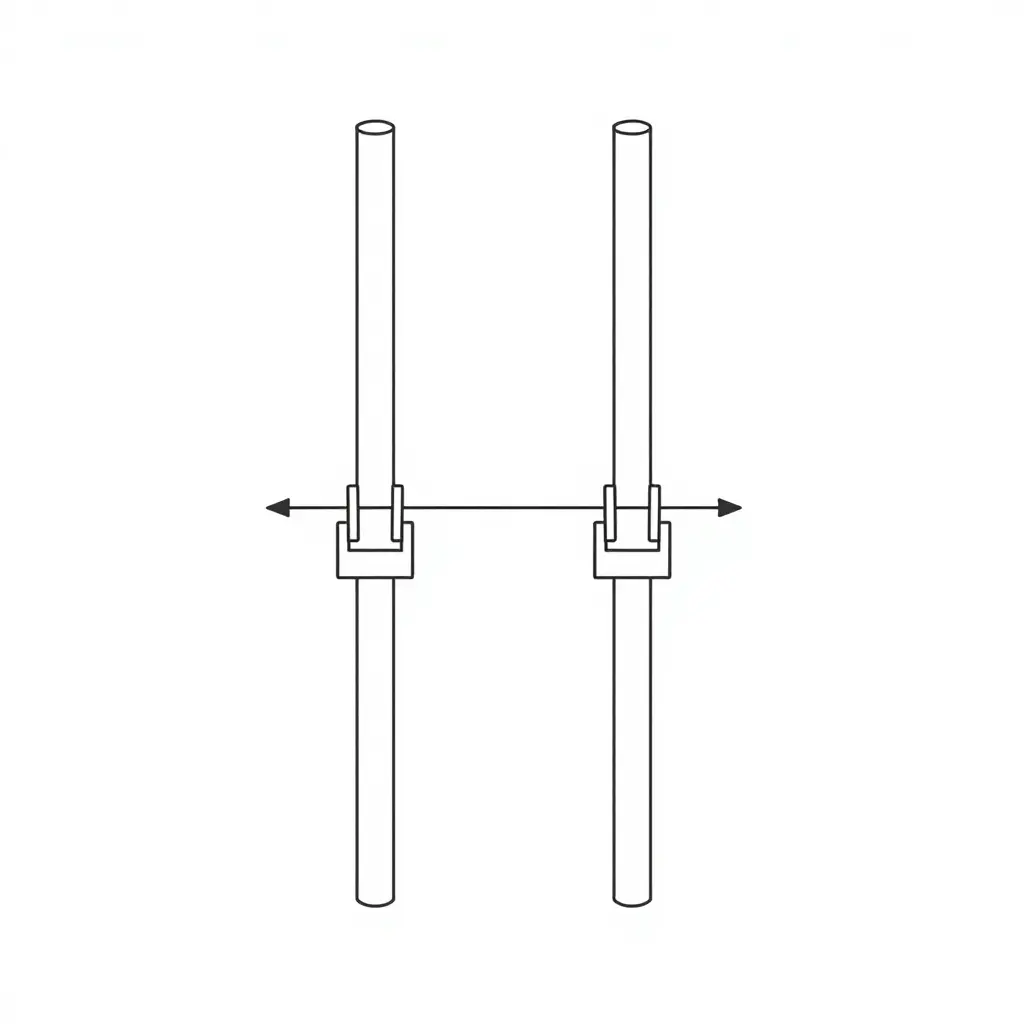
Use the figure as your reference when you compare a fairing’s stated spacing against your bike. A mismatch of even a few millimeters puts strain on the clamps, and a fairing that sits off-center throws the whole windshield into turbulent air. Nail this measurement first; from there you can move on to windshield height and the broader range of compatible motorcycle fairing kits.
Steps to Set Windshield Height for Minimal Buffeting
Windshield height is adjustable on a batwing fairing, and the ideal setting depends on your torso length, seat position, and helmet profile. Buffeting is rider-specific, so the correct height is tuned by testing on the road; knowing the broader fairing performance benefits helps you recognize what a properly set shield should feel like.
- Sit in your normal riding posture and measure the vertical gap between your eye line and the top edge of the windshield.
- Set the top edge near nose height, then test-adjust it upward or downward in 1-inch increments.
- Ride at highway speed on an open stretch to evaluate where turbulence reaches your helmet and shoulders.
- Check helmet shake and shoulder pressure after each change; together they reveal the true buffeting pattern.
- Factor in fork clamp spacing when you change shield angle, because repositioning the clamps shifts both the angle and the effective height.
- Loosen the mounting hardware evenly, then retorque it to spec so the shield stays stable under steady wind load.
- Repeat the incremental adjustments until helmet shake and shoulder pressure settle to a tolerable minimum.
- Record your final measurements so future windshield swaps or replacements start from a known baseline.
Buffeting Intensity vs. Windshield Height (2004 Honda Shadow)
The bar chart below plots relative buffeting intensity at highway speed against windshield height measured above the fork clamp baseline. Short shields leave your helmet in turbulent air, the mid range smooths the flow, and overly tall shields push turbulent air back down into the rider’s space.
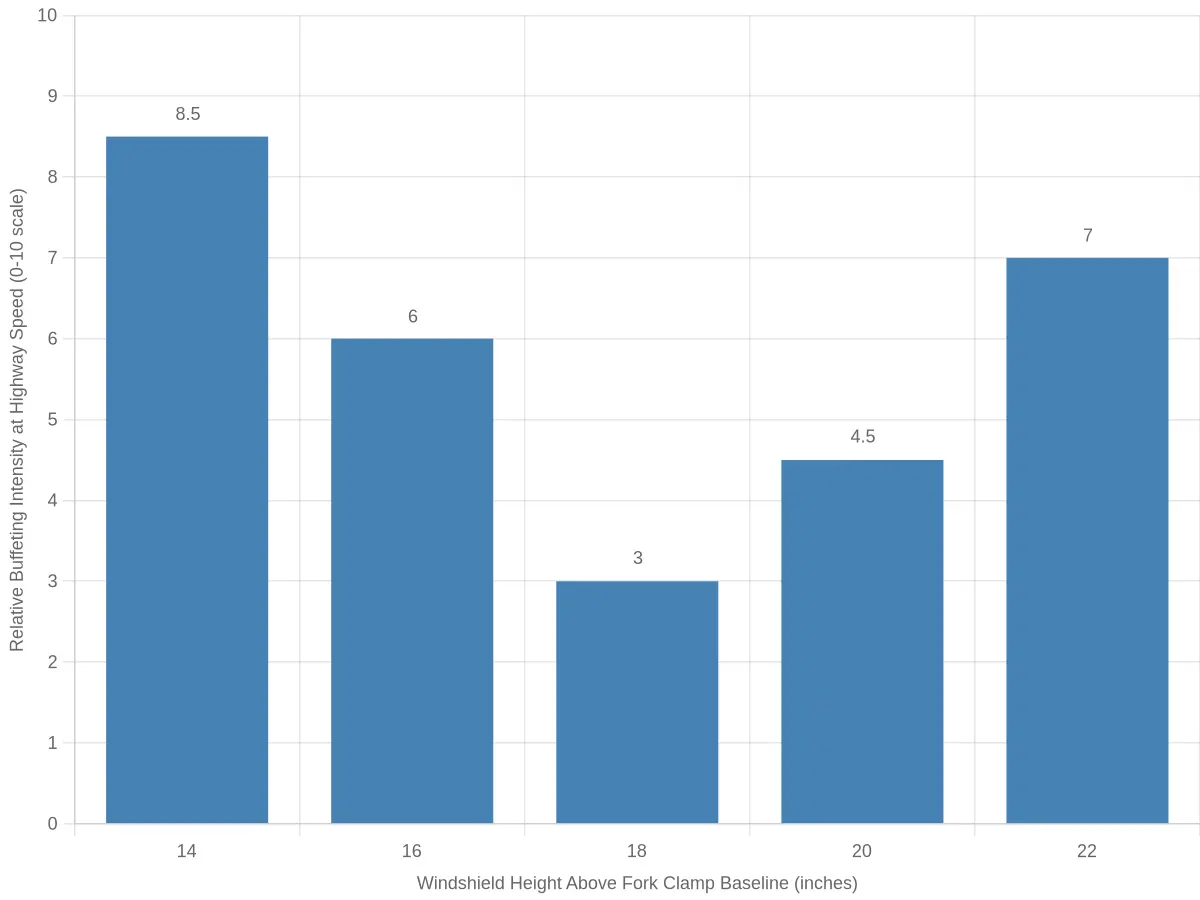
| Windshield Height (in) | Buffeting Intensity (0-10) |
|---|---|
| 14 | 8.5 |
| 16 | 6.0 |
| 18 | 3.0 |
| 20 | 4.5 |
| 22 | 7.0 |
Caption: Buffeting intensity bottoms out near 18 inches; taller shields lift turbulent air back into the helmet, so the ideal range sits at the mid position.
Tuning Spacing and Height as One System
Fork clamp spacing and windshield height are not independent settings; together they form one aerodynamic system that decides rider comfort at highway speed.
Fork clamp spacing sets the width at which the brackets grip the fork tubes. That measurement fixes where the batwing fairing mounts laterally and, just as importantly, the angle it presents to the oncoming airstream. When spacing matches the fork width, the fairing sits squarely and splits air symmetrically around you.
Windshield height then governs where airflow separates off the top edge. On the 2004 Honda Shadow, moderate spacing paired with a shield trimmed near eye level produces a stable, quiet air pocket at highway speed.
When Spacing Drifts Out of Spec
Misaligned spacing (widened, pinched, or twisted) tilts the fairing or shifts it off-center. Riders feel the turbulence and try to compensate by raising or raking the shield, which only lifts the pocket too high or introduces buffeting of its own. Now the two settings fight each other instead of working together.
The Balanced Setup
Bring fork clamp spacing back to the specified width and match it to the correct windshield height, and the calm, stable pocket returns. Review the performance benefits of motorcycle fairings to see how precise fitment drives real-world highway comfort.
Frequently Asked Questions
What fork clamp spacing does a 2004 Honda Shadow need for a batwing fairing?
It depends on the model. The 2004 Aero sits near 7.5 inches (190 mm) center-to-center; the Spirit 750 and ACE run about 8.0 inches (205 mm); the Sabre and Spirit 1100 are wider at roughly 8.5 inches (215 mm); and the VLX is narrowest at about 7.0 inches (178 mm) on 39 mm forks. Measure your own bike before ordering and check the number against the manufacturer’s spec sheet to guarantee a solid, vibration-free mount.
How tall should the windshield be to stop buffeting at highway speed?
Aim for the top edge to sit about 2 inches below your line of sight, which lets you look just over the shield. On a 2004 Shadow that typically means a 15 to 17 inch windshield, depending on your torso height and seat. Getting that height right is the single biggest factor in calming helmet-level turbulence.
Will a batwing fairing designed for another model fit my 2004 Honda Shadow?
Not directly. Clamp spacing, fork diameter, and headlight cutout vary by model, so a Harley-style unit won’t simply bolt on without adapter brackets. A model-specific kit is the cleaner route, and these motorcycle fairing kits offer real fitment and comfort benefits without drilling or shimming.
Does windshield height alone fix buffeting, or does spacing matter too?
Both matter, and they work together. Spacing governs how cleanly air flows past the forks and up the shield, while height controls where that airflow strikes your helmet. If the spacing is off, buffeting lingers even behind a tall windshield.
What happens if my fork clamp spacing is slightly off?
Even a half-inch mismatch can twist the fairing, adding vibration and uneven airflow that feeds buffeting back into the cockpit. It also puts constant stress on the clamps and fork tubes over time. Correct it with model-specific brackets or precise shims rather than forcing the mount.
Conclusion
On a 2004 Honda Shadow, a batwing fairing’s highway performance comes down to two fitment variables: fork clamp spacing and windshield height. Clamp spacing determines how cleanly the fairing mounts and how stable it stays behind the fork tubes; get it wrong, and the fairing flexes, vibrates, or refuses to sit square. Windshield height decides where the air stream leaves the top edge; set it too low, and turbulent air pounds the helmet, while too tall trades buffeting for back pressure and reduced visibility. Match both to your bike and seated position, and buffeting at highway speed drops noticeably.
The practical order is straightforward: confirm clamp spacing first, then choose windshield height against your seated eye line rather than the fairing’s overall size. Measure, verify fitment, and prioritize airflow over aesthetics.
Buying Guidance
Summit Fairings is a practical place to start. The catalog spans more than 3,000 fairing styles covering almost every motorcycle model, so you can match the exact clamp spacing and windshield proportions your Shadow requires instead of compromising. Prices run 10-40% lower than other sites, and the team promises an answer to your fitment questions within six hours. If you want to see what fits your build, explore Summit Fairings’ full range and confirm the specifications before you buy.