
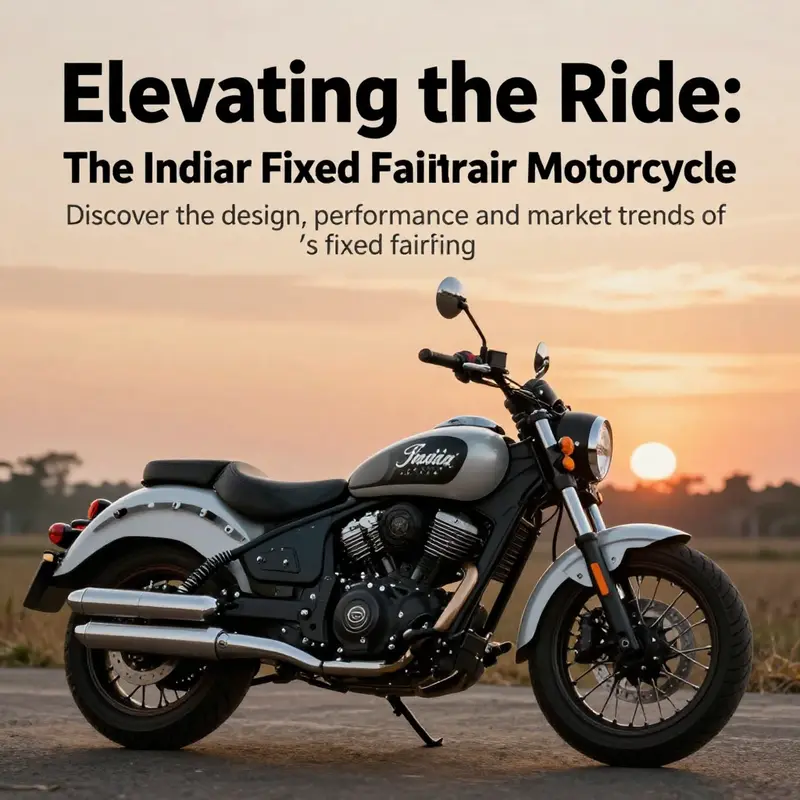
Indian Motorcycles has long stood as a beacon of motorcycle heritage, blending traditional aesthetics with modern engineering. Among its offerings, the fixed fairing motorcycle represents a significant advancement, emphasizing both comfort and style for long-distance cruising. This exploration delves into the innovative design and aesthetic aspects of these models, their technical specifications and performance benefits, and their position in the market amidst evolving consumer preferences. Each chapter illuminates how Indian’s fixed fairing motorcycles cater to modern riders while honoring the brand’s storied legacy.
Fixed Fairings, Indian Identity: Aerodynamics and Heritage on Modern Touring Motorcycles
 Fixed fairings have long been a touchstone in the world of touring motorcycles, signaling a deliberate balance between sheltering wind and preserving a rider’s sense of belonging to a machine with a storied past. When Indian Motorcycles embraces fixed fairing designs on its touring and cruiser-oriented models, it is not merely adding another shield to the front; it is reframing a rider’s relationship with long-distance travel. The form becomes a canvas where the past and the present converse through lines, materials, and finishes. A fixed fairing effort in this context must harmonize with the brand’s emphasis on heritage, craftsmanship, and the tactile joy of long rides. It cannot be a cold shell; it must feel like an extension of the rider’s intention, a shelter that does not conceal the soul of the motorcycle but rather frames it for the road ahead.
The historical arc of Indian Motorcycles carries a strong memory of wind, weather, and open horizons. Fixed fairings in this lineage are not innovations adrift from the brand’s core identity; they are a continuation of a design vocabulary that respects proportion, silhouette, and the silhouette’s ability to carry light and shadow. A fixed front more than anything else acts as a unifier. It ties the motorcycle’s front fascia to the fuel tank’s curvature, the rider’s upright posture, and the lines that travel from the fork to the rear profiles. In this sense, the fairing becomes a sculptural element that also serves a practical purpose: it channels air, reduces fatigue, and welcomes riders into longer journeys with a sense of control over the wind rather than surrender to it. The result is a machine that feels at home on highways and byways alike, able to sustain high-speed cruising while preserving the brand’s signature understated elegance.
Behind the surface, the design team must negotiate several constraints. The fixed fairing must deliver consistent wind protection without mounding the rider with excessive turbulence at high speeds. It must also integrate with the bike’s lighting design, instrumentation, and cockpit ergonomics so that the rider experiences a seamless interface rather than a set of disjointed parts. To achieve this, the fairing often becomes a locus where the vehicle’s mechanical and aesthetic stories converge. The front shield can merge into the headlight housing, enriching the perceived mass and providing a coherent line that reads cleanly from the rider’s viewpoint to the bike’s shoulder and rear contour. The integration extends to the instrument cluster, where a digital or semi-digital display can be nestled within the fairing itself, creating a cockpit that feels modern without abandoning familiar visual cues from the brand’s heritage.
Material choices play a decisive role in how this concept translates into real-world riding. A fixed fairing built from sturdy, impact-resistant plastics uses sculpted sections that reduce weight while maintaining rigidity. Some configurations favor composite laminates that combine strength with a premium surface finish, a nod to the brand’s attention to detail and its willingness to invest in tactile luxury. The paint and surface treatment of the fairing must speak the same language as the rest of the motorcycle: deep, saturated tones, carefully rendered chrome or brushed metal accents, and a finish that respects the bike’s vintage minimalism while signaling contemporary drift toward refinement. The color stories often fuse a classic palette with modern accents—gloss black or charcoal bases enlivened with bold, carefully chosen accent hues that trace a line from the fairing through the tank and into the seat rail. The result is a bike that communicates a narrative of continuity: the past remains legible, yet the future is clearly present.
Crucially, the rider’s interaction with the fairing is not a peripheral concern but a core element of the riding experience. A well-executed fixed fairing reduces wind fatigue for long-distance journeys, preserving shoulder, neck, and spine alignment that otherwise would become strained after hours in the saddle. The rider’s cones—head, shoulders, and hips—rotate in harmony with the machine’s aerodynamics, encouraging a posture that remains relaxed even when the wind grows forceful. The result is less fatigue on the highway and a more engaged experience on winding roads where the rider must adjust line and speed. With a fixed fairing, the rider often notices a calmer cockpit, a more predictable wind envelope, and a sense that the machine is a single, coherent organism rather than a chassis connected to an external shell.
Aesthetic innovations in fixed fairings are rarely about a single feature; they are about how several elements interact. The fairing’s lines must echo the bike’s overall silhouette, creating a visual echo that runs from the front to the rear. Tight facial features—such as a sculpted headlight housing or a cut that sweeps up into the fairing’s curve—can make the front seem more assertive without appearing crowded. The fairing also becomes a canvas for lighting signatures. LEDs, when integrated into the edges or within the shield’s inner surfaces, create a narrow, legible glow that can improve visibility while enhancing the bike’s nighttime presence. The lighting should feel like an intentional extension of the design, not a separate script thrown onto a page that already has a story.
The cockpit’s technology story is intertwined with the fairing’s form. A large, easy-to-read display can be embedded within the fairing’s plane, offering a clear window into speed, navigation, ride modes, and suspension feedback. The screen’s location must optimize readability from the rider’s line of sight, minimizing the need to glance away from the road. The tactile controls—buttons, switches, perhaps a jog dial—should be positioned to be intuitive when the rider’s gloves are on, preserving a sense of mechanical engagement. In a modern fixed fairing, these elements are not afterthoughts but essential components of a refined tactile language that respects the rider’s need for clarity, speed, and control.
The color story remains an essential facet of the design conversation. A fixed fairing can be the stage on which a brand claims its contemporary identity while honoring its historical roots. Deep black surfaces might be paired with teal, bronze, or metallic accents to create a contrast that feels both bold and timeless. The pairing must avoid shouting; it should feel curated, as if every color choice has been weighed against the bike’s chrome, leather, and metal detailing. This disciplined approach helps riders see the fairing not as a separate piece but as a continuation of the bike’s personality—the way a historical line can be given new life when touched by modern material science and color theory.
In the broader market of fixed fairing motorcycles, many brands have experimented with similar themes of athleticism and grandeur. A contemporary rival’s approach to the fixed fairing emphasizes a sculpted, forward-leaning profile that also houses a large instrument panel and integrated lighting. The goal is to project confidence on the road, a sense that the machine was designed to take on miles and mountains with a calm, purposeful stride. The aesthetic language is not about chasing the latest trend but about translating the rider’s desire for privacy, shelter, and pace into a coherent external expression. This is the space where Indian’s heritage-informed approach can shine. By situating the fixed fairing as a bridge between classic silhouette and modern touring capability, the brand can offer riders a machine that feels anchored in memory while being responsive to contemporary expectations—the ability to ride farther, with less fatigue, in greater comfort, and with a design that communicates a clear, curated identity to any observer.
As design teams experiment with integrating wind protection and cockpit ergonomics, the rider’s journey through the saddle becomes a story of evolving intimacy with the machine. A fixed fairing can contribute to a calmer cockpit that invites longer rides with fewer interruptions from gusts and turbulence. Yet the rider should still be aware of the road rather than lost in a wind tunnel. The best executions manage this balance by shaping the air around the rider so that it feels predictable and controlled. This is more than a matter of comfort; it is about enabling a rider to connect with the road, to respond quickly to changing conditions, and to experience the machine as a single, coherent system rather than a loosely assembled set of parts.
For enthusiasts who value customization, fixed fairings also offer a practical platform for personalization. Finishes, color accents, windscreen heights, and even the way the fairing interacts with luggage solutions can be tuned to fit individual needs. The ability to tailor a fixed fairing to a rider’s stature, riding style, and climate speaks to a broader philosophy: touring motorcycles should be adaptable, not rigidly fixed in a single configuration. A fixed fairing becomes an invitation to configure, rather than a constraint, allowing riders to assemble a touring setup that feels uniquely theirs while preserving the bike’s core heritage-driven character.
In the ecosystem of motorcycle design and aftermarket enhancement, the fairing is not a solitary artifact. It is a portal through which broader design impulses—engineering efficiency, user interface clarity, and aesthetic refinement—move from concept to street. A rider who pays attention to these details will find that a well-conceived fixed fairing does more than shield from wind; it frames a rider’s perception of speed, distance, and the landscape unfurling ahead. It helps the bike’s core identity—one rooted in a tradition of craftsmanship and a preference for a certain luxury—translate into practical performance benefits. The result is a touring motorcycle that feels confident at sixty miles per hour and serene at seventy-five, a machine whose shape and function communicate a quiet authority rather than a loud proclamation.
Within the broader dialogue about fixed fairings, it is helpful to consider the accessible engineering and design language found in the aftermarket and factory collaborations across brands. A well-curated line of fairings from the aftermarket sector demonstrates how form and function can be reconciled in ways that suit diverse rider needs—from sport touring to grand touring. The approach to a fixed fairing can thus be understood not just as a style choice but as a statement about how a motorcycle can maintain its soul while embracing the tools of modern touring—digital instrumentation, refined lighting, and carefully tuned aerodynamics. For readers curious about how comparable design decisions manifest in other segments of the market, the Honda fairings collection offers a clear illustration of how standardized forms can be customized into unique expressions of personality and function. See the Honda fairings collection for a representative breadth of configurations and finish options.
The world of fixed fairings continually evolves as materials science improves, as digital interfaces become more capable, and as riders demand higher levels of comfort without sacrificing the visceral thrill of the open road. Indian’s approach—grounded in a respect for heritage, but equally committed to modern touring expectations—positions the brand to offer solutions that are both emotionally resonant and technically robust. The fixed fairing is not merely a component; it is a narrative device, a way to tell riders that a road trip can be a meditative experience as well as a performance exercise. The design language emphasizes restraint in ornament but intensity in execution: clean lines, purposeful gaps, and a finishing touch that invites a closer look, revealing the craftsmanship that makes a touring motorcycle feel like a companion rather than a machine at a distance.
As we look toward the next generation of fixed fairing motorcycles, the emphasis on integrated systems will intensify. Aerodynamics will increasingly depend on computational optimization, while the rider interface will evolve toward more intuitive, hands-off control landscapes. For Indian, this means continuing to fuse the brand’s heritage-inspired silhouette with contemporary engineering—an approach that satisfies both the nostalgic rider and the pragmatic traveler who wants a trustworthy, comfortable ride across continents. In this evolving dialogue between past and future, fixed fairings stand as a symbol of how a brand can honor its roots while embracing the efficiencies and possibilities of modern touring technology. The road ahead is not merely about speed or style; it is about the experience of riding itself—the quiet confidence of a bike that shelters you from the wind, while inviting you to lean into the curve and listen to the engine as it tells its own story of endurance and grace.
External reference: https://www.harley-davidson.com/en_us/motorcycles/road-glide/2026-road-glide.html
The Fixed Fairing Frontier: Precision Aerodynamics and Heritage on Indian Cruisers
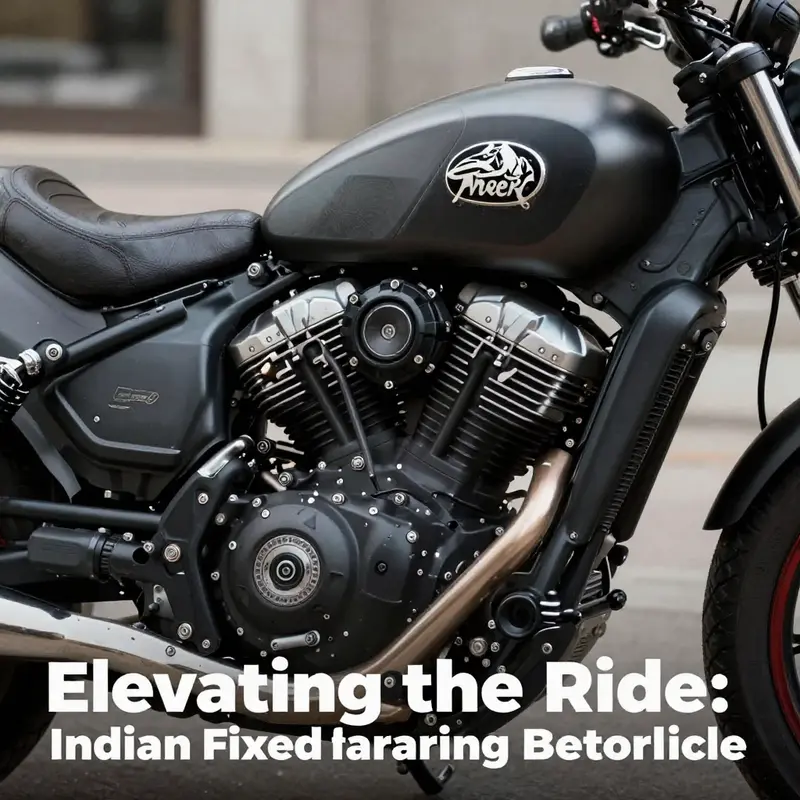 Across the spectrum of Indian’s lineup, the fixed fairing emerges as more than a styling cue. It is a deliberate integration of aerodynamics, rider comfort, and a creed of enduring performance. The fixed fairing, permanently attached to the motorcycle’s framework, anchors a silhouette that speaks to the brand’s heritage while embracing modern engineering. It represents a philosophy where form and function cohere in a singular, durable statement. Unlike removable counterparts, the fixed fairing is designed to work in concert with the frame, the chassis geometry, and the rider’s daily realities. It is sculpted to reduce wind intrusion at highway speeds, redirect air around the rider’s torso, and tame the buffeting that becomes fatigue’s ally on extended rides. The result is not merely a cleaner profile; it is a carefully tuned envelope that contributes to stability, confidence, and a sense of composure when the road stretches to the horizon. The fairing’s integration with the front wheel’s fork architecture, the headlight assembly, and the instrument cluster creates a unified visual language that is instantly recognizable and deeply nostalgic. The rider feels the difference in posture and rhythm long before the speedometer climbs to cruising thresholds, because the wind’s pressure and the machine’s reactions are intertwined with the rider’s breathing, glance, and control inputs.
Material choices for fixed fairings lean toward composites and molded plastics that balance rigidity with weight. When a fairing is fixed, its attachment points must carry structural loads, not merely cosmetic loads, which means the connection to the frame is a primary design detail. A well-executed fixed fairing adds to the bike’s torsional stiffness, helping keep the front end stable under varied loads—gently absorbing the micro-vibrations that travel up the fork while simultaneously shaping the air flow to minimize separation. In practice, the aerodynamics of a fixed fairing is a story of contours: a smoothly curved surface that guides air toward the sides and away from the rider’s helmet, with subtle radius transitions that avoid sharp edges where turbulent pockets could form. These choices translate into tangible benefits during long-haul cruising: reduced rider fatigue, a steadier wind distribution over the shoulders, and a more relaxed head position that preserves visibility without forcing the rider into an upright, wind-lily stance.
The fixed fairing also carries a distinct aesthetic weight. It is a visual anchor that signals a commitment to the classic cadence of American touring—where long journeys are measured not only by miles but by the ease with which those miles are experienced. The integrated lighting, often including LED headlamps and signals, contributes to a clean, cohesive front end. The lighting is not just functional; it reinforces the fairing’s field of protection and the rider’s sense of being in a protected cockpit rather than exposed to open air. In many designs, the fairing and the front shield merge with the instrument panel, creating a consolidated gateway to the bike’s electronic ecosystem. That ecosystem typically includes commonly standard features such as ABS, traction control, ride modes, and a digital display that communicates speed, torque, and energy management in a legible, non-distracting manner. The benefit here is more than information access; it is a reduction in cognitive load for the rider, who can glance at the essential data while keeping eyes on the road.
The mechanical implications of a fixed fairing extend into how the motorcycle behaves at speed. Aerodynamic drag is the silent antagonist that robs energy and amplifies fatigue. A well-integrated fixed fairing reduces drag by smoothing the air path across the machine’s frontal area, thereby preserving momentum and enabling stable cranking of the throttle without the rider constantly correcting course. This is especially valuable at highway speeds where headwinds and crosswinds can become a test of a rider’s focus. A fixed fairing, designed with careful attention to the bike’s rake, trail, and wheelbase, helps to dampen the gust-driven moment around the front wheel. It can also contribute to improved high-speed stability when combined with a properly tuned front suspension, which maintains consistent geometry under braking and acceleration. And because the fairing is fixed and integrated, it often contributes to a cleaner transmission of load into the frame. The frame—the backbone of the machine—works in concert with the fairing to minimize flex, creating a predictable front-end feel that inspires confidence when the road imperfections begin to show through the fairing’s surface.
From a rider’s perspective, the fixed fairing makes a meaningful difference in long-distance comfort. The wind deflection it provides reduces the direct blast that reaches the chest and shoulders, helping to maintain a comfortable breathing rhythm and reduce the need for helmet up and down fiddling that can break concentration. The deflection also tends to lower wind pressure on the arms, which reduces the rider’s tendency to tense muscles during extended highway runs. And because the fairing is fixed, the overall feel of the bike becomes more cohesive—the rider does not perceive a “detached” shell hovering in front; instead, there is a single, integrated barrier that interacts with the head, chest, and hips as a unified system. This sense of coherence is a critical part of what the fixed fairing promises: a smoother, more controlled ride that supports endurance journeys rather than merely short, bright stints of speed.
Technically, fixed fairings do not exist in a vacuum. They are part of a broader electronics and chassis ecosystem that is increasingly sophisticated in modern touring-oriented machines. Even within the fixed-design strategy, there is room for rider customization through ride modes and electronic aids. A typical suite may include ABS for reliable stopping power on varied surfaces, a traction control system that modulates torque delivery when the rear tire begins to slip, and multiple riding modes that adjust throttle mapping, stability logic, and braking response. These systems are designed to preserve the rider’s confidence by ensuring that the fixed fairing does not become a passive shell but rather an active contributor to a safe, controlled experience. The inclusion of an onboard display with navigation and ride data, even a compact touchscreen in some models, allows riders to monitor their pace, fuel consumption, and route information without removing attention from the road ahead. The chapter of fixed fairings in Indian motorcycles is thus not only about wind pressure but also about information clarity and the way technology helps define a more relaxed, sustained rhythm on longer trips.
A key dimension of this design approach is the interplay between heritage aesthetics and modern performance. The fixed fairing is a canvas where the brand’s historical signals—such as flowing lines, bold volume on the front end, and a sense of robust, enduring craftsmanship—can coexist with contemporary engineering realities. The result is a motorcycle that honors traditional cruiser language while delivering the benefits of a modern powertrain and chassis. The styling choices—how the fairing curves into the headlamp, how it sits with the fuel tank, how it carries the rider’s line of sight—are part of a broader narrative about purposed engineering: every contour is there for a reason, every junction solid, every interface designed to withstand the rigors of regular long-distance riding. Even the choice of color and surface finish is deliberate, contributing to a visual impression of durability and timelessness that encourages steady, confident riding rather than a fleeting visual impression.
In terms of maintenance and durability, the fixed nature of the fairing offers both advantages and considerations. Since it is not intended to be removed frequently, the fasteners, gaskets, and sealants around the attachment points are engineered for longevity and weather sealing. This reduces the likelihood of wind and water intrusion into sensitive areas near the engine or electronics, while making routine inspections and cleaning more straightforward if the unit is designed with accessible access panels and clear service routes. A fixed fairing imposes a design discipline where the internal routing of cables, harnesses, and hoses is optimized to remain sheltered and protected by the fairing’s shell. This helps to minimize the need for frequent adjustments caused by flex or vibration, reinforcing long-term reliability. Yet, the fixed approach also means any significant damage to the fairing may require more deliberate repair, given its structural role and its integration into the frame’s load paths. Nevertheless, with proper care and periodic inspection, the fixed fairing contributes to a durable, low-maintenance riding experience that aligns with the long-haul expectations of the segment.
The fixed fairing’s role in branding should not be overlooked. It signals a commitment to a particular riding lifestyle—one that prizes a comfortable, controlled, and visually distinctive journey over explosive, sprint-focused acceleration. This is not a minimal accessory; it is a core attribute that shapes how a motorcycle feels when a rider climbs aboard after a long day, how the machine stands in a garage lit by soft, warm lamps, and how the rider’s memory is anchored by the sight of a clean, sculpted front end that echoes both the brand’s past and its present capabilities. The result is a motorcycle that carries a strong narrative weight: a machine that invites a rider to settle in for the road ahead, rather than chase the horizon with a constant battle against wind resistance.
For readers who want to situate fixed fairings within a broader panorama of fairing design, it helps to consider how other brands approach the concept. The evolution of fixed, non-removable shells demonstrates a shared pursuit of smoother air flow, integrated lighting, and a cleaner instrument cluster. While the exact implementations vary, the central theme remains: create a seamless interface between rider, air, and machine. The fixed fairing embodies this idea by resisting the impulse to reframe the rider’s experience around modular accessories. Instead, it provides a stable, cohesive platform that supports safety, comfort, and aesthetic integrity over thousands of miles. This is the essence of the approach—designing once, delivering benefits across decades of riding.
In keeping with the broader conversation about fairing design, readers may explore external design perspectives in adjacent brands to gain a comparative sense of how fixed elements influence rider experience. For a sense of how fixed designs translate into aesthetics across the market, consider the Yamaha fairings collection as a reference point. It offers a snapshot of how fixed, integrated shells can define a family look while accommodating a variety of engine configurations and chassis geometries. This cross-brand perspective highlights how a single architectural choice—the fixed fairing—can be adapted to multiple paths while preserving a strong, recognizable identity. It also emphasizes that the core value of a fixed fairing lies in its ability to harmonize wind protection, rider comfort, and visual coherence in a way that supports both performance and enduring appeal.
The practical implication for riders is clear: fixed fairings are not merely a matter of how a bike looks at the showroom floor. They are a one-piece answer to the demands of long-distance riding, where comfort and confidence compound with every mile. They’re a reminder that large-displacement cruisers are crafted to be ridden rather than admired at idle. They invite a rider to experience a calm, controlled journey, where wind noise and fatigue are managed through thoughtful engineering as much as through the rider’s own discipline. The fixed fairing thus functions as a collaborator on the road—an ally that preserves energy, supports safety, and preserves the rider’s sense of immersion in the landscape rather than a constant battle with the elements.
As with any durable mechanical feature, the ultimate verdict on a fixed fairing comes from the road. It is the highway miles, the back-road stretches, the rain-slick mornings, and the sunlit afternoons that reveal how well the design has stood the test of time. In this narrative, the fixed fairing is both a technical choice and a storytelling element. It tells a story of a motorcycle meant to travel, endure, and be remembered for more than its raw acceleration. It is the visual and functional signpost of a brand that values heritage without surrendering to fatigue-free, long-ride performance. The result is a riding experience that feels inevitable—like the machine has always been meant to do this, and now, with the fixed fairing’s decisive role, it truly does. For enthusiasts and riders alike, the chapter of fixed fairings is a reminder that the road is long, the wind is real, and well-designed protection can turn a long trip into a memorable journey.
External resource: https://www.indianmotorcycles.com/vehicles/chief-dark-horse
Internal reference for further context on integrated fairing design across the market: Yamaha fairings
Fixed Fairings on Indian Motorcycles: Aerodynamics, Heritage, and a Touring Ethos
 Across the Indian motorcycle lineage, the fixed fairing stands as more than a stylistic element. It is a deliberate engineering choice that binds aerodynamics, rider comfort, and long-distance capability into a single, recognizable silhouette. In markets where riders increasingly chase both performance and endurance, a fixed fairing is not merely a shield against wind; it is a design language that communicates purpose, efficiency, and a refined sense of travel. The evolution of fixed fairings in this context reflects a broader shift in consumer expectations: wind protection that reduces fatigue on multi-hour journeys, integrated lighting and instrumentation that minimize clutter, and a surface that harmonizes with the brand’s nostalgic yet modern aesthetic. When a manufacturer chooses to pair a sturdy front shell with the classic lines that identify the brand, the result is a touring-oriented motorcycle that can confidently cruise highways, carve scenic byways, and carry riders through extended horizons with a sense of ease and poise.
The aerodynamic rationale behind fixed fairings has become clearer as technologies advance and rider routines expand. Wind pressure on a rider at highway speed translates into fatigue, noise, and micro-dissipation of energy that complicates steering and control. A well-designed fixed fairing channels air smoothly around the rider and the engine, reducing buffeting and lift while widening the effective speed range of comfortable riding. The goal is not to eliminate wind completely but to tame it so that rider posture remains relaxed and attention uninterrupted. In parallel, modern fairings are engineered to integrate with the bike’s front-end geometry, preserving the silhouette’s iconic curves while delivering a tighter, more cohesive frontal aerodynamics. This integration matters because the fairing must also accommodate a headlight pattern, a multi-function dash, and sometimes a windscreen that can be adjusted for different rider heights and weather conditions. The result is a modular elegance: a shell that looks right on the street and works efficiently on long tours.
From a materials perspective, the industry has moved toward reinforced ABS and composite polymer solutions that strike a balance between rigidity, impact resistance, and weight. Lighter fairings contribute to overall handling and fuel efficiency, while still offering durability in the face of road debris and weather exposure. The choice of materials also influences production costs and repairability, a consideration riders weigh as they seek value and reliability over years of ownership. In this sense, fixed fairings serve as a focal point where engineering pragmatism and artistic design converge. The visual language—whether it emphasizes clean planes, subtle curves, or bold creases—must work in concert with the rider’s sense of motion. The fairing is the face of the machine in motion, revealing how form follows function in a living, breathing touring platform.
The interior architecture of a fixed fairing often embeds more than just wind deflection. It becomes a canvas for the rider’s interface with the bike. Instrument clusters, communication modules, and lighting arrays are increasingly integrated into the fairing’s architecture, delivering a cohesive user experience with fewer external joints and faster cooling paths for electronics. LEDs and digital displays are commonly arranged to minimize glare while ensuring readability in varying light conditions. This integrated approach also supports ergonomic shaping of the rider cockpit: the upper edge of the fairing, the position of the dash, and the routing of cables all contribute to a clean, uncluttered ride. When riders can reach controls without shifting their posture, long-distance cruising becomes less taxing, and the journey itself feels more natural. Even the windscreen, a familiar companion to touring rid