

Introduction
Motorcycle fairing speakers represent a vital upgrade opportunity within the motorcycle accessory market, offering superior audio performance tailored to riders’ needs. Designed especially for models with front fairings, these speakers elevate the on-road experience by delivering clear, powerful sound that competes with wind and traffic noise. Understanding the varieties available, the nuances of installation and upgrades, and possibilities for integration and customization provides a comprehensive overview essential for businesses catering to motorcycle enthusiasts. The first chapter examines the types and sizes of fairing speakers, highlighting how these options impact sound quality and fitting compatibility. Next, the article delves into installation methods and how upgrades can enhance rider satisfaction with minimal complexity. Finally, it explores integration strategies with broader audio systems and customization avenues that appeal to discerning customers seeking both performance and aesthetic appeal. This holistic understanding equips business owners with the knowledge to provide superior products and service solutions in today’s competitive motorcycle audio market.
Tables of Contents
Chapter 1: Types and Sizes of Motorcycle Fairing Speakers
- Exploring Full-Range Coaxial and Weatherproof Motorcycle Fairing Speakers: Optimal Sizes and Durability
- The Technical Backbone of Motorcycle Fairing Speakers: Magnets, Cones, and Tweeter Designs
- Ensuring Perfect Fit: Compatibility and Model-Specific Speaker Sizes for Harley-Davidson Fairings
- Rugged Reliability: Waterproofing and Vibration Resistance in Motorcycle Fairing Speakers
- Navigating Market Variations and Sizing Confusions in Motorcycle Fairing Speakers
Chapter 2: Installation and Upgrades of Motorcycle Fairing Speakers
- Careful Removal and Preparation of Motorcycle Fairings for Speaker Upgrades
- Selecting Durable, High-Performance Speakers for Seamless Motorcycle Fairing Upgrades
- Optimizing Wiring and Amplification for Reliable Motorcycle Fairing Speaker Upgrades
- Seamless Integration of Enhanced Audio Components in Motorcycle Fairings
- Enhancing Installation Efficiency with Precision Aids and Custom Inner Fairings for Motorcycle Fairing Speaker Upgrades
Chapter 3: Integration and Customization of Motorcycle Fairing Speakers
- Selecting Durable, Compatible Speakers for Seamless Fairing Integration and Custom Upgrades
- Precision Mounting and Seamless Installation: Building a Reliable Motorcycle Fairing Speaker System
- Optimizing Sound with Amplifier Integration and Digital Tuning in Motorcycle Fairing Systems
- Ensuring Longevity: Weatherproofing and Durability for Custom Motorcycle Fairing Speakers
- Precision Upgrades and Expert Installation: Elevating Motorcycle Fairing Speaker Systems
Chapter 1: Types and Sizes of Motorcycle Fairing Speakers

1. Exploring Full-Range Coaxial and Weatherproof Motorcycle Fairing Speakers: Optimal Sizes and Durability
Motorcycle fairing speakers primarily come in full-range coaxial designs that combine both woofers and tweeters in a single unit. This integration allows them to deliver a wide frequency range essential for clear, balanced sound on the road, where wind and engine noise pose significant challenges. Typically, sizes around 6.5 inches dominate front fairing applications, fitting many touring models without requiring modifications, while larger 6×9-inch options are often reserved for saddlebags or secondary mounts, providing enhanced bass due to their greater cone area.
Durability is critical for these speakers, so many are engineered to be waterproof and resistant to elements such as dirt, UV rays, and continuous vibration. This rugged construction helps maintain audio fidelity in diverse weather and riding conditions. Element-ready models frequently incorporate robust materials and sealing techniques that offer reliable protection without sacrificing acoustic performance. This balance is especially important for front fairing speakers exposed to road spray and sun.
Compatibility considerations include not just size but also impedance and ease of installation; modern kits often boast plug-and-play designs that allow straightforward swaps of stock units. Riders should verify exact speaker dimensions before purchasing, as nominal sizes sometimes differ slightly from actual measurements. For those customizing or upgrading their bike’s sound system, understanding these fundamentals of speaker type, size, and durability is crucial to achieving the desired audio quality and reliability.
For riders seeking more insights on mounting solutions and fairing options, exploring specialized motorcycle fairings can complement speaker upgrades effectively. More information can be found at Explore Summit Fairings, Your Go-To Destination for Motorcycle Fairings.
For detailed specifications and expert reviews of these speaker types and sizes, see comprehensive guides such as those provided by Creative Audio on Rockford Fosgate TMS24 specs.
2. The Technical Backbone of Motorcycle Fairing Speakers: Magnets, Cones, and Tweeter Designs
Motorcycle fairing speakers are engineered to deliver crisp, powerful sound under demanding conditions while fitting compactly within the fairing. Central to their performance are key technical components such as neodymium magnets, durable cone materials, and specialized tweeters, each playing a critical role in audio clarity and ruggedness.
Neodymium magnets stand out for their high magnetic strength and lightweight nature, allowing fairing speakers to achieve greater power and frequency response without adding bulk. These magnets enable the motor structure to operate efficiently, which is essential when balancing sound output with the spatial constraints inside a motorcycle fairing.
The speaker cones typically utilize co-molded polypropylene or reinforced polypropylene paired with poly-cotton spiders and Santoprene surrounds. These materials are carefully selected for stiffness and resilience, offering excellent resistance to vibration, moisture, and temperature changes. Such robustness ensures consistent audio quality and longevity despite exposure to wind, rain, and road debris.
Tweeters in fairing speakers are often dome-shaped and integrated with phase plugs to improve high-frequency dispersion and clarity, crucial for cutting through road noise at highway speeds. To protect from environmental wear and vibration, tweeters frequently incorporate Santoprene isolation spiders or are mounted behind protective grills.
Common sizes like 5.25″, 6.5″, and 6×9″ speakers differ not only in dimensions but also in voice coil diameter, power handling, and motor structure designs. Larger cones and voice coils allow for deeper bass and higher power ratings, while two-way designs with separate tweeters provide a full spectrum of sound with crisp highs and solid mids. Weatherproofing features embedded in surrounds and suspension components further enhance durability.
This blend of advanced magnet technology, rugged cone construction, and refined tweeter design exemplifies the care taken to optimize motorcycle fairing speakers. Together, they provide balanced sound capable of thriving in harsh motorcycle environments, offering riders an immersive audio experience without compromising protection or installation simplicity.
For more information on motorcycle fairings, check out this exploration of the best motorcycle fairings at Summit Fairings.
Detailed specifications and models can be referenced through trusted manufacturer sources such as the Rockford Fosgate Power 6.5″ speaker line.
3. Ensuring Perfect Fit: Compatibility and Model-Specific Speaker Sizes for Harley-Davidson Fairings
Selecting the right motorcycle fairing speakers for Harley-Davidson bikes requires a sharp focus on compatibility and model-specific considerations to guarantee seamless installation and optimal sound quality. Harley’s fairings vary widely across models and years, making it essential to match speaker dimensions and mounting styles perfectly. For instance, newer models like the 2022 FXLRST feature inner fairings engineered for marine-grade 5.25-inch two-way speakers. These often come in comprehensive audio kits designed to plug directly into the bike’s wiring harness, ensuring an effortless upgrade without modification.
Meanwhile, the more common 6.5-inch coaxial speakers are versatile enough to fit upper or lower fairings and even Tour Paks on several Harley models. Their weather-resistant construction offers durability on the road, but verifying mounting compatibility for your exact bike year is a must before purchase. Older Harley-Davidson motorcycles, typically those from 1998 through 2013, frequently require larger 7.25-inch speaker kits developed specifically to fit legacy fairings without spacer or wiring issues.
For riders seeking more extensive upgrades, aftermarket inner fairings that accept 8-inch speakers provide room for larger amplification setups and multiple digital signal processors. However, these demand precise frame and wiring matching to avoid complicated custom work. When choosing any speaker size or kit, always identify the exact Harley model and year, evaluate whether a complete audio system or standalone speakers best suit your needs, and confirm weather-resistant features tailored to outdoor exposure.
This careful approach not only preserves the integrity of the motorcycle’s factory fit and finish but also enhances sound clarity and volume on the road. For enthusiasts wanting to explore high-quality and model-compatible fairings and accessories, resources like the Summit Fairings blog offer excellent insights and guidance.
Detailed product fitment specifications can also be double-checked through manufacturer documentation to avoid installation headaches and maximize the performance of your fairing speaker upgrade.
4. Rugged Reliability: Waterproofing and Vibration Resistance in Motorcycle Fairing Speakers
Motorcycle fairing speakers face a demanding environment that tests their durability and sound fidelity. Riders rely on these speakers to deliver clear audio despite exposure to rain, road vibrations, temperature shifts, and UV radiation. Ensuring reliability in such conditions begins with carefully chosen materials and design features that cater to both waterproofing and mechanical resilience.
Waterproofing starts with the speaker cone and surround. Cones are often made from treated paper or advanced composites designed to resist moisture absorption. Surrounds use sealed, cloth or rubber edges to keep water out, preventing damage and sound distortion. Protective grilles and sealed enclosures further shield speaker components from rain and dirt. This protective approach allows smaller models around 4.7 inches and larger 6.5- to 6×9-inch speakers to maintain consistent performance on wet rides.
Equally important is vibration resistance. Fairing speakers must endure constant engine vibrations and the harsh impacts from road surfaces without degradation. Robust baskets constructed from steel or aluminum help anchor the speaker securely within the fairing, minimizing unwanted movement. Reinforced voice coils and magnets—often high-flux variants—ensure coil alignment and magnetic field stability. Heat dissipation features like radiator rings improve thermal management during extended rides, preventing sound quality loss due to overheating.
Brands that specialize in motorcycle audio rigorously test speakers under simulated environmental stressors including vibration, moisture, and UV exposure. This guarantees riders receive units that hold up in real-world conditions. Selecting speakers with these engineered protections extends their lifespan and preserves sound clarity no matter the ride’s duration or weather.
For enthusiasts interested in enhancing their motorcycle’s audio setup while balancing durability and size compatibility, exploring dedicated motorcycle fairing options offers promising results. These speakers integrate seamlessly with custom fairings and aftermarket setups, providing rugged performance without compromising factory aesthetics.
Learn more about premium motorcycle fairings and their integration with audio systems to achieve optimal sound and durability.
For detailed product features and durability specs, see manufacturers’ official information on waterproof and vibration-tested motorcycle speakers.
5. Navigating Market Variations and Sizing Confusions in Motorcycle Fairing Speakers
Motorcycle fairing speakers present a diverse market landscape that often puzzles consumers due to inconsistent sizing and brand-specific design differences. A common point of confusion arises from the discrepancy between advertised speaker sizes and their actual physical dimensions. For example, a speaker marketed as 6.5 inches may, upon closer inspection, measure closer to 5 inches. Such disparities complicate fitment decisions and compatibility checks, especially for riders aiming to upgrade or replace their fairing speakers without modifying their motorcycle’s fairing.
Brand differences further amplify these sizing variations. Popular touring motorcycles typically incorporate fairing speakers sized around 5.25 inches, tuned to their factory fairing dimensions. Meanwhile, aftermarket kits often push towards larger 6.5-inch speakers to boost sound performance, pairing these with larger rear speakers for a richer audio experience. Some manufacturers deploy proprietary mounting and wiring systems tailored for their models, making it imperative for consumers to cross-reference specifications before purchase.
Differences extend beyond physical dimensions to power ratings and hardware integration. Some models offer fairing speakers with specific wattage configurations and specialized amplifiers, while others emphasize plug-and-play simplicity or upgrade flexibility within a brand’s suite of audio packages. These factors create a complex decision matrix where a size mismatch or wiring incompatibility can negate even the most promising audio enhancement.
Due to these challenges, riders should carefully validate exact speaker dimensions, mounting compatibility, and connection requirements for their motorcycle’s make and model. Detailed product information, installation guides, and user experiences are valuable for making informed choices. For an authoritative resource compared to these market variations, the comprehensive 2024 guide on motorcycle speakers at RevZilla offers precise sizing and compatibility insights.
For more insights into optimizing your motorcycle’s components, explore the best motorcycle fairings available at Summit Fairings here.
Chapter 2: Installation and Upgrades of Motorcycle Fairing Speakers

1. Careful Removal and Preparation of Motorcycle Fairings for Speaker Upgrades
Upgrading or installing motorcycle fairing speakers requires meticulous removal and preparation of the fairing panels to ensure both hardware integrity and optimal sound performance. The process begins by carefully detaching the fairing, often secured by numerous screws and retention tabs. For many touring bikes, such as recent Harley-Davidson Road Glide models, this starts with removing speaker grills held in place by tabs followed by unscrewing T-27 fasteners behind these grills. Alongside the fairing panels, removable accessories like winglet wind deflectors must be handled gently to prevent damage.
Once panels are off, the exposed speaker mounting points and amplifier brackets become accessible. Removing existing amplifiers or stock speakers may be necessary to install new mounting plates or interface brackets crucial for upgraded audio systems. Wiring management here is critical; routing harnesses through designated fairing openings helps avoid pinching or abrasion during reassembly. Wherever possible, plug-and-play connectors simplify reconnection and preserve factory wiring integrity.
When mounting new speakers, attention to hardware and crossover connections is vital for achieving clear sound. Weather-resistant designs should be prioritized to shield components from road elements. Keeping track of all screws, clips, and plastic tabs ensures smooth reinstallation without compromising panel fitment or appearance.
Testing the system before final reassembly confirms correct speaker function and wiring integrity. This careful, step-by-step approach safeguards the finish and electronics while preparing the motorcycle for a superior audio upgrade.
For those interested in a practical demonstration on a recent model, a detailed video walkthrough of the removal and speaker upgrade on a 2023+ Harley-Davidson Road Glide can be found here.
For further insights into fairing care and upgrades, explore the comprehensive guides available at Summit Fairings.
2. Selecting Durable, High-Performance Speakers for Seamless Motorcycle Fairing Upgrades
Choosing the right speakers for motorcycle fairing installation or upgrades hinges on balancing durability, audio performance, and compatibility with your bike’s design. Fairing speakers must endure intense vibrations, frequent exposure to moisture, dust, and varying temperatures, so marine-grade materials and waterproof constructions are crucial. Size and fitment compatibility also demand attention; selecting speakers that match or closely fit existing mounting points simplifies installation and preserves your motorcycle’s factory aesthetics.
Most high-quality fairing speakers operate at a 4-ohm impedance to pair effectively with amplifiers designed for motorcycles. This ensures optimal power handling and sound clarity. Two-way speaker designs combining full-range drivers and tweeters offer enhanced high-frequency response, which is vital for cutting through wind and road noise during rides. The typical speaker sizes range from around 5.25 inches to 6×9 inches, a sweet spot that balances rich bass output with clear vocals without compromising fairing space.
Modern upgrades often feature amplifiers with digital signal processing (DSP) and Bluetooth connectivity, allowing riders to fine-tune audio settings on the go. Such systems provide a personalized sound profile that can compensate for acoustic challenges posed by speed and environmental factors. Often, these speakers are packaged in plug-and-play kits tailored to specific motorcycle models, offering hassle-free installation with all required hardware and wiring harnesses.
Furthermore, speakers built with vibration-resistant components and neodymium magnets enhance longevity and sound fidelity, even under demanding riding conditions. Upgrading your fairing speakers with these considerations ensures a durable, high-performance audio experience that integrates seamlessly into your motorcycle’s design and withstands the rigors of the road.
For riders exploring their options, detailed guidance on speaker fitment, durability, and installation nuances is available in this comprehensive resource on motorcycle fairing options. To view a range of purpose-built, model-specific kits with proven performance, refer to this extensive overview: https://www.harley-davidson.com/us/en/shop/harley-davidson-audio-soutenu-par-rockford-fosgate-haut-parleurs-infrieurs-de-carnage-twin-cooled-stage-ii/p/76000989
3. Optimizing Wiring and Amplification for Reliable Motorcycle Fairing Speaker Upgrades
Upgrading or installing motorcycle fairing speakers demands a careful balance of robust wiring techniques, proper amplification, and precise hardware integration to meet the unique challenges posed by vibration, weather, and confined spaces. Since fairing speakers operate amid constant moisture, dust, engine heat, and intense vibration, selecting power and speaker cables designed for these conditions is critical. Using high-quality, weather-resistant wiring helps maintain consistent audio performance and system reliability over time. Fusing power lines close to the battery protects the electrical system from shorts or overloads, while grounding should be secured to clean chassis metal for stable current flow. Routing speaker wires carefully through existing fairing channels avoids interference from sharp edges and heat sources, with connections sealed in dielectric grease to reduce corrosion risk. Amplifiers play a pivotal role in elevating sound quality beyond stock audio capabilities by delivering sufficient power matched to the speakers’ impedance and wattage. Integration options often include plug-and-play harnesses and dedicated mounting brackets tailored for popular touring bike models, simplifying installation without compromising security. Weatherproof speakers featuring polypropylene cones and santoprene surrounds complement these amplifiers, providing resilience against environmental exposure and road vibrations. Adhering to manufacturer wiring diagrams and safety practices—such as disconnecting the battery before work and thoroughly testing the system prior to final assembly—ensures a smooth, safe upgrade process. These best practices enable riders to enjoy crisp, powerful audio that withstands the rigors of the road while maintaining a professional, factory-like appearance. For riders seeking additional guidance on choosing fairings compatible with such installations, detailed resources like the explore the best motorcycle fairings at Summit Fairings offer valuable insights. More about standardized wiring and amplifier integration for touring motorcycles can be found at specialized manufacturer documentation.
4. Seamless Integration of Enhanced Audio Components in Motorcycle Fairings
Integrating additional audio components into a motorcycle’s fairing requires precise planning and compatible hardware designed specifically for the rigors of riding conditions. Upgrading or installing fairing speakers often begins with carefully removing the stock amplifier or speaker assembly to clear space for advanced components that offer improved durability and sound performance. Custom mounting brackets tailored to specific models, such as newer touring bikes, enable secure placement of compact amplifiers, digital signal processors, and specialized A2B (Automotive Audio Bus) interfaces directly within the fairing. These audio elements are engineered to resist vibration, moisture, and temperature changes while maintaining a sleek, factory-finished look.
Upgraded speakers usually feature waterproof woofers with neodymium magnets and dedicated tweeters angled toward the rider’s ears, enhancing clarity even amid highway-level wind noise. Factory-style grilles and mounting hardware allow for clean installation without visible modifications. Wiring harnesses designed with plug-and-play connectors minimize installation complexity and preserve the fairing’s interior aesthetics.
Integration extends beyond the front fairing; many riders complement their setup with rear or saddlebag speakers to establish a surround sound environment. These additional components typically use weather-resistant coaxial or component speakers spaced strategically around the bike. Managing wiring and amplifier placement throughout the motorcycle is critical to preserve balance and ensure reliable power delivery.
Moreover, accompanying mobile apps provided by manufacturers enable riders to fine-tune sound parameters such as equalization and automatic volume control that adapts dynamically to external noise levels while riding. This smart tuning significantly improves the listening experience by compensating for varying road conditions.
For those interested in detailed installation methods and custom fitting solutions, resources like specialist installer guides show step-by-step processes for secure and efficient audio component integration inside factory fairings without compromising the motorcycle’s structural integrity or style. To explore expert insights and advanced mounting options, visit this comprehensive resource on motorcycle fairings.
External reference: Detailed installation examples and kit information can be found in specialist audio guides detailing amplifier and interface placements for modern touring motorcycles.
5. Enhancing Installation Efficiency with Precision Aids and Custom Inner Fairings for Motorcycle Fairing Speaker Upgrades
Streamlining the installation and upgrade process of motorcycle fairing speakers relies heavily on the use of specialized installation aids and custom inner fairings. These components serve to ensure precise speaker fitment and alignment, reducing the time and effort for riders and technicians while protecting the speakers from road vibration and environmental exposure. Installation aids such as templates, brackets, and pre-cut speaker buckets provide exact guides for cutting and mounting, minimizing guesswork and errors. For example, using well-designed cut-in templates for saddlebag speakers allows for clean, precise openings, ensuring a tight seal and stable speaker placement. Bolt-on hardware and pre-engineered wiring harnesses contribute to neat, clutter-free setups that maintain the bike’s original aesthetics without permanent modifications. These aids also simplify future upgrades by avoiding the need for re-cutting or drilling.
Custom inner fairings complement installation aids by offering precise, model-specific mounting platforms engineered to fit within the bike’s fairing dimensions perfectly. These inner fairings extend the durability of the speaker system, often incorporating materials that resist water intrusion, UV damage, dirt, and vibration—critical for harsh riding conditions. Beyond durability, custom inner fairings optimize acoustic performance by isolating speakers from direct contact with structural elements, reducing rattling and unwanted noise. Manufacturers that specialize in these fairings often design them to integrate antennas and speaker mounts seamlessly, yielding a factory-finished look and straightforward bolt-on installation.
Together, installation aids and custom inner fairings represent a cohesive approach to upgrading motorcycle audio. By reducing labor-intensive modifications, maintaining original styling, and enhancing component protection, these solutions make high-quality sound upgrades accessible and reliable. For riders aiming to improve their audio setup efficiently and elegantly, tapping into precision-engineered installation tools and inner fairing options is essential. To explore advanced fairing selections tailored for precise installations, see this resource on exploring the best motorcycle fairings.
For further detailed examples of streamlined installation systems and durable speaker solutions, refer to well-established industry standards in bolt-on fairings and speaker kits that balance ease of use with long-term performance.
Chapter 3: Integration and Customization of Motorcycle Fairing Speakers
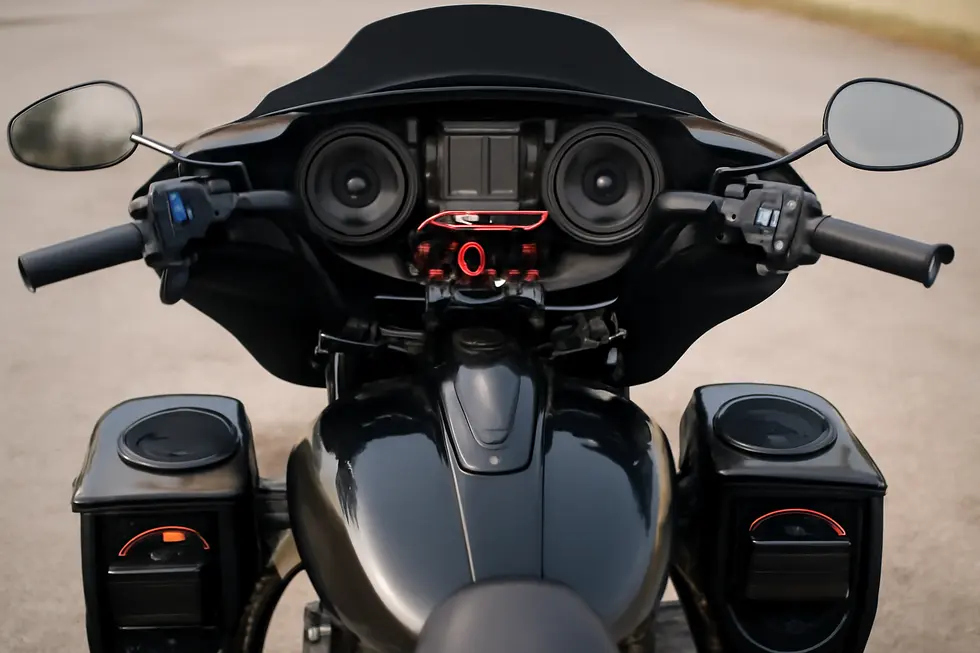
1. Selecting Durable, Compatible Speakers for Seamless Fairing Integration and Custom Upgrades
When upgrading or customizing motorcycle fairing speakers, prioritizing compatibility and weather resistance ensures lasting performance and ease of installation. Speakers must fit your bike’s fairing precisely to avoid modifications. Many manufacturers tailor their models to specific motorcycles, offering direct bolt-on designs and wiring harnesses that simplify integration. This approach preserves the bike’s aesthetics while providing a true plug-and-play experience.
Weather protection is non-negotiable since fairing speakers face constant exposure to rain, dust, and vibration. Components rated with at least IPX4 or IPX6 certifications resist water ingress and UV damage, prolonging reliability on long rides. Materials like corrosion-resistant metals and sealed speaker cones prevent moisture-related deterioration.
Balancing sound clarity with power handling is equally critical. Speakers designed for fairings often feature vented magnets and studio-grade crossovers that enhance audio fidelity, allowing music and navigation prompts to remain audible over highway wind noise. Choosing a system capable of reliably delivering sufficient wattage ensures consistent volume without distortion.
Customization often involves expanding beyond the fairing itself, integrating rear or saddlebag speakers powered by multi-channel amplifiers. This layered setup creates rich surround sound tailored to rider preferences. Some kits support DSP controls and additional speaker inputs to fine-tune the listening experience while maintaining a clean, factory-like installation.
Ultimately, selecting speakers that combine model-specific fitment, robust weather sealing, and expandable system options guarant