

Motorcycle fairings are critical for enhancing both the performance and aesthetics of your bike, especially for the 2008 Kawasaki Ninja ZX6R. As motorcycle enthusiasts know, the right fairing can not only improve your bike’s aerodynamics but can also significantly impact its visual appeal. This comprehensive guide examines the diverse selection of fairings available, ranging from Original Equipment Manufacturer (OEM) styles to third-party customization options. Each chapter is designed to provide valuable insights on purchasing, installation considerations, and the performance benefits of fairing upgrades, equipping business owners with the knowledge to make informed decisions for their clients.
From OEM Precision to Aftermarket Edge: Choosing Fairings for a 2008 Sportbike
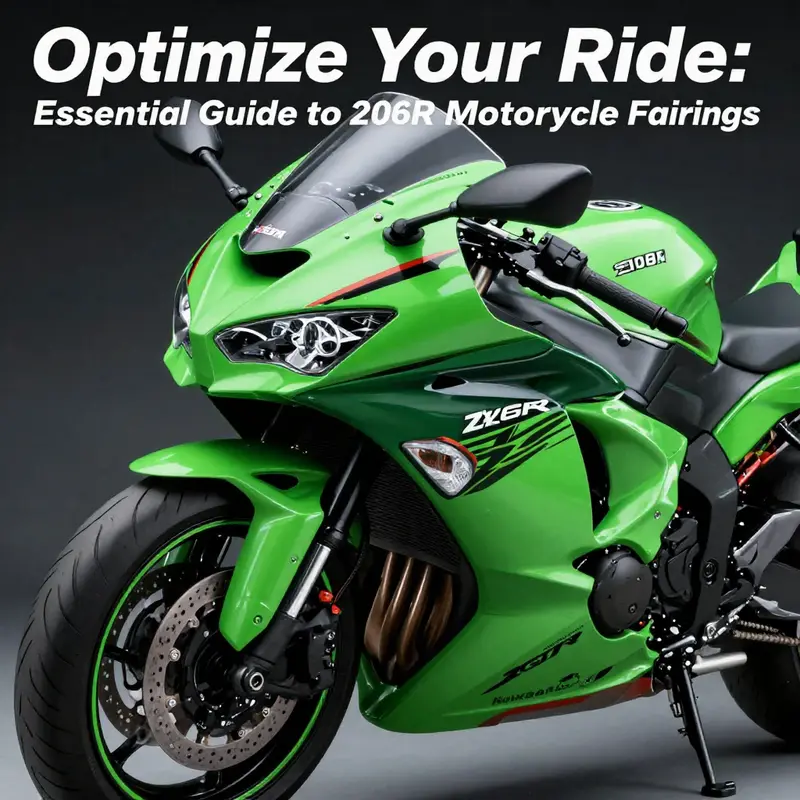 The fairing of a late-model sportbike is more than a cosmetic shell. It is a carefully engineered interface between rider, machine, and environment. For a 2008 generation of the high-rereving inline-four, the bodywork serves several intertwined purposes: shaping the airflow around the rider, shielding vital components from debris and weather, and establishing the visual stance that signals both speed and precision. In the real world, riders face a practical choice when breath of wind and street debris become daily concerns: opt for a factory-approved set that mirrors the original design, or explore aftermarket options that promise customization, potential performance gains, and a different balance of cost and fit. The decision hinges on how the bike is used, the budget available, and the degree to which the rider values exact authenticity versus a tailored look or marginal aerodynamic refinements. Understanding what each path offers requires looking at the core characteristics of OEM and OEM-style fairings, how they are produced, and what that means for installation, durability, and ride quality over time.
OEM fairings are built to exact factory specifications. They are designed to align with the bicycle’s frame, mounting points, and the array of components tucked behind the panels. This level of precision matters because even small discrepancies in fitment can influence clearance around the engine, radiators, and fuel system, or alter the way the panels sit relative to the windscreen. Genuine factory components typically come through official channels or authorized retailers, and they carry the reassurance of a direct lineage to the original design intent. The benefit is consistency: tighter tolerances, predictable paint and finish, and a seamless join with other original pieces. The trade-off, of course, is price and lead time. Authorized parts can command a premium, and availability may hinge on stock, back orders, or geographic distribution. The rider who prioritizes years of proven fit and a warranty-backed lineage will often find OEM fairings worth the extra investment, especially for condition-sensitive street machines and show-worthy builds where originality itself carries value.
Beyond the factory-true options lie aftermarket OEM-style fairings. These pieces mimic the exterior geometry of the originals but are produced by third-party manufacturers, sometimes with less emphasis on exact replica details and more emphasis on fit, finish, and durability at a lower cost. The resulting kits are varied in their completion and finish, with some offered in unpainted ABS, while others present ready-to-paint units designed to align with common color codes. The unpainted route is popular among riders who crave a head-start on a color-matched or custom-painted aesthetic, as it allows full control over the final finish. A typical complete kit of this type includes the front and rear sections as well as side panels and inner components—the equivalent of roughly two dozen individual parts in a conventional assembly. Although these kits strive to replicate the flow and silhouette of the original, they still require attention to detail during installation to ensure strong alignment and smooth surface transitions. For the rider who likes to experiment with graphics, this option offers a blank canvas and the possibility of a unique, personal appearance while preserving the bike’s essential aerodynamics.
Material choice is a practical throughline for both OEM and aftermarket paths. The majority of unpainted aftermarket sets are constructed from injection-molded ABS plastic, chosen for its balance of rigidity, impact resistance, and light weight. ABS responds well to standard fabrication processes, which makes it economical to produce and recyclable at the factory level. The homogeneity of ABS also means consistent wall thickness across panels, a factor that helps prevent warping during heat cycles and exposed sun. Painted options rely on a compatible base layer that accepts the chosen color and a durable clear coat, protecting the surface from UV exposure and minor abrasions. In either case, the surface’s interaction with the air—how seamlessly it merges with the wind and how it handles small deviations in surface finish—plays a critical role in the bike’s overall aerodynamics. When properly executed, the bodywork minimizes drag and buffeting, contributing to a more stable ride at high speeds and more predictable handling in corners or in gusty conditions.
The practicalities of choosing between OEM and aftermarket pieces extend into the realm of fitment and installation. A factory-referenced panel set is designed to slide onto predrilled attachment points and mounts with known tolerances. Because those anchors are integral to the frame geometry, the result is a near plug-and-play experience for technicians who are familiar with the model’s layout. Aftermarket OEM-style sets may require a more hands-on approach. Even when the panels are engineered to align with the same mounting points, slight variances in the produced panels—differences in peg holes, notch locations, or edge radii—can demand minor adjustments. Some riders enlist professional installation to avoid gaps along the windscreen, headlights, or fairing seams, and to ensure that the paneling maintains its intended clearance around the radiator shrouds or exhaust routing. It is not unusual for a skilled technician to re-check fitment after riding tests, especially on a bike whose track or street usage includes frequent speed changes, heavy braking, or occasional impacts with road debris.
Aesthetics also play a central role in the fairing decision. The visual impact of the bodywork is not merely about color and decals; it is about how the lines flow with the bike’s silhouette, how the panels merge into the tank, and how the windscreen interacts with the rider’s line of sight. For many, the unpainted or matched OEM-style option offers a clean base from which to build a distinctive look. Others embrace bolder lines and higher-contrast graphics, perceiving the fairings as a canvas for personal expression and brand-agnostic identity. This tension between authenticity and experimentation is part of the broader culture surrounding late-2000s sportbikes. The choice thus connects practical considerations—fit, finish, and protection—with an emotional dimension: the rider’s sense of pride in both the machine’s performance and its appearance.
Cost is another defining axis. Genuine OEM components tend to be the most expensive entry point, in both initial price and potential downtime while awaiting shipment. The advantage is the fidelity of fit and the certainty that the panels will mate with the rest of the bodywork as intended. For many riders, this is a straightforward investment in reliability and resale value. OEM-style aftermarket sets, while generally less costly, carry a spectrum of quality. Some are designed to closely mirror the originals, with robust ABS construction and careful attention to panel contours, while others emphasize sportier shaping or lighter weight at the expense of minute fidelity. The unpainted variants can reduce up-front costs and offer a flexible path toward a customized finish, with additional costs arising from professional painting and color matching. A street-focused rider may place a premium on a balanced, cost-conscious approach that preserves the machine’s accessibility should a panel need replacement in the future.
Beyond the hardware, the maintenance and care of fairings matter for long-term performance. Regular cleaning and UV protection help preserve the sharpness of lines and prevent color fading under sun exposure. Clear coats require occasional inspection for micro-damage and stone chips, which, if left unattended, can lead to surface imperfections that undermine both aesthetics and aerodynamics. For riders pushing their bikes on the track, the fairings may encounter more frequent impacts or abrasions; in such cases, the availability of aftermarket replacements with broad compatibility can ease repairs, allowing riders to return quickly to the course. The ease of maintenance also depends on the design of the kit: how accessible are the mounting screws, how easily can electronics be routed behind the panels, and how effectively do the panels seal to minimize water intrusion around the engine compartments and electronics bay during wet weather.
Compatibility is a salient practical concern. When a kit is labeled for a specific model year or generation, it is still wise to cross-check the fit with the exact sub-variants of that year, since minor revisions can alter mounting points or panel curvature. The safest approach is to verify the part numbers and consult with a professional if there is any ambiguity. A well-chosen fairing set, whether OEM or OEM-style, contributes not only to visual harmony but also to maintainability by ensuring that mounting hardware is standardized and accessible. The rider’s intended usage—whether the bike is primarily a showroom display, a weekend-wrench project, or a high-mileage daily rider—will ultimately determine whether the benefits of an authentic fit outweigh the appeal of a more creative aftermarket path.
In sum, choosing fairings for a 2008-era sportbike is a confluence of engineering precision, practical installation realities, and personal taste. The OEM route offers assurance of fit and finish and a direct lineage to the original design, with associated costs and potential lead times. The aftermarket OEM-style path provides a more budget-friendly avenue with opportunities for personalization, a broader range of finishes, and simpler replacement logistics in some cases. Both routes carry the shared goal of preserving the bike’s aerodynamic integrity while protecting its internal components and rider. The right choice—whether driven by budget, urgency, or a desire for a unique look—reflects how riders balance performance, aesthetics, and practicality in the context of a machine that sits at the intersection of engineering mastery and rider passion.
For readers exploring concrete purchasing options, it is useful to keep in mind that a complete, unpainted ABS injection-molded kit for this generation typically encompasses front, rear, and side panels, sometimes accompanied by inner components. While specific listings vary, the market commonly presents competitive pricing in the lower to mid two-hundred-dollar range for unpainted sets, with OEM and painted variants priced higher due to material quality, finish, and warranty considerations. When evaluating a potential purchase, confirm compatibility with the exact year range, ensure that the installation requires no intrusive modification, and assess whether the seller provides mounting hardware or documentation to facilitate a clean, secure fit. These checks reduce the risk of misalignment or wind-tunnel irregularities once the bike is back on the road or track, and they help safeguard the rider’s investment in both appearance and performance. In the end, the choice is less about chasing the cheapest option and more about securing a fairing solution that preserves the bike’s integrity, enhances its silhouette, and serves the rider’s goals as faithfully as the machine’s engineering once did on the showroom floor.
External resource: https://www.amazon.com/dp/B01M9VYH4Q
Shaping Personality and Performance: Aftermarket Fairing Choices for the 2008 ZX6R
 For owners of the 2008 Kawasaki Ninja ZX-6R, choosing an aftermarket fairing is about more than replacing a cracked panel. It is an opportunity to shape the bike’s personality, refine its aerodynamic behavior, and balance practicality with aesthetic ambition. The aftermarket scene for this model is mature and varied. Riders can source complete bodywork kits that replicate factory fitment closely, or they can pursue tailored solutions that emphasize weight savings, distinctive lines, or integrated features that the stock pieces do not provide. Understanding the trade-offs and possibilities helps you choose a direction that matches how you ride, where you ride, and how you want your ZX6R to look and perform.
Most aftermarket kits for this model use injection-molded ABS plastic. This material offers a good combination of impact resistance, flexibility, and affordability. ABS panels are easy to mount to existing brackets, they accept paint and graphics well, and they withstand exposure to weather and the occasional drop better than some brittle composite alternatives. Higher-end options may include textured finishes that mimic carbon fiber, or they can be ordered unpainted so you can commission a custom paint job that reflects a unique color scheme or motif. Kits commonly include the major components—nose, side panels, tail section, and belly pan—designed to replace the original parts without extensive modification to the subframe or mounting points. This compatibility reduces workshop time and helps maintain the bike’s structural integrity.
A big draw of aftermarket fairings is the ability to adjust aerodynamic characteristics without expensive suspension or frame upgrades. Subtle reshaping of the front cowl and side vents can influence airflow around the rider and the bike’s front end, improving stability at speed. Some designs offer enlarged ducting to channel air to the radiator or to vent heat more effectively from the engine bay. Others refine the leading edges to reduce buffeting and improve rider comfort on long straights. While these changes are rarely as dramatic as full aerodynamic development seen on race machines, sensible enhancements can make a noticeable difference in wind noise, rider fatigue, and high-speed composure.
Customization options extend beyond shape and function to lighting, trim, and finish. Many kits are sold unpainted, granting a blank canvas for paint specialists to apply base colors, metallic flakes, or airbrushed graphics. Integrated lighting housings accommodate modern LED strips or flush-mounted indicators, enabling a sleeker rear profile and clearer signaling. For riders seeking a more motorsport-inspired look, textured or painted faux-carbon surfaces can be combined with contrasting pinstripes or matte accents. Professional paint shops can add protective clear coats that resist stone chips and UV fading, preserving your investment over years of use.
Installation considerations often influence the buying decision. Complete kits that are purpose-built for the 2008 ZX6R aim to align with the bike’s original mounting points and fastener holes. This reduces the need for drilling or bracket fabrication, which is important for riders who want a factory-like fit and finish. Even so, obtaining a professional installation is advisable for those less experienced with motorcycle bodywork. Technicians who specialize in fairing replacement can assess alignment, adjust mounts, and ensure that wiring for lights and indicators is routed cleanly. They can also identify and reinforce any stressed mounting areas, preventing the common issue of cracked panels around fasteners.
For do-it-yourself enthusiasts, the aftermarket community provides a wealth of support. Online guides and forums document step-by-step removal and refit processes, list torque settings for fasteners, and offer tips for paint preparation and seam finishing. Many sellers include basic hardware and instructions, and some vendors provide higher-quality fastener kits or quick-release fasteners for easier removal. Before committing to a kit, verify that instructions are included and review community feedback about fitment nuances. Where possible, select a kit described explicitly as compatible with the 2008 model year to minimize guesswork.
Durability should be a primary selection criterion. Look for panels with consistent wall thickness and clean molding marks rather than thin, brittle plastic that stresses at mounting holes. Reinforced areas around the head tube, engine mounts, and tail subframe will better resist vibration and minor impacts. A well-made ABS kit will flex under load rather than crack, and paint adhesion should be tested or confirmed by the supplier. If you plan to ride in variable climates, consider finishes that offer resistance to salt and road grime. The right combination of material quality and professional finishing extends the usable life of the fairing and maintains resale value.
Aesthetic choices are highly personal but they also reflect practical trade-offs. A full race-style kit with minimal room for luggage or passenger comfort will transform the bike’s look and may shave modest weight, but it will compromise daily usability. Conversely, kits that prioritize integrated storage or passenger comfort preserve daily practicality while offering a refreshed appearance. If the bike will see track days, prioritize airflow and secure mounting for safety. For street-focused builds, prioritize visibility—ample reflective surfaces, clear turn signal mounting, and a tail that protects privately mounted lights are all useful features.
When evaluating vendors and kits, reviews and verified pictures from other owners are invaluable. Real-world photos show fitment, alignment, and paint finish in everyday lighting. They also reveal how panels perform after months of use—how they resist vibration, whether seams open, and how mounting points hold up. Look for posts that detail the installation process and any adjustments required. These firsthand accounts often highlight simple fixes that save time and money, such as shimming under specific mounts or using different fastener lengths to avoid stress points.
Budget is always a factor. Complete aftermarket kits are available across a wide price spectrum. Lower-cost options provide the bulk of the visual transformation at a friendly price point, while premium kits emphasize refined finishes, better-fitting molds, and sometimes additional features like pre-cut lighting holes or added vents. Remember to include painting, fasteners, and installation in your budget. A seemingly cheap kit can become costly once painting and professional fitting are added. Conversely, investing in a well-molded kit that requires minimal tuning can reduce labor costs and yield a cleaner result.
Finally, consider how the fairing choice integrates with future plans for the bike. If you are building a themed livery, choose panels that accept decals and vinyl well. If performance upgrades are planned, prioritize fairing designs that do not interfere with cooling or access to service points. For those who value reversibility, choose kits that can be removed without modifying the subframe or wiring harness extensively. Keeping original parts safe in storage allows the bike to be returned to stock at resale, preserving value and broadening options for future owners.
For riders seeking compatible aftermarket bodywork collections tailored to the 2007–2008 ZX-6R platform, a useful curated resource is available that groups compatible fairings by model and year, simplifying comparison shopping. For a practical guide that outlines how to choose the best fairing for this model, consult a comprehensive external resource that walks through compatibility, materials, and finishing options: https://www.smartbuy.com/how-to-choose-the-best-2008-zx6r-fairing
When the ZX-6R 2008 Needs a New Shell: Balancing Fit, Material, and Craft in Fairing Choices
 The fairing of a motorcycle is more than a cosmetic shell; it is the throughline between aerodynamics, protection, and rider comfort. For the 2008 Kawasaki Ninja ZX-6R, the decision to replace or upgrade the fairing kit sits at the crossroads of fitment accuracy, material quality, and the reputation of the manufacturer. In a field where every seam and mounting point can influence airflow and handling at speed, the choice between an OEM-style injection-molded ABS solution and a third-party alternative becomes a practical, almost engineering-minded, negotiation rather than a simple shopping decision. The ZX-6R’s 2008 design is well regarded for its sleek profile and effective air management, and that reputation rests on consistent geometry across the front, sides, and tail. When a kit is specified for the exact year, it carries the promise of a seamless installation where the parts align with stock mounting points, protect the rider from wind and debris, and preserve the bike’s lines rather than alter them beyond recognition. In this sense, the most dependable route remains a direct replacement that mirrors the original injection-molded ABS geometry, offering precise dimensional accuracy and a smooth, uninterrupted surface after mounting and paint. Yet the market recognizes that a rider may prioritize cost, customization, or a weight-focused approach, and those priorities steer the conversation toward ABS-based aftermarket sets or lighter carbon-fiber options. The careful navigator will weigh these paths not as brands versus brands, but as trade-offs among fit, finish, and how the package ultimately behaves on the road.
Material choice matters beyond aesthetics. ABS plastic, when injection-molded, delivers robust dimensional stability, excellent surface finish, and predictable paint adhesion. For a ZX-6R that is already a few seasons old, an OEM-style ABS fairing kit offers a straightforward path to restoring the original silhouette with reliable weather resistance and long-term durability. In practical terms, this means pre-drilled holes, clearly labeled components, and a mounting process that respects the bike’s stock geometry. The result is a shell that aligns with the front fender, windscreen, tank cover, and side panels without forcing the rider to improvise through misaligned fasteners or shims. The advantage here is not merely a pristine look; it is an installation experience that minimizes guesswork and reduces the risk of compromising structural integrity as the fairings wrap around the frame. The objective remains a seamless fit that preserves the ZX-6R’s intended aerodynamics while providing dependable protection against rain, road splash, and wind blast at highway speeds.
On the other hand, third-party ABS fairings are consistently positioned as the value option for riders who want to balance modern aesthetic cues with a more constrained budget. These kits typically embrace the same ABS material benefits as OEM lines — weather resistance, impact resistance, and compatibility with a standard fastener set — while offering design variations that might emphasize sharper lines, aggressive contours, or extra wind protection. The practical upside is clear: more aggressive styling or a visually updated stance without a catastrophic price jump. The downside can be a tighter margin for error in fitment and a wider variance in finish quality, depending on the factory and the batch. For riders who rely on a quick, straightforward swap, the presence of included accessories—such as windshields or heat shields, plus the hardware kit—helps simplify the project. In many cases, these bundles anticipate the realities of older bikes with preserved mounting points and provide the comfort of ready-to-use components rather than loose parts that must be sourced separately. The result can feel almost plug-and-play when the listing explicitly notes compatibility with the ZX-6R models from 2007 to 2008.
For riders who prize a lighter weight and a premium aesthetic, carbon-fiber options enter the conversation with a different calculus. Dry carbon fiber fairings promise a notable reduction in mass—often cited as a potential 20 to 40 percent weight savings compared with ABS—along with a distinct, high-end finish that many riders associate with elite sport riding. The performance implications are nuanced rather than dramatic; while every gram shaved from the bodywork helps in theory, the real trick lies in how the shells interact with the bike’s heat management, mounting tolerance, and the complexity of the fairing’s curves. Carbon fiber requires higher craftsmanship during installation and a precise, patient approach to fitment. Any misalignment in the inner brackets or gaps at the seams can undermine aerodynamics or rider comfort, especially where fairings meet the upper cowl and tank area. In this context, carbon fiber becomes less about affordable mass production and more about a skilled, deliberate upgrade that acknowledges the ZX-6R’s age and the expectations of a discerning rider.
Because the ZX-6R sits in a market with both enthusiasts and professionals, the question of where to source a kit becomes as relevant as the material itself. For individuals purchasing in small numbers, a straightforward consumer channel that lists compatibility for 2007–2008 ZX-6R models can provide a clear gauge of what is available, including the included hardware and any optional add-ons. The emphasis should be on fitment specifications and verified reviews to ensure the kit’s claims align with the bike’s real-world configuration. If the choice trends toward bulk or business-to-business purchasing, it becomes essential to confirm that the supplier can guarantee components that align with the ZX-6R’s exact year and variant so that there are no surprises when the first screws meet the mounting tabs. In either case, the buyer should look for pre-drilled holes and labeled components as signs of thoughtful engineering that foresees assembly challenges and minimizes the risk of misalignment during a first-time installation.
For those who want a directional path through the available options, a perusal of the Kawasaki Ninja ZX-6R fairings for the 2007-2008 window can serve as a useful benchmark. These kits, designed to correspond with the bike’s body lines as they existed in that era, are typically offered as complete sets that cover the front, sides, and tail, with the option to add a windshield or heat protection elements if the climate demands it. When a kit clearly marks compatibility with the 2007–2008 ZX-6R, it signals a degree of reliability in terms of mounting points and surface geometry that can reduce the guesswork involved in a repaint or a full shell swap. The practical effect is that a rider can approach the project with confidence that the parts will align with the bike’s core structure rather than forcing noise, gaps, or calibration issues into the ride. To explore these accessible routes, consider looking through a dedicated collection dedicated to the Kawasaki Ninja ZX-6R fairings for 2007–2008, which is designed to yield a coherent picture of what is feasible in this specific year range. Kawasaki Ninja ZX-6R fairings 2007-2008 collection: https://www.summitfairings.com/collections/kawasaki-ninja-zx-6r-fairings-2007-2008
When planning a purchase for the ZX-6R’s 2008 fairing set, the buyer should also consider broader sourcing strategies. The landscape includes injection-molded ABS kits from a range of aftermarket suppliers, plus carbon-fiber options from specialized manufacturers. Online marketplaces and wholesale platforms can reveal a spectrum of configurations, with some vendors offering full damage-replacement sets and others presenting modular pieces intended to let buyers swap one panel at a time. It is worth noting that the age of the model can introduce fitment uncertainties, especially if the bike has undergone earlier modifications or if subtle changes were made during subsequent years. Checking precise compatibility notes, verifying the existence of pre-drilled attachment points, and confirming the availability of fasteners in the kit are prudent steps before committing. A cautious buyer will also verify the finish quality, ensuring that the inner surfaces have protective coatings that resist cracking from heat and that the painted exterior can hold up to UV exposure without fading or crazing over time. In this context, the decision to invest in a kit requires not only an eye for aesthetics but a careful reading of the seller’s specifications, the materials used, and the installation guidance provided.
In sum, choosing a fairing kit for the ZX-6R 2008 means balancing three pillars: fitment accuracy, material quality, and the reliability of the supplier. ABS remains the workhorse option for those who want a dependable restoration with predictable paint outcomes and straightforward assembly. Carbon fiber offers a path to lighter weight and a refined look, tailored to riders who understand that installation precision matters and are prepared to invest in skilled labor when needed. Regardless of the path, the guiding principle is to ensure that the parts you buy explicitly cover the 2007–2008 ZX-6R variant and that the mounting points, edge radii, and panel contours align with the bike’s original geometry. In that alignment lies the confidence that the fairing will contribute positively to the bike’s handling, protection, and visual appeal, rather than becoming a source of ongoing fitment concern. For riders seeking a practical starting point, a careful comparison of the available ABS kits, an awareness of the carbon-fiber option’s weight and cost implications, and a cautious review of the supplier’s fitment guarantees will illuminate a path that respects the ZX-6R’s legacy while enabling a refreshed, riders-first experience after the upgrade.
External reference: For further context on product variety and user reviews related to ZX-6R fairing kits, see this external resource: https://www.amazon.com/dp/B01M9VYH4Q
null
 null
null
Streamlining Speed and Style: The 2008 ZX-6R Fairings as a Convergence of Performance and Persona
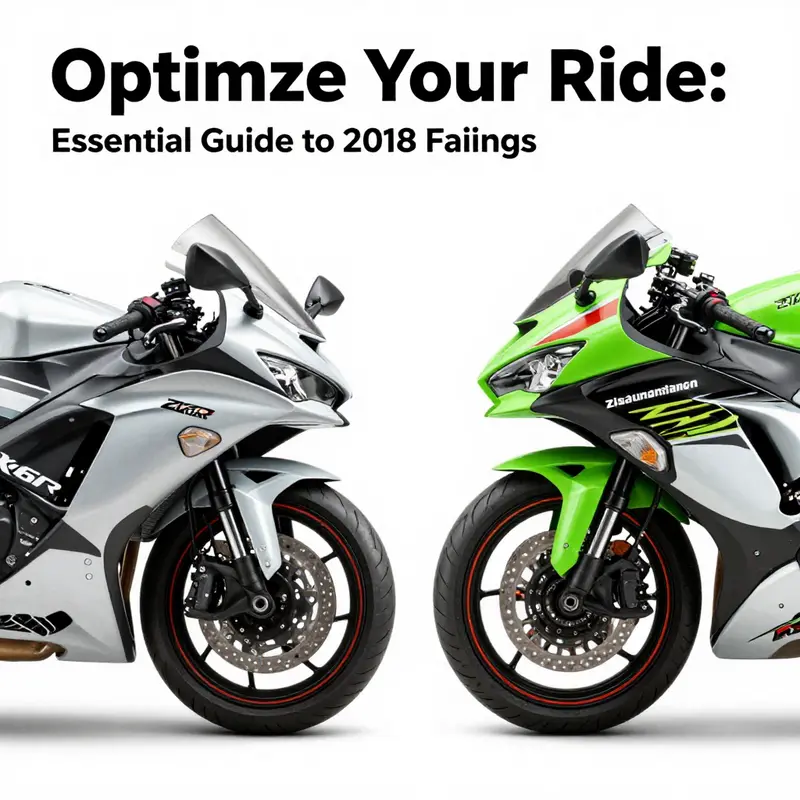 The 2008 Kawasaki Ninja ZX-6R sits at a crossroads where engineering and visual impact meet in a single, sculpted form. The fairing that envelops this middleweight superbike is not merely a shell; it is a wind-tuned architecture designed to harmonize function with personality. In the riding world, fairings for this model carry a dual responsibility: to slice through air with minimal friction and to project an aggressive stance that signals the bike’s intent even at a standstill. This convergence of performance and aesthetics matters because it transforms a capable machine into a purpose-built tool for high-speed riding, where every curve of plastic, every line of conto