

The motorcycle fairings market in Europe is experiencing rapid evolution, driven by increasing demand for high-performance, lightweight, and environmentally-friendly designs. As motorbike culture thrives across the continent, business owners must keep abreast of the latest trends, manufacturing dynamics, procurement channels, compliance requirements, and customization options to harness the full potential of this lucrative market. This article will explore the current market landscape, key supply sources, essential purchasing platforms, regulatory frameworks, and emerging customer preferences for tailored fairings, equipping business owners with the knowledge needed to thrive in this competitive arena.
Market Demand and Trends: The Evolution and Current State of Motorcycle Fairings Across Europe
 Across Europe, motorcycle fairings have evolved from simple aerodynamic shells into sophisticated, integrated systems that reflect a broader balance of performance, comfort, and sustainability. The riding culture in Europe—faded from a history of iconic racing to a vibrant mosaic of sport, touring, and adventure—drives a demand that is as much about the rider experience as it is about the vehicle’s external silhouette. Today, the fairing is seen not merely as a barrier against wind but as a carefully engineered interface that orchestrates air flow, rider protection, thermal management, and even digital connectivity. This shift mirrors a larger trend: the fusion of mechanical efficiency with intelligent design, where every curve and surface serves multiple roles, from reducing fatigue on long highway stretches to housing sensors, displays, and energy-efficient cooling channels that support increasingly electronic motorcycles.
Market evolution in Europe has been shaped by three parallel currents. First is the renewed emphasis on long-distance comfort and stability. Touring and sport-touring motorcycles remain highly popular, and fairings engineered for these classes emphasize refined wind protection, reduced wind noise, and smoother air separation at high speeds. This translates into fairings that manage gusts and turbulence with a focus on rider posture and upright visibility, allowing riders to sustain comfortable turns and upright sightlines during extended journeys. Second is the demand for lightweight, high-strength materials. European riders are increasingly attuned to overall efficiency and performance, and fairings crafted from carbon fiber-reinforced composites or advanced glass-reinforced plastics offer substantial weight savings without compromising impact resistance. These materials also support eco-conscious design narratives, since lighter configurations contribute to lower energy expenditure in production and operation. Third is the growing preference for integrated systems. Riders expect fairings to do more than shape the bike. They seek compatibility with electronic rider aids, embedded displays, and smartphone connectivity, as well as modular components that can be upgraded as technology advances. The fairing thus becomes a canvas for modular engineering, where panels, vents, and ducting can be reconfigured to suit different riding styles and climates.
The current state in Europe also reflects the rapid advance of electric powertrains in the two-wheeler sector. Zero-emission and plug-in hybrids place new demands on fairings. In electric bikes, cooling pathways around battery packs and power electronics must be carefully engineered to avoid heat buildup, while still preserving aerodynamics. European designers are responding with lighter, more efficient fairings that accommodate cooling intakes without increasing drag, and with coatings and materials that support recyclability, aligning with regional sustainability goals. This confluence of aerodynamic optimization, thermal management, and environmental responsibility marks a notable departure from older approaches that prioritized speed alone. It is a shift that encourages designers to think of the fairing as a living component—one that can accommodate sensors, active aerodynamics, and even modular panels—while keeping the rider shielded from the wind and the road.
In terms of consumer preferences, the market shows a clear tilt toward the sport-tourer aesthetic that harmonizes aggressive lines with corridor-friendly wind protection. The appeal lies not only in the look but in how the fairing interacts with the rider’s posture and the bike’s overall balance. A well-designed fairing in a sport-tourer setup channels air efficiently around the rider and reduces fatigue on long rides, enabling easier handling of wind forces at higher speeds. This preference is echoed in the continued popularity of models that blend race-inspired contours with touring practicality. Riders gravitate toward fairings that can be customized for color, texture, and graphics while maintaining compatibility with a suite of accessories and protective features. Customization extends beyond cosmetics; it now frequently encompasses modular options for screens, vents, and detachable panels, enabling riders to tailor the ride to their climate and road conditions.
From a production and supply-chain viewpoint, Europe sits at a crossroads. While a number of high-end manufacturers produce fairings in-country to ensure precise fit and tight tolerances, a substantial portion of supply comes from global producers that specialize in composite tooling and scalable shaping processes. In particular, regions with established plastics and composites ecosystems—such as parts of Asia—play a major role in meeting European demand for both standard shapes and customized, CAD-driven designs. This global dynamic is supported by sophisticated logistics networks that offer efficient lead times and compliance with European safety standards. For instance, suppliers in major manufacturing hubs leverage standardized processes to ensure adherence to ECE R43 and related quality criteria, enabling quick entry into European markets while maintaining consistent quality across batches. The supply chain has also grown more agile, with digital communication channels that facilitate rapid design iterations and remote customization approvals, shortening development cycles from concept to showroom.
Regulatory compliance remains a foundational driver of fairing design in Europe. The ECE R43 standard governs structural integrity and safety in the event of a collision, a requirement that pushes designers to optimize thickness, ribbing, and mounting interfaces without compromising weight. For fairings intended for electric motorcycles, additional regulatory considerations—such as REACH and RoHS compliance—guide material selection and chemical formulations. The emphasis on recyclability and low environmental impact aligns with broader European sustainability goals, influencing choices from resin systems to surface coatings. In practice, this means engineers must balance stiffness and impact resistance with environmental criteria, often turning to advanced composites and specialty coatings that minimize volatile organic compounds and facilitate end-of-life recycling.
The procurement landscape for European distributors and shops reflects a growing sophistication in sourcing. Online platforms for B2B procurement have become essential channels, offering access to certified suppliers of high-precision composite fairings suitable for common European models. The shift toward CAD-driven customization is supported by manufacturers that provide prototyping services, including rapid 3D-printed mock-ups that allow buyers to validate fit and aesthetics before committing to full-scale production. This capability is especially valuable for European riders who crave individualized styling while insisting on strict fit standards and compatibility with aftermarket components. The customization trend supports a thriving aftermarket ecosystem, where independent workshops and specialized shops can promote tailored configurations that align with local riding styles and seasonal climates.
For readers seeking a practical glimpse into how these dynamics translate into products that still respect the broader European ethos, one can observe how some regional offerings emphasize lightweight, three-layer composite structures that balance aerodynamic efficiency with robust impact resistance. These designs take advantage of layered materials to optimize stiffness, provide scratch resistance, and accommodate internal routing for wiring and sensors. In the same breath, there is growing interest in taking advantage of the internet of things (IoT) through embedded connectivity features. A modern fairing can host data displays, charging indicators, and app interfaces while maintaining clean lines and drag-minimized shaping. This convergence of aerodynamics, materials science, and digital integration is shaping a new normal for European fairings.
The market narrative is further enriched by a consumer culture that values both performance and personal expression. European riders—whether navigating alpine passes, coast highways, or inland expressways—expect their fairings to harmonize with the bike’s geometry and their own riding style. The result is a design philosophy that treats the fairing as a system rather than a single component. Panels, vents, and fasteners are conceived to work in concert with the rider’s stance, the bike’s suspension setup, and the wind environment of different regions. The gap between form and function narrows as designers incorporate feedback from riders into iterative development cycles. This approach yields fairings that not only reduce drag and noise but also contribute to a smoother, more confident ride through variable weather conditions.
As this evolution continues, the European fairing market is likely to become even more integrated with sustainability and smart technology. We can anticipate future iterations that emphasize modularity, with quick-release panels and standardized mounting interfaces that enable rapid customization across brands and models. Advanced materials with lower environmental footprints—paired with recyclable coatings and finishes—will align with the region’s regulatory and cultural emphasis on responsibility. More riders will demand adaptive wind management features, such as personalized airflow control and sensor-driven adjustments, further blurring the line between protective shell and intelligent companion on the road. In sum, the European market for motorcycle fairings is moving beyond its traditional role as a cosmetic and aerodynamic accessory. It is becoming a pivotal, multifunctional element that shapes ride quality, safety, and sustainability for a new generation of riders.
For readers seeking a concrete example of how this narrative translates into consumer choice, consider the broader ecosystem that supports European riders: a dedicated online hub that aggregates fairing collections and customization options across mainstream models. A quick reference to a prominent example in the aftermarket space highlights the availability of diverse styling options and modular designs that can be tailored to reach a balance between aerodynamics and aesthetics. This illustrates how the European market views the fairing as a configurable asset. Additionally, if you want a sense of regional availability and product variety, explore the Yamaha fairings collection to see how a mainstream approach integrates with European preferences for performance and customization. Yamaha fairings collection.
External resource: for a broader economic perspective on the motorcycle fairing market, including growth projections and regional dynamics, see Global Market Insights’ market study on motorcycle fairings (external source). https://www.globalmarketinsights.com/market-research/motorcycle-fairing-market
From Factory Floors to European Roads: The Global Flow of Motorcycle Fairings and Europe’s Evolving Demand
 Europe sits at the intersection of engineering heritage and a ferocious appetite for performance, style, and sustainability in two-wheeled travel. The motorcycle fairing, once a simple shield against wind and rain, has evolved into a sophisticated, aerodynamically tuned, lightweight module that integrates safety, electronics, lighting, and even climate management. In the European context, sport and touring motorcycles drive the lion’s share of demand for full or semi-enclosed fairings. The allure isn’t merely cosmetic; it is a strategic response to real-world needs: higher speed stability, reduced rider fatigue on long journeys, and the capacity to house sensors or displays for navigation and connectivity. As the market leans into electrification, Europe has begun to see a growing appetite for zero-emission fairings that blend lightweight composites with clean metallurgical and adhesive technologies. These layouts are not only about aesthetics; they serve as functional platforms for new propulsion architectures and smarter riding experiences, aligning with how riders in Europe increasingly value efficiency, reliability, and environmental responsibility.
All these dynamics rely on a remarkably intricate supply network that stretches from coastal manufacturing hubs in Asia to the heart of European distribution. In recent years, China has solidified its role as the world’s core producer of motorcycle fairings. Within China, the Pearl River Delta region is a recognized epicenter, where a dense cluster of plastic processing, mold-making, and automated finishing operations creates the capability to scale production, meet strict safety standards, and continuously push for tighter tolerances. Across this ecosystem, a few industry leaders coordinate design, materials selection, and production cadence to deliver consistent quality across thousands of standard and customized SKUs. The vertical integration that has become common in this sector—where an original equipment profile might rely on a network of nearby suppliers plus export channels—has sharpened the ability to respond quickly to European buyers who demand both cost efficiency and the high performance associated with premium composites.
The export pattern mirrors a broader shift in the global two-wheel industry: volume is concentrated where cost-to-performance curves are most favorable, yet a rising share of high-end, technically advanced fairings is now channeled toward mature markets like Western Europe. The 2024 export data for one major Chinese manufacturing hub illustrates the scale and reach of this supply chain. In that year, a single city recorded an export volume in the vicinity of hundreds of thousands of units, with total regional export figures accounting for a substantial portion of national output. Notably, these products did not simply ship en masse to distant warehouses. They traversed sophisticated logistics networks that emphasize value-added service: door-to-door delivery through specialized port facilities, near-real-time compliance documentation, and streamlined customs arrangements. The ability to deliver to Germany, France, Italy, and other European destinations with relatively short lead times is increasingly framed as a competitive differentiator. This efficiency is often described in terms of a reduced cycle time versus traditional supply chains, with improvements on the order of a few weeks in some cases, and markedly shorter transit windows overall.
A hallmark of the modern supply chain is its vertical integration and the strategic role of contract manufacturing in meeting diverse market requirements. Upstream, the fairing begins with advanced polymers, precision molds, and surface-finishing capabilities that can withstand weathering and UV exposure, all while remaining relatively light. Downstream, finishes and coatings are engineered to resist environmental stressors without sacrificing colorfastness and gloss, an essential consideration when European riders demand long-lasting aesthetics alongside durability. For many European buyers, this is more than a single part; it is a modular system designed to integrate lighting assemblies, airflow channels, and mounting provisions that conform to a vehicle’s geometry and European standards. The ability to mix standard parts with CAD-driven customization—where a customer can alter color, texture, or emblem placement—has become a new revenue stream for manufacturers who can offer both mass-produced lines and bespoke solutions.
The evolution of fairings into multi-function components goes hand in hand with regulatory realities. All products intended for the European market must satisfy the European ECE R43 standard, which ensures that materials, structural design, and performance in simulated collisions meet recognized safety criteria. Beyond this, components for electric-powered two-wheelers must comply with REACH and RoHS directives, underscoring a broader shift toward sustainability, recyclability, and non-toxic material choices. These compliance requirements, while presenting a challenge, also drive innovation. They push manufacturers to adopt advanced composite materials, surface treatments with longer lifespans, and smarter integration strategies that keep weight down while increasing functional capabilities, such as embedded display modules or sensor housings that can be customized for the European rider’s preference for connectivity and information certainty.
Customization has emerged as a central theme in the European market. Riders and retailers alike seek options that reflect individual identities, riding styles, and regional climates. Chinese suppliers have responded with CAD-enabled design services, rapid prototyping through 3D printing, and a spectrum of finish options—from textured carbon-like surfaces to high-gloss finishes with durable protective coatings. The combination of flexible production lines and responsive design services means a single OEM or distributor can offer a catalog of options that reads like a palette rather than a single package. In practice, this approach supports a wide range of applications, from sport-focused aerodynamics optimized for wind-tunnel performance to touring-oriented fairings that optimize heat dissipation and rider protection over long trips. The result is a market where European customers enjoy an intimacy with form and function that was previously the preserve of high-end niche brands.
Another dimension of the supply chain that deserves attention is the logistics architecture that ties production to consumption. Guangdong-based suppliers, for example, are well acquainted with international shipping lanes and the documentation required for EU entry. Ports, freight-forwarding networks, and inland distribution centers are orchestrated to minimize delay and ensure predictable delivery schedules. For European distributors, the advantages extend beyond price; the domestic availability of components reduces downtime for repair, updates, and customization, which is crucial for dealerships and service centers that rely on a quick turnaround for customers seeking personalized upgrades. In this sense, the global flow of fairings resembles a well-tuned orchestra where each instrument must play in time with the others to produce a seamless customer experience across continents.
As Europe’s two-wheeled landscape continues to evolve, so too does the profile of demand. The shift toward electric mobility prompts fairing designers to explore materials and configurations that facilitate effective cooling, housing for thermal management components, and the seamless integration of digital interfaces. This trend matters not only for new machines but also for retrofits and upgrades that European riders pursue to extend the life of their motorcycles while embracing new performance and environmental standards. Such dynamics create opportunities for regional distributors and workshops to position themselves as hubs of expertise for both traditional internal-combustion machines and modern electric platforms, enabling them to offer not just parts but integrated, future-ready solutions.
For readers seeking a lens into model-specific product lines and the breadth of styling options available on the market, the following resource offers a practical snapshot of the catalog that European buyers often encounter when exploring aftermarket possibilities: Kawasaki Ninja ZX-14R fairings.
Beyond the catalog and the factory floor, the industry’s trajectory is inseparable from the broader narrative of global trade and regional specialization. Chinese manufacturers continue to amplify their value proposition by offering both standard, high-volume production and targeted customization that speaks to European taste for performance and personality. Meanwhile, European logistics, regulatory clarity, and a mature aftersales ecosystem reinforce the appeal of a streamlined supply chain that can deliver both immediate parts and bespoke aerodynamic systems with equal confidence. The result is a market where the fairing is neither mere protection nor decorative shell but a reliable, adaptive platform that supports the rider’s goals—speed, efficiency, and experience—across a diverse continent.
External perspectives on market dynamics, supplier capabilities, and regulatory frameworks can deepen understanding of these patterns. For instance, a recent overview of Chinese fairing production and export trajectories highlights how regional clusters organize around advanced plastics processing, precision tooling, and coating technologies to meet global standards. It also points to the importance of ongoing investment in surface engineering and lightweight composites as the sector moves toward higher performance tiers and broader geographic reach. This broader context helps explain why Europe remains a coveted destination for high-value fairings and why the supply chain’s evolution toward speed, customization, and sustainability will continue shaping the sector for years to come.
External reading: https://www.baijiahao.baidu.com/s?id=1776543210482239839&wfr=spider&for=pc
Platform Currents and Channel Fabric: Building Europe’s Motorcycle Fairing Supply Web
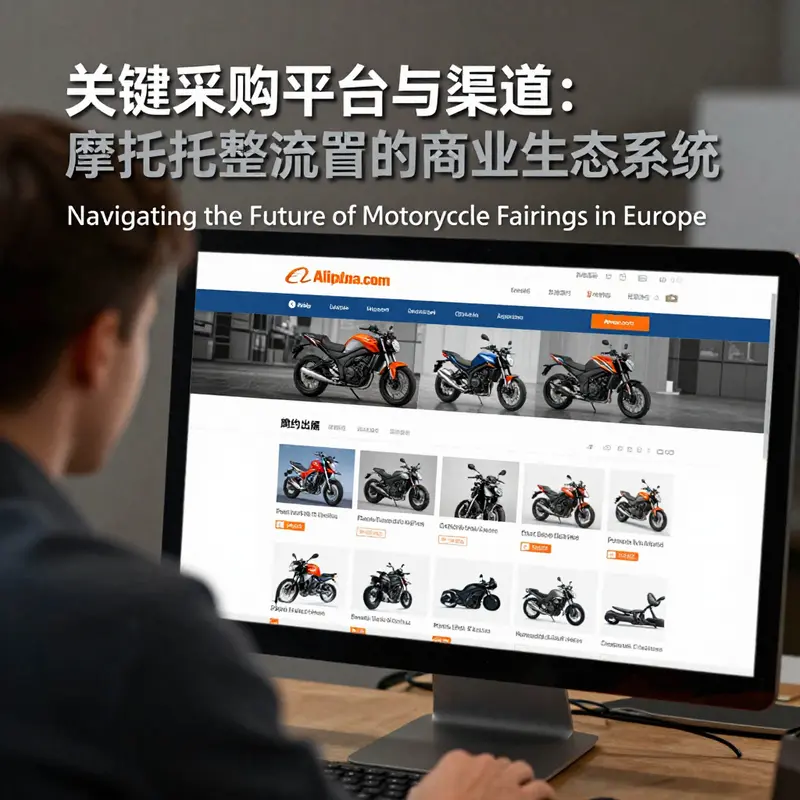 Europe’s motorcycle culture sits at a crossroads of high performance, lightweight design, and environmental responsibility. Among the components that shape that balance, the motorcycle fairing plays a pivotal role. It is not merely a cosmetic shell; it is an aerodynamic instrument, a rider-safety accessory, and a canvas for engineering precision. In this chapter, we trace the commercial ecosystem that underpins how fairings move from raw materials to European riders’ hands. The discussion centers on the platforms and channels that knit together upstream materials, midstream manufacturing, and downstream sales, all while embracing digital innovation and regulatory discipline. The arc reveals a market that is less a linear supply chain than a dynamic, data-driven network, continually reconfiguring itself to meet Europe’s demand for performance, customization, and sustainability.
At the heart of the European demand are sport bikes, touring machines, and the growing class of electric-powered two-wheelers. These riders prize full fairings for their aerodynamic efficiency, wind protection, and integrated interfaces. The trend toward zero-emission two-wheelers amplifies demand for lightweight, recyclable materials and fairings that can accommodate battery packs, cooling paths, and smart electronics without sacrificing form. The result is a procurement landscape that rewards materials science, precision engineering, and the ability to adapt designs quickly as new models come to market. The commercial implication is clear: to serve Europe well, suppliers must combine technical excellence with efficient, reliable access to the continent through a robust, digitally enabled ecosystem.
Upstream, the base of the fairing economy rests on advanced composite materials, engineering plastics, and precision molds. The choice of material—glass fiber reinforced plastics, carbon fiber composites, or ABS-based blends—directly influences weight, rigidity, heat resistance, and, ultimately, rider safety in collisions or gusting wind. The procurement platforms that connect these materials with fairing manufacturers span both global industrial marketplaces and vertical platforms dedicated to automotive and motorcycle parts. On one end lie broad, widely used channels that source raw polymers and standard composites; on the other end are specialized portals that curate higher-performance fibers and pre-preg materials suitable for aerospace-grade lightness. In practice, the most active buyers routinely tap a blend of sources. They may use large, general e-commerce portals for breadth and cost efficiency, while turning to industry-specific networks to secure the specialized resins, prepregs, and tooling required for EU-compliant fairings.
Within this upstream layer, several platforms play a central role in shaping availability, pricing, and lead times. The global reach of a few major industrial marketplaces enables European buyers to compare materials across manufacturers and regions with unprecedented speed. Meanwhile, vertical platforms designed for automotive and motorcycle components help buyers identify suppliers who understand specific regulatory and performance criteria. This dual-channel approach is essential because European standards demand not only high mechanical performance but predictable quality and traceability. The supplier base remains heavily concentrated in regions with mature plastics and composites clusters. In Europe itself, the focus is often on finishing and assembly, but the supply of base materials frequently travels through established hubs in Asia and North America before finding its way into European molds and fabrication lines. The result is a global-to-local arc where supply stability, regulatory compliance, and cost management converge at the same purchasing table.
The midstream manufacturing stage in the fairing ecosystem is where material choices meet shaping processes. The European market relies on a dense cluster of injection molding, vacuum forming, and composite layup facilities, with major concentrations in coastal provinces of China and in domestic industrial centers that export to Europe. Chinese hubs—especially those with integrated capabilities in polymers, UV-resistant coatings, and automated finishing lines—play a central role in delivering mass-produced yet high-quality fairings for European brands and distributors. The appeal is not merely price. Modern fairing production demands tight tolerances, surface finish quality, and consistent UV stability, all of which feed into compliance with European regulatory expectations. To achieve this, many Chinese manufacturers have invested in automated tooling, digital process controls, and robust quality-management systems. They also leverage port facilities and logistics networks that support efficient cross-border delivery to Europe, often with door-to-door arrangements that reduce the administrative burden on European buyers.
Digitalization is reshaping the midstream and downstream layers in tandem. Industrial internet platforms and smart manufacturing concepts enable real-time capacity matching, traceable production runs, and faster prototyping cycles. For instance, some producers couple CAD-driven design iterations with 3D-printed prototypes to verify fit and aerodynamics before committing to costly tooling. Once a design passes prototype validation, the next step is to tune the manufacturing process for consistent replication. This is where industrial internet platforms and cloud-based collaboration channels enter the picture, helping factories align with European buyers on batch sizes, material choices, and delivery windows. The result is shorter development cycles, fewer last-minute changes, and a smoother transition from design to delivery. In parallel, tooling suppliers and mold-makers operate in a highly specialized network that coordinates with composite fabricators and finishing shops to ensure that every fairing meets the exacting surface quality and dimensional tolerances required by European vehicle standards.
Downstream, the channels diversify as market players bridge factory output with end consumers and repair shops across Europe. Traditional routes remain viable: original equipment manufacturer–level supply to new-bike programs, and the aftermarket and repair channels that serve independent retailers and customization shops. European buyers also increasingly rely on cross-border e-commerce to reach enthusiasts who want bespoke styling or replacement parts for aging bikes. The online shopping behavior in Europe favors platforms that combine broad catalogs with robust returns policies, detailed technical specifications, and credible after-sales support. As a result, the fairing ecosystem must offer not only parts but the assurance that these parts will fit, perform, and endure in European road conditions. This is where the integration of supply chain transparency, product data management, and after-sales service becomes a crucial differentiator.
In this integrated landscape, the importance of regulatory compliance cannot be overstated. European sales and installation require fairings to pass safety and environmental standards. The fairings must meet the structural and impact requirements of the relevant regulatory regime, ensuring that the engagement with the rider remains safe even in the event of a collision. For electric fairings, additional demands apply: materials must comply with REACH and RoHS directives to ensure safe handling and end-of-life recyclability. Meeting these standards is as much a product design and materials choice issue as it is a procurement decision. Suppliers who can demonstrate consistent regulatory compliance, traceability of materials, and reliable post-sale support emerge as trusted partners for European distributors and repair shops.
This ecosystem also reflects a shift toward customization. European riders increasingly want individuality in the profile of their fairings—color, texture, and a variety of decals or finishes. That demand nudges the procurement and manufacturing networks toward flexible tooling, shorter run lengths, and rapid prototyping. The collaborative potential of CAD-driven customization, combined with 3D printing for proof-of-concept testing, enables a more agile response to fashion trends and model-specific needs. In practice, this means buyers must cultivate a portfolio of suppliers who can flex between large-volume production and smaller, bespoke runs without sacrificing quality or delivery reliability. Some suppliers integrate color-matching and finish control into the finishing line to ensure that each batch aligns with European expectations for visual appeal and wear resistance. The end result is a more resilient and responsive supply web that can accommodate Europe’s diverse riding cultures—from the fast-track tracks of southern Europe to the long-haul routes across northern climates.
For those seeking a tangible example of how thi