
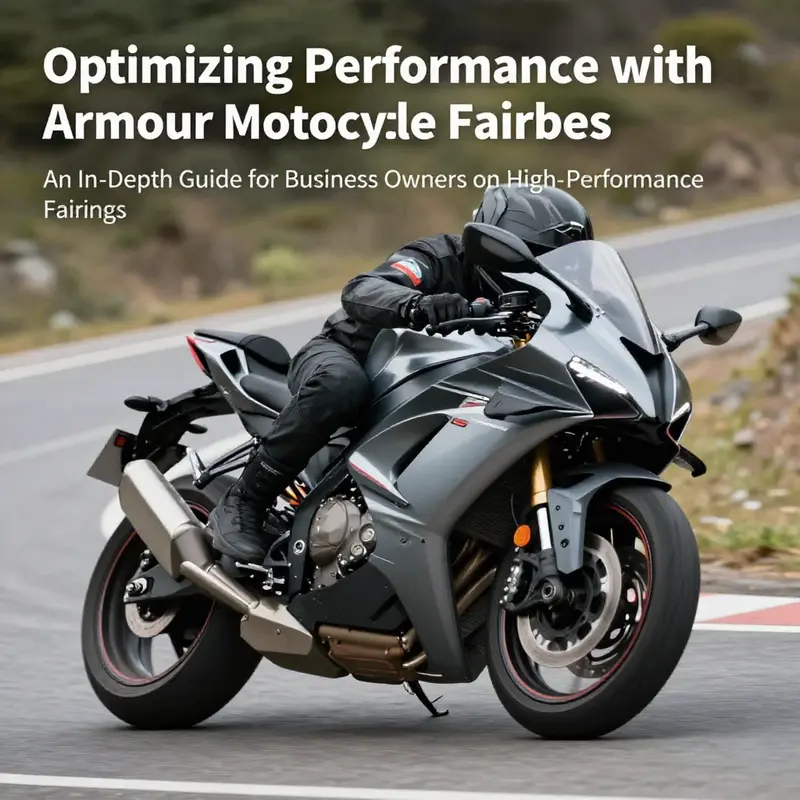
The motorcycle fairing industry is at a pivotal point, with innovations enhancing not only aesthetics but functionality and performance. Among various types available, ‘Armour Bodies’ motorcycle fairings are noted for their durability and protective features. This article explores the different types of fairings, their materials, and the benefits they offer to business owners looking to enhance their product offerings in the motorcycle industry. Each chapter maintains a focus on how these fairings contribute to improved performance, protection, and customer satisfaction, ensuring businesses can make informed decisions in an increasingly competitive market.
Armoured Full Fairings: How Comprehensive Bodywork Shapes Speed, Safety, and Style
 Full fairings cloak a motorcycle in a single, continuous rhythm of curves and planes. They are the most ambitious expression of armour-like bodywork, designed to envelop the engine, chassis, and riders’ line of sight in a seamless shell. In the vernacular of riders and builders who speak the language of protection and performance, these fairings are not merely aesthetic; they are a design philosophy that treats the bike as a single organism moving through air. When we consider Armour Bodies-style concepts of protection, the full fairing embodies both promise and trade-off. The promise is clear: a wrap that slices through wind, reduces turbulence, and provides a sheltering cocoon from rain, grit, and windblast. The trade-off is more nuanced. The same shell that can lower drag and stabilize high-speed handling can complicate access to the engine and other components during maintenance or quick field fixes. The dance between protection and practicality is a constant tension in the world of full fairings, and it is precisely this tension that makes the topic feel both timeless and urgently contemporary for riders chasing peak performance.
Aerodynamics lie at the heart of the full fairing’s purpose. The shell is shaped not only to look fast but to work with the air rather than against it. The front and sides guide the wind around the rider and the bike’s mass, creating a smoother wake that reduces drag and can contribute to higher top speeds and improved fuel economy at sustained velocities. A well-designed full fairing smooths the path of air over the rider’s torso and limbs, diminishing buffeting at wind exposed positions and lowering noise levels inside the cockpit. In a sportbike context, where every curve, lip, and vent is calibrated, the goal is to convert potential resistance into usable momentum. The effect extends beyond speed: at highway and track speeds, the reduced drag translates into steadier stability and more confident cornering, as the rider’s seat of balance remains anchored by a carefully contoured air stream rather than buffeting from stray gusts. The visual language of full fairings—long, flowing lines that wrap around the engine and down toward the belly pan—also communicates a design intent: a bike that has been engineered to disappear into the air, letting performance speak through motion.
Protection sits alongside aerodynamics as a core justification for full fairings. A complete shell shields vulnerable components from road debris, weather, and the occasional collision with a stray object on the highway or a trackday gravel trap. For the rider, the impact is less about armor in the literal sense and more about predictable resistance to wind and moisture. The material and construction determine how this protection translates into real-world resilience. Durable plastics, whether ABS or polycarbonate composites, absorb and distribute impact forces more evenly than exposed metal parts would, reducing the likelihood of a crack propagating through a critical area. Even the choice of finish—paint, clear coat, and texture—contributes to the shell’s longevity by resisting UV exposure and environmental wear. In a world where durability matters not only for a rider’s wallet but for long-term performance, the full fairing becomes a practical form of daily armour, capable of withstanding the rattle and swing of miles traveled on diverse roads.
The rider’s experience is inseparable from the shell’s influence on comfort. The full enclosure reduces wind blast and turbulence, which translates into lower fatigue on long rides and more comfortable hours in the saddle. The wind tunnel logic that informs the fairing’s shape helps maintain a stable cockpit at speed, which, in turn, helps a rider keep posture, grip, and line through corners. In adverse weather, a well-fitted full fairing can keep rain and spray at bay for longer periods, allowing a rider to maintain visibility and body warmth without constantly fighting the elements. The aesthetic payoff, often cited by enthusiasts, is secondary only to the sense of purpose the bike conveys when the fairing is cleanly aligned with the bike’s frame and rider position. The look signals intent: speed, rigor, and a commitment to a single, coherent ride experience.
Material choice matters as much as the form. ABS plastic remains the bread and butter of many factory and aftermarket full fairings because it balances weight, cost, and durability. High-grade ABS can resist cracking from small impacts and flexes enough to absorb minor vibrations without transferring them sharply to the rider. For riders seeking greater stiffness or lighter weight, some turn to polycarbonate blends or composite materials, including fiberglass or carbon fiber, for specific panels or accents. These advanced options bring a premium in stiffness-to-weight ratio and finish, but they demand careful consideration of fit, resin compatibility, and long-term maintenance costs. In the broader dialogue about armour-like bodywork, these materials offer a spectrum of choices—each with its own balance of protection, weight, and price. It is essential for buyers to test fit and confirm compatibility with their machine’s mounting points, radiator clearance, exhaust routing, and underbelly clearance before committing to a full shell.
The Armour Bodies concept often circles back to durability and protection in a way that resonates with riders who value robustness. Yet the reality of full fairings remains nuanced. While a complete shell provides comprehensive weather and debris protection, it also imposes maintenance realities. Access to the engine and cooling components typically becomes more involved, requiring patience during routine service work and, occasionally, the removal of sections of the shell for more complex repairs. This is not a fault of the concept but rather an engineering trade-off that designers weigh when prioritizing aerodynamics and protection over modularity. Consequently, many riders who lean toward full fairings accept a level of complexity as part of the performance equation. They learn to plan maintenance intervals accordingly, recognize quick-release fasteners, and appreciate the modular sections that some fairings offer to ease disassembly for service work. The end result is a chassis that remains faithful to its armor-like identity while still serving as a practical tool for daily use, track days, and long tours.
The conversation about full fairings would be incomplete without acknowledging the spectrum that exists between full coverage and lighter, more exposed configurations. For riders who prioritize rapid access to the engine or easier customization, 3/4 or half fairings provide a middle ground. These designs maintain a high level of wind and weather protection while reducing the mass and bulk of a complete enclosure. They also simplify maintenance access and can be tailored more readily to individual needs. The decision between a full shell and a lighter alternative is rarely about one virtue alone; it is a calculus that weighs protection, aerodynamics, maintenance practicality, cost, and the rider’s personal relationship with the bike. In the context of armour-inspired bodywork, the full fairing represents a pinnacle of integrated protection and aerodynamic efficiency, a statement that speaks to a rider’s aspiration for maximum performance wrapped in a single, cohesive silhouette.
For riders who want to see how these principles translate in the wild, one can explore specific examples and collections that illustrate the breadth of fairing design. A practical point of reference is a curated set of fairings for popular sport-bikes, such as those designed to fit high-performance models from major marques. These collections demonstrate how a complete shell can align with the bike’s chassis geometry, radiators, exhaust routing, and rider ergonomics to achieve a harmonious blend of protection and performance. The integration is not only about the outer shell; it affects cooling efficiency, weight distribution, and even the way air interacts with the rider’s gloves and suit. When done well, the full fairing reads like a single line drawn by the wind itself—an extension of the motorcycle’s physics and the rider’s intent.
For readers seeking practical paths to explore this realm, a hands-on reference to a major manufacturer’s sport-fairing lineup can be enlightening. The Honda CBR fairings collection offers a concrete example of how engineers translate wind, heat, and rider position into a robust, aesthetically cohesive package. Honda CBR1000RR fairings (2008-2011) collection provides a window into the logic of full-shell design without implying endorsement of any specific product line. This kind of reference helps anchor the discussion in real-world fitments and compatibility concerns, reminding readers that the journey toward a well-fitted full fairing requires attention to model-specific details, mounting points, and the interactions between the shell and the bike’s instrumentation, fuel system, and radiator routing.
In the end, the appeal of full fairings in armour-style motorcycle bodywork lies in their synthesis of form and function. The shell is not merely a cover but a kinetic partner that shapes the bike’s behavior at speed. It creates momentum, sustains it, and shields the rider from the elements and hazards of the road. It projects a particular identity: one of discipline, precision, and purpose. And while the shell might add complexity to maintenance, it also elevates the riding experience by delivering a more predictable, confident, and exhilarating relationship with the machine. For riders who crave both protection and performance, the full fairing remains a defining technology—an armour that does more than cover; it conducts the rider’s energy into speed, stability, and meaningful control.
External resource: https://www.motorcycle.com/motorcycle-fairings-types-and-functions/
Three-Quarter Fairings: The Armor-Style Role in Modern Motorcycle Bodywork
 The term armor bodies can drift into rumor as easily as into the workshop. It refers to a concept of protective, armor-like bodywork that riders value, even if there isn’t a single universal manufacturer behind it. In that sense, the discussion around 3/4 fairings becomes less about chasing a label and more about what these mid enclosure panels actually do for the bike’s armor profile.
A three-quarter fairing sits in a practical middle ground: it encloses enough of the machine to shape airflow and shield critical components, while leaving open access to the engine and lower chassis for maintenance and customization. In this sense, 3/4 fairings function as a form of armor for the machine, tempering wind and debris without turning service into a scavenger hunt for fasteners and hidden bolts. They embody a philosophy that many riders instinctively recognize: you do not need a full shell to gain the benefits of protection, aerodynamics, and rider comfort. You want enough coverage to tune the bike’s character to the road while keeping the machine approachable for tweaks, repairs, and upgrades.
Design wise, the 3/4 fairing covers the upper front portion of the bike and its sides, sweeping from the headlight region down toward where the foot pegs and knees meet the tank. This geometry yields a clean, streamlined silhouette that channels air toward the sides and away from the rider’s torso. The payoff is not purely cosmetic. The aerodynamic gains reduce fatigue over long rides, push gusts and crosswinds to the margins, and help keep the rider’s visibility steady in a variety of weather conditions. For sport style standards, cafe racers, or light adventure machines, this can translate into steadier handling at speed and a more confident ride when conditions turn unpredictable. Yet the same geometry must also acknowledge practical realities: some degree of wind protection comes at the cost of easier access to the engine and certain components for service or upgrades. Riders who favor routine maintenance often prize 3/4 configurations for their balance—enough enclosure to improve drag without the full enclosure’s maintenance overhead.
Behind the aesthetics lies material science, because the kind of skin the fairing wears influences its protective credentials and its longevity. The most common choice for factory and aftermarket 3/4 fairings is ABS plastic. It’s a blend of strength, lightness, and cost that makes it a reliable backbone for a broad spectrum of bikes. High grade ABS, when properly designed and joined, resists cracking under the kinds of minor impacts that stone chips and gravel can deliver. For riders who want more bite in a protected shell, polycarbonate offers superior impact resistance, though it can be more prone to scratching and may demand more careful surface treatment to keep it looking sharp. On the higher end, fiberglass and carbon fiber are staples of premium, weight conscious builds. They deliver exceptional stiffness and resilience with minimal weight, but they come at a higher price and can require more careful fabrication and repair work. The material choice directly echoes the rider’s priorities: affordability and resilience, or stiffness and lightness with a premium look. In that sense, choosing a 3/4 fairing becomes a decision about how the bike should defend itself against the world, and how much maintenance the rider is prepared to shoulder.
Even when framed as armor, a 3/4 fairing serves more roles than blunt protection alone. It acts as a wind shield, a weather shield, and a cosmetic statement. It guides air away from the rider’s torso, reducing buffeting on fast straights and allowing a more stable line through corners. It also helps maintain a more controlled air path around the engine and radiator in exposed climates, which can contribute to cooling efficiency and thermal management, particularly on bikes that push the envelope of performance. In short, the 3/4 fairing is a practical harmony of function and form. It offers a shield for the vulnerable, a platform for personality, and a chassis-wide contribution to how the bike feels when it is leaned over in a curve or pushed into a gusty highway wind.
A practical rider will also consider compatibility and customization. Not every bike silhouette or chassis will accept a 3/4 fairing with the same ease, and sometimes a fairing’s lines must be tuned to the tank, the frame rails, or the fuel tank’s edge. For those who chase a particular look or a particular fit, aftermarket offerings provide options that must be matched to the model’s geometry. In that respect, the concept of armor style bodywork becomes as much about fitment as about materials. The right 3/4 fairing can integrate with the bike’s lines to enhance its armor-like stance, while also allowing straightforward engine service, radiator checks, and electrical routing. This compatibility becomes especially important for riders who intend to customize their bikes with additional protection features, like skid plates or protective sliders, since the fairing must cooperate with these elements rather than obstruct them. Amid the decisions about what to install, there is also the matter of aesthetics: a 3/4 fairing can redefine the bike’s profile, shaping the impressions of speed and durability that a rider projects to the world.
For readers who picture armor and bodywork as a single, joint concept, it is worth pausing on a small but telling distinction. The rider’s personal armor – riding jackets, gloves, boots, and knee protection – remains a separate system from the vehicle’s body panels. The objective of clothing and protection gear is to absorb and distribute impact forces to minimize injuries. The fairing, meanwhile, aims to shield the bike’s vital components from debris and weather while sharpening the machine’s aerodynamic behavior. When these two domains work in concert, the rider experiences a more durable, more predictable ride, and repairs or replacements after a mishap can be more straightforward because the skin of the bike remains in one piece, or at least in well designed, modular sections.
In this light, a 3/4 fairing becomes more than a stylistic choice. It is a deliberate addition to the armor-like strategy of modern motorcycling, one that respects both the rider’s protection and the bike’s mechanical integrity. The fairing’s coverage invites a practical compromise: keep the essential access for maintenance, enjoy a cleaner airflow, and preserve the bike’s aggressive stance without surrendering the rider’s comfort. It is this balance that often persuades riders to adopt a three-quarter approach when their goals include performance fidelity, midrange rider protection, and a coherent visual language that echoes both speed and resilience.
To glimpse how this balance appears in the real world, consider how a well fitting fairing can align with the bike’s existing protective features and with the rider’s own safety equipment, producing a cohesive sense of armor that is as much about practical advantage as about the emotional appeal of a machine that looks prepared to meet the road head on.
For readers who want to explore the broader landscape of fairing types and how they influence performance and protection, internal resources discuss different fairing families and their implications for model compatibility and aesthetics. See related discussions on fitment and look in manufacturer and rider forums. External resources can also help, including guides that summarize materials, construction methods, and real world outcomes. For those who want to see how these concepts translate to specific chassis and model choices, it is worth exploring a range of aftermarket options and ensuring proper compatibility before committing to a build path. The goal remains clear: blend aerodynamic efficiency, robust protection, and accessible maintenance into a cohesive armor-like bodywork that serves the rider at every turn.
Minimal Armor, Maximum Impact: The Role of Quarter Fairings in Armour Bodies Motorcycle Fairings
 Quarter fairings occupy a distinct place within the language of motorcycle bodywork. They are not about full enclosure or track-day aerodynamics. Instead, they represent a design choice that prioritizes simplicity, weight savings, and visual statement while still contributing measurable function. When considered through the lens of armour bodies—a concept emphasizing durable, protective bodywork—quarter fairings become an essential element in a layered approach to protection. They are small components with outsized influence on a bike’s character, ergonomics, and everyday resilience.
A quarter fairing typically embraces the uppermost front section of the motorcycle. It frames the headlight and instrument cluster, offers a modest wind break, and clarifies the bike’s face. Because of its limited coverage, it remains light and unobtrusive. That lightness translates into easier handling at low speeds and less fabrication complexity during installation or removal. For riders seeking a combination of function and form, quarter fairings deliver a visible upgrade without committing to the expense or mass of full bodywork.
From a materials standpoint, quarter fairings follow the same practical logic found in armour-minded bodywork. High-grade ABS plastic provides a compelling balance of impact resistance, cost, and ease of repair. A quarter fairing built from ABS takes dings and small impacts well; it flexes rather than cracks under typical urban hazards. Polycarbonate offers tougher impact tolerance and is sometimes used for wind deflectors, though it scratches more easily. Fiberglass and carbon fiber remain options for bespoke builds or show bikes where weight, stiffness, or a particular finish is required. However, the cost and fragility profiles of those materials often outweigh their benefits for riders who want both protection and value.
In an armour bodies framework, quarter fairings contribute not by replacing heavy protective components, but by complementing them. They work in tandem with engine guards, frame sliders, and reinforced skid plates. Think of them as the visible edge of a protective strategy: they reduce the amount of grit, bug spray, and road wash reaching the instruments and upper tank. They also offer a small aerodynamic advantage that smooths airflow around the rider’s torso and head. At highway speeds, even that modest smoothing reduces buffeting and rider fatigue. For commuting or light touring, this increased comfort can make a surprising difference over longer rides.
A key advantage of quarter fairings is their accessibility. Maintenance remains straightforward because the lower engine and much of the chassis remain exposed. For riders and mechanics who prefer to work on the bike without removing a complex bodywork system, a quarter fairing is a practical compromise. It protects critical upper components while keeping daily service and troubleshooting quick. This balance is especially useful on standard or naked bikes where frequent access to the top of the engine, airbox, or electrical components is common.
Aesthetic considerations are equally important. Quarter fairings shape the bike’s personality. They can create a retro café-racer silhouette, sharpen a streetfighter’s face, or lend a commuter an upscale, finished look. The minimal surface area makes graphics and paint treatments more economical. For riders who want the appearance of an armored, purposeful machine without the full commitment of a race-inspired full fairing, quarter fairings provide a tasteful middle ground.
Functionally, their protective capacity should be understood as targeted rather than comprehensive. Quarter fairings are not designed to absorb or redirect the energy of a crash in the way heavy clamshell fairings can. Their role is to reduce wear on exposed parts, manage everyday environmental exposure, and limit minor impacts. When properly integrated into a broader protective suite—engine guards, radiator guards, skid plates, and robust mounting points—they contribute meaningfully to the bike’s overall resilience. In practical terms, a quarter fairing reduces the likelihood of scraped instruments, minimizes headlight fogging from road spray, and offers a first-line buffer against small debris.
Market dynamics favor quarter fairings for budget-minded riders and those retrofitting older motorcycles. They are generally cheaper than half or full fairings and avoid the fitment challenges that complex, model-specific bodywork demands. For riders who travel frequently on mixed roads, or who use their bikes for daily commuting, the lower replacement cost and easier repairs are significant benefits. A high-quality ABS quarter fairing can be sanded, filled, and repainted without the need for costly panel replacement. For many, that practicality is a form of armour in itself: resilient, repairable, and affordable.
The choice of a quarter fairing also has implications for aftermarket ecosystems. Because they cover less area and attach at fewer points, these fairings often fit a wider range of handlebars and instrument setups. That flexibility makes them a favorite in customization circles. Swap a headlamp, change handlebars, or alter clip-on geometry, and the quarter fairing still sits comfortably as the bike’s face. For riders who want to tinker and personalize, this openness is a decisive advantage.
When recommending a quarter fairing, the rider’s priorities should guide the decision. Choose a durable ABS unit if affordability and impact resilience matter. For track-oriented aesthetics and weight savings, consider composite materials—but accept higher costs and greater care. Color match and fitment should be verified before purchase, and mounting hardware quality must not be overlooked; a flimsy mount can transfer vibration into the fairing and lead to premature failure. Integration with additional protective components should be planned, not improvised. Effective armour bodies solutions stitch together small protective elements into a cohesive whole, and quarter fairings are one stitch among many.
Installation often takes less time than more extensive kits. Because these fairings attach to limited points, a rider with basic tools and mechanical comfort can fit them in an afternoon. This simplicity also supports iterative upgrades; riders can test different shapes and wind deflectors until they find the best compromise between protection and style. For those considering aftermarket panels for a specific model, a helpful resource is the broader fairings marketplace. For example, a comprehensive collection of model-compatible panels can show how quarter fairing options vary by bike family. See the Honda fairings collection for one perspective on compatibility and styling choices: Honda fairings collection.
Viewed from the perspective of armour bodies motorcycle fairings, quarter fairings are both practical and strategic. They are not a substitute for full protection but a valuable component in a layered approach. They defend the upper bike, improve rider comfort, and enhance appearance while keeping maintenance simple. For riders who value functionality, economy, and a clear aesthetic voice, quarter fairings deliver meaningful benefits. For deeper technical comparisons and material guidance across fairing types, consult specialist reviews and technical guides. For detailed, expert-reviewed insights into fairing materials, designs, and performance trade-offs, the BikeSocial motorcycle fairings guide remains a useful reference: https://www.bikesocial.com/motorcycle-fairings-guide
Armour Under the Skin: Material Realities Guiding Durable, Protective Motorcycle Fairings
 When riders speak of armour in the context of motorcycle fairings, the conversation often shifts to durability, protection, and a certain rugged elegance that blends function with form. The idea of armour bodies in fairings is less about a single brand name and more about a design philosophy: shells that can weather debris, weather, and the occasional tumble while still offering clean aerodynamics and manageable maintenance. This philosophy hinges almost entirely on material choice. The debate isn’t about the loudest claim or the sharpest line, but about how a given plastic, a specific blend, or a composite can deliver impact resistance without sacrificing weight, heat tolerance, or long-term stability. In that light, ABS, polycarbonate, and their blends stand out as the most consequential triad shaping modern armour bodies. They don’t merely define the shell’s outer surface; they decide how a bike behaves after a roadside stone hiccup, how it ages under ultraviolet sun, and how easy it is to repair after a mishap. The discussion of fairings becomes a conversation about balance—between protection and performance, between cost and durability, between what a rider wants and what a shell must endure.
At the heart of the material story is ABS, a workhorse plastic that has earned its place in mass-market fairings through a well-tuned trade-off between strength, processability, and price. ABS—acrylonitrile butadiene styrene—combines three monomer families to deliver a resin that resists impact reasonably well, supports complex geometry through injection molding, and presents a surface that can be finished to a high standard. The acrylonitrile component brings stiffness and chemical resistance, the butadiene portion lends toughness, and the styrene ensures the material processes well and yields a smooth surface. The result is a shell that can take the on-road bruising of everyday riding, resist cracking under minor impacts, and be manufactured at scale with a cost profile that makes affordable fairings feasible for a broad range of riders. Yet ABS is not invincible. Its heat resistance is moderate, and long exposure to UV light without protective additives will inexorably dull the surface and embrittle the resin. In practical terms, that means ABS fairings benefit from UV stabilizers and protective coatings, especially for riders who park in sun-drenched locales or take extended rides where the panel temperatures soar toward the higher end of a fairing’s operating range. ABS’ heat deflection and aging characteristics are well documented in industry literature, and this context matters when a rider contemplates the long-term life of an armour body that must survive sun, rain, and speed.
In the lineage of performance and protection, polycarbonate offers a different architectural logic. Polycarbonate is the material most riders imagine when they think of “shatterproof” or near-legendary impact resistance. It’s not merely strong in a static sense; it exhibits remarkable toughness even when subjected to sudden, high-energy impacts. It also tolerates heat far better than ABS, a relevant factor when riding over long distances at high speed or in hot climates where the fairing sees furious solar heating. Polycarbonate’s transparent variants have become iconic for helmet visors and face shields, a testament to its optical clarity and crack resistance. When used for full or partial fairings, PC can deliver a higher resilience to impact, preserving rider protection and the integrity of the enclosure after minor collisions. However, PC is not without drawbacks. It is more susceptible to scratching than ABS, and its molding can be more complex and costly. In practice, pure PC shells are often reserved for premium or racing-oriented fairings where the need for superior impact resistance and heat tolerance justifies the added expense. Even in those cases, environmental stress cracking can be a risk if the material is not properly stabilized or coated for outdoor exposure. The result is a trade-off: PC excels in protection and heat resistance but demands careful processing and finishing to maintain surface durability and gloss over time.
The industry’s answer to combining the best traits of ABS and polycarbonate has increasingly become PC+ABS blends. These co-polymers are engineered to merge the toughness and processing ease of ABS with the heat and impact resilience of PC. The practical upshot is a shell that can shrug off harder hits, resist deformation at elevated temperatures, and retain structural integrity as the bike ages. PC+ABS blends also bring i