
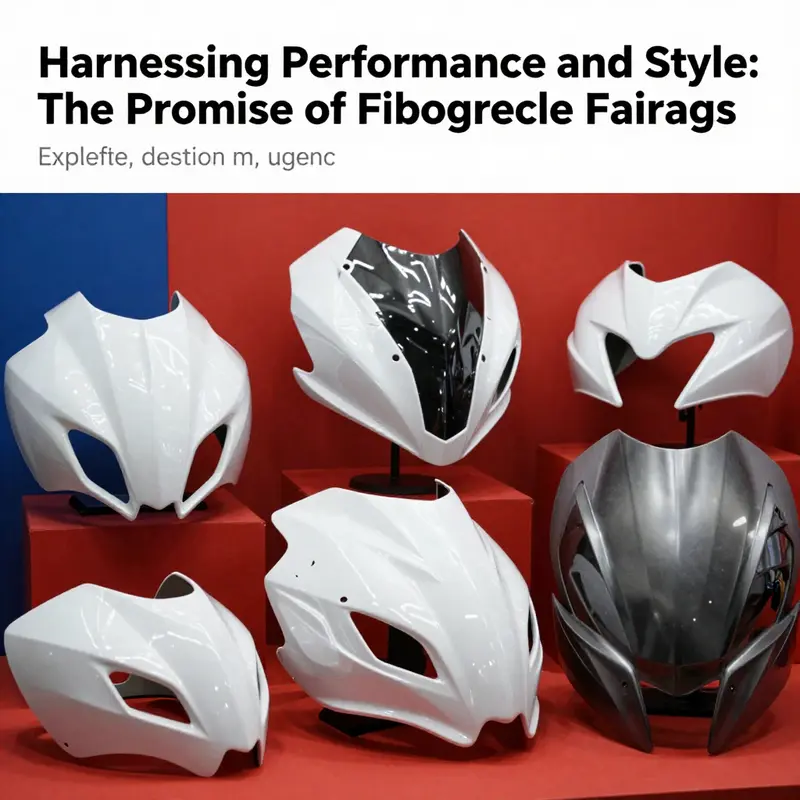
Understanding fiberglass motorcycle fairings is essential for business owners in the motorcycle industry. These components offer a unique combination of durability, cost-effectiveness, and customization potential, which can significantly boost product offerings and customer satisfaction. As we delve into the advantages of fiberglass motorcycle fairings, their aerodynamics and aesthetic designs, the market availability for sourcing compatible variants, and their applications in motorsport and beyond, it becomes clear that embracing fiberglass fairings can enhance both performance and profitability in your business.
Fiberglass Fairings: Strength, Lightness, and Savings for Modern Motorcycles
 Fiberglass fairings occupy a unique niche in motorcycle engineering. They sit between the hard, high-cost materials used in some factory designs and the more basic plastics that weather the rough realities of everyday riding. The result is a composite that can be molded into aerodynamic shapes, finished with a glossy surface, and finished off with decals or custom graphics—all while delivering a combination of durability, weight savings, and affordability that many riders find appealing. This chapter explores how fiberglass fairings achieve their signature balance, why durability and cost-effectiveness matter as performance factors, and how these attributes translate into real-world riding, modification, and maintenance.
At the heart of fiberglass fairings is a reinforced fiberglass composite, typically glass fibers embedded in a polyester resin matrix. The glass fibers provide the structural backbone, lending stiffness and impact resistance, while the resin binds the fibers into a cohesive, shape-retaining shell. The resulting material is not a single uniform block but a layered system. A typical fairing may combine multiple plies of fiberglass with tuned resin content to achieve the desired balance between rigidity and flexibility. This layering gives the fairing the ability to absorb and distribute energy from minor impacts, vibrations, and road debris without cracking or delaminating as quickly as cheaper plastics can. The outcome is a panel that behaves predictably under stress, which is especially important for performance riding where fairings must maintain a clean aerodynamic profile even after a few nicks or dings.
One of the most tangible advantages of this construction is weight. Fiberglass fairings are commonly lighter than traditional ABS plastic counterparts by up to about 30 percent. The exact savings depend on the thickness and the number of layers, but in general, this weight reduction translates into measurable performance gains. Lighter fairings reduce the overall mass that must be moved with every engine revolution, which translates into crisper throttle response, quicker acceleration, and improved maneuverability. Weight savings also play into fuel efficiency, not by turning a heavy touring bike into a fuel-sipping machine, but by reducing the work the engine must do to push the machine through wind resistance. In practical terms, riders experience a smoother, more responsive ride at highway speeds where aerodynamic drag dominates inefficiency. The fairing’s shape—often tailored during the molding process—also helps manage airflow more efficiently, reducing turbulent wake behind the rider and the bike’s silhouette. While those shaping decisions are nuanced, the end result is a shell that contributes to stability and a calmer ride at high speeds and during prolonged highway exposure.
Durability, closely tied to the fiber-resin matrix, is another cornerstone of fiberglass fairings. The glass fibers confer high impact resistance. If a rock or a piece of debris strikes the surface, the energy can be dispersed across the fiberglass layers rather than concentrated at a single point, which lowers the risk of cracking. This toughness matters for daily riding, track days, and weekend adventures alike. Compared with standard plastics, the fiberglass composite tends to be more forgiving when subjected to road hazards. It can resist minor chips and scratches without propagating damage that would require immediate panel replacement. That resilience reduces downtime and the frequency of parts-mastering repairs, which is a practical consideration for riders who rely on their machines for commuting, training, or weekend sport.
The durability story also includes fatigue resistance. Even under repeated cycling loads—such as those produced by buffeting, wind pressure, and the flex of a bending fairing at highway speeds—a well-designed fiberglass panel maintains its shape and integrity. Shops and manufacturers can tune the layup to emphasize impact resistance or stiffness as needed for a particular model and riding purpose. For riders, this translates into a more predictable, stable experience when weather conditions, road texture, or aggressive cornering add dynamic stress to the fairing surface. The net effect is a panel that not only protects internal components from the elements but also contributes to the rider’s confidence and control on the bike.
Aesthetics are part of the durability conversation, too. Fiberglass panels take finishes very well. Their surface can be ground, polished, and painted to a high-gloss standard, and the underlying fiberglass field responds well to finisher treatments, clear coats, and decals. Because fiberglass is readily moldable, designers can craft streamlined shapes that optimize airflow without creating prohibitively complex tooling. This moldability is where performance and style converge: the same process that yields a wind-slick profile can also accommodate intricate details, vents, and cutouts that personalize a bike while maintaining an aerodynamically efficient form. For riders who seek a custom look—whether a race-inspired livery, a retro appearance, or a bold, modern graphic—fiberglass fairings offer a practical path to achieve it without a prohibitive price tag.
Cost-effectiveness is the other side of the durability narrative. Fiberglass fairings typically cost less to produce than carbon fiber equivalents and are more affordable than high-grade OEM panels. The raw materials themselves are less expensive, and the tooling and prep work associated with fiberglass layups are generally more forgiving and quicker to execute. This combination translates into substantial savings across the supply chain, from aftermarket manufacturers to repair shops that service a large fleet of bikes. For a rider purchasing a replacement panel or an entire set, the lower upfront cost of fiberglass can be a deciding factor when considering a full aesthetic or aerodynamic upgrade. It also means that enthusiasts can pursue more ambitious customization projects without risking a budget spiral. When paired with a finish that holds decals well and resists UV degradation, fiberglass fairings deliver long-term value, balancing initial outlay with the convenience of maintenance and renewal over time.
Industry standards and quality assurance add another layer of value. Many manufacturers produce certified fiberglass fairings that meet stringent performance and safety benchmarks. These certifications cover impact resistance, dimensional accuracy, and endurance under various temperature and humidity conditions. In practice, this means a buyer can expect a fairing that fits the mounting points with reliable tolerances, holds its shape across riding conditions, and withstands the regular heat and weather exposure an engine bay experiences. Certification provides a level of trust that helps riders select components with confidence, even when the price point is more accessible. The combination of durable construction, reliable fit, and a sensible price point helps fiberglass fairings remain a practical choice for both new builds and restorations.
Beyond raw materials and testing, the repairability of fiberglass contributes to its cost-effectiveness. Minor damage to fiberglass panels can often be repaired rather than replaced. A skilled shop can address small cracks or chips by smoothing the damaged area, applying patch material, and refinishing the surface. This repairability not only lowers long-term ownership costs but also aligns with the DIY spirit that many riders enjoy. The ability to restore a fairing’s appearance and performance without sending the bike to a precision shop makes fiberglass a compelling option for weekend project cars and bikes alike. It also means that riders can maintain their bike’s look and aerodynamic performance without waiting months for a replacement part to arrive from a factory or aftermarket supplier.
Customization remains a hallmark of fiberglass fairings. While durability and cost are important, the way a rider experiences the bike’s personality matters too. Fiberglass can be finished in a variety of ways—from high-gloss clear coats to matte textures—and is well suited to graphic application, color matching, and custom airbrushing. The surface accepts decals and wraps with predictable adhesion, which helps preserve the aesthetic over time. For riders who want a particular color scheme, emblem, or visual theme, fiberglass provides a pragmatic path to realize that vision without incurring the higher expenses typically associated with more exotic materials. The result is a bike that looks as good as its performance feels, reinforcing the idea that performance aesthetics can be accessible and enduring.
The practical realities of choosing fiberglass come with some caveats. While fiberglass can deliver excellent strength-to-weight characteristics and a favorable cost profile, it is not inherently as stiff or light as carbon fiber for the most extreme performance applications. For track-only builds or bikes that push to the upper limits of aero optimization, carbon fiber or advanced composites may still be preferred. Yet for the vast majority of riders—whether they are upgrading an aging sportbike, restoring a classic, or pursuing a custom project—the fiberglass option offers a compelling balance. It provides a robust, repairable, and visually versatile solution that can withstand daily use, occasional track days, and the social and practical demands of riding, all while keeping a lid on total ownership costs.
The broader market context reinforces fiberglass’ appeal. Aftermarket ecosystems are thriving with fiberglass offerings designed to fit a broad spectrum of models and riding styles. Manufacturers emphasize fitment accuracy, surface finish quality, and the ability to deliver ready-to-paint panels that are compatible with common repair and painting workflows. This reliability is crucial for shops and individual buyers alike, who want a straightforward path from purchase to installation and style realization. The availability of ready-to-ship options and a scalable manufacturing approach means that fiberglass fairings can serve both one-off restorations and small shop operations with equal efficiency. The economics of scale come into play here as well: when larger volumes are involved, prices can become even more favorable, further widening the appeal for riders who want to upgrade without overextending their budgets.
To illustrate the practical implications for riders, consider how fiberglass fairings align with the broader goals of customization, performance, and affordability. A rider might choose fiberglass to reduce total bike mass, rework aerodynamics, and refresh the exterior with a high-impact finish that resists fading in sunlight. The ability to rework the surface for decals, artwork, or a brand-new color palette makes fiberglass a versatile canvas for self-expression, whether the intent is to mimic a race-inspired look or to create a personalized street-bike silhouette. Additionally, the relative ease of repairing minor damage supports ongoing maintenance as part of a rider’s routine rather than an exceptional event that requires a large budget or extended downtime.
For readers seeking more information on compatible options and model ranges, a practical path is to explore category-specific collections that organize fairings by fitment and design cues. As a starting point for model-agnostic exploration, the broad availability of fiberglass options remains a strong incentive for riders who value both durability and customization. When compatibility matters, and the goal is to minimize downtime while maximizing rider satisfaction, fiberglass fairings often deliver a compelling mix of performance, aesthetics, and economics that few competing materials can match.
For readers who want a direct pointing resource on compatible options, you can browse the Honda fairings collection for a sense of how fiberglass shapes and finishes translate across different bike families. This internal link helps connect the discussion to a concrete assortment of products while keeping the focus on the general principles described above. Honda fairings collection
In sum, fiberglass motorcycle fairings offer a durable, lightweight, and cost-effective path to upgrading a bike’s performance and appearance. Their material makeup supports tough, impact-resistant shells; their weight advantages contribute to acceleration, handling, and fuel efficiency; and their market availability enables affordable customization and easier maintenance. While no single material is ideal for every racing or riding scenario, fiberglass stands out for riders who want to balance performance with value. This pragmatic blend of properties makes fiberglass fairings a versatile option for aftermarket upgrades, race replicas, and personalized builds. The result is a practical, aesthetically pleasing, and economically sensible solution that aligns with the everyday realities of riding and the long-range goals of customization. A rider can envision a tailored look without breaking the bank, knowing that the same panel contributes to better aerodynamics, weather protection, and resilience against the inevitable bumps and bruises of road life.
External resource for further background and industry context: https://www.alibaba.com/product-detail/CFRP-Fiberglass-Motorcycle-Fairings-for-CBR600RR_1601478899244.html
Weaving Air and Identity: Aerodynamics and Aesthetics in Fiberglass Motorcycle Fairing Design
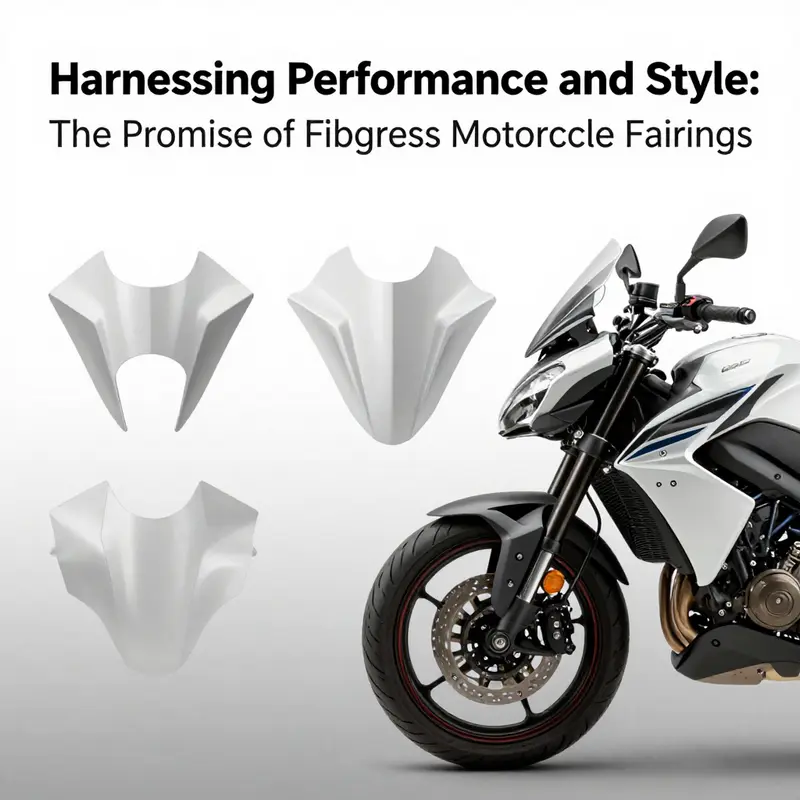 Fiberglass fairings are more than simply covers; they are a deliberate conversation between the rider, the machine, and the air around it. In a sportbike, where every curve is a statement about speed and control, the fiberglass shell plays the role of both shield and guide. Its popularity rests on a practical balance: durability that resists scuffs and impacts, a low weight that preserves handling, and the ability to tailor aesthetics without forcing a heavy price tag. This chapter looks at how the design of fiberglass fairings blends aerodynamic function with personal expression, and how that blend translates into real-world performance on the road and on the track.
At the heart of fiberglass fairing design is the material system itself: a glass-reinforced resin matrix that can be laid up in complex shapes, cured, and finished to a high gloss or a muted tone. The typical setup uses polyester resin reinforced by layers of chopped or woven glass fiber. This combination yields a favorable strength-to-weight ratio while remaining relatively forgiving in the layup shop. The mold forms the vehicle’s silhouette, and skilled craftsmen steer the layup to ensure each contour responds to air in a predictable way. Because fiberglass can be molded around features like instrument clusters or line up with chassis brackets, designers can preserve the bike’s original proportions while adding fairing edges that align with the rider’s needs for protection and comfort. The result is a shell that is stiff enough to hold its shape at high speeds, yet forgiving enough to absorb subtle impacts without shattering into sharp fragments.
Aerodynamics is a central driver in shaping fiberglass fairings. The shapes are not ornamental afterthoughts; they are tuned instruments that channel air to minimize drag and manage pressure distribution around the rider. Smooth, continuous surfaces reduce flow separation, allowing the air to stay attached as the motorcycle advances. Where a fairing meets the head, the design can guide the slipstream around the helmet and shoulders, reducing buffeting and steering torque. Side panels steer air toward radiator intakes and frame cavities, avoiding wake regions that would otherwise sap speed or stability. In wind tunnel simulations and real-world testing alike, well-contoured fiberglass fairings have demonstrated meaningful drag reductions, often in the mid-teens depending on the baseline geometry and the rider’s position. That drag reduction translates into faster acceleration, higher top speeds, and a more consistent ride at highway and race-track velocities. It also improves fuel economy at sustained high-speed cruising, because the engine works less hard to push air aside and through the chassis openings. Importantly, the aerodynamic gains come without a commensurate increase in weight, preserving the bike’s reactiveness and steering feel.
Beyond function, fiberglass fairings offer a platform for personal design language. The material’s inherent moldability makes it feasible to craft distinctive lines, integrate graphic channels, and provide press-fit or bonded finishing options. Finishes range from high-gloss lacquer to matte textures, with clear weave showing through in certain aesthetic treatments to celebrate the fabric-like interior of the composite. Artistically minded builders can apply decals, airbrushed artworks, or embedded color gradients that respond to lighting as the bike moves. The result is a shell that can be as striking as it is efficient, turning a performance modification into a statement of taste and identity. Because the resin system accepts paint readily, and because fiberglass can hold surface details well, the durability of the finish holds up to daily use and to the occasional track-day session. This synergy between form and function is a key reason fiberglass remains a preferred option for riders who want both a competitive edge and a unique look without resorting to more expensive materials.
Of course, safety and protection must accompany style. The fairing forms a protective envelope around critical components, guarding the wiring, radiator, and electronics from wind-blast and minor impacts. Modern fiberglass systems are engineered to meet impact resistance and durability criteria that matter in both street and track scenarios. While no shell can replace good riding technique, a well-finished fairing can distribute impact forces and help keep fairings intact long enough to avoid additional damage. In practice, the resin, glass content, and layup schedule are chosen to deliver predictable deformation and energy absorption characteristics. When integrated with correct mountings and fasteners, the fairing contributes to rider safety by maintaining line of protection without introducing unpredictable points of failure. Because fiberglass is relatively forgiving during crashes, it can crack or dent while still preserving the rider’s protection and the bike’s integral structure, a feature that adds to the overall resilience of the package. These considerations are part of the design brief that guides both aftermarket manufacturers and restoration shops toward a fairing that performs as well as it looks.
Weight remains a central consideration, especially for riders chasing nimble handling. Glass-reinforced systems deliver a favorable stiffness-to-weight ratio compared with many other plastics, while still offering an economical path to enhancement. The impact on handling comes through reduced inertial load in the front-end assembly and a more balanced mass distribution around the steering axis. When paired with appropriate windshields and fasteners, a fiberglass fairing can lower the rider’s fatigue on long rides by directing airflow toward protected zones and away from the rider’s upper body. A modest weight gain or savings translates into better acceleration and braking response, which in turn improves control. That is particularly important in the aftermarket and racing contexts, where precise fitment and surface finish are paramount to realizing the aerodynamic and protective benefits without compromising stability. In this sense, fiberglass fairings act as a careful compromise: light enough to aid performance, rugged enough to resist the day-to-day demands of riding and racing, and flexible enough to accommodate the rider’s evolving sense of style.
Achieving a seamless integration with the motorcycle’s original architecture is perhaps the most nuanced aspect of fiberglass fairing design. The process begins with accurate measurement of the frame and fairing mounting points, followed by a review of clearance around the engine, fuel tank, and exhaust. The layup is then tailored to keep the finished shell within tight tolerances for fitment. When the fairing bolts into place, gaps and contours should align with the bike’s frame lines so that the eye reads a single, coherent silhouette rather than a mismatch of shapes. A well-fitting fairing maintains the intended aerodynamic profile while safeguarding controls and indicators from weather and branches of airflow that could cause flutter at speed. The design also must consider heat sources, such as the engine and radiator, so that panels do not bend, warp, or trap heat in ways that degrade performance or comfort. For riders seeking specific compatibility with a broad catalog of models, a wide range of mold-formed options exists, and careful selection ensures the skin remains faithful to the bike’s visual language. For a broad range of model-specific options, see the Honda fairings collection.
From a production perspective, fiberglass fairings are appealing because they support both small-run customization and larger-scale manufacturing. The layup process, when executed with care, can produce robust shells with consistent thickness and surface quality at a reasonable cost. The resin system and glass content determine not only strength but also cure time, resin bleed, and ease of sanding. Skilled technicians can achieve a near-flawless surface ready for priming and painting, with minimal filler. The economics of fiberglass versus carbon fiber become clear in this context: fiberglass offers significant cost savings, easier repairability, and broader accessibility for riders who want to customize or restore. As the marketplace for aftermarket components expands, vendors can deliver ready-to-ship fairings that fit a wide range of models and weather conditions. The emphasis is on reliable fitment, predictable results, and a finish that holds up to weather, sun, and the occasional crash repair. In short, fiberglass fairings balance manufacturing practicality with the demands of performance on both street and track, making them a practical choice for builders and enthusiasts who value a hands-on, craft-centered approach to biking.
Riders who choose fiberglass are often looking for a canvas as much as a shell. The design process becomes a collaboration between intention and constraint: performance targets drive contouring, but the rider’s taste drives color, texture, and graphics. There is room for customization that ranges from subtle refinements to bold graphic statements. The performance implications of a given aesthetic choice are real but manageable; a cooler color scheme or a unique finish does not inherently undermine the streamlining of airflow so long as the geometry remains true to the airflow path. This is why builders emphasize the importance of a thorough fit-check, a careful paint job, and a robust finish. They know that the fairing must survive repeated exposure to sun, rain, and road grit while continuing to deliver the experience of a bike that feels fast, smooth, and well-deserved. In practice, a fiberglass fairing becomes a record of a rider’s journey, a tangible marker of both the machine’s capability and the owner’s vision. The chapter’s discussion has sketched the space where engineering goals and creative expression meet, and it invites readers to imagine how a well-made shell can transform everyday rides into extended conversations with wind, light, and speed.
Ultimately, fiberglass fairings stand as an accessible gateway to a sport that blends art with engineering. They are the result of an iterative design language that respects aerodynamic truth while inviting personal customization. The path from raw glass to finished shell is one of careful planning, precise fabrication, and patient finishing work—an arc that many riders know well because it mirrors their own process of upgrading a bike. In this sense, the fairing becomes more than a protective cover; it is a disciplined interface that channels air, frames the rider’s silhouette, and communicates intent with every mile traveled. And as the market evolves, the core message remains: the fiberglass shell offers a practical, versatile platform where performance can go hand in hand with expression, enabling riders to honor the machine’s heritage while shaping its future.
External resource: https://www.alibaba.com/product-detail/2005-2006-CBR600RR-Fiberglass-Motorcycle-Fairings_1600743782242.html?spm=a2700.gallery-internal.0.0.1a1c7e91LdXgIv&urlPrevPage=1
Between Fit and Finish: Sourcing Fiberglass Motorcycle Fairings in a Global Market
 Fiberglass motorcycle fairings sit at a crossroads of practicality and expression. They are not merely shells that cover the bike; they are engineered surfaces that shape aerodynamics, shield critical components, and carry the rider’s personal language in color and graphic design. In the modern market, fiberglass fairings offer a compelling blend of durability, lightness, and customizability. They are made from glass-reinforced polyester resin, which provides a strong strength-to-weight ratio that many riders find ideal for track-ready builds or street machines that demand both performance and curb appeal. The moldability of fiberglass makes it possible to craft aerodynamic shapes with smooth transitions, clean lines, and precise contouring that can significantly reduce wind buffeting and rider fatigue on long rides. Yet the story of fiberglass is not only about performance. It is also about accessibility. Compared with higher-cost alternatives like carbon fiber, fiberglass maintains a more approachable price point while still delivering robust protection for the engine, frame, and instrumentation. This balance makes fiberglass fairings a staple in aftermarket upgrades, race replicas, and personalized builds where a rider seeks both form and function without breaking the bank.
In the global marketplace, the availability of fiberglass fairings is broad and surprisingly efficient. Buyers today have multiple routes to source complete kits or individual panels, enabling restoration projects, mid-range performance pivots, or highly customized aesthetics. As a result, the decision to adopt fiberglass is increasingly framed not just as a material choice but as a sourcing strategy. Platforms that aggregate sellers—whether they are large-scale manufacturers or smaller shops specializing in niche models—allow riders to compare fitment, finish, and price across a spectrum of options. An essential driver of this accessibility is the compatibility specificity that accompanies many listings. The market recognizes that fit is not a guess but a verification activity. The more precise the product description—model year range, engine size, frame type, and even sub-variants—the greater the likelihood of a smooth install and a reliable aesthetic outcome. In this sense, fiberglass fairings are less a single product and more a modular ecosystem in which fabricators, retailers, and end users converge around standardized reference points to ensure harmony between bike and body panels.
The sourcing landscape is anchored by two broad channels, each with its own rhythms and implications. First, consumer-facing marketplaces host an extensive range of full fairing kits and individual panels for a diverse set of motorcycles and scooters. Marketplaces are particularly valuable for riders seeking options with flexible return policies, community feedback, and buyer protection programs. They also offer confidence-enhancing features like compatibility guarantees, which can be a decisive factor when a rider faces a nonstandard build or a project bike that has seen a few iterations. Second, wholesale platforms and factory-direct corridors connect buyers with manufacturers capable of scaling orders, customizing finishes, or tailoring designs to specific performance or aesthetic objectives. In this space, fiberglass fairings are not only sold as off-the-shelf parts but also as components in a collaborative process aimed at achieving precise fit and a shared vision for appearance and performance. The important takeaway is that fiberglass is no longer a niche choice limited to DIY enthusiasts; it sits at the heart of a robust, interconnected supply chain that can support everything from quick repairs to bespoke builds.
Compatibility remains the linchpin of successful sourcing. The market emphasizes the importance of exact model year, engine size, and frame type as core compatibility axes. While many listings promote broad categories like “universal” or “sport bike,” the safest route in practice is to interrogate the seller about these dimensions with a precise checklist in hand. For a restoration or a performance-oriented rebuild, even small discrepancies in mounting points, rake, or fairing hole spacing can complicate installation and degrade the intended aero profile. To mitigate these risks, buyers are advised to gather as many specifics as possible before committing. In addition to model year and engine displacement, factors such as mounting hardware compatibility, secondary attachment points, and the contour of the tail section can influence how a panel aligns with the radiator shroud, windscreen, or frame braces. The broader implication is clear: fiberglass fairings reward careful upfront verification with a smoother, more durable outcome, whereas hasty purchases can lead to misfit and rework.
The material advantages of fiberglass are tangible in real-world riding scenarios. High rigidity translates into stable aerodynamics at higher speeds, where a well-fitted fairing maintains predictable airflow and reduces the buffeting that often troubles riders on longer journeys. The crack resistance of fiberglass also contributes to longer service intervals between repairs, an especially meaningful consideration for riders who use their machines in demanding environments or who push toward track days. Light weight remains a critical asset, as every gram shaved from the vehicle’s exterior can influence handling, acceleration, and fuel efficiency—especially when fairings are integrated with lightweight brackets and clamps. Yet the same properties that endow fiberglass with strength also demand careful handling during installation and finishing. Unlike some more forgiving plastics, fiberglass surfaces respond to weather exposure, impact,