
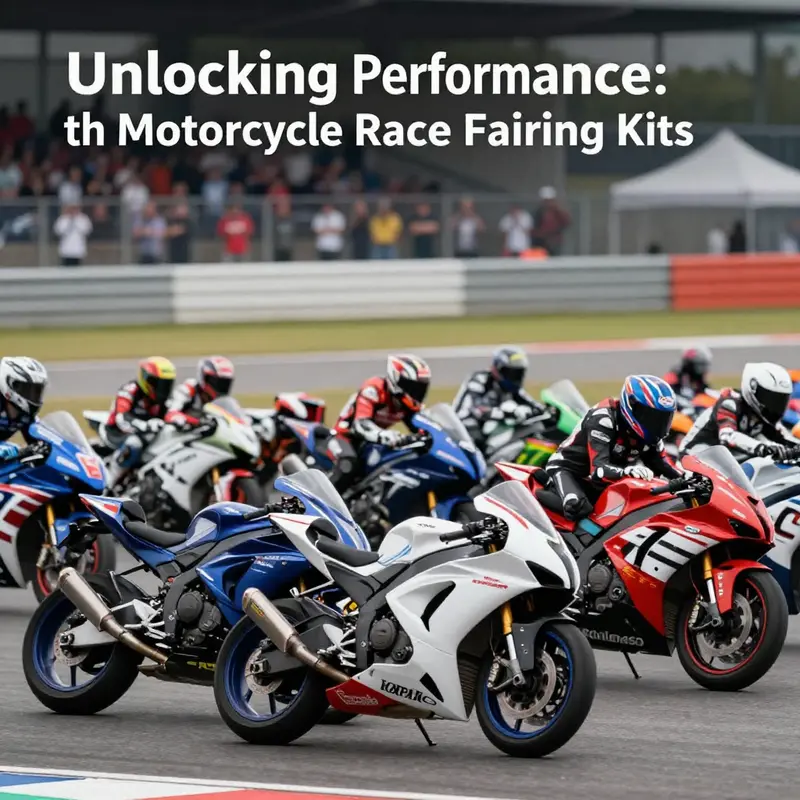
Motorcycle race fairing kits offer a unique blend of aesthetics and performance, designed specifically for the demands of high-speed racing. These kits not only enhance the look of a motorcycle but also significantly improve its handling and speed through advanced aerodynamic designs and lightweight materials. Understanding the intricacies of these kits is crucial for business owners in the motorcycle industry who seek to provide their customers with high-performance options. This article delves into the materials and construction of race fairing kits, examines aerodynamics and its impact on performance, discusses the challenges associated with installation, and compares race fairings with standard street fairings. By the end, readers will have a comprehensive understanding of the value and importance of motorcycle race fairing kits.
Edge of Speed: How Materials and Craft Shape Motorcycle Race Fairing Kits
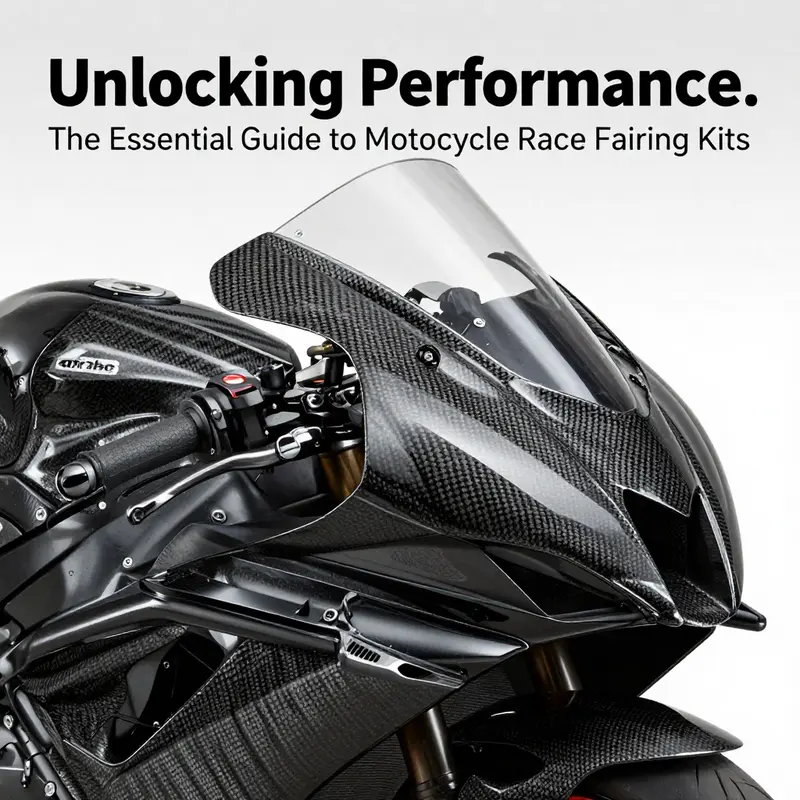 The skin a rider depends on at the edge of the track is more than a decorative shell. It is the engineered interface between a machine’s power and the rider’s composure, a carefully crafted surface that must breathe with the bike while resisting the forces of wind, heat, and crash energy. In the world of professional track performance, race fairing kits are not merely cosmetic upgrades. They are aerodynamic instruments, mass-reduction systems, and structural elements that must behave like a single, integrated part of the motorcycle under racing’s extreme conditions. The chapter that follows unpacks the core decisions behind fairing materials and construction, exploring how choice and technique translate into real-world performance on the circuit. The story is not about one perfect material but about the relationship between material science, manufacturing discipline, and the rider’s pursuit of speed with control.
At the heart of most race fairings lies a simple truth: every gram saved shifts acceleration, braking, and cornering. Carbon fiber has become the flagship material because of its exceptional strength-to-weight ratio and stiffness. When laid up with precision and cured under controlled conditions, carbon fiber layers create a shell that resists deformation at high speeds and under gusty crosswinds. The result is a fairing that remains taut through the high-frequency loads of a sweep down a long straight and the sudden gusts that can upend stability in mid-cavor. The weight savings are not merely theoretical. In circuit racing, even a modest reduction in unsprung mass and rotating inertia translates into faster lap times, crisper turn-in, and more predictable behavior when a rider presses the throttle to the edge at exit. The fairing’s weight interacts with the bike’s overall mass distribution, and the rider’s position now sits within a more favorable airflow field. A leaner silhouette can also reduce buffeting, allowing the rider to keep their helmet quiet enough to concentrate on line and rhythm rather than fighting the wind.
Yet carbon fiber does not exist in a vacuum. Its performance is inseparable from how the material is structured, how it is laid up, and how it is cured. The construction process—hand-laying or more automated techniques—determines the orientation of fibers, the presence of voids, and the surface finish that armor-skin must deliver. In a typical hand-laid approach, artisans position layers of carbon fabric over a precise mold, aligning fibers along strategic directions to maximize strength where it is most needed. The resin is carefully infused or applied, and the stack is then cured under heat and pressure. The autoclave cure, favored in many professional shops, imposes a uniform pressure that drives resin into every filament and minimizes micro-voids. The result is a slick, high-release surface that reduces aerodynamic drag while maintaining structural integrity through a wide range of loads.
Where weight is at a premium, fiberglass remains a common, practical alternative. Fiberglass provides a more forgiving cost-to-performance ratio and can be molded with less specialized equipment. For teams operating under tighter budgets or for certain test programs, fiberglass fairings offer real performance benefits—strong enough for track use, lighter than many stock plastics, and easier to repair after a slide or low-speed impact. The trade-off is clear: fiberglass shells tend to be heavier and less stiff than carbon fiber at equivalent thickness. This softness, while beneficial for impact resistance in some scenarios, can translate into marginally different handling characteristics and a different feel in high-speed cornering. In the broader toolkit of racing, fiberglass often fills a critical niche where maintainability and economy are as important as the aerodynamic package.
The construction process for fiberglass and carbon fiber fairings shares a common core philosophy: the surface must be smooth, and every contour should contribute to a predictable flow field. A well-made fairing minimizes separation and drag by shaping the boundary layer as the air travels from the nose to the tail. The science here is practical as well as theoretical. Designers rely on a mix of computational fluid dynamics and empirical testing to tune contours for downforce distribution, lift reduction, and transition behavior at the high speeds seen on circuits. The surface finish is more than cosmetic; it is a critical factor in how air performs at the airframe-rider interface. A rough, imperfect surface can erode the very benefits of advanced materials, introducing turbulence that translates to increased drag and static load on the rider’s shoulders and torso.
Beyond materials and their layups, the fairing’s construction plan includes precise molds, alignment references, and fastener strategies that ensure repeatability from one race weekend to the next. The mold itself must be crafted with extraordinary accuracy. Subtle deviations in curvature or thickness can alter the fairing’s stiffness and the way it interacts with the frame and mounting points. Hand-lay processes require skilled technicians who understand how resin viscosity, cure temperature, and pressure timing interact to produce a consistent part. In many shops, the curing stage is the most critical window. An improper cure can leave residual stresses that only reveal themselves under heat and vibration, compromising the long-term performance and, in a worst-case scenario, rider safety.
A key design consequence of these processes is the balance between stiffness and weight. A fairing must resist flutter and flex at high speeds, especially where the rider’s weight distribution and body position place concentrated loads on the lower fairing and windscreen region. Carbon fiber’s stiffness helps prevent deflection that would otherwise alter the rider’s line or create unwanted buffeting. At the same time, the skin must remain compliant enough to absorb minor impacts without catastrophic failure. This is not simply about raw strength; it is about the correct distribution of material and the way it behaves under multi-axial loads. Proper fiber orientation is a tactical choice. In some areas, 0/90-degree plies maximize torsional rigidity, while ±45-degree plies support biaxial bending and crash energy absorption in a controlled fashion. The engineer’s goal is to create a shell that behaves like a unified structure when bolted to the bike but can still tolerate the occasional slip or slide without catastrophic fracture.
The manufacturing narrative also intersects with practical realities of installation and integration. Race fairings must align with mounting points, radiators, and the bike’s steering geometry. The process of fitting a new fairing kit to a race bike is a careful choreography. The installer must verify fitment of each mounting point, ensure that the upper and lower fasteners do not conflict with nearby components, and confirm that the aerodynamic surface clears the rider’s knees, arms, and any internal hardware such as gauges or internal wiring. The precision of the fit is part of the performance equation because misalignment can introduce troublesome gaps, which in turn disrupt the flow and create a drag penalty. The installation is not a casual job; it requires attention to tolerance stacks, shim adjustments, and occasional refinishing to maintain a pristine surface. When done well, the result is a seamless envelope around the rider, an aerodynamic cocoon that reduces drag and supports a stable, confident riding position at the limit.
The life cycle of a race fairing kit embodies another set of considerations. Durability in the harsh environment of race use means UV resistance, chemical resistance from fuel and oils, and resilience against heat soak. Carbon fiber, with its resin system and protective clear coats, can endure repetitive heat cycles and exposure to the elements more effectively than some standard plastics. Fiberglass, while robust, often requires additional protective layers or coatings to ensure that the surface remains smooth under track-day abuse and occasional scrapes. High-temperature curing, meticulous surface finishing, and protective topcoats all contribute to longer service life and more predictable repair options after a crash or a heavy contact incident. Repair practices become a discipline in their own right: small cracks may be repaired by resin injection and patching, while larger defects may need layups reapplied over a repaired mold line. The philosophy here is practical: race teams prefer components that can be repaired quickly and reliably between sessions, so the kit’s architecture often emphasizes modularity and repairability where feasible.
In considering whether to opt for carbon fiber or fiberglass, riders and teams weigh weight savings, stiffness, cost, and practicality. Carbon fiber delivers the performance edge, but it comes at a price both in materials and in the skill required to manufacture and install properly. Fiberglass offers a more accessible entry point, especially for teams refining their approach or for riders who want to test aero concepts without the premium manufacturing overhead. The decision also depends on the overall setup: the bike’s chassis stiffness, the rider’s weight, and the specific track conditions for which the kit is intended. A stiff, highly engineered carbon fiber fairing can deliver a sharp handling response that rewards precise riding lines, while a fiberglass option might offer a more forgiving response profile that helps a developing team build confidence while experimenting with intakes, ducts, and venting strategies.
The evolution of race fairing kits continues to hinge on material science and manufacturing discipline. Even within carbon fiber, advances are incremental rather than revolutionary: improved resin systems that cure more evenly, better surface finishes that reduce friction drag, and more refined layup schedules that optimize performance across a spectrum of speeds and wind conditions. In fiberglass, ongoing improvements focus on improved formability, better surface quality, and tougher yet lighter laminates that maintain resistance to heat and impact. The best kits today are the product of cross-disciplinary collaboration: aero engineers, materials scientists, and skilled technicians who can translate complex theory into reliable, repeatable performance on the track. This collaboration is what makes a kit feel intuitive on the bike—not just fast in a wind tunnel, but predictable when the rider attacks a corner at the limit on a hot afternoon.
For riders who want to visualize how a fairing integrates with existing bike geometry, a look at the Honda fairings collection can offer a sense of fitment, mounting conventions, and styling cues that influence both performance and aesthetics. See the collection here: Honda fairings collection.
The broader perspective still centers on the rider’s experience. A well-designed, properly constructed fairing reduces buffeting and wind noise, allowing the helmet and shoulders to stay aligned with the bike’s natural rhythm. In turn, this translates to improved concentration, steadier throttle control, and more precise braking lines when a lap demands maximum discipline. The rider’s posture is supported by a surface that seems to disappear at speed, letting the mind focus on line, entry speed, and exit strategy rather than fighting the wind. In the end, the science of materials and the craft of construction come together to enable a human performance edge—one that is felt in every corner, every straight, and every moment when the rider threads the bike through the track’s demands.
For readers seeking deeper technical context beyond the chapter’s scope, a detailed treatment of materials and construction techniques is available in the referenced technical resource. It expands on resin systems, curing cycles, and the nuances of infusion vs. hand lay-up, with diagrams that illustrate how fiber orientation shapes stiffness and impact resistance. External readers can explore this at: https://www.racecraft.com/motorcycle-fairings-materials-and-construction and bring the theory into a broader practice that complements the focused narrative here. By linking theory to application, it becomes clearer how a fairing kit performs as a cohesive, engineered system rather than a collection of parts.
In the final analysis, the choice of materials and the precision of construction determine whether a race fairing is merely a cosmetic upgrade or a fundamental contributor to a rider’s performance envelope. Carbon fiber and fiberglass each offer pathways to the same destination: a lighter, more aerodynamically efficient shell that maintains structural integrity and supports the rider’s ability to push limits with confidence. The best kits are not just about shaving seconds from a lap time; they are about creating a reliable environment where a rider can focus on racing itself—the line through the corner, the throttle progression, the patience of a well-timed brake. When the race day comes, a well-engineered fairing kit should feel like part of the motorcycle’s breath and heartbeat, a living piece of the machine that helps translate ambition into speed without compromising control or safety.
Aero-Driven Precision: Elevating Track Performance Through Motorcycle Race Fairing Kits
 Aero-Driven precision on the racetrack is not just about raw horsepower; it is about shaping how air behaves around a machine at speed, and race fairing kits are the toolkit that makes that control practical. In high-speed environments, drag becomes a dominant adversary. The goal is not merely to reduce resistance but to sculpt a flow field that keeps the bike stable, the rider buffered from buffeting, and the machine balanced enough to exploit every twist of the track. When a kit is designed with aerodynamics at its core, the rider experiences more than a higher top speed. They feel a sturdier front end, a more linear response to steering inputs, and a sense that the bike remains controllable even as speeds climb toward the upper limits of the class. The engineering logic behind these kits rests on the fundamental idea that air wants to follow the contours of the bike. The smoother and more deliberate those contours, the less energy is wasted bending air around fenders, fairing struts, and the rider’s torso. In practice, that translates into tangible performance gains: faster acceleration out of corners due to reduced parasitic drag, improved braking stability because the air is less likely to lift or buffet the bike, and calmer rider perception, which can lower reaction times under pressure. The science is clear enough on the macro scale; the challenge lies in translating that science into a package that survives the rigors of a race day while remaining serviceable and reliable under the stresses of cornering forces, engine heat, and the unpredictable conditions that track racing invites. At the core of most race fairing kits is a push toward advanced materials and precise geometry. Lightweight, high-strength composites such as carbon fiber and fiberglass enable a dramatic reduction in mass while preserving rigidity. This is not a cosmetic exercise. Every gram saved in the bodywork reduces the load the drivetrain must move, improving the unsprung mass balance and enabling crisper handling and quicker chassis response. The weight reductions come with a caveat: the structural demands on a fairing kit are high. They must withstand vibrational fatigue, impact from debris or a tumble on the track, and the thermal expansion that accompanies sustained high-speed runs. The best kits balance these competing requirements through careful layups, resin choices, and strategic reinforcement in critical zones—where the rider’s body or the bike’s frame interacts with wind pressure and cornering loads. Alongside material choices, aero design emphasizes air management. Integrated ducts and carefully contoured fairings direct cooling air where the engine needs it while preventing intrusive recirculation that might raise intake temperatures or create drag pockets. In a race machine, engine temperature is not a negotiable; it governs performance, reliability, and the ability to push hard for sustained laps. A well-executed fairing kit weaves cooling channels into the structure without compromising aerodynamics. The front end, the nose, and the windscreen area receive particular attention. Front-end shaping influences how the air splits as the bike enters a corner or accelerates in a straight line. The aim is to create a smooth air bridge that reduces separation, minimizes wake behind the rider, and channels air cleanly over the rider’s helmet, reducing buffeting that can sap rider endurance over a long stint on track. This approach—streamlined contours that steer air rather than fight it—underpins why many race-focused kits feature sharper, more aggressively sculpted lines. The result is a cohesive silhouette designed to cut through the air with minimal turbulence. It is not just about the rider, either. Aerodynamics in race fairing kits also consider the rider as an aerodynamic element. The body position interacts with the air flowing around the fairing. By reducing buffeting, the kit helps the rider maintain a stable posture and consistent line through corners, which in turn translates into more predictable hand and knee inputs and better throttle control. The rider’s experience becomes a feedback loop: less wind pressure means more focus on the track, which feeds back into smoother lines and improved lap times. Across the industry, manufacturers and teams have pursued these gains in parallel, applying the same aerodynamic tenets to race-inspired kits that people put on street-legal bikes for track days or sanctioned sessions. The common denominator is a disciplined approach to aero efficiency rather than a cosmetic makeover. In this context, the two broad categories of fairing kits emerge: full, track-focused systems and partial, half or quarter kits. Full fairings deliver the most comprehensive wind shielding and a factory-style appearance, creating a cohesive, enclosed profile that can significantly reduce drag and lift. They tend to be more expensive and require careful installation, precise alignment, and often custom painting to match the bike’s color scheme and sponsor livery. The payoff, however, is an integrated aero package that can maximize top-end speed and cornering stability, particularly on circuits with long straights and high-speed sections where air loads are intense. Partial kits, by contrast, strike a balance between performance and practicality. They offer meaningful improvements in aerodynamics and weight without the same degree of complexity. These half or quarter fairings are lighter and generally easier to maintain, making them appealing for riders who want to tune aero gains without committing to a full-body transformation. They may necessitate additional pieces like windshields or auxiliary shields to achieve particular comfort levels at highway speeds, but the installation burden is often lower, and the overall system can be more adaptable to a broader range of bikes and use cases. The choice between full and partial fairings should align with the rider’s objectives. For a dedicated race bike chasing the lowest possible lap times, a track-focused full kit can provide the window to shave the last tenths off a best lap. For riders who value versatility, or who race intermittently, a partial kit can deliver meaningful aero benefits with a lower cost of entry and a simpler maintenance path. It is also essential to acknowledge that aero gains are not linear. A kit that excels at one set of conditions or a particular circuit can perform differently under crosswinds or on a wet track. Crosswind sensitivity is a genuine consideration. If the fairing’s contour interacts unfavorably with a gust, the bike can become unsettled at high speed, and the rider’s input may need to be more precise to maintain the desired line. The design solutions to this challenge include careful front-end shaping to minimize lift and a smooth, continuous flow around the rider’s torso and helmet. The aim is a stable air cushion that reduces the tendency to hover or dart in crosswinds, thereby improving predictability in the hands of a skilled rider. In practice, this means manufacturers test and refine fairing shapes using wind tunnel data and computational simulations to identify where flow separation might occur and how to mitigate it with contours, tapers, and ventilation channels. The engineering challenge lies in marrying these aero ideals with real-world constraints: weight distribution, mounting points, the availability of other components, and the rigors of race-day maintenance. A track fairing kit must fit with the bike’s structure, align with the rider’s seating position, and accommodate the bike’s cooling system, exhaust routing, and steering geometry. It must also endure the heat and vibration that accompany sustained performance on track. This is why professional fitting and precise alignment are often necessary. The installation process, while not impossible for a skilled amateur, benefits from the expertise of technicians who understand how to preserve aero continuity while ensuring secure attachment to the frame and subframes. A well-fitted kit, after all, is not just about appearance; it is a functional, high-performance package that works as a system rather than an assemble-it-yourself add-on. From a rider’s perspective, the aesthetic of a race-inspired fairing is part of the equation, but the true value rests on performance and reliability. The aggressive look communicates intent, but the deeper satisfaction comes from the steadiness of the bike at speed, the absence of flutter or excessive noise, and the ease with which the rider can push through a sequence of corners with confidence. It is easy to underestimate how wind noise and buffeting can drain a rider’s focus over time. When a kit minimizes those distractions, a rider can concentrate on line choice, braking points, and throttle modulation—factors that collectively determine lap times as much as engine power or suspension setup. In selecting a race fairing kit, riders should consider fit, airflow design, and the intended use. Full fairings are often the right choice for dedicated track days or long-distance track sessions where efficiency and consistent shielding are critical. Partial kits appeal to those who value weight savings, easier maintenance, and the flexibility to switch configurations for different events. The practical realities of installation, paint, and potential fitment with stock components or accessories are not to be overlooked. In the end, aero optimization is a balancing act. It requires a clear understanding of what the rider wants to achieve on a specific circuit and under particular conditions. The most compelling aero programs are those that treat the fairing as an integrated system, not a standalone aesthetic feature. They acknowledge that the rider, the engine, and the bike’s chassis all play a role in how air behaves and how the bike performs in the corners. For readers looking to explore further how aero design is implemented in practice, the fairing collections page provides a practical gateway to see how different lines approach the balance between wind protection and drag reduction. Fairing collections offers a sense of how designers translate aero theory into shapes that riders can actually mount, tune, and race with. The catalog approach helps riders compare how various front-end contours, ducting patterns, and panel configurations influence the overall aero profile, and it can illuminate the differences between full and partial solutions in a concrete, visual way. While the catalog is a useful reference, it is the technical conversation behind the scenes that matters most on race day. Teams and builders study the interplay of drag, downforce, and stability across track segments, adjusting fairing geometry to maximize performance in the moments that matter most: the few seconds out of corners, the high-speed straightaway dyno of air pressure on the rider’s helmet, and the way the bike feels under braking as air pressure climbs. The practical takeaway for the rider who is preparing for a season on the track is to approach fairing selection as a performance instrument rather than a cosmetic upgrade. Consider the track profile, the typical weather and wind conditions, and how the bike’s chassis and rider position work with aero shapes to influence stability. Accept that the gains are cumulative, not isolated. A well-chosen kit contributes to downforce management, reduces drag, improves rider comfort, and gives the machine a more predictable character at speed. Those benefits, when aligned with thoughtful maintenance and careful installation, translate into meaningful improvements in lap times, fatigue reduction, and the rider’s ability to focus on technique rather than fighting the wind. For scholars and practitioners who want to cross-check the aero claims with empirical data, a study by Palanivendhan in 2021 emphasizes that altering a bodywork configuration can meaningfully enhance the aircraft-like aerodynamic profile of a motorcycle under dynamic conditions. While the exact numerical gains depend on many variables, the qualitative takeaway is robust: evolved bodywork shapes can unlock performance where it matters most on the circuit. As the research points out, the aero advantage grows when the fairing kit is designed as an integrated system rather than a collection of separate panels. That insight reinforces the value of a holistic approach to race fairings, one that considers airflow, cooling, weight, safety, and installation as core design constraints rather than afterthoughts. In sum, aero-driven fairing kits offer a pathway to elevating track performance through a disciplined synthesis of materials science, fluid dynamics, and practical racing needs. The decision between full and partial configurations, the importance of fitment, and the ways in which contouring shapes the rider’s experience all come together to determine whether the aero gains translate into measurable lap-time improvements. The chapter has traced the throughline from air to acceleration, from rider comfort to cornering confidence, and from wind tunnel concepts to race-day realities. This is how aerodynamics, far from being a theoretical discipline, becomes a daily factor in the pursuit of speed and control on the racetrack. External resource: for a deeper dive into aero optimization in motorcycle fairing kits, see the Race Motorsports article on aerodynamics in motorcycle fairing kits: Enhancing Performance https://www.racemotorsports.com.au/aerodynamics-in-motorcycle-fairing-kits-enhancing-performance/
The Tight Fit: Inside the Installation Challenges of Motorcycle Race Fairing Kits
 Every baselined speculation about race-ready fairings promises sprint-ready aerodynamics, razor-thin weight, and a look that screams competition. Yet the reality of getting a race fairing kit onto a bike is closer to a careful negotiation than a simple bolt-on upgrade. The installation is where engineering intent confronts real-world constraints, and where even the most advanced composite panels reveal potential clashes between ambition and execution. This chapter leans into the practical ferocity of that moment—the point at which design meets the bench, the shop floor, and the rider’s patience. The story is less about what the kit can do on paper and more about what it demands in the shop and on the track. It’s a narrative of precision, preparedness, and the quiet courage required to embrace a track-focused transformation that may not tolerate improvisation.
A fairing kit is not a single piece of kit you slip into place. It is a system: a collection of panels, ducts, seals, fasteners, mounting points, and sometimes non-standard hardware that all must align with the bike’s original geometry and the rider’s preferred cockpit stance. The promise of ultra-lightweight construction and optimized airflow can amplify the stakes during installation. The fitment challenge boils down to a handful of core realities: every panel must align with every other panel, every edge must sit flush against the frame or subframes, and all seams must seal against moisture and wind without introducing new drag. Small misalignments can cascade into larger issues—gaps that spoil the visual line and joints that compromise structural integrity under high-speed loads. Even minute deviations in contour can create invisible gaps that disrupt the intended aerodynamic balance, slightly altering steering feel and the bike’s response to gusts and slipstreams on the top end.
The first test in the shop is fitment itself. These kits are designed with the best possible aerodynamic envelope in mind, but that envelope rarely matches a bike’s raw, stock geometry perfectly because every race-grade platform arrives with its own quirks. Some kits may share the same overall silhouette, but the exact mounting points depend on the model year, subframe design, and even the way other aftermarket components have been integrated. The result is a process of meticulous trial fit, followed by deliberate refinement. A common outcome is the discovery of minor gaps around the tank area or along the belly fairing that might appear negligible at a glance but can create air leakage paths at speed. These gaps are not merely aesthetic hiccups; they can influence how the air flows across the bike, affecting stability, lift, and downforce.
The second hurdle is ground clearance. An aggressive, race-oriented profile can shave precious millimeters from the bike’s natural clearance. When cornering at track speeds, the risk of contact with the track surface or with raised curbs increases if the underside of the fairing or its lower extensions sit too close to the pavement. The rider’s approach to suspension setup becomes a real variable in this equation. A kit that tucks tightly against the lower frame or chains, or one that uses extended belly panels for aero efficiency, may necessitate a re-tune of ride height, front and rear sag, and even spring rates to preserve ground clearance without compromising grip. In practice, this means a broader, more integrated approach to setup—