

Motorcycle customizations are a pivotal aspect of the riding experience, offering not just aesthetic appeal but also functional enhancements. One of the most sought-after upgrades is the batwing fairing, a design that promises style and practicality. Among various models available, the Reckless Motorcycles Joker Batwing Fairing stands out. In this guide, we will delve into its availability, specifications, features, and user feedback, providing a well-rounded perspective for business owners considering the product. Each chapter will offer insights that help you understand the Joker Batwing Fairing’s place in the market, its unique sound and design elements, how it stacks against competitors, and practical advice on installation and maintenance.
Reshaping the Road: The Reckless Motorcycles Joker Batwing Fairing and the Quest for Availability
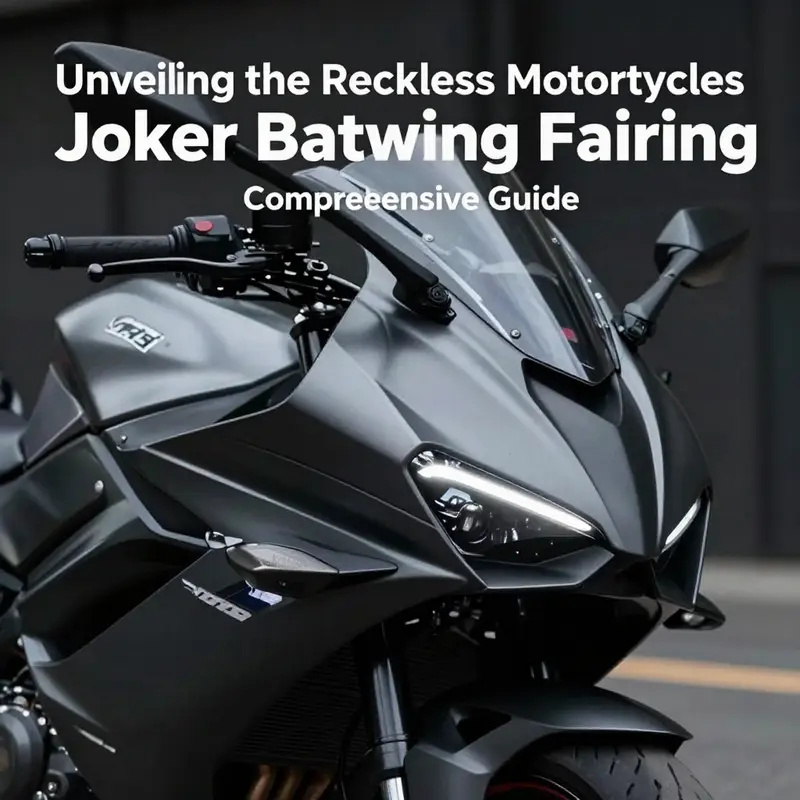 The Batwing fairing has long framed the silhouette of American cruising, turning headlight glare into a resolute line that rides low and wide across the handlebars. When a brand aims for a Joker-sly persona within that familiar contour, riders tend to imagine not just a shield from wind but a statement stitched into the bike’s very face. The Reckless Motorcycles Joker Batwing Fairing is precisely that kind of invitation—a promise of bold aesthetics wrapped around what could be a practical platform for audio, weather protection, and a cleaner wind path. Yet public data about this specific Joker variant remains scarce. In the absence of a published specification sheet or explicit stock status, the challenge for a potential buyer is not merely to price out a component but to verify fit, finish, and feasibility in a way that aligns with a rider’s expectations and riding conditions. What is evident, though, is that Reckless Motorcycles has built a family of Batwing fairings that tend to fuse Harley-Davidson culture with an aftermarket emphasis on performance and versatility. Within that family, similar versions designed for Dyna and Street Bob platforms hint at a philosophy: design a fairing that can cradle electronics, improve aerodynamics, and still look right at home on a chrome-and-black street ride. The Joker, as a sub-brand or model line within that family, would then be expected to carry forward this ethos—bold lines, confident stance, and a willingness to be noticed while the road disappears behind the rider’s focus. But as with any serious aftermarket upgrade, the questions outnumber the confirmed facts until a dealer’s brochure or an official product page clears the air.
In the current landscape, what is publicly documented points to Reckless Motorcycles offering Batwing fairings that sometimes include an audio system, as seen in W/Stereo variants of similar models. These versions are described in the broader marketplace as second-hand items with certain caveats: no windscreen included, no hardware for mounting, and visible wear such as scratches or paint imperfections. Those notes matter because they illuminate a larger pattern in the aftermarket—the gap that often exists between an enticing, aggressively styled silhouette and the practical realities of installation, weather sealing, and ongoing reliability. A Joker-branded fairing, if it exists in the catalog, would carry the same essential questions: Will it seal against rain and spray? Does it integrate cleanly with a rider’s electrical system? What models and years is it designed to fit, and how does the installation affect the bike’s center of gravity and handling characteristics? These questions are not mere pedantry; they strike at the heart of whether a rider can enjoy the intended experience without chasing constant troubleshooting.
The Joker’s promise rests on a core truth about Batwing fairings: they are both protective shell and visual accent. The protective aspect is not only about wind deflection at highway speeds but also about shielding vulnerable electronics and wiring that sit inside or behind the fairing’s cavity. The audio elements that often accompany W/Stereo variants add another layer of complexity; waterproofing, speaker placement, and amplifier heat management all demand careful routing through the fairing and into the bike’s electrical system. In practice, these features are most reliable when installation is performed by professionals who understand how to seal the junctions, address vibration concerns, and ensure that the fairing’s mounting points align with the frame’s tolerances. For a rider eyeing the Joker model, this is not merely a matter of bolt-on fitment; it is about ensuring that the ride remains seamless after a rainstorm or a long, dusty trip through open highways.
Beyond the mechanical realities, the Joker Batwing Fairing also speaks to a design conversation about proportion and stance. The batwing’s width, the height of the peak, and the angle of the fairing’s lower edge shape the rider’s posture and the bike’s air profile. A Joker version would likely follow Reckless Motorcycles’ preference for an aggressive, confidence-inspiring silhouette—one that makes the bike appear wider and more planted on the road without compromising the rider’s visibility or control. In this sense, the Joker’s appeal is not only aesthetic; it is about an enhanced sense of command, a visual signal of intent as the rider approaches a canyon road, a city boulevard, or a rain-slick expressway. Yet beauty must be weighed against practicality. A fairing that looks spectacular but offers insufficient weather sealing or hard-to-clean interior surfaces can quickly become a maintenance headache. The published and accessible data hint at the dual nature of Reckless products: high-impact looks paired with a robust approach to weather resistance and, where offered, integrated entertainment. For riders who crave the “on-the-go” experience, the Joker would ideally deliver both, with materials and finishes that hold up to exposure and a mounting system that remains dependable across seasons.
As curious riders map the possibility space for the Joker Batwing Fairing, they inevitably engage in a process of due diligence. The first step is to verify model compatibility. Harley-Davidson platforms such as Dyna and Street Bob are commonly addressed by aftermarket fairings, with mounting kits and adaptors designed to align with each generation’s frame geometry. The absence of a centralized, public spec sheet for the Joker means a direct inquiry to Reckless Motorcycles or an authorized dealer becomes essential. Riders should ask about the exact model years supported, the inner dimensions of the fairing cavity, the weight distribution after installation, and any required modifications to gas tanks, handlebars, or dash components. It is also prudent to request a detailed breakdown of included hardware, wiring harness routing, and a checklist of weatherproofing steps that the factory or installer will perform. These queries reveal much about the product’s intended finished state and help buyers separate the dream of a dramatic upgrade from the practicalities of maintenance and reliability on the road.
For readers who want to place the Joker Batwing Fairing in the broader aftermarket ecosystem, a wider frame of reference can be helpful. The Yamaha fairings collections at Summit Fairings, for example, illustrate how vast the aftermarket landscape is when it comes to integrating fairings with diverse bike families. The comparison across brands and platforms helps readers gauge what a high-spec fairing typically delivers in terms of fitment precision, finish quality, and accessory ecosystems. For readers exploring a broader landscape of aftermarket fairings, the Summit Fairings Yamaha collections provide a useful point of comparison. Summit Fairings Yamaha collections.
In the end, what matters most is a balanced appraisal: does the Joker Batwing Fairing offer the look, fit, and features you want without introducing uncertainty into maintenance and reliability? The prudent path is to pursue direct confirmation from Reckless Motorcycles or its authorized retailers, to request a current availability snapshot, and to obtain a complete specification sheet that enumerates materials, exact dimensions, mounting hardware, and any electrical integration requirements. Riders should also consult reviews and owner feedback for any long-term wear patterns, especially around the windscreen mounting points, speaker enclosures, and waterproof seals. When a product announcement is sparse, the best practice is to approach the purchase as a collaborative project—between rider, dealer, and installer—so that the Joker Batwing Fairing becomes not just a change in appearance, but a reliable upgrade that enhances the riding experience rather than complicating it. The notion of Reckless Motorcycles’ Joker is thus less about a single accessory and more about a philosophy: that style can be fused with durability, and that a rider’s confidence on the road should grow with every kilometer, not degrade under a cloudburst or a long detour.
External resource: https://www.recklessmotorcycles.com
Sound, Shadow, and Steel: The Batwing Fairing as a Loud Expression of Modern Motorcycling
 In the realm of motorcycle customization, a single component can declare a rider’s stance almost as clearly as the engine’s note. The batwing fairing stands at that intersection of sculpture, wind management, and personal soundtrack, converging three threads into one bold statement. Its silhouette slices the air with a disciplined confidence, shaping not only the bike’s aerodynamics but the rider’s sense of scale on the road. This is where form becomes function and attitude becomes speed. The fairing’s broad shoulders and sweeping crown are designed to impose a certain presence, turning a machine into a moving canvas that announces itself before the rider even twists the throttle. It is a hinge between wind and will, where every contour rolls air away from the rider and frames the motorcycle as a deliberate instrument of capability. The batwing, therefore, is more than a component; it is a platform for identity, a statement that blends aggression with purpose.
Design language matters as much as the technical promise. The aggressive aerodynamics of a batwing fairing are engineered to redirect airflow around the rider, reducing buffeting and lifting the bike’s center of pressure toward stability at speed. A well-calibrated fairing can soften handling at highway velocity, allowing the rider to focus on road texture and line choice rather than on gusts and wind fatigue. The size and curvature of the shield influence everything from mirror visibility to air pressure on the rider’s chest, and a careful balance is struck between protection and openness. A fairing that looks ready for action often communicates a readiness to perform. In this sense, the design is as much a psychological cue as a mechanical one, signaling the rider’s willingness to push past easy corners and into more assertive riding lines. The effect is cumulative: the eye reads a silhouette that suggests a bike has been shaped to meet the road’s demands with decisiveness, and that impression travels from rider to onlooker with the same certainty that a tuned exhaust delivers a note.
Beyond the aesthetics, the integrated audio and its placement within the fairing texture the riding experience in a fundamental way. A built-in stereo system, arranged for a wide listening field, becomes part of the bike’s personality as soon as the engine hums into its first idle. The configuration is not merely about volume but about how sound breathes with wind, how bass survives the highway rush, and how treble remains intelligible when the wind creates a shifting, white-noise backdrop. In a complete package, the audio system is paired with multiple speaker elements—two larger woofers and two smaller midrange units—carefully distributed to form a cohesive stereo image. The result is a listening field that feels genuine and immersive, not eclipsed by the roar of air and tires. The rider experiences music as a dynamic companion to speed, a charged layer of atmosphere that interacts with throttle response and cornering while maintaining clarity even at lean angles and high cadence transitions. In this sense, sound becomes part of the riding grammar, a second language that communicates mood, tempo, and focus without requiring the rider to look away from the road.
The practical implementation of such a system hinges on more than speaker count and wattage. It rests on how the fairing houses the components, how the electronics are shielded from the elements, and how power management remains stable across long rides. Weather sealing is not a mere afterthought; it is a core feature that preserves performance through rain, spray, and sudden temperature swings. The wiring is routed with a blend of resilience and elegance, designed to minimize heat buildup and reduce the risk of vibration-induced fatigue on connectors. Mounting hardware must endure the road’s realities, from potholes to curves, while maintaining alignment that sustains both wind protection and audio fidelity. In the end, a well-integrated system feels almost seamless: the rider’s momentum, the bike’s balance, and the soundscape align so tightly that the rider’s perception of speed changes. The sensory experience becomes a cohesive whole where wind, music, and machine act in concert rather than in competition.
From a rider’s perspective, the essence of such a fairing centers on the fusion of attitude and function. The visual aura—the sharp edges, the broad expanse of shielding, the sculpted crown—conveys a message about the rider’s approach to riding: decisive, engaged, and willing to push boundaries. The audio element extends that message into a personal ritual, turning long stretches of highway into a moving stage where music marks tempo, cadence, and pace. It is not merely about entertainment; it is about maintaining focus and rhythm in the mind’s ear as the body follows the road’s demands. In this sense, the design cultivates a particular habit of riding: one that pairs control with a sense of departure, a readiness to meet wind and distance with both hands on the bars and eyes on the horizon. The fairing thus becomes a partner in this ritual, shaping the rider’s relationship with speed and space while offering a sanctuary of sound and shelter within the bike’s broader physical frame.
For readers exploring this category within the broader ecosystem of aftermarket bodywork, the lineage is not accidental. The fairing’s geometry interacts with a variety of cruiser platforms, demanding careful fitment and attention to mounting hardware, bolt patterns, and harness routing. Compatibility matters because a seamless fit preserves both wind protection and structural integrity. In addition, the aesthetic impact extends beyond the rider’s silhouette; it informs how the bike sits in a parking lot, how it photographs from certain angles, and how it reads in motion. The narrative of a batwing fairing emphasizes not only engineering prowess but also how design celebrates speed as a shared experience—visual, audible, and tactile—between rider and road. The result is a creature of wind and music whose presence signals a certain devotion to the craft of riding, one that honors both the blunt force of momentum and the refined art of sound balance. For those curious about how such components are categorized and displayed across brands, a closer look at broader fairing galleries helps reveal the language of these shapes. See the Honda fairings collection for an example of how a wide faceted shield can harmonize with different chassis layouts and rider needs. Honda fairings collection.
As the scene of customization evolves, this kind of integrated aero-acoustic package embodies a modern philosophy of riding: performance and personality are inseparable. The batwing, with its sculptural presence and its sonic capacity, offers a way to tune not only the bike’s physical footprint but the rider’s emotional footprint as well. The wind’s character, the music’s texture, and the machine’s response to rider input become parts of a single, coherent system. It is a philosophy of speed that respects both restraint and exhilaration, recognizing that the rider’s journey is as much about listening as it is about going fast. In a world where the road rarely stands still, the blend of design intention and audio potential helps riders feel rooted in the present while looking forward to what lies around the next bend. And that is the core appeal: a single, deliberate choice that makes a motorcycle not just a machine but a statement—one that wears its attitude with confidence and lets sound carry the ride forward.
External reference: https://www.recklessmotorcycles.com/products/joker-batwing-fairing
In the Wind’s Shadow: Joker-Inspired Batwing Fairings and the Limits of Comparative Knowledge
 In the wind’s shadow, the batwing fairing appears as more than a weather shield. It is a sculpture of aerodynamics carved for long hours on asphalt. A joker motif inspired batwing—without naming any particular model in public sources—offers a lens into how form can promise protection, comfort, and presence on the road, while data about the exact variant remains elusive. The result is a design object that tempts riders with the romance of protection and the drama of silhouette, even as specifications stay murky.
Public inquiries reveal a robust landscape of well-documented fairings from a prominent American maker. Those widespread designs come in multiple windshield heights and provide integrated lighting and refined wind deflection. Pricing, warranties, and the variety of mounting options help riders shape the choice around model year, riding style, and travel needs. Yet those data points do not extend to the joker-inspired option, leaving a gap between visual appeal and engineering truth. The absence of official specifications makes it impossible to perform a meaningful direct comparison, because basic anchors like fitment compatibility, hardware included, and even the electrical harness layout remain unknown. This matters not merely for curiosity but for owners who want to avoid misfit, hardware clashes, or alignment issues that could affect handling at highway speed or expose the rider to moisture.
Where data is sparse, a disciplined approach becomes essential. A practical evaluation framework emerges from what is known: verify fitment against the exact year and model, inspect mounting hardware, request official measurements when possible, and examine the silhouette at both the rider and passenger positions. It is also essential to consider whether the design appears to accommodate a stereo interface, weather sealing, or other electronics, and whether those features were meant to be integrated or added later. The testing ground extends beyond photos; it includes a careful assessment of the finish, presence of scratches or paint damage in used items, and the availability of hardware and instructions. In short, the joker-inspired batwing is as much about consumer diligence as it is about aesthetics.
The research results frame a broader truth about batwing fairings across the field. For the most widely documented touring setups, manufacturers publish clear specifications, model-by-model fitment charts, and warranty terms. Those anchors enable a straightforward, apples-to-apples comparison. The joker-inspired variant, by contrast, remains a silhouette in the fog of incomplete information. This absence is not a verdict on quality but a reminder of how much leeway a market will grant to design narratives that outpace public documentation. It invites enthusiasts to practice careful skepticism, to seek official statements, and to rely on authorized dealers who can confirm whether a given fairing will physically and electrically marry with a particular bike.
In this context, it helps to anchor the discussion with an example of transparent, well-documented options from the broader aftermarket ecosystem. A catalog that clearly lists fitment notes, hardware requirements, and cross-model compatibility can reveal how much clarity a consumer should expect when evaluating any new or niche accessory. For readers who want to explore documented options, the Honda fairings collection provides a compact reference point. It offers concrete alignment between product design and the physical realities of a bike’s frame and cockpit, and it demonstrates how precision in official information translates into smoother installation and longer-term satisfaction. See more here: Honda fairings collection.
Taken together, the joker-inspired batwing becomes a case study in more than just form. It sits at the intersection of art, engineering, and market communication. The chase for the perfect blend of protection, wind management, and rider immersion can be just as important as the object itself. The public record on the joker-inspired variant is thin, and that absence colors every judgment about fitment, finish, and long-term reliability. It does not erase the allure of the concept; it reframes it as a prompt for patient, methodical inquiry. Riders and readers are reminded that in aftermarket journeys, the thrill of design must be balanced by the discipline of verification. When a product name is not accompanied by a robust spec sheet, the best path forward is to gather evidence, compare known baselines, and rely on trusted points of confirmation—official pages, dealer support, and verifiable photos—before committing to a choice that may look compelling in photos but behave differently on the road.
As this chapter moves toward the next phase of the article, the central message remains clear: visibility and value in batwing fairings depend as much on transparent information as on aggressive styling. The joker-inspired concept embodies this tension. It invites the rider to weigh the romance of a dramatic silhouette against the practicalities of fit, protection, and durability. In doing so, it mirrors a larger truth about aftermarket parts across brands and models: the most enduring upgrades are those backed by explicit specifications, honest measurements, and dependable aftercare. The road test of any niche variant, therefore, begins not with a purchase impulse but with a meticulous search for documentation and a candid assessment of one’s own bike, riding style, and climate. That is how a rider turns a bold look into reliable performance, a true partnership between machine and rider that survives the long miles ahead.
Designers of aftermarket fairings often calibrate their offerings to a spectrum of riders, balancing aggressive looks with the need to preserve engine cooling and steering geometry. The joker-inspired batwing, in this sense, participates in that design dialogue but leaves room for the unknown, which is both a risk and an invitation. In the end, the story of this variant becomes a metronome for prudent consumer behavior: seek clarity before commitment, measure twice, and ride with confidence only after a solid fit is confirmed.
External resource: https://www.cycleworld.com
Winged Confidence: Rider Realities and the Allure of Bold Batwing Fairings in Reckless Motorcycle Customization
 Riding with a batwing fairing is to ride with a different kind of intention. The fairing acts not only as a shield against wind and weather, but as a sculpted interface between rider and road. In the best designs, the wing-like shell channels air around the rider, reducing the raw push of wind at high speeds and smoothing the turbulence that rattles a helmet and bones alike. For riders who chase long days in the saddle, this can be more than comfort; it is a practical extension of the bike’s personality. A batwing fairing, especially a larger, theater-style unit, changes not only what you feel on the shoulders and chest but what you hear, and how you occupy space on the motorcycle. It becomes a stage through which the journey unfolds. The integration of audio systems within some premium kits promises more than a soundtrack; it offers a sense of immersion, a perception of the road that is less buffeted by external noise and more tuned to the rider’s chosen tempo. The marriage of wind management and onboard sound has become a focal point for enthusiasts who want to turn highway miles into a curated experience. Reading the road through this wider frame changes what a rider believes is possible when travel becomes an expression rather than a mere commute.
Yet, for a particular niche batwing fairing from a small manufacturer, direct rider feedback is sparse in mainstream forums. The market for this kind of kit remains intimate, with discussions often confined to specialized communities where builders trade notes on fit, finish, and weatherproofing. Still, the broader conversation about batwing fairings yields consistent threads. Riders describe a stabilization of air pressure on the chest and shoulders, and a noticeable reduction in helmet buffeting. They report that at highway speeds the seat and back enjoy more constant support because the fairing redirects a portion of the wind away from the rider. For those who design around the experience of listening to music or radio programs while riding, the potential advantage is clear: a well-integrated audio system that remains weather-sealed and shielded from the worst of the riding environment. All of this is contingent on careful engineering and precise fitment, because no amount of aesthetic drama can compensate for a loose fit or a poorly sealed routing of cables and connectors. The result, when well executed, is a cocoon of air and electronics that feels almost custom-tailored to the rider’s posture and route.
Installation is where the craft of the upgrade becomes tangible. A batwing fairing sits at the intersection of aerodynamics, electrical engineering, and vehicle structure. The mounting points must align with the bike’s frame geometry, and the fasteners must secure more than plastic; they must anchor a weight and a wind profile that influence handling at speed and through corners. A professional install is often not a luxury but a necessity. The technician will verify that the surface is clean, the angle of attack is appropriate for the rider’s height, and the weatherproof seals cover every entry point for rain and road spray. The wiring harness must be routed to protect against abrasion, water ingress, and vibration. The rider gains a consolidated control interface, often including audio, Bluetooth, and sometimes GPS power, but every connector becomes a potential point of failure if not sealed and shielded properly. From a maintenance perspective, the owner must commit to periodic checks of seals, connectors, and the integrity of the mounting hardware, as well as an occasional recalibration when the fairing’s influence on airflow shifts due to changes in rider posture or tire load. In short, installation is not merely a bolt-on step; it is the moment when design intent meets real-world physics and the bike earns its new personality.
With the benefits come trade-offs. The weight of a well-equipped fairing adds to the bike’s mass. The change is small at a standstill, but it becomes perceptible at twisty sections or when accelerating in a straight line at high speed. The added weight and the complexity of the electronic modules can affect the precision of the ride, especially in models with marginal clearance or older electrical systems. The price tag is rarely modest, and maintenance costs can accumulate, particularly if a component is integrated with a proprietary interface or an amplified audio system. Riders weigh these factors against the hoped-for gains in comfort and entertainment. If the primary aim is conversation-free highway cruising on long trips, the math often favors the upgrade. If the bike is used for short urban hops or in climates where rain is a frequent companion, weatherproofing and serviceability assume a greater priority. The aesthetic payoff—an imposing silhouette that matches the rider’s own appetite for bold styling—also matters. In practice, many owners find that the fairing becomes a central piece of the bike’s identity, something that endures long after the paint has been repaired or refreshed, a symbol of a rider’s willingness to push beyond stock boundaries while respecting the laws of physics on the road.
When a rider finally tests the kit, the experience often centers on three axes: comfort, sound, and confidence. Comfort comes from the wind shadow created by the fairing and the absence of relentless wind pressure at the torso. Sound becomes a companion rather than a competing force, provided the installation keeps the speakers in a protected compartment and the rider can still hear the environment around the bike. Confidence grows from the sense that the bike feels more stable—less buffeted by gusts and less thrown by crosswinds. Yet the story is not purely positive. If the fairing is too large for the bike, or if mounting alters the bike’s steering feel, a rider may notice a slight mismatch in steering response or a change in weight distribution. Some owners report that the cockpit becomes more intimate with the machine, making corner entries feel different and requiring a brief adjustment period. The best practice is to ride with the new configuration for a few sessions, then revisit alignment, windscreen height, and audio balance. It is a process of calibration, not a single install. The goal is to arrive at a balance where wind, weight, and electronics cooperate rather than compete, delivering a ride that feels both secure and alive.
Riders who pursue this kind of customization should approach it as a conversation between the bike’s core geometry, their riding style, and the environment they most often encounter. An important step is verifying compatibility with the bike model, engine heat management, and fairing width to avoid interference with handlebars, fuel tank, or side cases. The design should respect maintenance access to the headlamp, wiring, and battery, while still offering the protective function it promises. Aesthetics matter, but they should not eclipse usability. The best purchasable kits balance form and function so that the rider can enjoy a clean visual line, a coherent rhythm of airflow, and a straightforward maintenance schedule. In the end, the value lies not only in the look but in the way the kit reshapes the ride—how it invites longer journeys, how it creates moments of satisfaction when the road unfolds in a straight ribbon or into a winding pass. The experience is personal, iterative, and often transformative, turning miles into a narrative that the bike helps the rider tell with wind and sound as co-authors.
For a broader context of fairing options and compatibility considerations, some riders explore collections of Yamaha fairings as