
ABS or Fiberglass Fairings: What Really Drives Crack Repair Cost
When a fairing cracks, the first question most riders and shops ask is how much it will cost to fix. The answer rarely depends on the badge on the tank or the paint code on the panel. It comes down to the material and how the panel was built.
ABS and fiberglass fairings behave very differently once damaged. ABS is a molded thermoplastic: flexible, impact resistant when thick enough, and usually straightforward to weld or plastic-bond. Fiberglass is resin and glass mat, and its strength sits in the layup — the number of layers and the wall thickness behind the crack. To understand how fairing materials shape durability, look at the construction, not the label.
That difference decides the repair. A thin, single-layer panel may need reinforcement built up before it holds its shape; a thick, hand-laid part may need only a local patch and a blend. Thickness also decides which adhesives, welds, and fillers survive vibration and heat.
Brand, paint, and color matter less than wall thickness and layup. Those two decide the repair method and the final price.
This article covers how to tell ABS from fiberglass, why wall thickness drives labor, the repair options for each material, the supplies that move a quote, and how to price a crack repair accurately.
Primed and painted, ABS and fiberglass can look nearly identical. A crack exposes the difference. The material decides how a panel fails, how many labor hours a shop should quote, and whether the repair holds at highway speed. ABS flexes and gives before it tears; fiberglass stays stiff and shatters along its resin matrix. Knowing which one is in front of you keeps estimates accurate and prevents callbacks.
ABS vs. fiberglass at a glance: compare the two most common fairing materials side by side before you commit to a repair strategy. The table contrasts them on material type, wall thickness, flexibility, crack behavior, the default repair method for each, and how difficult that repair typically is.
| Attribute | ABS Fairings | Fiberglass Fairings |
|---|---|---|
| Material type | Thermoplastic | Thermoset composite (resin + glass fiber) |
| Typical wall thickness | 2-3 mm | 3-5 mm |
| Flexibility | Flexible; bends and absorbs minor impacts | Rigid; very little flex before damage |
| Crack behavior | Cracks slowly, often holds together when bent | Shatters and spider-webs across the panel |
| Default repair method | Plastic welding or heat-based fusion | Resin layup using fiberglass mat and cloth |
| Typical repair difficulty | Moderate | High |
Use the table to match the material to the method. ABS responds to heat and plastic welding, so a technician can fuse the crack back into one flexible piece. Fiberglass responds to layers of resin and mat, so the repair is only as strong as the number of layers built. Guessing wrong is expensive: welding a fiberglass panel or laying resin over ABS often means the fix fails within weeks and the customer pays twice. For a broader look at how these materials fit the wider market, see our guide to motorcycle fairing styles and materials. Read wall thickness and layup correctly and quotes stop being guesswork.
Wall Thickness: The Number That Predicts the Repair
Measuring fairing wall thickness is the quickest way to forecast crack repair cost. A tech who checks a damaged panel with a caliper or an ultrasonic gauge gets a number in millimeters, and that number usually decides the repair path before any filler touches the surface. The thresholds hold fairly consistently across ABS and fiberglass panels:
- Sand and refinish: roughly 3.0 mm and up. There’s enough material to feather, fill, and block the crack without grinding straight through the panel.
- Stitch or weld: about 1.8 to 2.8 mm. Material remains, but heat and solvent need gentle handling to avoid distortion or burn-through.
- Replace: below roughly 1.8 mm, or any crack running across a mounting point. There is too little material left to hold a lasting repair.
Thin walls raise repair labor, because the technician has to add internal backing, build layers more slowly, and re-block the panel to keep it flat. Every extra step is billed time.
A Quick Worked Example
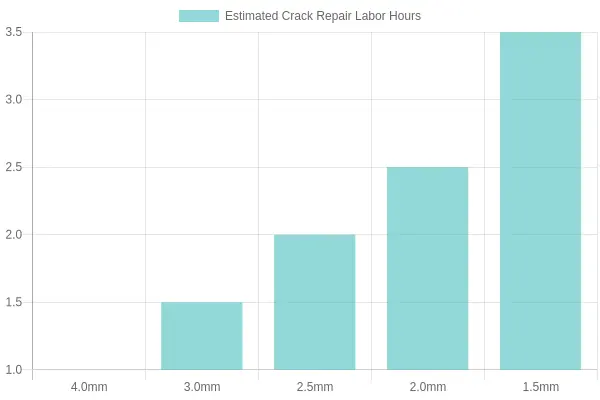
Take a 4 mm ABS panel with a 40 mm crack. Sand, fill, and refinish runs about 1.2 hours. The same crack in a 2 mm panel takes roughly 2.5 hours, because the thin wall needs backing, a slower stitch, and extra blocking to stay true. At a $90 hourly rate, that’s about $108 versus $225 for identical damage. Under 1.5 mm, the honest answer is often replacement rather than repair. It pays to understand how fairing materials and layup affect durability before a crack ever appears.
Layup Construction: How the Build Decides Strength and Repairability
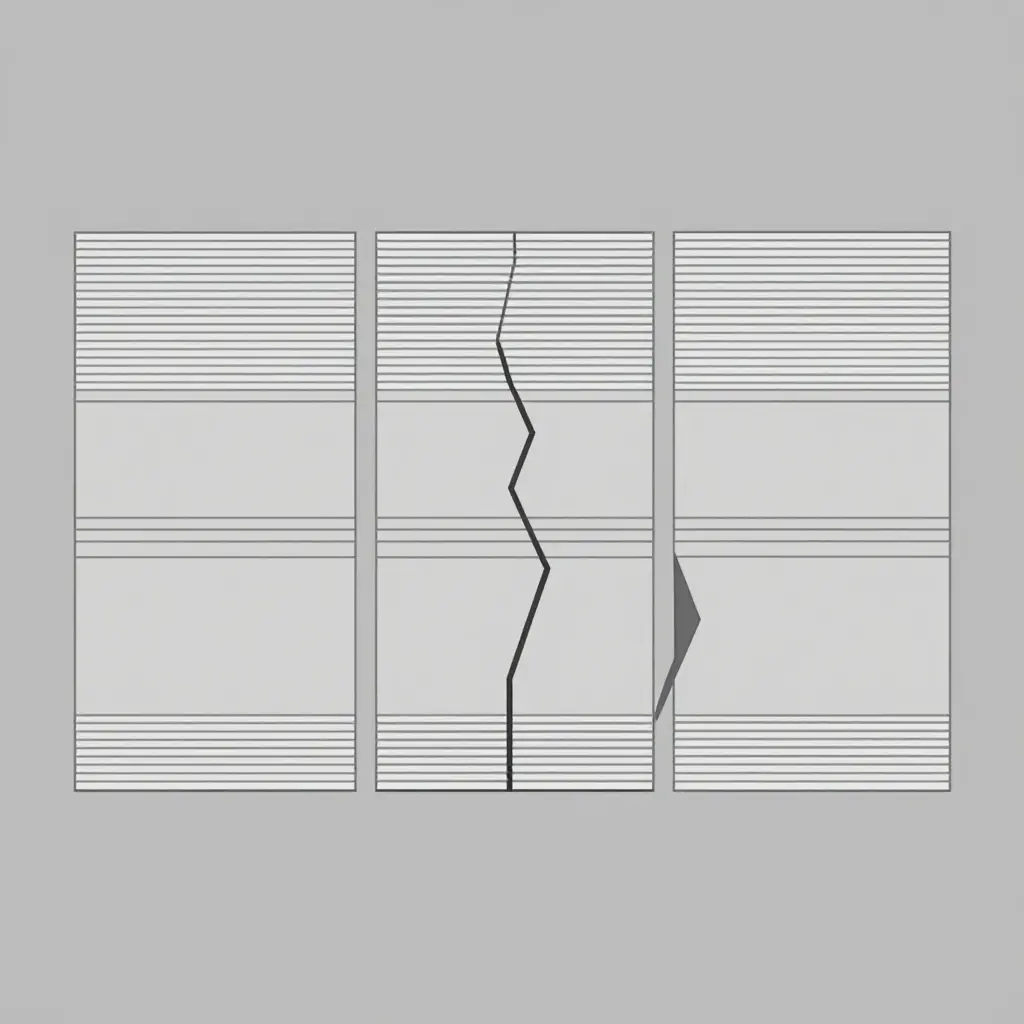
A fiberglass fairing is a stack of small manufacturing decisions, and each one shapes how the part cracks, flexes, and — the part that matters for your wallet — how easily it can be fixed. The layup variables that matter most:
- Hand layup method
- Resin-to-fiber ratio
- Number of fiber plies
- Vacuum bagging
Hand layup. In traditional hand layup, a technician lays dry glass mat or cloth into a mold and wets it out with resin by brush or roller. It is affordable and flexible, but it traps more air and excess resin than machine methods, so the part is slightly heavier and weaker per gram, often thick and porous. Thick, porous laminate is forgiving at repair time: the technician can sand back the damaged area, build up new layers, and feather the patch into the surrounding material. A hand-laid fiberglass layup tends to be easier to repair, even if it is not the strongest.
Resin-to-fiber ratio. A wet, resin-rich layup feels solid, but too much resin makes a brittle, heavy panel that cracks easily and hides serious damage. A lean ratio packed with fiber produces a stiff, strong panel — and a tighter, denser surface that patch material struggles to grip. For cheap and predictable fairing repair, a moderate ratio is the sweet spot.
Number of fiber plies. More plies mean a thicker wall: stronger, stiffer, and more impact resistant, but also heavier and more expensive. A thicker wall gives a patch more material to bond into, so the fix holds up better over time.
Vacuum bagging. Vacuum bagging pulls out excess resin and compresses the layers under pressure, creating a dense, low-void laminate that is stronger and lighter. The trade-off is that this tightly controlled structure is harder to match during repair, because new material has to blend into it.
Average Crack Repair Cost by Material and Wall Thickness
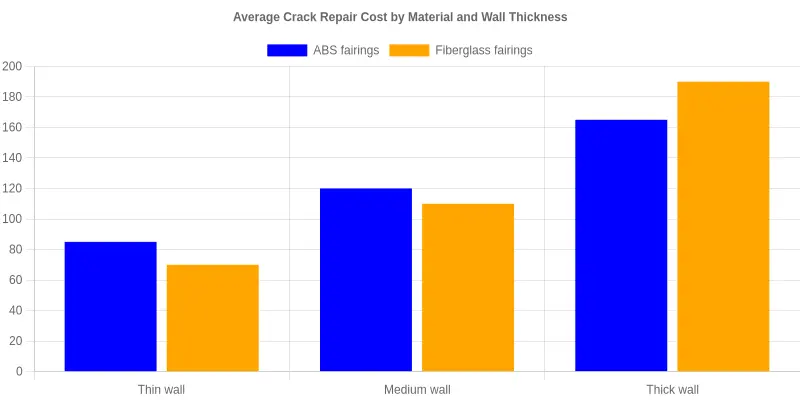
Figure: Average crack repair cost by material and wall thickness. ABS fairings run $85 (thin), $120 (medium), and $165 (thick). Fiberglass fairings run $70, $110, and $190 respectively. Fiberglass is cheaper to repair in thin and medium layups, but thick sections cost more once resin, mat, and finishing labor are added.
What Actually Drives Crack Repair Cost
Before you quote a customer or budget your own project, it pays to know what really moves the number. Every estimate comes down to a handful of variables, and understanding them keeps unpleasant surprises off the invoice.
- Wall thickness — Thicker panels hold more material and resist flexing, so a crack in a heavy layup often needs less invasive reinforcement. Paper-thin panels crack through faster and demand careful backing to avoid burn-through, and below the repair threshold they are replaced outright.
- Layup quality — A tight, well-consolidated layup spreads stress evenly and gives the technician a stable surface to bond. Sloppy, air-pocketed layups force extra grinding and re-lamination, which pushes crack repair cost upward.
- Crack length — Short hairline fractures can be stop-drilled and sealed in minutes, while long running cracks require full-panel cosmetics, blending, and paint to match the original finish.
- Crack location — Cracks near a flat, open edge are quick to fix. Cracks hiding behind brackets, around mounting tabs, or along tight curves mean more disassembly and careful reshaping.
- Material type — ABS plastic responds to plastic welding and chemical bonding, while fiberglass calls for resin, mat, and sanding. Each material carries its own labor rate and consumables.
- Labor hours — Time is the single biggest driver: prep, repair, cure, sand, and paint. Complex jobs stack hours fast, so always factor hourly rates into the final crack repair cost.
Weighing these six factors early lets shops quote confidently and riders plan their spend. For a closer look at how the materials behind popular fairing styles influence repair and replacement decisions, it’s worth the read.
Crack Types and the Right Repair Method
Not every crack in ABS or fiberglass fairings deserves the same fix. Matching the crack type to the material — and to its wall thickness and layup — keeps repair costs sane and the result strong.
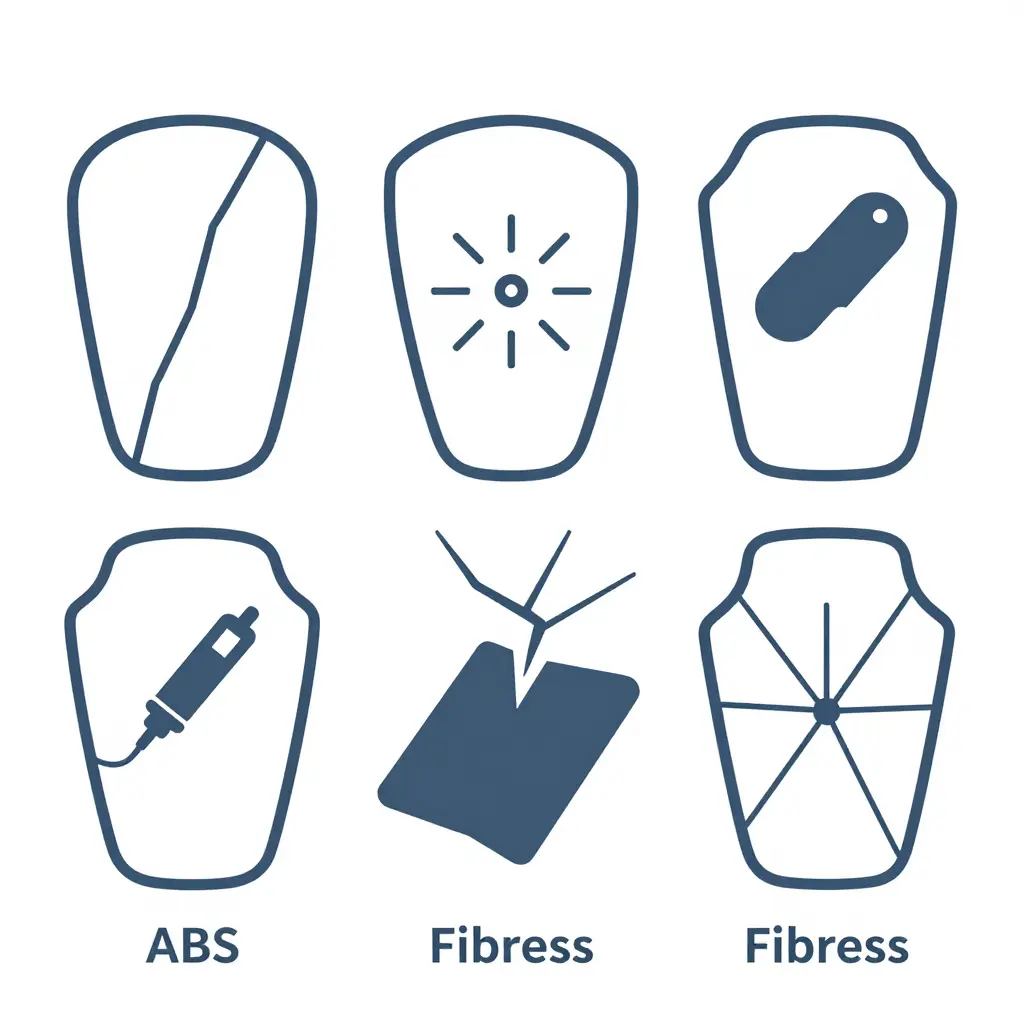
Hairline cracks are shallow surface splits. On thin ABS, a plastic welder plus flexible filler usually seals them. On fiberglass, sanding and a thin resin coat often suffice, unless the crack sits over a thin, unsupported panel.
Stress cracks radiate from flex points and mounting bosses, and here wall thickness matters most. A thick ABS panel can be welded and backed with a reinforcing patch, while a thin one may need a full re-laminate. In fiberglass, the layup decides: more plies keep the crack local, fewer plies force you to rebuild the whole area.
Impact cracks follow a hit and often tear material. ABS responds well to heat-assisted welding with donor plastic. Fiberglass needs chopped-strand mat added to restore strength, especially where the original layup was light.
Spider cracks fan out from a single point. On rigid ABS, grind back to solid material, then weld. On fiberglass, chase every leg and re-glass the zone. Understanding fairing materials and construction helps you judge how far damage spreads.
For any motorcycle fairing crack, the rule is simple: thicker walls and denser layups tolerate localized repairs, while thin, resin-starved panels push you toward replacement.
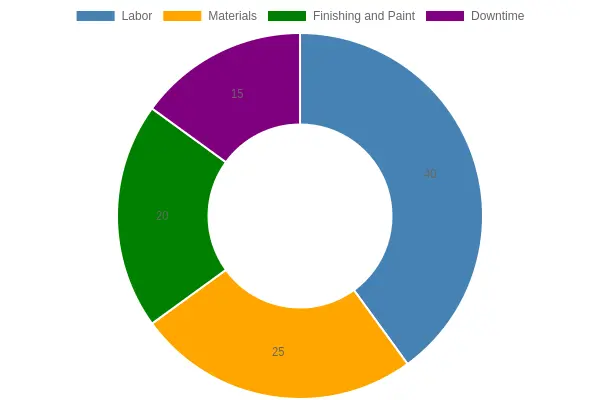
Where the money actually goes. Labor dominates at 40%, because hand-laid repair is slow, careful work. Materials take 25% for resin, fiberglass or ABS filler, and reinforcement. Finishing and paint claim 20% for color matching and gloss, and downtime takes the remaining 15% in lost shop or riding time.
What the Numbers Tell You
A crack repair is rarely about the crack itself. It is about the hours wrapped around it. Labor at 40% is the single biggest line item, and it scales with how the fairing was built: a thick, well-built fiberglass panel holds a scarf joint and needs fewer hours to stabilize, while a thin ABS shell may demand careful plastic welding and heat control. Materials at 25% is a cost you can partly control by choosing quality resin and reinforcement cloth. Finishing and paint at 20% is the invisible money, since a flawless color match and clear coat hide every trace of the repair. Downtime at 15% is the quiet tax no invoice shows, whether your bike sits idle or a shop bay stays tied up.
Key takeaway: on a like-for-like crack, wall thickness and layup move the labor and materials slices more than any other factor. Thin panels take longer to stabilize — backing, a slower stitch, extra blocking — while thick panels consume more material and finishing time. Thin panels also carry the higher risk of repeat failure.
That split is the scoreboard when you weigh a repair against replacement. If labor creeps past its 40% share, a fresh set of panels often wins on both time and value. Shops that track the four slices over time get sharper at quoting, and riders get fewer surprise invoices.
Frequently Asked Questions About Fairing Crack Repair
Whether you run an auto repair shop or wrench on your own ride, the cost of fixing bodywork usually comes down to two things: what the fairing is made of, and how thick it is. These are the questions we hear most often from shops and riders.
Is ABS or fiberglass cheaper to repair after a crack?
For a small, clean crack, ABS is usually cheaper because a technician can plastic-weld or chemically bond it quickly. Fiberglass costs more for tiny damage, since the shop has to rebuild the area with resin and cloth before sanding. For large or shattered sections the advantage can flip: fiberglass is sometimes cheaper, because a technician can lay up new material instead of sourcing a molded ABS panel.
Does thicker wall thickness always mean lower repair cost?
No. A thicker wall resists flexing and cracking, which helps durability, but when a crack does appear, more material has to be ground out, rebuilt, sanded, and blended, and the repair consumes more resin and mat. Labor hours can be lower on a thick panel than on a thin one, but the total bill is often higher. Thickness prevents damage; it does not automatically make a crack repair cheaper.
Can fiberglass layup be repaired without visible marks?
Yes, in the hands of a skilled technician. The edges are feathered, the laminate is rebuilt, and fairing compound is applied and block-sanded flat. Once primer and color coats go on, a proper repair disappears into the surrounding panel, even on curved or contoured sections.
How does wall thickness affect repairability?
Wall thickness shapes how a crack behaves and how hard it is to fix. Thin walls crack cleanly and quickly, and because there is less material to work with, the technician has to add backing and weld gently — which pushes labor hours up. Thick walls hold their shape and give a patch more to bond into, but they take longer to grind, fill, and finish.
Does material type change paint matching cost?
Material type does influence paint matching, though color and finish matter even more. ABS often needs a flex additive in the primer and topcoat, while fiberglass usually takes a standard primer and gel-coat-friendly base. That extra step can nudge up the cost of a repair, but a hard-to-match custom color is usually the bigger expense regardless of what the panel is made of.
If you are planning a repair and want panels that are easier to work with, it helps to understand fairing styles and materials before you buy.
The Bottom Line: Thickness, Layup, and Material Set Your Repair Bill
If there is one takeaway to hold onto, it is this: how much it costs to fix a cracked fairing depends less on the size of the crack and more on what lies underneath the paint. Wall thickness and layup, combined with material type, decide crack repair cost far more than most riders expect. A thin, single-skin panel flexes under impact and can spider-crack across a wide area, while a thicker, multi-layer layup absorbs the hit and often needs only a localized repair. Material matters just as much: ABS flexes and can be plastic-welded, whereas fiberglass is rigid and repairs through resin, mat, and sanding.
For repair shops, the practical move is to inspect the panel before quoting. Measure thickness, feel for flex, and identify the material so the estimate reflects real labor hours instead of guesswork. For enthusiasts, the lesson is simpler: buying the right affordable motorcycle fairings up front can save money the next time a tip-over happens. Understanding your panels also pays off, so brush up on layups and materials in a solid fairing materials guide before you commit.
Ready to Replace or Upgrade? Start with Summit Fairings
When a crack finally wins, replacing the panel is often cheaper and faster than a full repair. Summit Fairings stocks over 3,000 styles, offers prices 10-40% lower than other sites, and promises a reply within six hours, so you never lose riding time waiting. Whether you ride ABS or fiberglass fairings, you will find options built to hold up. Head to Summit Fairings and get back on the road.