
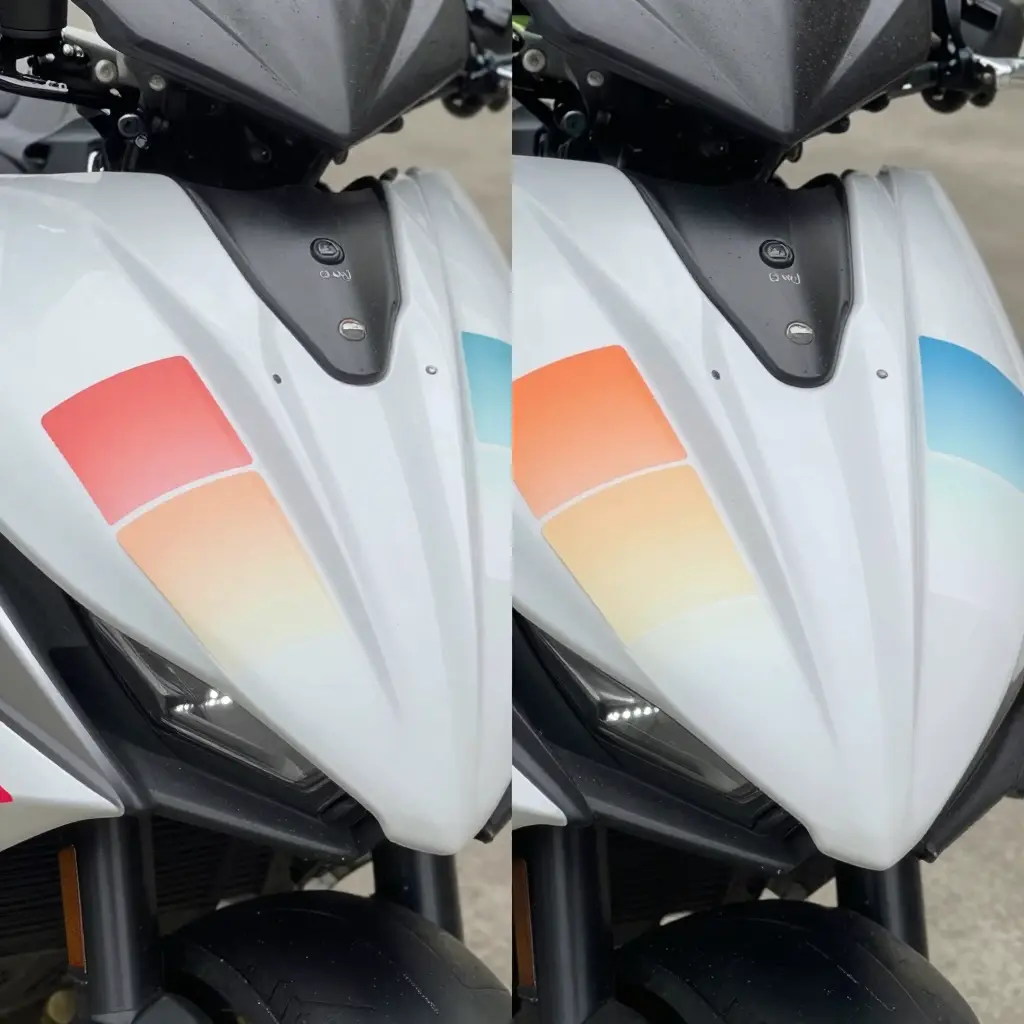
Aftermarket Fairing Paint Match: Why Color Code and UV Fade Decide the Mismatch You See
An aftermarket fairing paint match means painting a replacement fairing so it lines up with the bodywork already on the bike, close enough that the two panels look like one color under the same light. It rarely works straight out of the box, and when it does not, the owner sees a fairing paint mismatch.
Two things decide the outcome. The first is the paint color code: the pigment recipe a factory used, and how faithfully a supplier reproduces it. The second is UV fade, the slow change in tone and gloss that sunlight works into the original panels. A fairing can be sprayed to a technically correct code and still look wrong next to plastic that has aged for years in the sun.
This article covers how each factor works, how they interact, and what owners, enthusiasts, and body shops can do about it: where to source the code, how to blend, and the steps that close the gap between custom motorcycle fairings and the bike they bolt onto.
What a Paint Color Code Actually Encodes
A color code is not a name like “Raven Black” or “Candy Red.” It is a manufacturer’s shorthand for a pigment recipe: the toners, metallic flakes, pearl coats, and clear coats used on one model in one model year. The code ties that recipe to a single production run, so the same badge name can carry different codes across model years or markets. That is why the code matters more than the color name.
From OEM Paint Code to Pigment Recipe
When a factory releases a model, its paint supplier engineers a formula to meet durability, gloss, and regulatory standards. The OEM paint code points to that formula in the brand’s parts and refinish databases. A body shop working from the code mixes a repair using the manufacturer’s own proportions, which is what keeps a repainted panel close to the factory finish.
Why Aftermarket Fairing Paint Match Often Falls Short
Aftermarket manufacturers rarely have the factory formula. Many start an aftermarket fairing paint match from a generic or approximated code, then adjust by eye or toward the closest toner in the cabinet. Because the exact recipe is never reproduced, the result is a close relative of the original rather than a copy. For how finish sits on custom motorcycle fairings, see how design and materials shape the final look.
Same Code, Different Result
Two parts can carry the same code and still come out different. Suppliers blend pigments in batches, and batch-to-batch variation in toner strength moves the final hue. Mixing ratios drift as well: a small change in flake concentration alters flop and sparkle, while a different reducer load or spray pressure changes how the pigment lays down. UV exposure compounds all of it over time, fading some pigments faster than others, so even a perfect initial match drifts apart.
Every paint code is only as good as its source, so it helps to see how OEM references compare with aftermarket and generic ones side by side.
| Source of the code | How the code is derived | Typical match accuracy | Most common mismatch symptom | How to verify the match |
|---|---|---|---|---|
| OEM factory code (VIN-linked) | Assigned by the manufacturer and tied to the factory paint formula and build record | Highest – matches the original finish as it left the line | None on a fresh panel, though it can look off beside a sun-faded OEM panel | Cross-check the code against your VIN and confirm the build year |
| OEM code applied to aftermarket fairings | Ready-made kits painted to a named OEM code | High on newer bikes, noticeably lower on aged ones | Faint shade or metallic-flake difference where old and new panels meet | Hold a test piece in daylight next to an unfaded area under the tank or seat |
| Aftermarket / generic paint code | A supplier reference loosely mapped to several OEM colors | Moderate – one code often covers multiple model years | Slight hue shift, usually a touch warmer or cooler than the OEM finish | Request a spray-out card and compare it with your original panel |
| Digital colorimeter-matched mix | A camera or spectrophotometer reads the panel, then software calculates a formula | High on unfaded paint, drops fast on UV-faded surfaces | Looks perfect in the booth, then drifts in direct sunlight | Have the shop scan a protected panel, not the sun-exposed top surfaces |
Why an aftermarket fairing paint match comes down to the source is simple: each code is derived from a different reference, so two physically identical colors can carry two different formulas. Use the OEM code as your baseline, then confirm it against an unfaded spot on your own bike. If you would rather have the shade handled before the parts reach you, look at custom fairings painted to your factory code.
How a Paint Color Code Is Structured
A paint color code is a short alphanumeric label that a manufacturer assigns to one factory finish. The letters usually signal the color family or model year, while the digits pinpoint the pigment blend. Codes often combine a hue number with a trailing letter for a variant such as pearl or metallic.
The label is a reference to a recipe, not a color by itself: it tells you which pigments to mix and how many layers to apply. Two bikes sharing one code can still show a fairing paint mismatch, because the code points to a formula, not a guaranteed result. Choosing the right code is half the job; applying it, as covered under custom fairing finishes, is the other half.
The recipe falls into three families:
- Single-stage: pigment and clear are combined in one coat, simple and easy to match.
- Two-stage: a base coat carries the color, then a separate clear coat adds gloss and protection.
- Tri-coat: a ground coat, a translucent mid-coat, and a clear top coat, with light bouncing through the layers to create depth.
Tri-coat finishes are the hardest to reproduce aftermarket. Because the mid-coat is semi-transparent, tiny shifts in spray pressure, coat thickness, or flash time move the final hue. Reproducing it takes the exact formula plus near-identical technique, so two shops reading one code can still turn out visibly different panels.
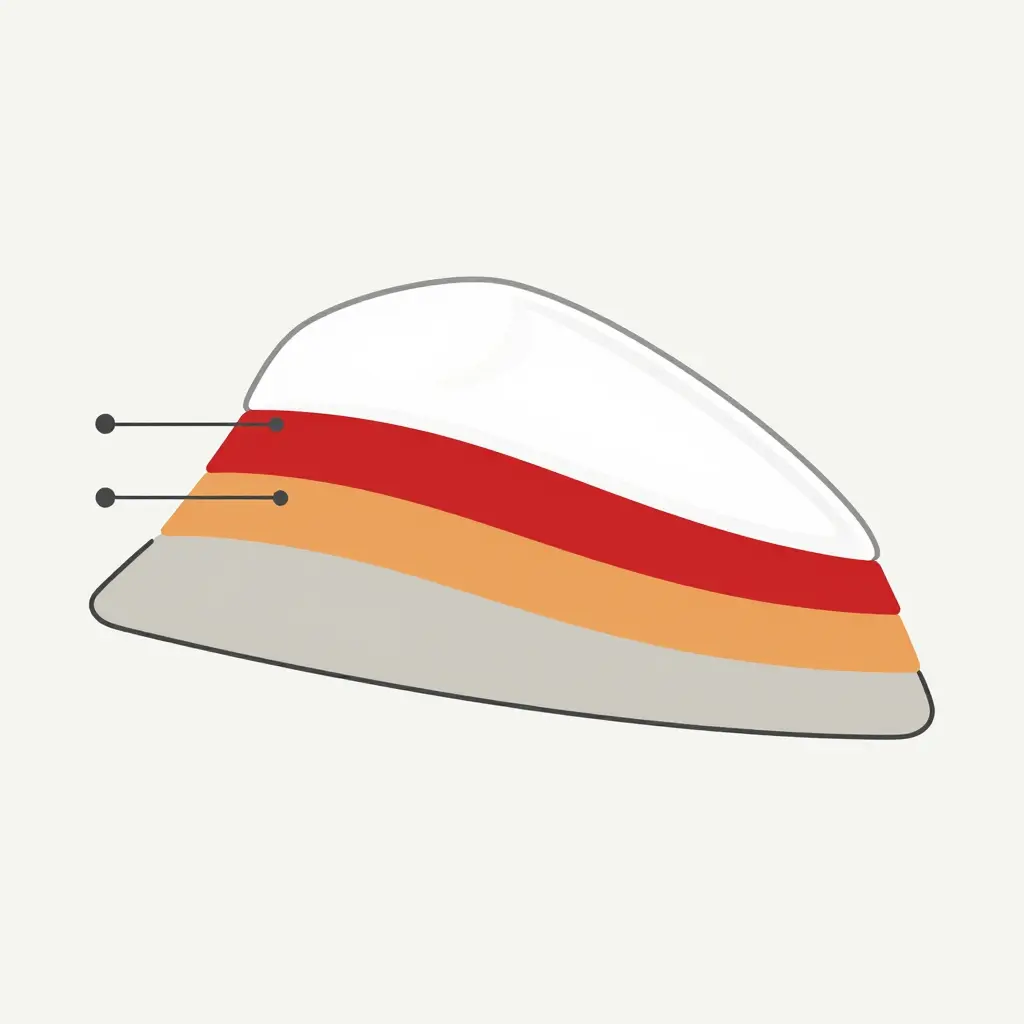
The layered cross-section below shows the stack a color code refers to: primer, pigmented base coat, clear coat. The callouts mark which layer the code actually describes, which is why matching aftermarket motorcycle fairings takes more than the right numeric value.
UV Fade: The Second Decisive Factor in Paint Mismatch
Sunlight is hard on a motorcycle’s finish. Even a bike that spends most of its life parked keeps getting hit, and the paint keeps changing at the surface. That process, known as UV fade, is the second reason a color code alone cannot guarantee a visual match.
How UV Radiation Breaks Down the Finish
Motorcycle paint is a layered system: a pigmented base coat supplies the color, and a clear coat over it seals and protects. UV light attacks both. In the clear coat, high-energy photons break polymer bonds, a process called photodegradation, which dulls the gloss and lets the layer gradually erode. Once the clear coat thins, UV reaches the pigment below and begins altering its chemical structure directly.
Oxidation, Lightness, and Saturation
As the base coat oxidizes, pigment particles react with oxygen and shift in two measurable ways:
- Lightness: coatings that chalk and haze usually read lighter.
- Saturation: colors lose vibrancy and look grayer or washed out.
A red that once looked deep and rich can drift toward a softer, dustier tone. These shifts are small per year and obvious over several.
Why Pigments Fade at Different Rates
Pigments do not resist UV equally. Organic reds, yellows, and some blues break down early, while many blacks hold their color well; whites stay light, but the clear coat over them can yellow. Because a single finish often blends several pigments, the components age at different speeds, and the hue drifts in a direction that is unique to that bike.
The Practical Result
An OEM panel that has aged in sunlight for years has already shifted from its factory color. A freshly painted aftermarket part is mixed to the original code, so it matches the code, not the aged bike. The result is a fairing paint mismatch that no formula fixes on its own. A reliable aftermarket fairing paint match usually means blending or tinting to the vehicle as it sits today. For a broader look at fitment and finish, explore motorcycle fairings.
Fade rates also differ by finish type. A single-stage solid color drifts the least. A standard base coat under clear coat climbs faster. A metallic or pearl under a UV-sensitive clear changes fastest of all, which is why a fresh panel bolted next to a five-year-old one never quite agrees: one has been baking in the sun while the other sat in a box.
If you want a new panel to disappear into an aged bike instead of standing out in the parking lot, custom motorcycle fairings finished to a matched, faded tone are worth a close look.
How to Match Aftermarket Fairing Paint to an Existing Finish
A dependable aftermarket fairing paint match is built from measurement, testing, and verification rather than one long look at the color. What you choose depends on the paint type, the age of the finish, and how much of the bike you are repainting.
Spectrophotometer Readings
A spectrophotometer reads the wavelengths the existing paint reflects and converts them into numeric values. It is the fastest way to establish a baseline when the finish has faded or when no color code is available. It works well on solid colors and gives you a starting point for complex finishes.
Color Test Cards and Spray-Out Panels
A spray-out panel is a small card or scrap panel painted with the mixed formula, then held against the bike. Because it shows the actual mixed pigment rather than an on-screen approximation, it suits solid colors and minor touch-ups where a close, economical match is enough. Enthusiasts comparing custom motorcycle fairings often use spray-outs before committing to a full set.
Blend Panels
On metallics and pearls, flake size and orientation shift the color as the viewing angle changes. A blend panel, a larger panel with the new paint feathered into the old, lets you judge that behavior across angles. It suits multi-stage finishes and partial repaints.
Daylight Versus Artificial Light
Check samples under real daylight and under shop lighting. Daylight shows the true hue, while sodium or LED shop lamps can mask red and green shifts. A match that looks right indoors can fail in the sun, so compare in both.
Confirming the OEM Paint Code
Confirm the target against the OEM paint code on the vehicle’s identification plate or sticker. Cross-check any code your supplier provides against that factory reference, then verify with a spray-out. This step catches faded or previously repainted panels that no meter fully accounts for.
| Method | Best fit |
|---|---|
| Spectrophotometer | Faded or unknown finishes |
| Spray-out panel | Solid colors, touch-ups |
| Blend panel | Metallics, pearls, partial repaints |
| Light check | Every match before final spray |
The Paint Match, Step by Step
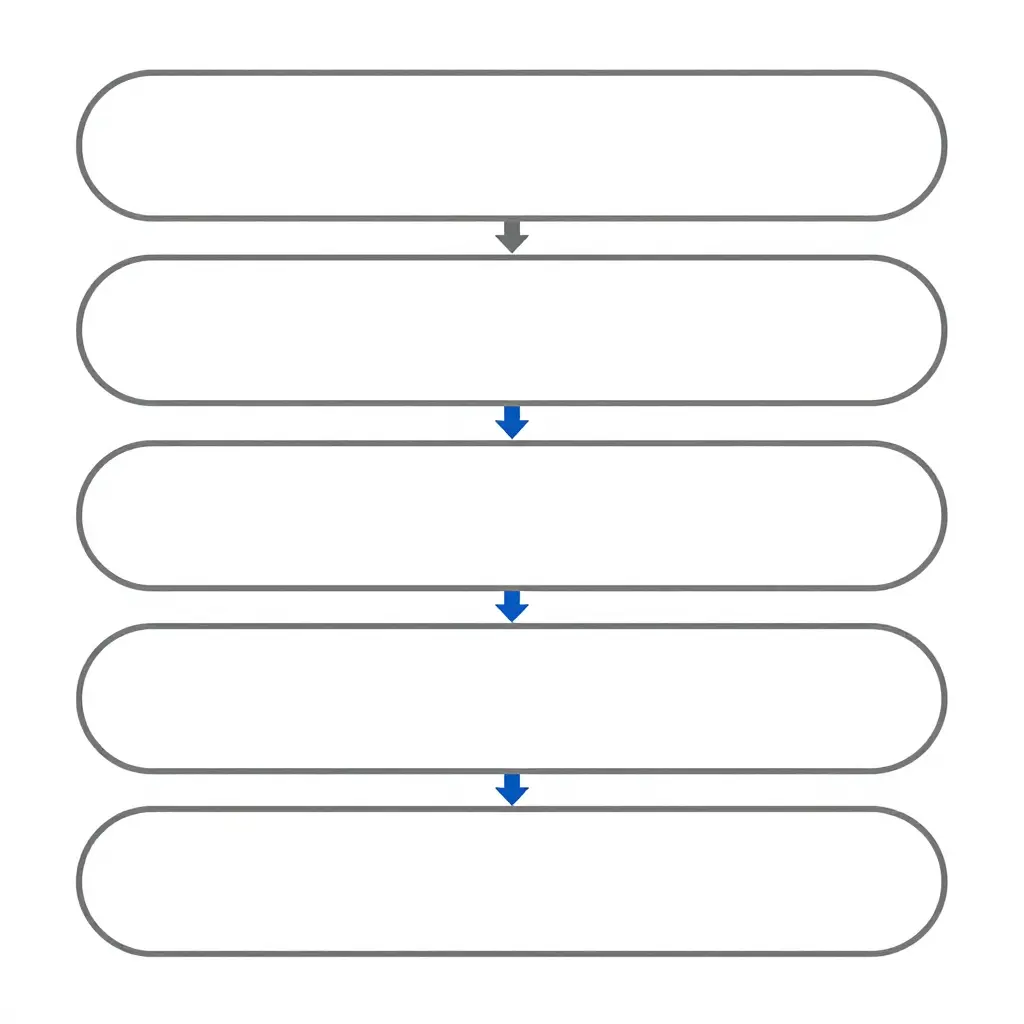
Matching an aftermarket fairing to a factory finish is less guessing than following a repeatable loop. The diagram above breaks the method into five steps, and shows where a mismatch creeps in and where you get to correct it.
Step 1 – Color Code Lookup
A paint job starts with data. Pull the factory color code from your bike’s VIN or service tag, then have it cross-referenced against a current formula. The code tells you the shade the factory meant to spray, not the shade on the bike now after years of sun exposure.
Step 2 – Test Spray-Out
The only honest way to know what a formula looks like is to spray it. Mix a small batch and lay it down on a test panel cut from the same material as your fairing. Plastic, ABS, and fiberglass each take pigment differently, so testing on the wrong substrate can send you chasing a color that was never going to work.
Step 3 – Compare Under Natural Light
Hold that panel against the original bodywork in daylight, ideally indirect sun around midday. Shop fluorescents mislead you, and a color that matched under a bulb can turn obviously wrong the moment the bike is outside. This is the step that exposes UV fade most clearly.
Step 4 – Adjust
If the panel reads too light, too dark, or off in tone, adjust the mix. Modern systems let you nudge the formula with tints or adjust flake concentration until the test panel closes the gap. Adjust, re-spray, compare again, and repeat as needed.
Step 5 – Final Match
When the test panel disappears against the fairing in natural light, the formula is locked. Only then commit it to the full panel or kit. Skipping straight to the big spray-out is how people end up with a beautifully finished fairing that is just slightly the wrong shade.
If you are building a full set rather than a single panel, browsing a range of custom motorcycle fairings ahead of time lets you plan colors and finishes in one pass instead of matching piece by piece.
How Mismatch Causes Rank in Importance
Not every cause of a visible mismatch carries the same weight. Owners investigating an aftermarket fairing paint match tend to hear a dozen possible culprits, from primer selection to ambient lighting. On a finished bike, a few of them dominate what the eye actually detects.
UV fade sits at the top. Factory paint ages unevenly, and one harsh season of sun exposure can push an original panel well away from its certified color. A fresh panel sprayed to the correct code still reads as different beside sun-faded plastic. This is the most frequent driver of fairing paint mismatch on older motorcycles, and it gets worse with every passing year.
Color code accuracy is a close second. Codes vary by year, region, and production plant, and aftermarket suppliers sometimes approximate a shade rather than replicate it exactly. A code that drifts even slightly from the original shows up once the bike is in direct daylight.
Application variables matter far less. Primer choice, coat thickness, ambient temperature, and spray distance all affect finish quality, but their influence on hue is usually subtle. They explain texture and gloss differences far more often than color shifts.
Arranging the causes side by side makes the relative weight obvious, as the chart below shows.
Getting this hierarchy right helps enthusiasts comparing custom motorcycle fairings diagnose a mismatch correctly instead of chasing small variables that rarely change the final result.
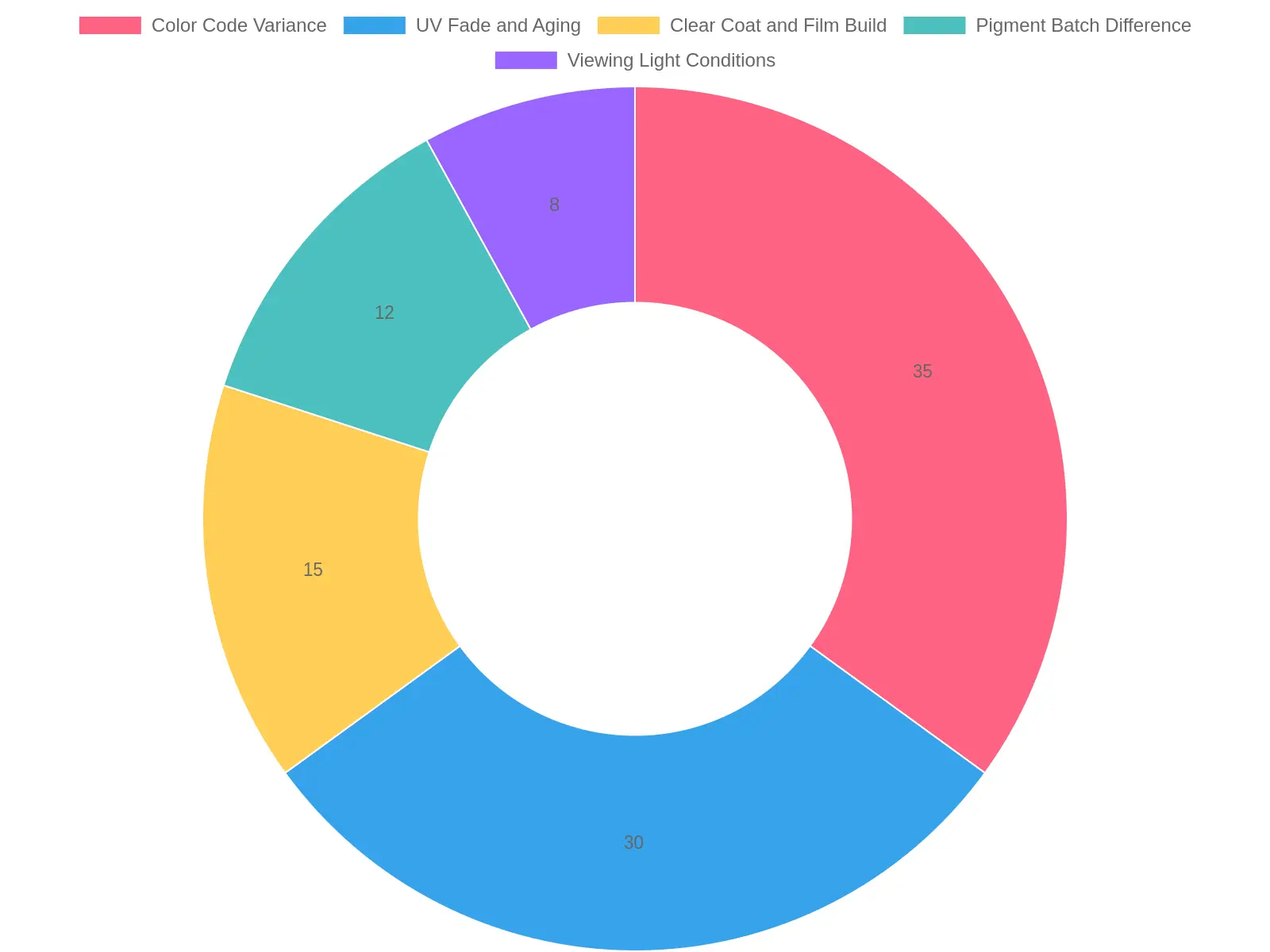
Chart: Estimated share of each cause behind an aftermarket fairing paint match that falls short. Color code variance (35%) and UV fade and aging (30%) dominate, together accounting for roughly two-thirds of every visible mismatch.
What the distribution tells us about aftermarket fairing paint match
No single factor owns the problem. Color code variance leads at 35% because even an identical factory code gets translated through different paint lines, tinting habits, and OEM-versus-aftermarket formulas. UV fade and aging follows at 30%, which is why a freshly painted panel can look right in the booth and drift away from sun-baked originals within a season or two. The remaining 35% splits between clear coat and film build (15%), pigment batch difference (12%), and viewing light conditions (8%): smaller individually, but fully capable of turning a near-perfect repair into an obvious eyesore. The practical reading is simple: chase color accuracy first, control your environment second, and most aftermarket fairing paint match headaches never reach the bike.
Solutions and Best Practices
Reducing mismatch comes down to process rather than luck. A few disciplined steps protect the result whether you are a rider, an enthusiast, or a body shop.
Confirm the Exact OEM Color Code Before Ordering
Never rely on a paint name alone. Paint names repeat across years and markets, while the manufacturer’s color code identifies one specific formulation. Collect the code from the vehicle’s identification plate or the original paint label, and confirm it against the model year and build date. Ordering against the wrong code guarantees a mismatch before the panel is even sprayed. When you specify an aftermarket fairing paint match for custom motorcycle fairings, pass the verified code to your supplier in writing.
Always Request a Spray-Out Sample
A color chip on a screen is not a finish. Ask the supplier to spray a physical sample card using the exact base coat, mid-coat, and clear you will receive, then view it in daylight and under shop lighting. Approve the card before full production begins.
Account for UV Fade on the Rest of the Vehicle
Even a perfect code can look wrong against aged panels. Sun exposure shifts existing paint over time, so a factory-fresh hue may look deeper and glossier than the surrounding bodywork. Compare the sample against the actual vehicle in indirect light, and plan a blend or a full respray where UV fade is significant.
Choose Suppliers That Document Their Paint Process
Reliable suppliers record base-coat brands, mixing ratios, and clear-coat systems, and they share those details on request. Documented processes make touch-ups repeatable and give your painter a known baseline. That is the difference between a one-time fix and a recurring problem.
Quick Reference Checklist
- Verify the OEM color code against the build date.
- Approve a physical spray-out sample before ordering.
- Assess UV fade on adjacent panels and blend if needed.
- Buy only from suppliers who document their paint process.
FAQ: Aftermarket Fairing Paint Match and UV Fade
Question: Why does a fairing with the correct color code still look different from the rest of the bike?
A color code defines the original formula, but not how your existing panels have aged or how the new part was sprayed. Different primer shades, film thickness, and clear coats all shift the final tone, so an aftermarket fairing paint match is rarely identical straight out of the box. Even factory panels from separate production runs can vary slightly.
Question: Can UV fade be corrected once it has developed?
Mild UV fade often improves with a machine polish or a clear coat restoration, but oxidation that has changed the pigment itself usually cannot be reversed. The reliable fix is repainting to a fresh reference, because an aftermarket fairing paint match holds best when both surfaces start from similar condition.
Question: How much paint fading is normal?
For a bike stored outdoors, a gradual shift over three to five years is typical, especially on tank tops and upper fairings. A noticeable color change within one season, or a visible edge under the decals, points to aggressive UV fade. Comparing a hidden area against an exposed panel gives a quick, honest reading.
Question: Is color matching harder on tri-coat finishes?
Yes. Tri-coat finishes add a translucent mid-layer, and that coat is extremely sensitive to spray distance, humidity, and film build. An aftermarket fairing paint match on a tri-coat often looks slightly deeper or more pearlescent than the original, and the color code alone rarely captures that layered effect.
Question: How should I compare paint under proper lighting?
Evaluate panels in indirect daylight, not under shop fluorescents or at night, since those sources hide warm and cool shifts. View the fairing from several angles, because metallic and pearl tones change with the viewing direction. A color code that looks correct indoors can look wrong the moment the bike meets sunlight. For closer results, ordering panels painted as a matched batch, like these custom motorcycle fairings, keeps tones consistent.
Conclusion
The mismatch you see on a freshly installed fairing is not luck. It is decided first by the paint color code and second by UV fade. Get the code right and the panel starts close; manage the sun exposure and the color stays close as both surfaces age together. Everything else, from lighting and panel angle to surface texture, only explains the smaller differences that remain.
Summit Fairings sells motorcycle fairings for export, offering over 3,000 styles that cover almost all motorcycle models. Whether you are replacing one panel or refreshing the whole bike, buying from summitfairings.com costs 10-40% less than prices on other sites, which makes it a practical source for affordable motorcycle fairings. Owners and body shops who want the basics first can review what motorcycle fairings are before ordering.
For a closer color and finish match, custom motorcycle fairings let you specify the code and coating you need instead of settling for a stock option. Have a question about paint codes, fade, or fitment? Summit Fairings promises an answer to any question within six hours.